Showing posts with label Coaching. Show all posts

Sunday, February 22, 2026

Stop Fixing, Start Developing: A Roadmap for High-Impact Coaching

Coaching has been in my blood since my teaching days.  When I got my first position, I was recruited into a freshman football role by one of my former coaches on the varsity staff.  While I was worried about the impact on me as a first-year teacher, those concerns never materialized.  A year later, I took on two additional positions: head varsity ice hockey coach and freshman lacrosse coach.  For me, I wanted to impact as many students as possible both in and out of the classroom. Little did I know that these experiences would profoundly shape me as I built my coaching consultancy many years later.  

In my work with schools across the globe, I have consistently seen that the most significant driver of student outcomes is not a new piece of technology or a trendy curriculum; it is the quality of teaching and leadership. However, effective practices do not happen in a vacuum. It requires a culture of support that moves beyond the traditional, often superficial, evaluative process. To truly move the needle on student learning, we must shift to a coaching culture.

In the latest episode of my podcast, Unpacking the Backpack, I explored the L.E.A.D model designed to guide the growth of effective coaching. By focusing on four specific pillars, we can empower educators to reach new heights of professional excellence.


The Foundation: Listening with Intent

Effective coaching is built on a foundation of trust. Without it, even the most brilliant pedagogical advice will go unheeded. This trust is earned through the practice of listening with intent. Many leaders fall into the trap of "fixing" a teacher's problems before fully understanding the classroom context.

True listening involves a deep engagement with the educator’s perspective. Research supports the necessity of this relational approach. For example, a study by Knight and van Nieuwerburgh (2012) finds that the success of instructional coaching largely depends on the quality of the relationship and the coach's ability to facilitate self-directed learning through empathetic listening. When we listen first, we validate the educator’s experience and create a safe space for the vulnerability that growth requires.

Building the Muscles: Developing Capacity

Once trust is established, the focus shifts to building capacity. In education, we often mistake doing what we are told for actual growth. Capacity, however, is the internal ability to make high-level decisions independently. The goal of coaching is to provide the scaffolding necessary for teachers and administrators to become their own best observers.

This process must be job-embedded and continuous. According to Kraft, Blazar, and Hogan (2018), the impact of coaching is significantly greater than that of traditional professional development because it provides sustained, individualized support directly applicable to the teacher's unique classroom environment. By investing in a shared vision, mission and set of goals, we help educators see not just where they are, but who they can become as practitioners.

The Mirror: Empowering Through Evidence

If capacity building is the "how" of growth, evidence is the "what." We must move away from feedback based on subjective opinions and move toward feedback grounded in objective data. This is where we truly empower our staff. When we use evidence, we are not making a judgment; we are providing a mirror.

Using artifacts such as student work samples, engagement data, or video reflections allows for a more rigorous analysis of practice. Desimone and Pak (2017) emphasize that instructional coaching is most effective when it is content-focused and supported by active learning through the examination of evidence. When an educator can see the direct correlation between their actions and student outcomes, they are more likely to take ownership of the necessary changes. It shifts the conversation from "Am I a good teacher? Am I an effective administrator?" to "Is this strategy working for my students? Is this benefiting my staff?"

The Compass: Aligning Actions

The final component involves ensuring that all moves are aligned with the school’s vision and goals. We have all seen the "initiative fatigue" that occurs when educators feel pulled in multiple directions. A coach serves as an alignment specialist, ensuring that daily practices are coherent and research-based. Alignment creates synergy that drives exponential growth. When the entire district or building is pulling in the same direction, leadership and teaching become more focused and sustainable. We must continually ask whether our coaching cycles directly serve our mission to improve students' lives.

Coaching is the engine of professional growth. By listening with intent, developing capacity, empowering through evidence, and aligning actions, we create a system that supports everyone in being their best. It is about human connection, belief in potential, and a relentless commitment to collective improvement.

Want to learn more about Aspire Change EDU’s L.E.A.D coaching model and how the process can support leaders and educators in your district, school, or organization? Reach out today to set up a complimentary thirty (30) minute Zoom meeting. 

Desimone, L. M., & Pak, K. (2017). Instructional coaching as high-quality professional development. Theory Into Practice, 56(1), 3–12. 

Knight, J., & van Nieuwerburgh, C. (2012). Instructional coaching: A partnership approach to improving instruction. Educational Management Administration & Leadership, 40(1), 100–120. 

Kraft, M. A., Blazar, D., & Hogan, D. (2018). The effect of teacher coaching on instruction and achievement: A meta-analysis of the causal evidence. Review of Educational Research, 88(4), 547–588. 


Sunday, May 11, 2025

Why School Leaders Need a Coach: The Critical Role of Job-Embedded and Ongoing Professional Learning

Professional learning is an embedded element of every district and school, but the focus is usually on teachers.  Leaders deserve support as well.  Recently, on Unpacking the Backpack, I discussed the value of job-embedded and ongoing coaching for administrators backed by research after revisiting blog posts I wrote in 2018 and 2021. Listen on Spotify or wherever you access your favorite podcasts. Below are some expanded thoughts on the topic, including additional research.

Effective school leadership is pivotal in shaping successful learning outcomes and creating an enriching school culture. However, the complex responsibilities inherent in school leadership often demand continuous skill development, reflective practice, and adaptive leadership approaches. Increasingly, educational research underscores coaching as a highly effective form of professional learning, essential for empowering school leaders with the capabilities required for impactful, sustainable leadership.

The Case for Coaching in School Leadership

School leaders today face unprecedented challenges, from navigating diverse educational needs to managing organizational change effectively. Coaches provide critical support, enabling leaders to build essential skills, reflect critically on their practice, and apply adaptive strategies in real-time scenarios (Aguilar, 2013). According to Wise and Cavazos (2017), leaders who engage in coaching report increased self-efficacy, enhanced problem-solving skills, and a heightened capacity for effective decision-making. Effective leadership is about people and how their collective actions align with new thinking, ideas, and tools to help build cultures primed for success (Sheninger, 2019). Coaching helps leaders get to where they need and want to be to improve outcomes.

Job-Embedded Coaching as Continuous Improvement

One of the defining characteristics of successful leadership coaching is its job-embedded nature, meaning the learning occurs within the actual work context. This approach ensures relevance, practicality, and immediacy, directly connecting coaching sessions to daily challenges and responsibilities (Drago-Severson & Blum-DeStefano, 2018). It also avoids having to miss time to attend presentations and workshops.  Job-embedded professional learning through coaching allows leaders to immediately apply new insights, receive timely feedback, analyze evidence, and refine their practices iteratively, which is imperative in a disruptive world (Sheninger, 2021). 

Research Support for Ongoing Professional Learning

Research consistently highlights ongoing, sustained professional development as significantly more effective than isolated training events (Darling-Hammond, Hyler, & Gardner, 2017). Ongoing coaching supports deep, reflective learning processes, allowing leaders to progressively build and reinforce leadership competencies over time. The sustained nature of coaching contributes to deeper internalization of effective leadership practices, ultimately enhancing organizational outcomes and student achievement (Goff, Guthrie, Goldring, & Bickman, 2014).

Promoting Reflective Leadership

Coaching promotes reflective practice, a cornerstone of effective school leadership. Reflection facilitated by a skilled coach helps leaders critically analyze their actions, decisions, and outcomes, driving continual growth and learning (Robertson, 2016). Through guided reflection, leaders develop a deeper understanding of their strengths and areas for growth, enhancing their overall leadership capacity and effectiveness.

Building Capacity for Adaptive Leadership

Adaptive leadership, crucial in today's educational environments characterized by complexity and constant change, is significantly enhanced through coaching (Heifetz, Grashow, & Linsky, 2009). Coaches support leaders in developing adaptive strategies, resilience, and flexibility, ensuring they are equipped to lead effectively amidst changing contexts and challenges (Sheninger, 2015).

Creating Sustainable Leadership Growth

Ultimately, coaching contributes to the sustainability of leadership growth by embedding continuous learning within the leader's professional practice. This sustained engagement supports immediate performance improvement and long-term leadership capacity building, benefiting the broader educational community and fostering school-wide improvement (Killion & Harrison, 2017).

The evidence supporting coaching as an essential component of professional learning for school leaders is compelling. Job-embedded, ongoing coaching helps leaders develop the reflective capacity, adaptive skills, and sustained effectiveness necessary to meet contemporary education's dynamic demands. As schools continue navigating complex educational landscapes, investing in coaching for school leaders remains a strategic imperative (Sheninger, 2019). 

Want to learn more about the Aspire Change EDU coaching model? Reach out today to set up a complimentary thirty (30) minute Zoom - AspireChangeEDU@gmail.com

Aguilar, E. (2013). The art of coaching: Effective strategies for school transformation. Jossey-Bass.

Darling-Hammond, L., Hyler, M. E., & Gardner, M. (2017). Effective teacher professional development. Learning Policy Institute.

Drago-Severson, E., & Blum-DeStefano, J. (2018). Leading change together: Developing educator capacity within schools and systems. ASCD.

Goff, P., Guthrie, J. E., Goldring, E., & Bickman, L. (2014). Changing principals’ leadership through feedback and coaching. Journal of Educational Administration, 52(5), 682–704. 

Heifetz, R., Grashow, A., & Linsky, M. (2009). The practice of adaptive leadership: Tools and tactics for changing your organization and the world. Harvard Business Press.

Killion, J., & Harrison, C. (2017). Taking the lead: New roles for teachers and school-based coaches. Learning Forward.

Robertson, J. (2016). Coaching leadership: Building educational leadership capacity through coaching partnerships. Leading and Managing, 22(1), 26–38.

Sheninger, E. (2019). Digital Leadership: Changing Paradigms for Changing Times (2nd Edition). Corwin: Thousand Oaks, CA. 

Sheninger, E. (2021). Disruptive Thinking in Our Classrooms: Preparing Learners for Their Future. ConnectEDD Publishing: Chicago, IL.

Sheninger, E. (2015). Uncommon Learning. Corwin: Thousand Oaks, CA 

Wise, D., & Cavazos, B. (2017). Leadership coaching for principals: A national study. Mentoring & Tutoring: Partnership in Learning, 25(2), 223–245. 

Sunday, May 12, 2024

The Never-ending Upgrade: Why Constant Growth is the Key to Success

While I enjoy keynoting and facilitating workshops, it is through a coaching lens that I get to see how teachers and administrators are implementing innovative learning strategies with fidelity. Through their actions, I can collect evidence to show efficacy while curating exemplars I can share in my presentations. No matter where I go, I get the same message from educators on their desire for practical strategies. There is no better example than those implemented in classrooms, schools, and districts. 

“Eric, we know the why. To move our practice, we want to see how it can be done and what it could look like.”

The quote above is something I hear over and over again as I support school systems across the world. It is important to educators because it highlights the importance of moving from theory to practice. While understanding the reasons for change (the why) is important, it is equally important to see how this change can be implemented (how) and what the results might look like (what it could look like), something I elaborate on in Disruptive Thinking in Our Classrooms. Here’s why:

  • Educators need practical guidance: Ideas and strategies are often handed down from above, with little guidance on how to implement them in the classroom. Educators need to be shown how to put these into practice.
  • Sharing effective practices: By sharing examples of what has been implemented successfully, educators can learn from each other and improve their own practice.
  • Building a vision for change: Seeing what innovation could look like can help educators stay motivated and committed to making changes.

Thus, when I am in certain places, I always check in on educators who push the envelope and crave feedback so they can grow. A few weeks back, I was in Stryker Local Schools (OH), where I have been supporting the district this past year. One classroom I always try to visit is that of Larry Freshour, an elementary technology teacher. For starters, he is always craving feedback. I can’t remember a time this past school year when we had a conversation, and he didn’t mention how he was implementing an idea or strategy that he learned during one of the professional development days I facilitated. The other reason is that he thoroughly engages learners using a rotational model, immersing students in thought-provoking tasks.

During a recent visit, he had just finished up with a hook on circuits using a short video from Flocabulary.  When I entered, the class was already completing lightsaber cards in honor of May the 4th, which Star Wars fans are undoubtedly aware of and have this date marked on their calendars. Research has shown how vital relevance is to learning and Larry makes great efforts to impart authentic contexts and application during each lesson. Students were seen throughout the room creating working circuits to ignite the lightsaber. Self-regulation, pacing, and intrinsic motivation were on full display. 


Constant growth is the key to success because our world is always changing. By continuously learning new skills, adapting to new situations, and pushing ourselves beyond our comfort zones, we stay relevant, overcome challenges, and unlock our full potential as educators. This growth mindset fuels progress, keeps us engaged, and allows us to reach new heights consistently, just like Larry.  


Sunday, February 25, 2024

10 Ideas for Primary ELA Stations

In my coaching work, suggestions typically arise for ideas on implementing various personalized strategies effectively at the primary level (PreK – 1). While choice, in my opinion, might not be the most developmentally appropriate option, I do see station rotation (or centers) as a viable option. Establishing engaging and educational station activities for primary-age students in the English Language Arts (ELA) curriculum is essential for fostering literacy skills, including reading, writing, listening, and speaking. Stations allow young learners to explore and practice these skills at their developmental level through purposeful play and hands-on activities. At the same time, the teacher can pull small groups for targeted instruction or support.

Recently, I was asked by some Kindergarten teachers at Howell Elementary School in Tennessee during one-on-one coaching sessions about ELA-specific stations that would be great for young learners.   The conversation provided the spark for this blog post. 

Here are several practical ideas that can be effective and enjoyable for primary students:

Sight Words Station: Little learners engage in tasks to recognize and practice high-frequency words. Implement interactive games like sight word bingo, memory match, and word fishing (using a small fishing rod with magnets to "catch" words written on paper fish).

Phonics and Word Families Station: Students learn to build phonemic awareness and understand word families. They can use sorting games where students group words by their beginning sounds or word family endings. Consider incorporating simple CVC (consonant-vowel-consonant) word-building activities with letter tiles or magnets.

Technology Station: Here is a great way to integrate digital literacy and acquire data using adaptive tools when appropriate. Use tablets or computers with ed-tech tools focused on ELA skills, such as letter recognition, phonics games, or digital storytelling tools.

Alphabet Station: Students learn to recognize and practice letters and sounds. Activities can include magnetic letters, alphabet puzzles, and letter-matching games. They can work on identifying letters, matching uppercase to lowercase, and producing letter sounds.

Listening Station: Students learn to develop listening comprehension and focus. Try setting up a listening center with headphones and a variety of age-appropriate audiobooks. Include follow-up activities related to the stories, such as drawing a scene from the story or answering simple questions.

Writing and Drawing Station: Students actively practice writing skills and express creativity. Provide various writing materials like paper, notebooks, pencils, markers, and crayons. Include prompts or story starters, and encourage students to draw pictures related to their stories.

Reading Nook: This station encourages a love for reading while improving fluency. Teachers can create a cozy corner with a range of picture books, early reader books, and thematic books related to current classroom topics. Rotate books regularly to keep the selection fresh and engaging.

Drama and Role Play Station: Students work to enhance speaking skills and imagination. Set up a mini-stage area with costumes, props, and puppets. Students can retell familiar stories, perform improvised scenes, or use puppets to create narratives.

Poetry and Rhyme Station: Your learners work to enjoy the rhythm and rhyme of language. Offer poetry books, nursery rhymes, and songbooks. Include activities like rhyming matching games, building simple rhymes, or creating class poems.

Sensory Writing Station: Students practice letter formation and fine motor skills. Provide trays with sand, shaving cream, or salt for students to write letters and words with their fingers or small writing tools.

For each station, it's essential to provide clear instructions and rotate activities regularly to keep students engaged and challenge their learning. Additionally, adapting each station to meet primary students' diverse needs and learning preferences will ensure that all children can participate and benefit from these ELA station activities. Here are some tips to help you develop station rotation effectively:

  • Develop a template and share it on-screen with context
  • Integrate a timer
  • Use available data to group/regroup and target instruction
  • Integrate an adaptive learning tool
  • Keep rotations between 3-4
  • Use an exit ticket (2-3 scaffolded questions/problems) at the end of the block for accountability

Effective and engaging ELA station activities for primary students are crucial for developing literacy skills. Although choice may only sometimes be developmentally appropriate for learners in PreK to Grade 1, station rotation offers a structured yet flexible method of instruction. These stations encourage skills ranging from letter recognition to creative expression and fine motor skills, all tailored to young learners’ developmental levels. Providing clear instructions and regularly updating activities are vital to maintaining engagement and addressing the diverse needs of the students.

Sunday, December 26, 2021

Top Posts of 2021

With 2020 in the rearview mirror, the consensus was that 2021 would be a much smoother ride.  Most people would agree that this was not the case.  During countless coaching visits, I saw and heard firsthand the myriad of challenges being faced in classrooms, schools, and districts.  Through it all, though, educators found a way to forge ahead in the midst of adversity.  It sure wasn’t an easy path, but the resilience, dedication, and determination of people who have committed their lives to serve children of all ages have and continue to be on display.  I, for one, cannot thank them enough for the sacrifices made and the resulting impact on kids.

Writing this past year has been bittersweet for me.  On the one hand, I continually empathized with educators as the struggle was, and continues to be, very real.  It is difficult to honestly know this feeling if you are just up on a stage and not in classrooms or buildings.  Context matters, especially when doling out advice.  On the flip side, I have witnessed some of the most extraordinary practices that have been implemented with fidelity.  This is no small feat considering the environment that a pandemic had and continues to create.  Through a coaching lens, I was able to generate topics for posts that I thought people would find value in and appreciate.  Writing provides me with an avenue to both reflect on my practice and celebrate that of others.

Speaking of celebrations, I had one on a personal level with the publishing of my latest book in April. Disruptive Thinking in Our Classrooms was one of my major pandemic projects, alongside with becoming a master at cooking charbroiled Gulf of Mexico oysters on the grill.  Since the book became available, I used this blog to create supplemental content while expanding on many of the concepts with additional insight.  All of these posts and accompanying original images have been curated on Pinterest.  In addition to these resources, there is also a comprehensive study guide and an impressive bulk order discount through ConnectEDD Publishing (email info@connecteddpublishing.com).

Without further ado, here are my most popular posts of 2021 in no particular order.  Instead of sharing a summary of each, I have decided to include the unique image that was developed to accompany the content. 

How to Make Learning Stick

Pedagogical Leadership

8 Elements of Effective Coaching

Learning Recovery Through Acceleration

Making Headway with Remote and Hybrid Learning


Thanks for all you do, and wishing everyone the best in 2022!

Sunday, October 10, 2021

Seeking Out Feedback

Growth is a never-ending journey. While there is no one best way to get better at what we do, I think we can all agree that feedback is a necessity no matter the path taken. For it to impact practice, it should be practical, specific, timely, and facilitated in a positive fashion.  While we know how important feedback is to our growth, the question becomes how often do we receive it in some form?  I shared the following in a past post:

Feedback can be a catalyst for motivation, engagement, and finding answers to questions or problems. First and foremost, we must be open to it in some form. One way to move the needle is to seek it out from a variety of perspectives. 

If you are not receiving enough feedback to either spark or sustain your growth, how are you seek it out?  I can definitely improve in this area, and I really didn’t think about it much until an experience with Jackson County Schools in Georgia.  One of the site visits took us to East Jackson Comprehensive High School, where I observed one of the best math lessons ever.  In a nutshell, the teacher created a courtroom experience where students dove into the concepts in a relevant way. Various roles were assigned, such as jury members, prosecution, and defense, where the class used evidence to determine whether or not math problems were solved correctly. The teacher was thoroughly immersed in the lesson himself as the judge with a wig and all.  As part of my notes, I wrote that this was an experience students would remember for a very long time.

Even though the lesson was amazing, it was not the best part.  Near the end, the teacher took off his wig and, as a form of closure, asked the students for feedback to improve the activity in the future.  The responses were fantastic and included more challenging problems, finding ways to get the jury more involved during deliberation, and finding ways for all students to report out.  I couldn’t applaud enough the teacher’s willingness to be vulnerable coupled with a sincere desire to improve. To top it all off, this was also a great example of using student voice to personalize the learning experience without technology.

There are so many valuable lessons that each of us can take away from the teacher above related to effective teaching and learning, but also practical ways to seek out feedback and act on it routinely. Here are six ideas to consider:


  1. Seize every opportunity: Don’t wait for someone else to provide you with feedback. If you do, there is a chance you might be waiting for a while. 
  2. Listen intently: After asking for feedback, take in all that is provided to you. Make sure your body language clearly shows that you are paying attention and genuinely care about what is said. It goes without saying that being “present” is vital.
  3. Clarify points: After listening, verbalize what has been suggested to you while using questions to make sure that the points that have been made are clear. Doing so also shows that you were listening.
  4. Be appreciative: If you want honest feedback on a regular basis, people need to know you care. It is also essential to understand that sometimes providing ways to improve to a peer or superior in position isn’t easy for some to provide. By showing appreciation, it sets the stage for others to make efforts to seek you out to engage in feedback conversations instead of the other way around
  5. Write usable points down: You don’t have to agree with everything that is provided to you. Write everything down, process, and then reflect on what has value.
  6. Take action: The value of feedback lies in how it is used to grow and improve.  If it is given and nothing changes, then don’t be surprised if people stop providing it or, worse yet, turn to criticism.

Seeking out feedback is a simple act that anyone can engage in to grow. Always look to seize the moment. The real work begins once you use it to be the best iteration of yourself for those you serve.


Sunday, April 18, 2021

Using Feedback to Create a Culture of Excellence

Growth is a huge component of the change process. In order for each of us to pave a path for success, there must be feedback along the way.  When it comes to navigating the process of change, this might be the most essential element to help individuals improve while also validating efforts made to get better.  Cultures of excellence are created and fostered when feedback is used to commend effort while providing considerations for growth regularly.  In a previous post, I highlighted five considerations to help maximize this powerful tool, which you can see below:

  • Positive facilitation
  • Practical and specific
  • Timely
  • Consistent
  • Use the right medium


In my role as a coach, I am constantly providing educators with feedback based on qualitative and quantitative evidence in alignment with the principles listed above.  On a typical day when I visit classrooms with principals in my partner districts across the country, both the building and district leaders receive a 1000-to-5000-word document laden with practical feedback. They get this before I physically leave for the day.  I have always done this because I know that timely information has been critical to my professional growth.  The best outcome of this process has been the feedback I have received from leaders who have stated how valuable this resource has been for them.

During my recent work with the Kentucky Department of Education (KDE), I had the honor of sharing what I have learned from the field while helping them look at and analyze evidence from their change efforts during our time together.  During each virtual coaching session, they were pushed to bring artifacts from their respective cohort.  Recently I shared what Jill Angelucci, an assistant principal from George Rogers Clark High School, created as a result of the project.  My role was to provide then direct feedback on all the evidence shared while also engaging the group to do the same. One of the key points I tried to make was how important it is to do the same with teachers.  It warmed my heart when Amy Rhodes, the principal of Bevins Elementary, shared what she had recently implemented in regard to feedback. The result was “Feedback Fridays.” 

You can see examples of the slips she created HERE and read the summary below:

While our district was on all virtual learning, I began asking my teachers to submit one thing each week they wanted me to give feedback on from Canvas. Teachers could ask for feedback on a module, lesson, or recorded video from Canvas. They could ask me to join a Zoom for the upcoming week or look at a piece of student work. The options are endless. I gave each teacher feedback on what he/she submitted. If the teacher submitted something to me before 2:30 on Friday, I allowed them to leave work 30 minutes early (while we are on all virtual learning and students were not in the building). 

I recently checked back in with Amy Rhodes after reviewing the feedback slips she had shared during the KDE coaching sessions to gain more insight into her views on why and how she moved forward with this strategy.  Below are her thoughts.

Feedback and coaching have been part of my professional growth goal for the last few years.  Being an instructional leader is my top priority, and I know how vital teacher efficacy is to student achievement. When our school closed in March of 2020, we were not prepared for virtual learning. We did the best we could with the resources we had. Going into the new school year in August of 2020, we needed a learning management system and ways to improve virtual learning. Being all virtual, I was unable to observe instruction in the classrooms, and I had to teach myself how to conduct virtual observations through Canvas and by participating in Zooms. 

I noticed that my teachers worked very hard at making their virtual classrooms presentable and designing their Canvas courses so they were easy to navigate. I did not see the sound instruction that I would see in the classrooms if we were not virtual. Some of the things I look for while doing classroom visits, using our district walkthrough document, are learning targets, higher-level questioning and discussion, active engagement, student feedback, technology, and formative assessment. I knew my teachers were already overwhelmed with all the changes, but I also know how vital it is for our students to receive sound instruction rather than be virtual or in person. 

We meet in PLCs every Wednesday and were able to use this time to discuss and have teachers share out their Canvas pages and virtual lessons. When I would see something from the week that I liked, I asked that teacher to share out at PLC. For example, while conducting a virtual observation in Canvas, I noticed a third-grade teacher found a fantastic way to engage students even through virtual learning. I asked her to share her screen I PLC and show her colleagues what she did. This was an excellent way for teachers to learn ideas from others. 

As I already said, my teachers were so overwhelmed, so I chunked the things I look for from our walkthrough document.t I started with learning targets, and I provided coaching and feedback until every teacher had learning targets on their virtual lessons each day. Next, we moved on to formative assessment and then on to questioning and discussion. We chunked the areas and worked on them in small groups. With the coaching and feedback I provided, along with the PLC discussions, it did not take too long until I was observing high-quality teaching and learning virtually!

If there isn’t a concerted effort to improve progress, it is often hard to come by in many cases. Most educators need and want feedback to grow. There is no one right way to do this, in my opinion.  However, once feedback is prioritized and consistently provided, the stage is set for a culture of excellence.

Sunday, March 28, 2021

The Power of Collaboration

There is nothing more gratifying, in my opinion than watching people work together to achieve a common goal.  In a previous post, I shared how members of the 4th-grade team at Red Cliffs Elementary School in the Juab School district collaborated to create a personalized experience that combined choice and data to differentiate.  I was so empowered by what I saw that I captured the story of both teachers. My point was to illustrate an exceptional practice that benefitted all learners and how this might have never come to pass had they not embraced the spirit of collaboration.  It goes without saying that together we are all better, and leveraging others' collective intelligence will only strengthen both individual practices and school culture.

It is rare for me actually to see differentiation during my school visits. Now, this is not to say that it's not happening, but in over thousands of different classroom visits, I have only seen it a handful of times.  The week following my work with the Juab School District in Utah, I traveled to Elmhurst Community School District 205 in Illinois. My week-long visit there was a follow-up from 2019, where hundreds of classroom walk-throughs were conducted with a focus on improving digital pedagogy.  Extensive feedback was provided to district and building leadership, and a plan was developed to begin implemented specific strategies for growth over a period of time.  It was during the return trip that I once again saw differentiation firmly in part of a personalized learning experience. 


Upon entering the second-grade classroom, students were observed either completing their list of must-do activities or if they finished a choice board.  Activities were differentiated, consisting of slight alterations in choice board activities, based on proficiency data. The teacher, Lauren Joyce, was observed providing targeted instruction for a few remote learners. Some kids were already at mastery and were able to move forward along their own path. I also noticed Katie Murphy, the instructional coach, playing an active role in the classroom. This was a fantastic lesson that genuinely personalized the experience for all kids where they got what they needed when and where they needed it. 

Naturally, I wanted to capture Lauren and Katie's story, which you can read below.

Teaching during this past year has definitely challenged me, Lauren, to view things a little bit differently and has forced me out of my comfort zone in many ways. Teachers have had no choice but to instruct online, and students have had no choice but to sit on the other side of a computer screen for hours on end. I have had to adapt and think outside the box since I had never taught this way before. Because of the pandemic, this year has been unpredictable and has constantly been changing. Our students have been in school in three formats; all remote, hybrid, and now entirely in-person. I was hesitant at the start of the year about starting small group instruction given the circumstances. I had trouble envisioning what small group instruction would like in a remote and/or hybrid setting.    

District 205 has given us the opportunity to have an instructional coach at each elementary building. For the past four years, Katie and I have worked closely together on different classroom instructional strategies. This year, I knew I would need her support more than ever, especially in leveraging the best instructional strategies using technology. One of my biggest goals this year was to provide purposeful and engaging differentiation in math to meet all learners' needs in my classroom. I had somewhat of a vision about what I wanted this to look like but wasn't sure where or how to start. I often see things as "big picture" or what I want my end goal to be. Katie helped me utilize student data to bring my vision to life. Together, we looked at student data and decided which students demonstrated mastery of math standards and wanted to create more rigorous learning opportunities for these students. This is how Katie helped my big picture vision begin to come to life. A classroom environment was created that integrated the following structures and routines:

  • Collaborative conversations
  • Independence
  • Choice (must do may do) 
  • Self-advocating 

This year has really taught me that we can teach with resilience and still allow for learning to be fun. Katie and I want to make sure learning is engaging and effective. We think with this approach to teaching; we are seeing the students thrive in any setting. They are excited about math as it is personalized through voice and choice while also emphasizing critical thinking and problem-solving. Collaborative conversations with groups help to create the expectations for speaking and listening for them to follow as they work together. Below is a description of what Eric saw during his visit. 

  • Goal was to differentiate math based on pre-assessment data based on proficiency of standards while providing students choice along with teacher instruction
  • Collaborative groups and structures were established where students could work together 
  • Opportunities to follow a unique path to meet or exceed the standard were developed
  • Resources were made available in Google Classroom, such as anchor charts, the daily agenda, and a Google Form for students to communicate with a teacher around their learning.


One thing Lauren emphasized to me through email was the importance and influence instructional coaching has had on her instructional practice while also improving the classroom environment. She has significantly benefited from Katie's help, guidance, and feedback over the course of their time working together. Katie is the person she goes to immediately with any and every idea she has; her support has genuinely made Lauren a better teacher.

I don't think I would be willing to try some of these things if it weren't for her giving me a gentle nudge and supporting me every step of the way. Additionally, the students view Katie as a member of our classroom community. She has even been given the title "Class Celebrity."

Lauren and Katie exemplify the power of collaboration and the positive impact on both kids and school culture.  The moral of the story here is to work smarter, not harder, and great things will happen.  Be sure to leverage all the resources you have available, the greatest of which are the colleagues in your school.


Sunday, March 14, 2021

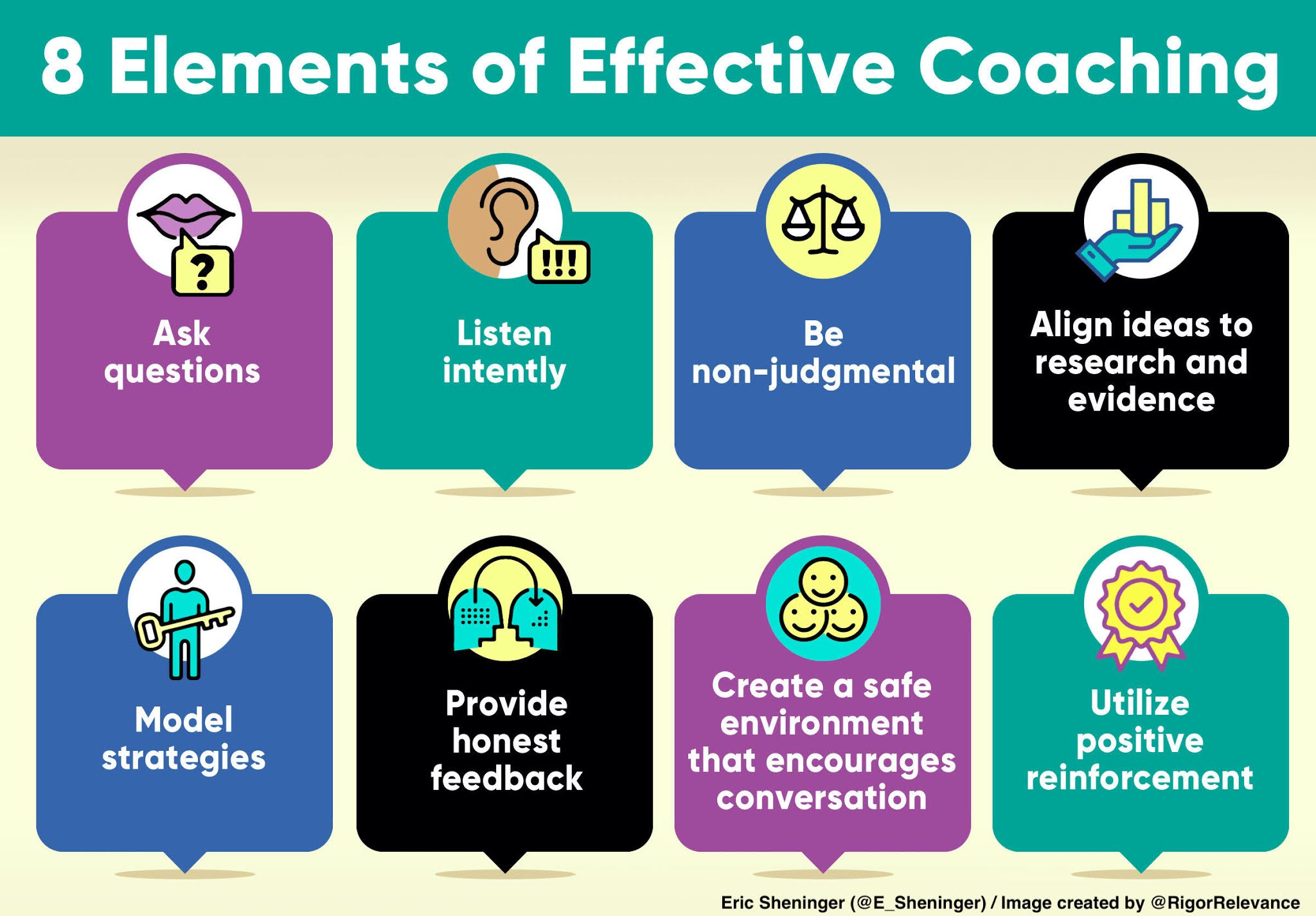
8 Elements of Effective Coaching

I absolutely love coaching educators in small groups.  During these sessions, I get to see firsthand how they are implementing ideas and strategies into practice to grow.  While giving keynotes and facilitation workshops is something I love, both lack an ongoing component, which is one of the most critical aspects of professional learning that leads to scalable results.  While one-and-done and drive-by events are great at establishing the why once the excitement dies down, people are often clamoring to figure out how to make what they just heard a reality in their specific context. Having multiple touchpoints and small groups allows for more engagement, personalization, mentoring, feedback, and the time to dive more deeply into concepts.  

There are so many ways to implement coaching effectively, but some specific strategies are listed below:

  • Ask questions
  • Listen intently
  • Be non-judgmental
  • Align ideas to research and evidence
  • Model strategies
  • Provide honest feedback
  • Create a safe environment that encourages conversation
  • Utilize positive reinforcement


The other day, I facilitated a coaching session with leaders as part of a year-long partnership with the Kentucky Department of Education (KDE) on digital leadership.  The stage was set in separate large group sessions described below:

In order to fully understand the impact remote learning has on teaching and learning, we must be purposeful in the role we play in supporting and leading teachers in a digital environment. We must inspect what we expect. The only way to do this is to roll up our sleeves and jump into the digital learning environment with our teachers and students. To best assess our current levels of teaching and learning performance in a digital environment, we must understand how to collect the evidence that helps shape our overall understanding of learning now and in the future. 

Once we have gathered the appropriate evidence of teaching and learning in a digital environment, participants will be led through the process of analyzing and interpreting evidence collected in an effort to understand the current conditions teachers are creating, and students are learning in each day. Once there is an understanding of the current landscape, practical ways will be shared in how to coach teachers to keep sound instructional design at the forefront of teaching and learning.

During these touchpoints, I offered specific ways for leaders to successfully gather and interpret evidence of teaching and learning to be in a better position to lead pedagogical change. In between two major workshops have been many small sessions where participants have been tasked with bringing evidence to illustrate how they are successfully leading change in their districts and get valuable feedback.  Each coaching cycle has been designed to personalize the experience for all participants.  My facilitation partner from KDE, Ben Maynard, has been incredible at using Google Jamboard for participants to upload artifacts, ask questions, and brainstorm strategies that the leaders hope to implement in the near future.  

During one session, Jill Angelucci, an assistant principal from George Rogers Clark High School, shared an extraordinary artifact that resulted from professional learning that had been implemented throughout the year.  Since things have been challenging during the pandemic, her school wanted to move beyond the challenges and instead focus on the positives.  What they came up with was having teachers routinely present on what’s worked well. In my opinion, this was genius and not only shared effective practices but also built people up in the process.  

Teachers presented for approximately 30 minutes once a month on Thursday. Below you can see an example of what was created using Canva as a result of the sessions at Jill’s school. You can see all of them HERE. 


She was able to model digital strategies and ways for teachers to incorporate voice, choice, and path into their learning. It created a second piece to the overall strategy of ‘Think Tank Thursday’ where they continually share and identify other strategies made available to all staff. This was all accomplished while students were remote and almost entirely through Google Meet sessions. Innovative use of space and time was made available, and they plan to continue this while kids return to the building.

The artifact above was one of many that have been shared during the longitudinal work with KDE.  The effective elements of coaching listed earlier in this post weren’t just used by me, but instead the entire group. It was a collaborative process where tangible outcomes were shared and analyzed.  Coaching takes the “why” and moves educators along a continuum of effectively leading change and what can be used to show success.

If you are interested in discussing what a coaching cycle can look like in your district or school send me an email (esheninger@gmail.com). 

Sunday, October 25, 2020

Give and Take Ideas to Support Teachers

The pandemic has really put a strain on educators, yet they continue to rise to the occasion on behalf of kids. This has come at a cost both mentally, socially, and physically. Something has to give. There has been a great deal of conversation lately about what can be taken off the plates of teachers.  I have to commend those administrators who are working to find ways to put their staff more at ease in these challenging times. While removing specific responsibilities to reduce stress and anxiety is a great start, we must also consider what can be given to them to provide multifaceted support. Giving can be just as, if not more, powerful than taking away, which is typically the more straightforward option. 

Below are some ideas that I have. Some are more doable than others, but all are realistic.


Time

If there is one thing that teachers consistently ask for, it is time to plan, create videos, grade, conference with remote students, update the LMS, etc. I don't want to belabor this point as I recently wrote about the topic. You can view the post HERE. The main takeaway with time though is to develop ways to give it unconditionally to teachers and not schedule or mandate anything else in its place, such as meetings or PLC's. 

Eliminating Meetings

Let's be honest for a minute. No one truly likes meetings, and the value of them is open to interpretation. I, for one, did not find value in them when I was a principal and eliminated most while reducing the time of the ones that were kept. Now I am not saying that all meetings don't have value, but while the pandemic rages on minutes and essential information can be emailed to staff or made part of a collaborative Google Doc. 

Coaching and Feedback

There is a difference between wanting to be left alone and a desire to grow. The majority of educators fall into the latter. Even in the midst of challenging times, growth is necessary to meet the needs of diverse learners. Now is not the time to revert back to traditional observation and evaluation protocols because, quite frankly, they will not result in improved outcomes.  Taking this away and replacing with non-evaluative strategies consisting of coaching and feedback will go a long way towards creating an empathetic environment.  

Prioritize standards

It is unrealistic to try to cover the entire curriculum as educators are implementing hybrid models for the first time, and increasing COVID cases is forcing some schools back to remote learning. An emphasis on priority standards can significantly reduce teachers' burden while streamlining other pedagogy aspects, such as assessment. Other elements to consider are aligning formative tasks and checks for understanding to those prioritized standards so teachers can monitor the learning of students. In the end, more manageable conditions are created for teachers. 

Grading grace periods

There is inequity when it comes to grading, as some subject areas require a great deal more time because of the nature of the content. Additionally, many teachers are still getting used to tasks and assessments in a hybrid environment. Even though deadlines are needed showing a little grace will always be appreciated.

Cover classes

Some districts and schools are hiring substitutes. Others are seeing their administrators offer their time and that of other non-teaching staff members. No matter the route taken, this strategy is sure to build up morale. There should be no catch when a class is covered, and it should be up to the teacher as to how he or she will use this opportunity to either grade, prepare lessons, attend professional learning, observe peers, or just put up their feet and relax. 

Eliminate non-instructional duties 

Many contracts have teachers assume a duty either during the school day or after. These can include cafeteria, hall, in-school suspension, extracurricular, or athletics, where there is no compensation. If possible, try to eliminate all of these. If you can't, consider developing a schedule where administrators and other support staff can fill them in lieu of teachers. 

Choice in professional learning

Forcing educators to engage in one-size-fits-all professional development at this time will tend to be hit or miss depending on the person. Mostly miss as there is a definite need for practical strategies in the areas of remote, hybrid, and blended learning facilitated in practical ways. Growth and improvement are of vital importance, but it needs to be something that educators want to engage in at a time when there are so many challenges. Consider providing different choices such as face-to-face, virtual, blended, or asynchronous options. It is also wise to gather input from staff to determine what they feel is needed. 

Communicate norms to families

One of the most common frustrations I hear from teachers when I am coaching is that they can't keep up with all parent emails that come in after school hours, mostly from remote learners and parents. I have gone as far as to recommend that teachers state they're out of office on their email each evening from 5:00 PM until 7:00 AM. Establishment of, and then clear communication of, norms can go a long way towards taking away some emails and messages, especially late at night and early in the morning. In Digital Leadership, I lay out the importance of using a multifaceted approach to meet stakeholders where they are while reinforcing the vital message at hand. Develop the norms with teachers and then "pound the pavement" with digital communications. 

Mental health days

With a substitute shortage, this could be a bit dicey, but the overall impact far outweighs the short-lived frustration of covering classes in a pinch. Based on the size of a district or school, a determination can be made as to how many of these days can be realistically given to each teacher. 


Empathetic leadership is critical to helping staff get through challenging times. Using a give and take strategy and lessening the burden will create a culture of empowerment.  As people have different needs, it is crucial to consider various options as there is no one right way to help people at any point in time. Work to take things off educators' plates, but also consider what you can personally give. In the end, powerful relationships will be formed, and that benefits everyone.


Sunday, February 16, 2020

Knowing Where We Are Paves the Way for Change: The Impact of Coaching

I often tell audiences during keynotes and workshops that my role isn’t to tell anyone what to do, but instead to get educators to think critically about what they do. It would be foolish of any speaker or presenter to do so, considering that we don’t really know the people who we are blessed to speak with, let alone the specific culture in which they work.  The fact for many in education is that we teach the way we were taught and lead the way we were led.  In some cases, this might still be effective. However, the opposite is more often true, and helping others come to this realization can be a tricky process.

Where I see the most change from my work is when I am fortunate to work with districts and schools on an on-going, long-term basis. This allows me to really get a pulse on the culture, understand the challenges that are faced, make observations, collect evidence as to where practices are, and ultimately build relationships in the process.  Trust and honesty are key, which compels me not to hold back when engaging both teachers and administrators in dialogue on feedback.  Often, we are blinded by our own bias or comfortable where we are. No matter the case, both can be detrimental to growth.


So how do we begin to move the needle? It starts with analyzing how feedback is given.  What I have learned from past experiences, and currently, when working in schools, is that a tendency remains to tell people what they want to hear as opposed to pushing them with critical conversations on practice. The latter might sting at first, but it is needed to create a sense of urgency.  Making people feel good is always crucial, and a critical component of a positive culture. However, it shouldn’t come at the expense of shying away from the problematic and thought-provoking conversations that are needed to drive change at the individual and systemic levels.  

One of the best ways to help others know where they are and lay the groundwork for meaningful changes to practice is through coaching.  Currently, I have several projects around the country where I have assumed this role. Last year alone, I visited over 1000 classrooms and pretty much followed the same process.  At the conclusion of each day, I submit a detailed report that contains general commendations and recommendations for growth to each school. If I am there for an extended period of time, the district receives a comprehensive report within 24 hours of completing my last school visit.


In addition to general feedback, I script what I see by classroom while aligning evidence to support the ratings for how I chart data across five indicators. This allows me to provide some simple data for districts and schools to get an idea of where their practices are. Here is how I code each lesson after scripting and providing recommendations for growth:
  • Rigor Relevance Framework Quad alignment (A, B, C, D)
  • Engaged (E) or disengaged (DE)
  • Tech (T) or no tech (NT)
  • Teacher-centered (TC)) or student-centered (SC)
  • Student agency: High (H) vs. Low (L)
Now, these are meant to be black and white in terms of whether it can be seen or validated with evidence (i.e., questions, assessments, tech used by kids for learning, student work, etc.). However, I always stress that there is gray inherent in what I provide and encourage dialogue and support between coaching visits. It goes without saying that these visits are just a snapshot and, by no means, are indicative as to what happens during the entire lesson or regularly throughout the year. It is up to the school and individual educators to make that determination. There is one non-negotiable that I establish, and that is an administrator or teacher who has to accompany me. The reason being to coach the individual(s) later on providing feedback and to ensure interrater reliability (do we see the same thing).

I am fortunate to be involved in several long-term projects where I have been able to document growth over time. Over the years, I have shared all of the wonderful things happening at Wells Elementary, as I am now in my third year as their coach. Other schools and districts are beginning to follow suit. One, in particular, is the Corinth School District in Mississippi. The stage was set over the summer for me to work six days in each of their three schools to assist with teaching, learning, and leadership associated with their 1:1 implementation.  Following the protocol described above, I facilitated coaching days.

Even though I have a few stories of significant growth to share, I want to focus on just one. During my first visit to the high school in August, I spent the entire day visiting classrooms and then providing feedback to the admin team. They, in turn, then shared recommendations for growth with their teachers.  One teacher took the feedback and ran with it. 

The next time I met with the teachers, I facilitated a workshop on digital pedagogy.  Something from this day and the feedback from the classroom observation clicked him. During my third visit, we saw him implementing a choice board with his economics class. Going from direct instruction primarily to this high agency approach represented a dramatic shift in practice.  I again provided feedback both in the form of commendations and recommendations for improvement, specifically when it came to assessment.  I can’t begin to tell you how pleased and excited I was during my fourth visit. When we visited his history class, he again had the students working on a choice board. The main difference from last time was that there were six different rubrics to go along with the activity.  


The growth story of this teacher is one of many in the Corinth School District. His colleagues across all content areas at the high school have begun to implement an array of innovative strategies such as station rotation, choice boards, self-pacing, digital check-ins with students, and the purposeful use of technology aligned to effective pedagogy.  The middle school has begun to make impressive progress with blended learning, especially at the 6th-grade level. Last but not least is the elementary school where evidence has been collected, demonstrating tremendous growth with high agency strategies.  To be honest, I could fill this post with picture after picture as validation.

We can’t allow ourselves to stick our heads in the sand or cuddle up to the status quo.  Sometimes a push is needed. In all the schools I work in, the catalyst for change is always the first coaching visit.  Using an unbiased and non-judgmental lens, the stage is set for assisting educators in coming to a determination as to where they are.  Initially, this can be a tough pill to swallow. However, the fact remains that nothing about public education is perfect. Sometimes it takes an outside view to help come to that realization.

If you would like to know more about our coaching process and on-going work for schools or districts, shoot me an email (esheninger@gmail.com).

Sunday, August 19, 2018

The Case for Coaching Leaders

Growing up as a child I played numerous sports recreationally and in high school.  Upon entering high school   I was not the best athlete by any means, but football was one sport where I excelled more than others, and this led to some time playing in college.  Even though I had some fantastic coaches throughout my days playing competitive sports, I never gave much thought to becoming one myself.  Once I knew that my destiny was to become a teacher that was my sole focus. However, weeks before I was set to begin in my first role I was contacted by one of my former high school football coaches pleading with me to take the open freshman team role.  Initially, I resisted but then decided that this could be an excellent opportunity to connect with more kids and hopefully in the process pass along some of the life lessons that I learned from my former coaches.

I loved coaching football and eventually took on the freshman lacrosse and head ice hockey positions in my school.  For years I was able to teach both in the classroom and on the field.  That is one of the critical points of this post.  In many aspects, coaching is teaching, but without formal grades. As a coach, I provided lessons and strategies on skill development as well as competencies that pertained to excelling at a particular sport.  Each practice involved modeling, guided practice, and either individual or team practice. At the end of each practice, there was a closure activity where we reflected on the events of that day while preparing for a future contest.  The actual game was more or less an assessment of what my players had learned during practice.  

Coaching is so much more than the result of a game, match, or competition.  It is really about helping kids develop many of the qualities and characteristics in life that cannot be measured with an actual number such as leadership, commitment, perseverance, motivation, self-discipline, teamwork, resilience, enthusiasm, and reliability. The positive impact of a good coach can be felt for years and lead to success in both professional and personal aspects of life.  

When we reflect on some of the outcomes I have listed above, it is apparent how important the act of coaching is in numerous professions, not just in athletics. Many school districts invest in instructional and digital coaches to assist teachers in further developing pedagogical capacity in these respective areas.  This is a sound investment indeed, but research from the Wallace Foundation empowers schools to expand support to a group that is most often left out – leaders. In a recent article Marta Aldrich looked at a few studies highlighted below:
When it comes to the impact of school-related factors on student learning, research shows that school leaders are second in importance only to teachers — but also can have a multiplier effect on the quality of teaching. Historically, however, professional development has been limited to periodic workshops and training that focus mostly on administrative, operational, and compliance issues. They rarely receive ongoing, embedded coaching and problem-solving support based on the instructional needs of specific schools.
Leaders need consistent support and feedback on all aspects of the position to continually grown and improve, but the most emphasis should be on issues related to instructional leadership.  If teachers are being coached on research-based instruction and digital pedagogy for example, then leaders need to be well equipped to provide useful feedback and conduct effective observations or evaluations.  The same can be said about PLC’s, use of data, meeting the needs of learners with special needs, innovative practices, space redesign, etc. 


I encourage you to take a look at the links to the research from the Wallace Foundation for more detail on the why and how of coaching leaders.  Peter DeWitt outlines some other key considerations when it comes to coaching leaders.
One of the issues with any type of coaching, and something I found in a small-scale study I did with a little over 250 participating principals, was when principals felt coaching was focused on their needs and remained confidential, as opposed to focusing solely on the needs of the district, it was beneficial to their growth. Leaders, like teachers, need to feel that there is trust when it comes to working with a coach. Additionally, leadership coaching is only an effective means of professional development when it has the following elements of effective professional development:  
  • Happens over an extended period of time 
  • Involves external experts  
  • Teachers/Leaders are deeply engaged  
  • It challenges existing beliefs (Timperely et al. 2007). 
Research has consistently shown that professional learning that leads to school improvement and meaningful changes to practice is ongoing and job-embedded.  It is incumbent upon organizations, boards of education, and school districts to commit to helping teachers and leaders through effective coaching practices.  Larger organizations and districts might be able to make it work within existing structures, but this does not eliminate some of the inherent bias and trust issues that will still exist.  Being coached by the person who will eventually evaluate your performance might not always lead to a trusting relationship. It is also important to have coaches that possess the practical experience aligned with the areas where a leader can benefit from job-embedded coaching.

In any case, coaching can lead to improvements in teaching, learning, and leadership.  These results are not isolated to just achievement data, but also to the many qualities and characteristics mentioned earlier in this post that cannot (and should not) be measured with a number. If the goal is to support our teachers better then commitments must be made to ramp up assistance to all school leaders, including central office. Investing time and resources in people, regardless of position, is the key to transforming school culture in a way that leads to better results. 

For more context you can view my video reflection below. 


A great deal of my work as of late with districts, schools, and organizations has been in the role of job-embedded coach. If you are interested in learning more about what this looks like shoot me an email (esheninger@gmail.com).