Showing posts with label differentiation. Show all posts

Sunday, April 11, 2021

Organize, Streamline, and Empower Learning with Hāpara

The world has radically changed in unprecedented ways. Educators navigate uncharted waters that continually fluctuate as a result of COVID-19 and the Fourth Industrial Revolution. Even with all of these challenges, opportunities have arisen to take education in a different and better direction to create a new normal that better meets learners' needs. Teachers have risen to the occasion like never before. With increases in technology and adapting to both remote and hybrid learning, we have seen them become nimble while embracing innovative pathways to create a more equitable learning experience.

As someone who has actively worked in schools physically and virtually throughout the pandemic, I have seen some of the most extraordinary examples of sound pedagogy. I will even go out on a limb and state that what I have seen the past couple of months is significantly better at scale than what was observed prior to COVID-19's emergence. Now don't get me wrong.  There were definitely excellent practices taking place in classrooms across the globe. However, they were more isolated than widespread. All of that has changed in many schools.  

If you are an avid reader of this blog, you have seen examples of what I am talking about in terms of the use of time, differentiation, purposeful integration of technology, and educator collaboration. My role has not only been to provide strategies and ongoing coaching but also to make recommendations on solutions that can make the lives of teachers, administrators, and students easier in the process.  Hāpara is one such solution if you are using Google Workspace (formerly G-Suite).  They offer a suite of tools for differentiation, promoting digital citizenship, establishing productive workflows, providing feedback, and allowing learners to work at their own pace. 


Below you can see all that Hāpara does:

  • Highlights: Encourages a gradual release of responsibility approach to monitoring digital learning to grow digital citizenship and develop critical competencies amongst learners. Highlights give teachers a window into what learners are working on in their Chrome browsers and provides the ability to provide formative feedback and positive reinforcement while also facilitating guided practice.
  • Teacher Dashboard: Simplifies teacher workflows in Google Workspace by organizing all student Drive files into one convenient dashboard. This makes it easier for teachers to access student work and provide timely, consistent, formative feedback. 
  • Workspace: Consider this the place to organize all of those Google apps and tools. Hāpara workspace is a home base for learning that teachers can use to facilitate instruction, automate differentiation, personalize tasks and provide a collaborative experience. Educators can benefit from thousands of publicly shared Workspaces aligned to the local curriculum and customize them to meet their learners' needs. 
  • Student Dashboard: A one-stop hub where learners can find their Google Classroom assignments, Drive files, announcements, and communications from their teachers. Student Dashboard can establish a path to developing more vital executive function skills, greater autonomy, and increased student agency.  
  • Private Library: Allows schools and districts to secure their Hāpara Workspaces in private library collections. Only those within the school or district can see these Workspaces, and they cannot be shared publicly. This has the benefit of protecting licensed content so that copyright is not violated by sharing outside of the organization.
  • Classroom Dashboard: Provides schools and districts visibility into Google Classroom engagement metrics to make better-informed learning decisions. The valuable data provides insight into how Google Classroom is being used, whether or not students are engaged in learning, and developing a coaching and professional learning plan to ensure student success. 
  • Digital Backpack: A flexible solution for equitable distribution of textbooks, resources, and other content. 

The resiliency of educators during the pandemic has not gone unnoticed.  We need to continue to celebrate all that they have and continue to accomplish while also moving forward with pedagogical change that will transform classrooms in ways that future-proof learning. One way to ensure lasting success is to streamline workflows for teachers and students alike. In this case, Hāpara fits the bill for Google users. 

Sunday, March 28, 2021

The Power of Collaboration

There is nothing more gratifying, in my opinion than watching people work together to achieve a common goal.  In a previous post, I shared how members of the 4th-grade team at Red Cliffs Elementary School in the Juab School district collaborated to create a personalized experience that combined choice and data to differentiate.  I was so empowered by what I saw that I captured the story of both teachers. My point was to illustrate an exceptional practice that benefitted all learners and how this might have never come to pass had they not embraced the spirit of collaboration.  It goes without saying that together we are all better, and leveraging others' collective intelligence will only strengthen both individual practices and school culture.

It is rare for me actually to see differentiation during my school visits. Now, this is not to say that it's not happening, but in over thousands of different classroom visits, I have only seen it a handful of times.  The week following my work with the Juab School District in Utah, I traveled to Elmhurst Community School District 205 in Illinois. My week-long visit there was a follow-up from 2019, where hundreds of classroom walk-throughs were conducted with a focus on improving digital pedagogy.  Extensive feedback was provided to district and building leadership, and a plan was developed to begin implemented specific strategies for growth over a period of time.  It was during the return trip that I once again saw differentiation firmly in part of a personalized learning experience. 


Upon entering the second-grade classroom, students were observed either completing their list of must-do activities or if they finished a choice board.  Activities were differentiated, consisting of slight alterations in choice board activities, based on proficiency data. The teacher, Lauren Joyce, was observed providing targeted instruction for a few remote learners. Some kids were already at mastery and were able to move forward along their own path. I also noticed Katie Murphy, the instructional coach, playing an active role in the classroom. This was a fantastic lesson that genuinely personalized the experience for all kids where they got what they needed when and where they needed it. 

Naturally, I wanted to capture Lauren and Katie's story, which you can read below.

Teaching during this past year has definitely challenged me, Lauren, to view things a little bit differently and has forced me out of my comfort zone in many ways. Teachers have had no choice but to instruct online, and students have had no choice but to sit on the other side of a computer screen for hours on end. I have had to adapt and think outside the box since I had never taught this way before. Because of the pandemic, this year has been unpredictable and has constantly been changing. Our students have been in school in three formats; all remote, hybrid, and now entirely in-person. I was hesitant at the start of the year about starting small group instruction given the circumstances. I had trouble envisioning what small group instruction would like in a remote and/or hybrid setting.    

District 205 has given us the opportunity to have an instructional coach at each elementary building. For the past four years, Katie and I have worked closely together on different classroom instructional strategies. This year, I knew I would need her support more than ever, especially in leveraging the best instructional strategies using technology. One of my biggest goals this year was to provide purposeful and engaging differentiation in math to meet all learners' needs in my classroom. I had somewhat of a vision about what I wanted this to look like but wasn't sure where or how to start. I often see things as "big picture" or what I want my end goal to be. Katie helped me utilize student data to bring my vision to life. Together, we looked at student data and decided which students demonstrated mastery of math standards and wanted to create more rigorous learning opportunities for these students. This is how Katie helped my big picture vision begin to come to life. A classroom environment was created that integrated the following structures and routines:

  • Collaborative conversations
  • Independence
  • Choice (must do may do) 
  • Self-advocating 

This year has really taught me that we can teach with resilience and still allow for learning to be fun. Katie and I want to make sure learning is engaging and effective. We think with this approach to teaching; we are seeing the students thrive in any setting. They are excited about math as it is personalized through voice and choice while also emphasizing critical thinking and problem-solving. Collaborative conversations with groups help to create the expectations for speaking and listening for them to follow as they work together. Below is a description of what Eric saw during his visit. 

  • Goal was to differentiate math based on pre-assessment data based on proficiency of standards while providing students choice along with teacher instruction
  • Collaborative groups and structures were established where students could work together 
  • Opportunities to follow a unique path to meet or exceed the standard were developed
  • Resources were made available in Google Classroom, such as anchor charts, the daily agenda, and a Google Form for students to communicate with a teacher around their learning.


One thing Lauren emphasized to me through email was the importance and influence instructional coaching has had on her instructional practice while also improving the classroom environment. She has significantly benefited from Katie's help, guidance, and feedback over the course of their time working together. Katie is the person she goes to immediately with any and every idea she has; her support has genuinely made Lauren a better teacher.

I don't think I would be willing to try some of these things if it weren't for her giving me a gentle nudge and supporting me every step of the way. Additionally, the students view Katie as a member of our classroom community. She has even been given the title "Class Celebrity."

Lauren and Katie exemplify the power of collaboration and the positive impact on both kids and school culture.  The moral of the story here is to work smarter, not harder, and great things will happen.  Be sure to leverage all the resources you have available, the greatest of which are the colleagues in your school.


Sunday, March 21, 2021

Differentiating in the Personalized Classroom

I love visiting classrooms around the country to not only support but to see educators in action.  In my opinion, I learn just as much, if not more, from them as they hopefully do from me.  During the spring of 2020, I connected with the Juab School District in Utah and began what would be two years of longitudinal work to help them take personalized learning to the next level.  The pandemic derailed our planned first face-to-face day. As a result, Royd Darrington, the assistant superintendent, asked me to create asynchronous models for the staff to watch at their own pace. The first was an overview of foundational instructional strategies and pedagogy, while the other five focused on voice, choice, path, pace, and place. 


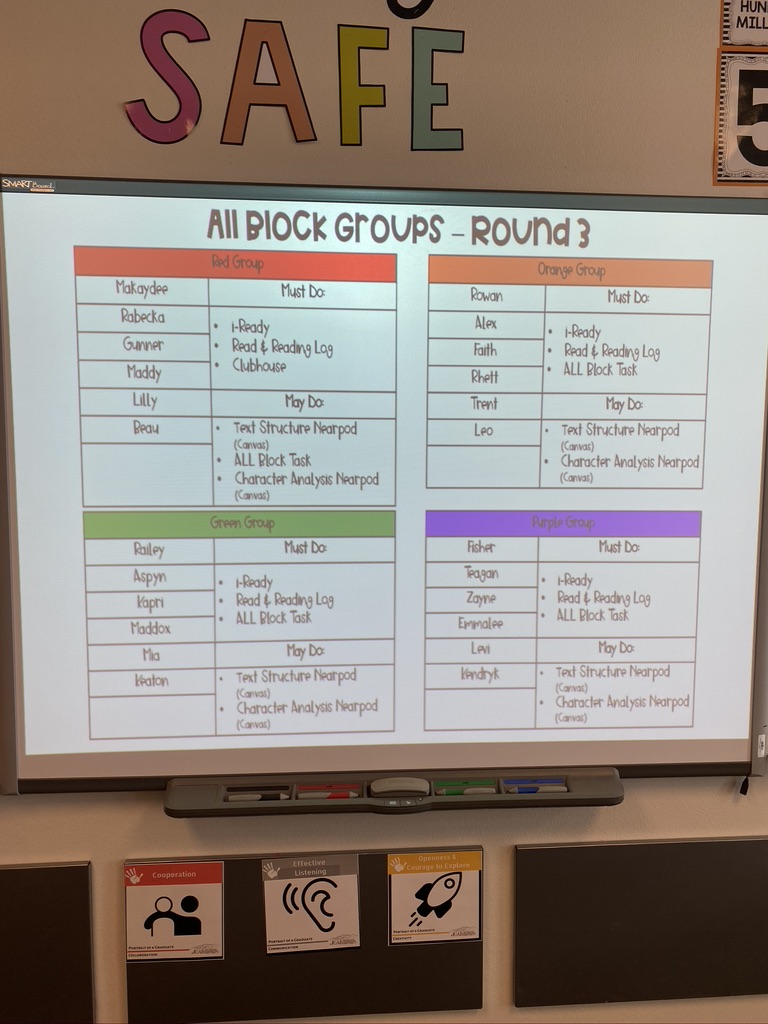
During the summer, I worked with the entire staff and visited each school to make some observations while offering feedback to the principals. Recently I visited the district where I met with each school to visit classrooms and see how they were progressing with personalized learning. Little did I know that my visit to Red Cliffs Elementary was going to blow my socks off. Upon entering the 4th-grade classroom of Jordan Jones, I saw probably the best examples of differentiation I have ever physically seen in real-time.  One of the hallmarks of personalization is the purposeful use of data, which can be used to group, regroup, facilitate targeted instruction, or differentiate. Upon questioning Jordan, she was implementing all of these!  There was also choice in the form of a must-do and may-do that varied for each group. Below is the picture I captured.  


I could not contain my excitement and awe, so I decided to reach out to get her perspective on this activity. Below is her detailed explanation of what I saw and why she created this activity. 

I have done small group instruction for years. Although it felt differentiated, most of the time, each group was receiving nearly the same instruction. I had a hard time grasping how to personalize instruction to my students' needs because I didn't truly understand which skills they were missing. This year, I have been dedicated to using and analyzing data. This has completely changed my classroom. I can honestly say that I know my students this year better than any other group in past years. Learning how to read and understand student data is what started me onto this personalized learning path.

Starting out this year, my students were in 4 reading groups, similar to what I have always done. Students each went to the same groups, and when the timer went off, they would rotate to the next one. It worked, but it was far from personalized. I had data, and I knew what students needed, but I wanted to find a way to truly make my groups targeted and intentional.

This is when we (my teammate and I) came up with the Must Do; May Do idea. There are certain things that I want each student to complete each day, but these are different for different students. Each group has its own Must Do, and May Do activities. Must-Do activities are intentional activities that target individual student needs. May Do activities help reinforce content and skills that have been taught in class. Some activities stay the same each week, while others change. I have found that mixing up activities with different technologies has helped keep students actively engaged.

While students are completing these individualized activities, my instructional assistant and I can work individually or in small groups with students. In these groups, we use data to identify reading and/or phonics skills that students have not yet mastered and then teach them explicitly. Data is the most significant piece of the success of this format of teaching and learning. Groups are formed based on DIBELS data and data from our i-Ready Reading digital component. Students who are working on skills with myself and my instructional assistant are reassessed every three weeks. This helps me know whether the interventions and instruction that are being given are working if the student has mastered the skill, and what to teach next.

During the week that Eric visited my classroom, students completed a Padlet as a Must Do. On this Padlet, students had to write a character analysis paragraph about a character in a book that we have been reading. We chose a Padlet to complete this task for multiple reasons. The first was to help engage my students in a new way to complete this specific task. In class, we had written these on paper, as well as on Google Docs. The second reason was to allow students to see how others had written theirs. This gave students the ability to read their peers' writing and possibly use them as a model.

I have never felt so confident in my teaching. This year, I can honestly say that I am the best teacher I have ever been, and I am growing every day. I feel confident that my students are getting the instruction and practice that they need. My students have learned to make choices that help them learn the most. I had a student last week say, "I don't care how long it takes. I am here to learn. I like to learn."

A few days later, I learned that Jordan had a partner in crime on the 4th-grade team and collaborated on this activity.  So naturally, I needed to reach out to Crissa Peterson to get her take as well. Success is typically a team effort, and it was so refreshing to hear how shared goals are achieved by working smarter, not harder.  Below is Crissa's take on the activity. 

My teammate and I felt that we needed to create a personalized learning experience that was meaningful and engaging to our students. We didn't want our students just completing activities as busywork. We wanted all of the activities to have meaning and value for that specific student. In order to create our groups, we looked at a few different data points. We used DIBELS data, a Phonic Screener for intervention (PSI assessment) that aligns with 95% group phonic skill interventions; we also used the iReady reading diagnostic results and then teacher discretion. From these results, we grouped students with similar learning needs/levels.

We also wanted to create activities that emphasized what we had been working on during our ELA module and All-Block tasks. We knew that Padlet would be a great option because students can share ideas with one another and modify them later if needed. It gave them a chance to enhance their typing skills as well while reinforcing the ELA standards we had been working on during that unit. We also felt that Nearpod was a great way to assess learning. It is an engaging and interactive tool that provides instant feedback to our students.

In creating our groups, we wanted to give our students voice and choice as well. In doing so, we decided to make our groups using the "must do" and "may do" templates. Each group is assigned different personalized "must do" and "may do" activities," so this means students are doing a variety of assignments throughout the block of time. Using this platform also allows the students to work at their own pace, and it also will enable students to master a standard/skill before moving on. "Must do" activities are the activities that are required for students to accomplish. These are personalized for them based on their learning needs. If students have finished their "must-do" activities, then they can go to a "may do" activity for the last round.

Students often tell us that they love being able to choose the order they complete their tasks in and that the activities frequently change for them. I, as a teacher, love that it gives my students the freedom and accountability to finish their assigned activities while keeping them engaged. Most of all, I love that I am personalizing their learning activities based on their individual needs and providing them the opportunity to work at their own pace, all while using technology and interactive tools.

Personalization is about giving all kids what they need, when and where they need it, to succeed. The dynamic combination of differentiation, choice, and targeted instruction does this. By capturing Jordan's and Crissa's story, I hope that other educators will not only see that this is doable whether or not we are in a pandemic but results in an equitable learning experience for learners.  


Sunday, September 13, 2015

Why Personalize

How we best learn has been a hot topic for many years. As most would agree experiences that are relevant, practical to our needs, meaningful and applicable drive learning.  The ability to acquire and construct new knowledge, then apply it in ways to solve complex problems, is at the heart of what education has been tasked with accomplishing. This lofty goal has fallen way short of expectations as our education system has changed very little over the past 100 years.  As a result of mostly the one-size-fits-all approach, students enter an environment where not only their needs are not met, but there is very little motivation to learn. With this stark reality in place, changes in schools and instruction are definitely needed to better meet the needs of all learners.

Now don’t get me wrong, significant progress has been made over the years with the work of Carol Ann Tomlinson regarding differentiated instruction. Wikipedia provides a very concise summary of this approach:
"A framework or philosophy for effective teaching that involves providing different students with different avenues to learning (often in the same classroom) in terms of: acquiring content; processing, constructing, or making sense of ideas; and developing teaching materials and assessment measures so that all students within a classroom can learn effectively, regardless of differences in ability."
Is differentiation enough and why has it not been incorporated at scale? Time might be one issue as well as a lack of resources to implement this approach consistently.  Another factor is the apparent lack of focus on what students are really passionate about and aligning this to their learning interests. Personalized learning builds on the important foundation that differentiation provides by factoring in the individual interests and preferences aligned to specific student needs.  Wikipedia provides this synopsis:
"Personalized learning is the tailoring of pedagogy, curriculum, and learning environments by learners or for learners in order to meet their different learning needs and aspirations. Typically technology is used to facilitate personalized learning environments."
The concept of personalized learning continues to evolve.  Be sure to check out the working definition and critical questions to consider compiled by Education Week.  As the definition continues to evolve so does the potential in schools to embrace this uncommon learning strategy. When implemented with purpose and in a pedagogically sound way, technology can not only support but also greatly enhance learning for all students in appropriate situations. Personalized learning represents a movement from the “what” to the “who” as a means to facilitate student ownership of the learning process.  

This shift not only results in a refined focus but also some important benefits such as:
  • Knowledge and how it is used
  • Authentic, relevant, real-world contexts
  • Building on diverse strengths/needs of all students
  • Fostering independence and self-directed learning
  • Ownership of learning
  • Different ways to facilitate learning
  • Use of tech to support and enhance learning
A more personalized approach to learning can result in increased relevance and value for students leading to better outcomes and results.  Advances in technology now allow educators to personalize learning through both blended and virtual pathways.  For many students, these changes can definitely enhance and improve their learning experience.  However, personalized learning and technology for that matter do not represent a silver bullet to all the woes that our education system currently has. When implemented correctly and appropriately aligned to deeper learning outcomes this approach can lead to deeper engagement and demonstration of what students know and can do.

What are your thoughts on personalized learning? Is it just another catchy fad or a legitimate approach to move schools forward through?