Showing posts sorted by relevance for query BYOD. Sort by date Show all posts

Sunday, January 11, 2015

The Drivers of a Successful BYOD Initiative

Technology seems to be more accessible that ever before.  It is common to walk into a typical household these days and see a variety of devices being charged. One of the first things I look for when I go to a friend’s house is whether or not any charging cables are readily available in case I need one.  Even when we entertain guests I will go to charge my iPhone and find that someone has already commandeered my charger, much to my chagrin.  Many other people regularly take some sort of charging apparatus with them wherever they go.   Access to technology is by no means isolated to only adults.  As devices have become more affordable over the years, parents have bestowed a variety of mobile technologies upon their children.  We really are living in a digital age.

As a result of the advances in technology and an increase in Wi-Fi access, schools have slowly begun to respond to this trend.  The realization now is that many students possess devices and it only makes sense to harness and leverage their immense power. For many, even the most stubborn school districts that have fought this trend for years have begun to change course.  All one has to do is look to the largest school district in the United States, the New York City public school system, to see that they have just lifted a ten year ban on students bringing their cell phones to school.  The potential is there for schools and educators to empower students to take more ownership of their learning.  This has resulted in a growing trend of Bring Your Own Device (BYOD) initiatives being adopted.  This has been the preferred option as opposed to 1:1 initiatives due to overall cost.  However, many schools and districts that have adopted BYOD have done so without proper planning and support.


The overall goal of any BYOD initiative should be to support and enhance student learning.  It should not be implemented as a way to just pacify students by allowing them to use their devices only during non-instructional time or to eliminate discipline issues. Don’t get me wrong, I believe that these are two important outcomes of BYOD, but firmly believe that student-owned devices in school have to be aligned to learning outcomes first and foremost.  Other important outcomes on behalf of the student include increasing productivity, conducting better research, becoming more digitally literate, and developing into a digitally responsible citizen. BYOD begins with trusting and respecting students.  The fact remains though that the cart is too often placed before the horse.  A rash decision is made to go BYOD without a sound rationale for how it will impact student learning.   The following are key drivers of a successful BYOD initiative:

  1. Infrastructure – Herein lies a common pitfall for many schools/districts that implement BYOD. Before going any further it is pivotal to ensure that the plumbing can withstand the stress of mobile technologies accessing the Wi-Fi network.  You need to expect that there will be more devices connected to the network on a given day than there are students.  Not only will some students bring in more than one device, but you have to account for staff member access as well.  There is nothing worse than developing and implementing a lesson that integrates mobile learning devices than to have the Internet slowed down to a snail’s pace. Or even worse, the network crashes or begins to negatively impact teachers and students using school-owned mobile technology.
  2. Shared Vision – This is extremely important, as you will have staff and community members on both sides of the fence.  Before going full steam ahead with BYOD, gather key stakeholders to establish a shared vision that includes rationale, goals, expected outcomes, expectations, and means to assess the effectiveness of the initiative.  Central to a BYOD vision is a consistent focus on student learning.
  3. Strategic Plan – The shared vision that is created by all stakeholder representatives, including students, will drive a plan for action.  As is the case in any successful initiative, sound planning is imperative.  During the planning process one must consider community outreach, budget allocations to improve existing infrastructure, policies, professional development (teacher and administrator), student trainings, and evaluation procedures (i.e. How do I know that this is impacting student learning?). Sound pedagogy must be at the heart of any BYOD initiative. To assist in this area check out these mobile learning frameworks.                                                                                                                                                                                                                                                                   
                                                                                                                                                             
  4. Policy Development – Part of the strategic planning process will be to develop policies and procedures relating to BYOD.  It is important that the resulting artifacts are not too overbearing and afford students the opportunity to be trusted and empowered to take ownership of their learning.  A sound policy addresses Wi-Fi login procedures, a focus on learning, acceptable use, equity, and absolving the school of any liability for lost, stolen, or broken devices.   
  5. Professional Development – As I work with schools and districts across the country on BYOD initiatives, I can honestly say that this is one area where mistakes are made. Teachers need proper support in terms of developing pedagogically sound lessons, designing assessments aligned to higher standards, exposure to web-based tools and apps that cater to BYOD, ensuring equity, and developing classroom procedures.  Prior to rolling out a school or district-wide BYOD initiative, teachers should know full well what the outcomes are as articulated in the shared vision and have a set of tools and instructional strategies that can be used on the first day. Another key to success is ongoing professional development to provide teachers with additional strategies and ideas so that devices are used to support learning.  In addition to teachers, leaders also need professional development in regards to the observation and evaluation process. They are the ones after all that have to make sure that mobile devices are being used properly to support learning while addressing higher standards.  Before implementing BYOD as a school or district make sure professional development has been provided to teachers and administrators. 
  6. Student Programs – Students themselves need a form of professional development on the expectations and outcomes of device use.  Successful initiatives contain an embedded component that includes educational programs for students before a BYOD initiative is rolled out and ones that are continued each year.  These programs, which can be held once in the beginning of the school year, focus on how devices should be used to support learning as well as digital responsibility.  As principal, I held annual assemblies in the early fall for each grade level, which focused on cyberbullying, creating positive digital footprints, and the tenets of our BYOD program.  The end result was that our students embraced the shared vision and device use was more focused on learning than off-task behavior. We were also in a better position to give up control and trust our kids.
  7. Budget allocations - Although BYOD initiatives are a cost-effective means to increase student access to technology in school, there are solutions available to help streamline teaching and learning devices.  ClassLink Launchpad is a fantastic learning management system (LMS) that can be purchased to deliver a uniform experience across all devices in order to assist with the teaching and learning. With ClassLink students and teachers can access a customized dashboard that is pre-loaded with a variety of tools that are used on a regular basis. Some teachers have even used it to help transform their classroom to paperless environments.
By focusing on these drivers BYOD can be implemented successfully in your school or district with the primary focus being on student learning. For the latest BYOD resources and tools check out this Pinterest board. Please consider sharing your thoughts on the advantages and perils associated with BYOD. By openly discussing both sides of the issue we can crowd source the best set of drivers to ensure BYOD success.

Sunday, February 15, 2015

Tips for BYOD Equity

Bring Your Own Device (BYOD) initiatives are being adopted by districts and schools around the globe.  With the growing access that students now have to technology at home, educators are seizing this opportunity to increase access in the classroom.  For cash strapped districts BYOD seems like the logical solution to leverage the mobile devices students have to enhance learning, increase productivity, conduct better research, address critical digital literacies, and teach digital responsibility.  In theory this all sounds fantastic and there are many benefits that I have witnessed firsthand after successfully implementing a BYOD initiative over five years ago at my high school. However, in practice it is important to ensure that any initiative involving student-owned devices is well thought out with a resulting plan for action focused on student learning. For more information on how to implement a successful BYOD initiative make sure all of these drivers are firmly in place.

One issue that comes up frequently with BYOD initiatives is equity. The equity issue either haunts those who have or are in the process of going BYOD.  There are other times, however, that this issue stops the initiative from moving forward.  In any case the ones who suffer are our students.  In today’s digital age, who are we to tell a student that he or she cannot bring their tools to class to support learning? Don’t get me wrong; equity is a real issue that needs to be addressed when rolling out or sustaining any BYOD initiative.  It is our job as leaders and educators to provide the best possible learning environment for out students.  With this being said the equity issue should not be seen as an obstacle or challenge that cannot be overcome. Instead of using this as an excuse, or allowing the naysayers to use this as ammunition to derail the initiative, it is our job to find applicable solutions in order to create schools that work for today’s learners.  After all, it is not about our (adult) learning, but our students.


Image credit: www.securedgenetwork.com

In my community where we made the decision to roll out BYOD many years ago, we did so knowing full well that all of our students did not own a device. Through our planning we also discovered that some students had parents/guardians who would not allow them to bring them to school for fear of theft or breakage. Then there was a small group of students who flat out told us that they had no interest in using their technology in school to support learning. All of these challenges could have been excuses not to move forward, but we decided to find some solutions to benefit the majority while not excluding any student.

Any successful BYOD initiative should focus squarely on how students can use mobile devices to support their learning.  If a lesson called for every student to use a device to demonstrate conceptual mastery aligned to a specific learning outcome it was our job to ensure this.  Here are some practical tips that we utilized to ensure BYOD equity:
  1. Know Your Students – Once a decision has been made to implement BYOD in your school/district and proper professional development has been provided find out who are the haves and have nots.  One suggestion is to use Google Forms to curate this information.  Going forward this will allow you to focus on those students who need access.
  2. Advance Planning – Notify students the day before that they will need to bring their device to class the following day if the learning activity calls for it. 
  3. Supplement School Technology – If a learning activity calls for every student to have a device then it is imperative that supports are put in place. Students will either forget to bring their device, not have one, or chose not to bring it into school. A successful BYOD initiative has ample technology on hand to make sure all students have access to tools. 
  4. Utilize Cooperative Learning – This archaic pedagogical technique is a necessity in a BYOD environment. There will be some cases where supplemental school technology is not available. Developing lessons where collaborative groups are established and all students have equitable access to a mobile device to accomplish the learning outcome is a sound practice.
  5. Engage Parents - Prior to going BYOD parent meetings should be planned and held to discuss the initiative as well as outcomes and expectations. These conversations should also clearly outline how the issue of equity will be handled.  
Device envy is another issue that is commonly referenced by BYOD critics as a reason for not implementing BYOD.  As children we all experienced some sort of envious situation in school.  For me personally it is when I wanted Air Jordan sneakers and my parents bought me Converse. Sure, it didn’t make me feel good, but I learned to deal with it.  Part of preparing our students for life is helping them to deal with envy in positive ways.  As educators the last thing we want to do is make students feel bad about the type of device he/she has, but we also don’t want to use this excuse to exclude the potential of mobile learning.  The best way to avoid any envious situation is to keep the focus on learning. Not only did we do this, but we also began signing out school owned technology to students who did not have access at all.  When it was all said and done we never received one complaint from our parents on the equity or envy issues.

So what are your thoughts on the equity issue? Would you add any tips that I might have missed?  For more BYOD resources visit this Pinterest board.

Thursday, March 28, 2013

The Device Conundrum - 1:1 vs BYOD


Cross-posted at the Huffington Post.

As we continue to advance in the digital age schools and districts are beginning to re-think pedagogy and learning environments by instituting either 1:1 device programs or Bring Your Own Device (BYOD) initiatives. In my opinion, schools that wish to create the most relevant and meaningful learning culture will go in one of these directions. It is tough to argue the potential impact of either program that is implemented diligently and with a focus on learning that will not result in the enhancement of essential skills sets that our students need to succeed in today's digital world. Probably the most significant impact, either 1:1 or BYOD can have is in the area of teaching digital responsibility, citizenship, and the creation of positive footprints online. After all, in the real world that we are preparing our students for, technological literacies and proficiencies are the cornerstones of numerous career paths.


Image credit: Tony Vincent learninginhand.com

The decision on which way to go is usually determined by finances, which is unfortunate for those schools and districts who have their hearts set on getting a device in the hands of each and every student. Competition resulting from the continuous evolution of tablets, laptops, and now Chrome books, puts schools in a better position to make large-scale investments in mobile technology. In theory and on paper, a 1:1 program seems to be the best program for schools wanting to integrate technology on a macro level to enhance teaching and learning. Advocates for 1:1 programs will claim that it is the only way to go as it ensures equitable access to all students regardless of socioeconomic status.

With each student possessing a device, collaborative work using Web 2.0 tools is a reality for all students, both in an out of school, provided there is Internet access at home. In this day and age, finding a location with free WiFi is not such a difficult task. Maintenance becomes less of a headache for the IT department, as they only have to worry about one type of device. It also figures to entail a more streamlined approach when it comes to providing professional development to staff so that the devices are consistently utilized to support student learning.

The general case I make for 1:1 programs above is compelling, but is it the best option for our students today? The more I read about others' thoughts on this and reflect on the BYOD program we have instituted at New Milford High School, I am beginning to think that 1:1 programs are not necessarily the best option for our students. My main reason for this shift in thought is why would we want to pigeonhole our students to one single device and/or platform? Is that reminiscent of the real world that we are supposedly preparing them to flourish and succeed in? The fact is many students own and are comfortable with their devices. The digital divide in schools becomes smaller when bold districts, schools, and educators work to effectively integrate the technology that has been available for years outside their walls. BYOD has the ability to save districts money, but the real impact comes in the form or engagement and empowerment of students to learn on their terms. I have grown quite tired of the myriad of excuses to not move towards BYOD because it can and will have a positive impact with the right mindset, training, and support.

It makes sense to me to create a technology-rich learning environment that leverages available technology with that, which the students already own. This is what we have done at my school and experienced a great deal of success. In addition to BYOD, students and teachers have access to three PC labs, one iMac lab, one Macbook cart, one PC cart, and one netbook cart. The equity issue with BYOD in classrooms has been overcome with school purchased technology and the use of cooperative learning after my teachers determine which device(s) each student possesses and brings to school on a regular basis. In my eyes we are accomplishing the same goals, for the most part, as we would if a 1:1 program had been instituted. Students have access to technology and are using it on a daily basis to communicate, collaborate, create artifacts of learning, problem solve, think critically, become more technologically proficient, and develop a greater global awareness. The should most certainly be able to use it to replace more archaic forms of technology (i.e. pencil and paper) if they wish.

I am extremely interested to hear what others think about 1:1 vs. BYOD in schools. Do you think one is better than the other and if so why? If you are considering going down one of these paths, which one would you lean towards?

Wednesday, September 11, 2013

BYOD Begins With Trust and Respect

I have written extensively over the past couple of years about our Bring Your Own Device (BYOD) initiative at New Milford High School at the Huffington Post and on my own blog.  It has been interesting to look back at all my blog posts to see how far we have come with BYOD at NMHS.  My first ever post on the topic just provided a small glimpse at the possibilities inherent when students are empowered to use the technology that they already posses to enhance their learning experience.


Image credit: http://www.securedgenetworks.com/secure-edge-networks-blog/bid/81148/4-Myths-of-BYOD-on-Enterprise-Wireless-Networks-Debunked

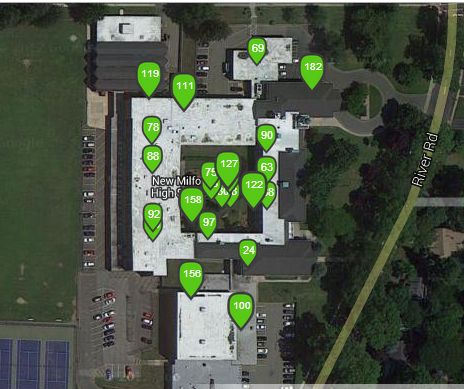
It was our desire and quest to create a school culture and learning environments that were more reminiscent of the real world that our learners would soon be a part of that drove change in this area. When I reflect upon how the program has evolved into it's current state I cannot help but to think about the most important change that was made recently.  It was during the summer that Ron Watson, the NM District IT Director, and I met to discuss the future of BYOD at NMHS. Up until this point we had students sign off on a paper guideline sheet after which I created a username and password for them to access the secure guest network.  This information was then passed on to Ron and each student that filled out the form was granted access.  There is no doubt in my mind that this process limited the amount of students who opted to bring their own mobile learning devices to school. I can't thank Ron enough for putting students first! Speaking of Ron, he just informed me that we had 460 unique devices connect to our guest Internet network yesterday (535 for the week) at my school. This is fairly significant as we only have 650 students and 53 staff members.  Take a look at the traffic at each access point below.


After critically analyzing our process and the culture of NMHS it was decided to change how we went about allowing students to access the Internet.  We decided to trash the old process reliant on paper and emails by replacing it with a seamless alternative that empowered students to want to bring their mobile devices to school.  This week I revealed these changes to our students.  While encouraging them to bring in their tools I explained that they could now access the Internet immediately with their current passwords and usernames that they have used to log onto school computers during their entire NMHS careers.  All they had to do now was bring in their device, select the guest network, enter their username/password, and check the box to agree to the terms of use. Then wallah, they would be connected to the Internet. Below is the terms that each student now has to agree to in order to access the Internet:


NMHS students and parents/guardians fully acknowledge that use of a personal device on the premises of New Milford High School is subject to all guidelines, rules and regulations governing acceptable use as established by the New Milford Public Schools Board of Education, Policy #2361 and Regulation R2361.  It is further understood that use of a personal device is restricted to those activities as required or related to the student's program of study and any use otherwise may be subject to disciplinary action including loss of device use privileges. Students WILL NOT access websites with inappropriate content using a 3G or 4G connection. Students and parents understand/agree that New Milford High School is NOT responsible for any damage or theft that may occur to the laptop while on school property. 
By logging into the New Milford wireless network, they are accepting the terms of the New Milford Student Responsible Use Guidelines. Once on the New Milford wireless network all users will have filtered Internet access just as they would on a district-owned device. 

Our BYOD initiative at NMHS has succeeded and grown up to this point based on the basic premise of trust and respect.  Yes, we have policies in place, the right infrastructure, and support our teachers with professional development and guidance. However, the most important elements stem from the fact that we trust our students to use their devices as tools for learning, enhanced productivity, and to conduct better research.  Time is spent working with them on digital citizenship and the creation of positive digital footprints that they can be proud of.  We also respect them as learners growing up in the digital age where these tools are playing a greater role in the world we are preparing them to succeed in.  When creating a BYOD initiative grounded in these principles the possibilities are endless.

What do you think are the keys to a successful BYOD initiative?

Sunday, December 6, 2015

Implementing Mobile Devices With a Focus on Learning

The following post is a modified excerpt from Uncommon Learning.

Mobile learning provides enhanced collaboration among learners, access to information, and a deeper contextualization of learning. Hypothetically, effective mobile learning can empower learners by enabling them to better assess and select relevant information, redefine their goals, and reconsider their understanding of concepts within a shifting and growing frame of reference (the information context).” — Marguerite L. Koole (2009) 

No one will deny the impact that mobile is having on the world.  All one has to do is take a look at how mobile devices are changing everyone’s perception of computing as it is more accessible and personal than ever. Over the years I have written extensively on the topic, including a chapter in my new book Uncommon Learning.  As a principal I quickly saw the potential in mobile learning and as a result our school became the first to embrace Bring Your Own Device (BYOD) back in 2010. 

Mobile devices offer a new and exciting avenue to engage students and promote learning while increasing academic achievement. Research by Cristol and Gimbert (2013) found that students utilizing mobile learning devices scored, on average, 52.34 points higher on the state assessments than their peers who did not use them. Students are more connected than ever with their devices, and it is necessary for teachers to capitalize on this opportunity to drive student learning and outcomes.  With any initiative, especially BYOD or 1:1, the focus has to be on learning. 

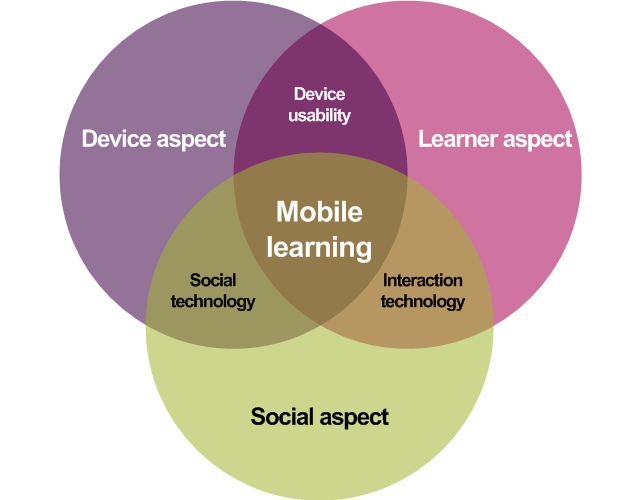
Koole’s (2009) Framework for the Rational Analysis of Mobile Education (FRAME) model provides a more holistic framework for mobile learning. In this framework, mobile learning is a combination of the interactions among learners, their devices, and other people. Koole provides a useful checklist that schools and educators can refer to when looking to integrate mobile learning effectively as part of a BYOD or 1:1 initiative. 


Image credit: https://mobilelearninginfokit.pbworks.com/f/1314179784/frame-venn-i1.png

Have you considered the following in your mobile learning ecosystem? 

  1. How use of mobile devices might change the process of interactions among learners, communities, and systems 

  2. How learners may most effectively use mobile access to other learners, systems, and devices to recognize and evaluate information and processes to achieve their goals 

  3. How learners can become more independent in navigating through and filtering information; how to prepare them for that change 

Be aware of the many pitfalls that are associated with educational technology. Access alone will not translate into enhanced student learning outcomes.  At the International Center for Leadership in Education (ICLE) my team and I work with schools and districts to get mobile learning initiatives right before an all out rollout. It is critical to plan well ahead of any major BYOD or 1:1 initiative at least a year in advance to ensure that all the necessary elements are in place to support student learning. These elements are listed below, but I encourage you to read this post that provides more detail on each:

  • Infrastructure
  • Shared Vision
  • Strategic Plan
  • Policy Development
  • Professional Development
  • Student/Parent Programs
  • Budget Allocations

I encourage you to take a critical look at the mobile learning initiatives in your district and determine what can be done to improve them. In education there is no such thing as perfection and as such we must always look for opportunities to improve existing initiatives, not just new ones to be implemented. 

Cristol, D., & Gimbert, B. (2013). Academic achievement in BYOD classrooms. Proceedings from QScience 12th World     
          Conference on Mobile and Contextual Learning. mLearn, 15.

Koole, M. L. (2009). A model for framing mobile learning. In M. Ally (Ed.), Mobile learning: Transforming the delivery of 
          education and training (pp. 25–47). Edmonton, AB: Athabasca University Press.

Thursday, July 12, 2012

Streamlining BYOD With ClassLink


After a semester long pilot program with the senior class during the spring of 2011, we rolled out our Bring Your Own Device (BYOD) program to the entire student body in September.  Throughout the entire 2011-2012 school year, we worked to refine our approach, implementation, and learning outcomes for the program.  The model that we developed is customized, based on our student body and overall objectives of the program. 

Students are permitted to use their devices for learning during non-instructional time (i.e. lunch) or in class at the discretion of the teacher.  Mobile learning devices (i.e. cell phones) have been successfully integrated as student response systems using free web 2.0 tools such as Poll Everywhere and Celly.  Smartphones and Internet accessible devices have been used by students to conduct web-based research, take notes using Evernote, manage work through Google Docs or Dropbox, organize their assignments on their calendars, and develop projects with a variety of other tools.  Even though our school has more than enough available technology in four computer labs and two mobile carts, some students are more comfortable working on their own devices.

One thing we quickly realized is that our students owned and brought a diversity of devices to school including smartphones, iTouches, iPads, laptops, and other tablet devices (Kindles, Nooks, Playbooks, etc.).  The challenge then became how to deliver a uniform experience across all devices in order to assist with the teaching and learning process.  The solution came in the form of an award winning, web-based application called ClassLink Launchpad


With ClassLink students and teachers can access a customized dashboard that is pre-loaded with a variety of tools that are used on a regular basis.  I was able to establish the specific tools added to each of the respective dashboard (teacher, student).  The best part is that for both groups the dashboard appears the same no matter the device that is used to login and access it. Below is what the dashboard looks like for my teachers.


Setup was a breeze, which was managed by both representatives from ClassLink and my IT department.  Student and staff information was uploaded from our information management system (PowerSchool) in a seamless fashion. Existing usernames and passwords for both teachers and students could be used to access the ClassLink Launchpad application.  An added bonus for my teachers was that Classlink allowed them access for the first time to their school drive, which we call the p drive.  With this feature on their dashboard they could not only access files that have been saved for years at home, but they could also work from these same files now at home and conveniently save.

We began using ClassLink late in the spring, but are extremely excited about the promise that this solution holds to enhance the teaching and learning culture of our school through BYOD.  There are so many more features that my teachers and I will explore in the coming months.  More training and webinars will be provided for my staff so they are comfortable using ClassLink with learning in in mind.  We will also focus on making students aware of ClassLink and the dashboard that has been specifically created for them.

How do you manage your BYOD program if you have one at your school?  If you don't, what are the factors holding you back?

Sunday, November 23, 2014

A Wake Up Call For School Leaders

So the other day I tweeted out this comment, “I am amazed each day to see so much educational progress in my Twitter feed. This should be the norm, not the exception.” Many people in education talk a great game when it comes to the effective use of technology, but the results (lack there of) speak for themselves. I constantly see and hear about leaders who tout themselves in a way that makes others develop a perception that they actually know something about the effective integration of a variety of technology tools to improve professional practice. However, once you get past the rhetoric you quickly realize that it is just talk with a clear lack of substance.  This is not to say that they are unwilling to learn or embrace significant change in this area.  It just hasn’t happened yet, at least from my view.  Thus, the use of social media in schools by educators continues to be an uphill battle.  


Image credit: http://dangerouslyirrelevant.org/wp-content/uploads/2014/07/ifleadersdontgetit.png

For those educators and schools that are either resistant to or unsure about using social media, I challenge you to move from a fixed to a growth mindset to create schools that work better for kids and establish relevance as a leader in your district, school, or classroom.

  • Begin to strategically utilize an array of free social media tools such as Twitter and Facebook to communicate important information (student honors, staff accomplishments, meetings, emergency information) to stakeholders in real-time. Consistency aligned with intent is key.  
  • Take control of you public relations by becoming the storyteller-in-chief to produce a constant stream of positive news.  If you don't share your story someone else will and you then run the chance that it will not be positive. Stop reacting to public relations situations you have limited control of and begin to be more proactive. When supplying a constant stream of positive news you will help to mitigate any negative stories that might arise.  
  • Establishing a brand presence should no longer be restricted to the business world when schools and districts now have the tools at their fingertips to do this in a cost-effective manner. Simply communicating and telling your story with social media tools can accomplish this. When you do, the brand presence develops solely based on the admirable work that is taking place in your district, school, or classroom.
  • Connect with experts, peers, and practitioners across the globe to grow professionally through knowledge acquisition, resource sharing, engaged discussion, and to receive feedback. This will not only save you time and money, but will open up your eyes to infinite possibilities to truly become a digital leader. Who would not want to tap into countless opportunities that arise through conversations and transparency in online spaces? Don't wait another second to start building a Personal Learning Network (PLN).
  • If you are an administrator, stop supporting or enforcing a gatekeeper approach and allow educators to use free social media tools to engage learners, unleash their creativity, and enhance learning. Hiding behind CIPA is just an excuse for not wanting to give up control.  If you want students that are real world or future ready, they must be allowed to use the tools that are prevalent now in this world.
  • Schools are missing a golden opportunity and failing students by not teaching digital responsibility/citizenship through the effective use of social media. We need to begin to empower students to take more ownership of their learning by promoting Bring Your Own Device (BYOD) and the use of mobile learning devices if schools do not have the means to go 1:1. By BYOD I don’t mean just allowing kids to bring in and use their own devices in the hallways and during lunch. That is not BYOD. Real BYOD initiatives allow students to enhance/support their learning experience, increase productivity, conduct better research, and become more digitally literate. 

It is time for the profession of education to catch up to society. In order to start moving schools in a better direction we must help leaders experience the true value of technology.  Once this happens they can begin to better model expectations for others, which will result in sustainable changes leading to transformation. Our students deserve and demand better.  Together we can continue to be the change that we want to see in education.

Wednesday, November 20, 2013

BYOD and the Paperless Classroom

At New Milford High School teachers are adapting their professional practice as we continue to evolve into a Bring Your Own Device school where student-owned technology integrated effectively.  NMHS teachers are also beginning to to integrate social media tools that are blocked and banned in the majority of schools across the country.  Ms. Smith’s science class has gone paperless. Students complete assignments whether it’s homework, class work, projects and tests all online using various websites, such as, Edmodo, Tumblr and Instagram on their BYOD devices. They also use their smart phones, iPads, iPods and digital cameras to take notes or to capture information. All pictures, notes and assignments are posted on the websites, e-mailed or placed on their private homework blogs. This has led to more student engagement, accountability and participation in the classroom, peer reviews and instant feedback to the students on how they are progressing. 


Image credit: http://www.packwomantech.com/byod-pros-and-cons.html

In Chemistry, Marine Biology and Bioethics Studies, every week each student makes two reflective and analytical posts on their blogs (Tumblr, Wordpress, Blogger, Pinterest or Weebly) exploring what has been happening globally or locally, either on TV or the Internet, and then making connections to what they have been learning in class. They are taking charge of what they want to learn about and are interested in science. Some examples of their blogs can be found at the following links: 


Students also used Instagram as a communication tool (like texting) as a way to give feedback, make comments and to reflect on what they have been learning. This works extremely well in Bioethical Studies, where some students may be reluctant and shy to express their opinions. One topic had 143 comments in the forty-eight minute period. Using Instagram allowed everyone to have a voice and be heard. They have also used Instagram/Webstagram to send short video when Ms. Smith has been absent to show they have been engaged, completing their work, and staying on task. Make sure you follow Ms. Smith on Twitter.

What tools and techniques are you using to go paperless in your classroom and/or school?

Sunday, July 3, 2016

Asking the Right Questions About Mobile Learning

As of late, I have been engaged in a great amount of work, either assisting districts and schools as they begin to implement mobile learning (1:1, BYOD) or helping them get their programs on track.  Over six and a half years ago, I helped successfully implement a Bring Your Own Device initiative in my school. Not only were we the first to do it in my state, but there weren't many great examples to pull from at the time.  Thus, many lessons were learned the hard way. It is important to remember that change has to be treated like a process as opposed to one single event. The success of mobile learning relies on proper planning, reflection, and evaluation to improve. 

The key to successfully implementing sustainable change begins with asking the right question(s). Below are some questions to help you ascertain where you are, but more importantly, where you want to be with either 1:1 or BYOD. 
  • Is your infrastructure ready? Has an infrastructure audit been completed?
  • Have you developed a shared vision that takes into account staff, student, and community input? For success, all stakeholders must be on board and have clear outcomes developed.
  • Have you developed a strategic plan to ensure the initiative will positively impact student learning? How will you measure success and evaluate effectiveness? Has curriculum been updated and other resources explored?
  • Have you created policies that protect students and staff while promoting creativity?
  • Has staff been trained in digital pedagogy (lesson/project design, assessment, etc.)? Do they possess the confidence to integrate the devices with purpose to support/enhance learning? Have administrators been trained on digital pedagogical techniques in order to provide valuable feedback to staff? Have fears and challenges been addressed? How will equity be ensured in a BYOD environment? What will you do if students forget their devices, don’t have them, or have no access to WiFi outside of school?
  • Has a plan been developed to train students? What will be done to educate parents?
  • How will you build community support?
  • What evidence will be provided to the BOE and community that the initiative is a success?
Determine where you want to be and how you are going to get there with your mobile initiative. Once you have answers to the previous questions, reflect on the drivers of a successful mobile learning initiative to ensure that the stage is set for improved student learning outcomes. 


Friday, January 22, 2016

5 Steps Toward Building Successful Digital Communities Infused With Rigor and Relevance

A dynamic combination of mindset, behaviors, and skills is required for schools to become places where social media and digital tools are integral and beneficial parts of a rigorous program and where they work symbiotically with active, engaged, and applicable learning. 
How can we take the greatest advantage of this moment in time and create compelling and challenging learning spaces for students? 


Image credit: https://etsmagazine.files.wordpress.com/

The most important things to do are to give up control and to trust students and their teachers to use real-world tools to unleash creativity and a passion for learning. After putting these tenets in the foundation, the specifics can take several different forms: 


Step 1

Realize that social media is a predominant tool in the world. It fosters personalization, creativity, and collaboration, giving students infinite ways in which to create artifacts of their learning and knowledge. 


Step 2

If 1:1 is not in the cards make use of devices students already have, know, and use. Bring Your Own Device (BYOD) signals to kids that teachers know and understand their basic makeup. 
Employing the energy surrounding personal devices allows them to use the tools that help them do what they do better. BYOD enhances learning, increases productivity, allows students to grow their research skills, and gives teachers the chance to teach appropriate digital responsibility. 

Step 3

Create spaces for making, collaborating, and tinkering. Give students chances to build and create using real-world tools (wood shop, electronics, metal work, and coding stations) and to solve open-ended, real-world problems. Bring play back into the picture. These spaces provide students with challenging problems to solve where there is no one correct solution. Through self- directed learning, students are driven to find solutions to create a product that has value. 

Step 4

Structure schools so that they more accurately reflect the real world. Ubiquitous connectivity, charging stations, and casual zones that promote conversation and play increase students’ sense of belonging and engagement. Digitally astute students engage through such models as blended learning, flipped classrooms, games, makerspaces, and virtual learning

Step 5

Give students access to open courseware and open source technology. Inherent in these approaches is a high level of personalization and choice about what to focus on, which in turn leads to greater ownership over learning and personalized ways to demonstrate understanding. 

Ambitious, successful teaching and learning have become inherently intertwined with the digital world. Educators must be able to develop and enact rigorous, relevant instructional methods and formats while using digital tools effectively to underpin their instruction. Students and teachers can transform learning so that it not only prepares them to excel in academic life, but also endows them with essential digital age skills. 

Wednesday, December 18, 2013

Be Present

There is no better way to get the pulse of a school as a leader than to be in classrooms.  I have never considered myself one to be tied to a desk and/or office, but the managerial aspects of the position and ridiculous amounts of paperwork catch up to you at some point.  This year educators in NJ, like many other states across the nation, are still adjusting to new mandates related to teacher evaluation and tenure changes.  Here we call it Achieve NJ.  The toll that all of these new directives - from SGO’s, to SGP’s to PDP’s - has taken on administrators and teachers has been quite dramatic.  In my case, none more than the never-ending time sap dedicated to paperwork and meetings.  This is our new reality.

Image credit: http://algetler.com/executive-presence-is-a-leadership-skill/

One of the mandates in particular has resulted in an increase in observations of tenured staff members. This is probably the one area of directed and mandated change that I have come to appreciate.  Why might you ask? It has resulted in my administrative team and I being in classrooms more often and regularly. Now, the beginning of the year was extremely rough as over six of the seven hours that my students were in school were spent conducting pre-conferences, observations, write-ups, and post-conferences.  After only a few months, the four of us that comprise the NMHS Administrative team have conducted co-observations, developed a common language and look fors, and have mastered the McREL tool that we use to observe staff.  Working together we are not only getting into more classrooms, but we have also developed a streamlined process using shared documents in Google Drive.  

The journey thus far has not been easy, but there now is a silver lining.  Once we became comfortable with the new mandates and how each impacted our professional practice we were able to lay out a vision for a renewed focus on the work we do that truly matters.  The only way to accomplish this was to become even more present by developing protocols to ensure we are in classrooms each day.  Even with the seemingly endless burden imposed by state mandates, we developed a walk-through procedure in order to not only know what is going on in our building, but to also better engage teachers and students in learning conversations.  

Our walks over the past two weeks have reaffirmed our belief in the innovative work taking place here at New Milford High School.  More importantly, they have been a catalyst for positive dialogue on what we can do as a school community to improve and celebrate our collective accomplishments. These rich conversations were just not taking place due to the pressure-filled environment that has been created as a result of education reform in this state.  Post-conferences have focused on how one can “prove” that he/she is meeting the criteria contained in a standards-based rubric, especially with uploaded artifacts.  On the other hand, our walks have reinvigorated our belief in public education and the amazing authentic and meaningful work teachers and students do each day.  Here is just a snippet of what I have seen or experienced in the past week:

  • An English teacher having every student in her Film Studies class share their presentation with me on Google Drive minutes after I attended a class.
  • Engineering students showing off the bridge they had just collaboratively created.
  • A pedagogically sound BYOD lesson in English where an equitable environment was created using both student and school-owned technology.
  • A History teacher having students use Socrative on Chromebooks.
  • Document Based Questions (DBQ’s) being administered in a history class.
  • Digital photography students working on editing the photos they just took on a recent trip to Rockefeller Center, Times Square, and Bryant Park in NYC.
  • A Math teacher using Poll Everywhere in AP Statistics to check for understanding.
  • A math teacher diligently working with students as they participated in a cooperative learning activity.
  • Students in our new Makerspace constantly tinkering, hacking, inventing, and creating.
  • Numerous teachers assessing learning in both summative and formative formats.
Picture from recent walk: BYOD and equity (student + school owned tech)


I think you get the point. Being present in our classrooms and other learning areas of our buildings cannot be overstated.  Even in the face of relentless pressures and mandates that don’t make much sense, it is our duty to be instructional leaders, cheerleaders, guides, mentors, and change agents.  This can only happen if we know what is going on in our schools, connect with both teachers and students alike, and provide positive as well as constructive feedback on what we see. Most importantly however is the mere fact that our presence will reaffirm what we do in the most important profession.  The work that I am seeing from my staff and students serves as an inspiration.  When I go into classrooms I am eagerly anticipating what I will see next.  Don’t succumb to the myriad of excuses that education reform provides each of us today not to be in classrooms.  Be present! 

Sunday, January 20, 2019

Are You a Critical Consumer?

Digital literacy is more important now than it has ever been.  The exponential evolution if the Internet and social media tools have allowed for the quick sharing of knowledge, ideas, images, videos, and opinions.  The result has been a double-edged sword.  In one respect everyone with a  smartphone has instant access to information at any time and from anywhere. I for one love the fact that I can get up to the minute news, sports scores, and weather in the palm of my hand. However, there is a downside that is beginning to plague society. We have seen an influx of misinformation, claims of “fake” news, inaccurate facts, distortion of the truth, broad claims, doctored results, and opinions with not much substance behind them.  Now more than ever we must not only teach our kids to be critical consumers of digital content, but we must also model the same. 


The education space is not immune to some of the prevalent issues and challenges described above.  This is not to say that amazing ideas and strategies aren’t being shared. In fact, I for one benefitted greatly as a principal when I learned about something shared on social media and then either implemented or adapted it in a way that bolstered the transformation efforts at my school.  Case in point.  As we explored moving towards Bring Your Own Device (BYOD) in 2010, I was able to glean powerful insights and evidence of efficacy from the Forsyth County School District in Georgia. The content they shared included policies, procedures, pedagogical techniques, and professional development, but more importantly, tangible improvement results.  Motivated and inspired I then began to seek out research and more examples of successful implementation that aligned with our goals while addressing specific challenges.

Going BYOD sounded like a great idea based on what I had either read or saw online. However, not everything I consumed addressed the realities we faced as a school. Some of were too “fluffy” or not practical.  It is important when reading a blog post or article to look beyond what in theory sounds good, but in practice might not lead to improvement.  Going beyond surface level opinions and ideas is really at the heart of critical consumption.  Since many of my queries when out through Twitter at the time that is how I received the majority of the information for consumption. As more and more tools and pathways have emerged to allow educators to share it is incumbent upon all of us to take a more in-depth look so that something isn’t done just for the sake of doing it or because it sounds really good.  
“Just because something sounds good on Twitter or looks good on Pinterest doesn’t mean it is an effective practice.”
The quote above has really helped ground my approach to what I consume and then ultimately use to improve professional practice.  It also extends well beyond social media to articles, books, keynotes, workshops, and presentations. We must acknowledge that with all of the great ideas and strategies there is an equal amount that just isn’t very good regardless of the hype surrounding them. By not good I mean that there will be difficulties in either implementing at scale or showing, not just talking about, better results.  To assist in taking a critical lens to what we see or hear consider the following questions:
  • Why is this idea or strategy good for my classroom, school, district, organization or professional growth?
  • How will it positively impact learners beyond just engagement?
  • Does it align to peer-reviewed research?
  • Is it realistic given culture, budgetary, demographic, socioeconomic, and facility challenges?
  • What qualitative and quantitative measures can be used as evidence to validate whether or not it is effective at improving outcomes? 
  • How can it be sustained and scaled?

Sharing will not and should not stop. Becoming a connected educator changed my entire trajectory thanks to what I was and continue to be able to glean from my Personal Learning Network (PLN) in addition an array of other means to get information discussed in this post. It is up to you to be a critical consumer to separate quality from what in theory seems like a great idea, but in practice won’t get the results that learners and educators are seeking. Sounding good just doesn’t cut it when the bold new world demands more from our learners.