Showing posts with label Change. Show all posts

Sunday, August 31, 2025

Shifting the Narrative From "We Can't" to "How Can We?"

Change is hard. Actually, it is really hard. Not only have I written extensively about this fact for years, but I also suspect that everyone reading this post has had a similar experience.  One main reason for this is a tendency to focus on things we cannot control, which redirects energy to the wrong things. The end result is a thought process about why we can’t change or improve our practice, something I discussed in detail recently on my podcast, Unpacking the Backpack. Change can and will happen if we focus on the right question. 

A pervasive mindset of "we can't" often hinders progress. It's a phrase that stifles innovation and dismisses new ideas before they even have a chance to take root. To genuinely prepare students for a disruptive world, both school leaders and teachers must make a fundamental shift: from dwelling on limitations to proactively asking, "How can we?" This isn't just about forced optimism; it's a strategic framework for finding solutions, leveraging collective strength, and fostering a culture of continuous learning.

The Leader's Role: Cultivating a Solutions-Oriented Culture

A leader's response to a challenge sets the tone for the entire school. Instead of listing reasons why a new initiative is impossible—"We can't do that because we don't have the time or resources"—an effective leader asks, "How can we achieve this goal given our current constraints?" This subtle change in language shifts the focus from limitations to possibilities. By modeling this approach, leaders empower teachers and show that their professional expertise is valued. This leadership style builds a sense of shared ownership and trust. As noted by Leithwood et al. (2004), leaders who promote a clear vision and provide genuine support for their staff are critical to creating a positive school culture and significantly improving school effectiveness. They transform the conversation from a list of barriers into a collaborative problem-solving session where everyone is an active participant in finding a way forward.

The Teacher's Role: From Data Judgment to Growth Roadmap

For teachers, embracing the "how can we?" mindset often means reframing the purpose of student data. Instead of viewing it as a judgment on their teaching—"I can't get everyone to mastery"—they see it as a roadmap for growth. For example, when faced with widespread learning gaps, a teacher can shift the question to, "How can we use diagnostic data to adjust our initial instruction and prevent these gaps from widening?" This approach encourages teachers to dive deep into student work and assessment results, pinpointing specific areas of need and then collaboratively designing targeted interventions. Marzano, Pickering, and Pollock (2001) demonstrated that data-informed instructional strategies, applied with fidelity, have a profound impact on student achievement. This isn't about working harder; it's about working smarter, using evidence to guide decisions and refine practices.

The Collective Effort: Collaboration as a Catalyst for Change

The "how can we?" philosophy thrives in a strong Professional Learning Community (PLC). Instead of a teacher lamenting, "I can't seem to reach this student," a PLC asks, "How can we, as a team, pool our expertise and resources to ensure this student succeeds?" This collective approach acknowledges that a single teacher shouldn't have to solve every challenge alone. When teachers regularly collaborate to analyze student work and share successful strategies, the group's collective intelligence becomes a powerful engine for improvement. Effective PLCs focused on learning, rather than simply on teaching, develop a shared responsibility for student outcomes. This collaborative environment transforms individual struggles into shared challenges, encouraging a spirit of teamwork and innovation that can tackle even the most persistent problems.

The Path Forward: A Commitment to Iteration and Resilience

Cultivating a "how can we?" culture requires a commitment to continuous learning and iterative improvement, something I discuss in detail in Digital Leadership. It accepts that not every solution will be perfect on the first try. When an initiative faces initial difficulties, the mindset shifts from "It didn't work" to "How can we refine this approach based on what we've learned?"

This resilience, combined with a willingness to experiment and reflect, is foundational to genuine progress. Black and Wiliam (1998) famously demonstrated the power of formative assessment and feedback in improving student learning, highlighting that continuous adjustment based on evidence is key. By embracing this ethos of inquiry, leaders and teachers can unlock an unprecedented potential for growth, transforming their school community into a place where student success isn't just a hope, but a systematic outcome.

Shifting from "we can't" to "how can we?" isn't a silver bullet, but it is the essential mindset for navigating the complexities of education today. It's about empowering every member of the school community to be an active agent of change, fostering innovation, and ultimately, building a school where student success is not just hoped for, but systematically engineered.

Black, P., & Wiliam, D. (1998). Inside the black box: Raising standards through classroom assessment. Phi Delta Kappan, 80(2), 139-148.

Leithwood, K., Louis, K. S., Anderson, S., & Wahlstrom, K. (2004). How leadership influences student learning: A review of research for the Learning from Leadership Project. The Wallace Foundation. 

Marzano, R. J., Pickering, D., & Pollock, J. E. (2001). Classroom instruction that works: Research-based strategies for increasing student achievement. Association for Supervision and Curriculum Development. 

Strong, M. (2009). Effective teacher induction and mentoring programs: A review of research literature and implications for policy. Review of Educational Research, 79(1), 173-201.


Sunday, July 20, 2025

The Art of Adaptation: Navigating and Justifying Change

Justifying change isn't just about presenting an idea; it's about building the bridge from current challenges to future possibilities, making the journey clear and compelling for everyone involved. Recently, on Unpacking the Backpack, I shared some thoughts on the topic after revisiting a blog post I wrote in 2024. Listen on Spotify or wherever you access your favorite podcasts. Below are some expanded thoughts on the topic, along with relevant research.

Change is a constant in education, driven by evolving student needs, new pedagogical research, technological advancements, and shifting societal expectations. Justifying these changes effectively within a school or district requires a clear articulation of the "why," backed by evidence, and a commitment to inclusive communication. When stakeholders, from teachers and parents to students and community members, understand the rationale and benefits, resistance can transform into enthusiastic support.

The Imperative for Change 

In a disruptive world, change is a constant. New research emerges on how children learn best, technology offers innovative teaching tools, and societal demands require schools to prepare students for an ever-changing world. For instance, the shift towards personalized learning into the curriculum isn't arbitrary; it's a response to research indicating better student outcomes (Durlak et al., 2011). Ignoring these shifts can lead to stagnant educational practices that fail to serve students effectively, potentially leaving them unprepared for future challenges (Fullan, 2015).

Building a Data-Enhanced Justification

Effective justification for change in K-12 relies heavily on data and evidence. This isn't just about standardized test scores; it encompasses a broader range of qualitative and quantitative indicators. For example, suppose a school is considering a new literacy program, presenting data on current reading comprehension levels. In that case, student engagement in reading or teacher feedback on existing resources provides a strong case. A decline in student motivation or an increase in behavioral issues may justify a new approach to classroom management or professional learning that focuses on engagement.

Benchmarking against successful schools or districts can also provide powerful evidence. If a new teaching methodology has significantly improved student outcomes in similar settings, this data can be compelling. Educational leaders often employ action research or pilot programs to gather localized data, demonstrating the potential impact of a change before implementing it more widely (Mills, 2018).

So why am I suggesting a move away from a data-driven mindset? Data-enhanced change recognizes that while data provides crucial insights, human judgment, experience, and qualitative factors are equally vital for successful implementation, fostering a more nuanced and adaptable approach. Unlike purely data-driven change, which can sometimes overlook contextual complexities and human elements, data-enhanced change integrates quantitative evidence with stakeholder input and practical wisdom to guide decisions.

Communicating the Vision and Benefits

Once the need for change is established, it's crucial to articulate a clear vision of the improved future state and the tangible benefits it will bring to students, staff, and the wider school community. For instance, if a district is moving to a new grading system, the communication should explain how it will provide more accurate feedback to students and parents, reduce teacher workload, or better reflect student mastery. For teachers, the benefits might include more effective teaching tools, reduced stress, or enhanced professional learning opportunities. For parents, it could be clearer communication about student progress or improved safety protocols. 

As I shared in Digital Leadership, active and transparent communication, including town hall meetings, dedicated websites, and regular updates, is paramount. Addressing potential anxieties and providing professional learning opportunities for staff are essential to mitigating resistance and fostering a sense of shared purpose (DuFour & DuFour, 2012).

Overcoming Resistance and Building Embracement 

Resistance to change often stems from comfort with the familiar, concerns about increased workload, or skepticism about the benefits. Acknowledging these concerns openly and creating channels for genuine feedback are critical. Engaging stakeholders in the change process itself significantly increases embracement. This could involve forming committees with teacher and parent representation, piloting new programs in a few classrooms before scaling, or providing ample training and support. Empowering "change champions" – respected teachers or staff members who embrace the new initiative – can also be highly effective in influencing peers (Kotter, 2012). By developing a collaborative environment where voices are heard and concerns are addressed, leaders can transform potential obstacles into opportunities for collective growth and improved student learning.

Justifying change is crucial for growth, driven by evolving student needs, research, and technology. This requires a data-enhanced approach that combines evidence with human judgment, clearly articulating the vision and benefits to stakeholders. By prioritizing open communication and active engagement, educators can transform resistance into widespread support for necessary reforms.

Durlak, J. A., Weissberg, R. P., Dymnicki, A. B., Taylor, R. D., & Schellinger, K. B. (2011). The impact of enhancing students’ social and emotional learning: A meta-analysis of school-based universal interventions. Child Development, 82(1), 405-432.

DuFour, R., & DuFour, R. (2012). Learning by doing: A handbook for professional learning communities at work (2nd ed.). Solution Tree Press.

Fullan, M. (2015). The new meaning of educational change (5th ed.). Teachers College Press.

Kotter, J. P. (2012). Leading change. Harvard Business Review Press.

Mills, G. E. (2018). Action research: A guide for the teacher researcher (6th ed.). Pearson.


Sunday, February 16, 2025

Cultivating Efficacy: Leading with Impact

I love talking about leadership and am always intrigued to review what I have written on the topic over the years.  Recently, on my podcast Unpacking the Backpack, I revisited another 2019 blog post.  The focus was on efficacy, an often misunderstood topic in the education space.  Take a listen on Spotify or wherever you access your favorite podcasts. You can also read the blog post HERE. Below are some expanded thoughts on the topic. 

Leadership isn't just about holding a title; it's about driving meaningful change. Effective leaders are those who cultivate a strong sense of efficacy – the belief in their ability to impact their students, staff, and community positively. This belief isn't just wishful thinking; it's a cultivated mindset grounded in specific actions and strategies backed by results in the form of evidence. Here are some more detailed thoughts:

Accountability matters and is a reality in our work.  We are accountable first and foremost to our learners.  Statements and claims didn’t cut it, and this was more than fair.  The term efficacy kept finding its way into the conversation and my head. In the real world of education efficacy matters and it is important that this is part of the larger conversation when it comes to change. It is a word that, in my opinion, has to be a part of our daily vocabulary and practice. Simply put, efficacy is the degree to which desired outcomes and goals are achieved.

So, how do we, as educational leaders, build and maintain this crucial sense of efficacy? It starts with self-awareness. Reflect on your strengths and areas for growth. What are your core values as an educator? What experiences have shaped your leadership style? Understanding your own beliefs and motivations is the foundation upon which effective leadership is built.

Next, focus on building strong relationships. Efficacy isn't a solitary pursuit. It thrives in collaborative environments. Invest time in getting to know your staff, students, and parents. Actively listen to their concerns, celebrate their successes, and create a culture of mutual respect and trust. When people feel heard and valued, they are more likely to be engaged and invested in the shared goals of the school.

A key component of efficacy is setting clear, achievable goals. Avoid vague aspirations and, instead, focus on specific, measurable, attainable, relevant, and time-bound (SMART) objectives. Break down larger goals into smaller, manageable steps. This allows for consistent progress and provides tangible evidence of your impact, further reinforcing your sense of efficacy. Celebrate these milestones with your team, acknowledging their contributions and fostering a sense of shared accomplishment.


Embrace continuous learning. In this disruptive world, the landscape is constantly evolving. Stay informed about current research, effective practices, and innovative approaches to teaching and learning. Encourage professional growth opportunities for your staff and create a culture of ongoing learning within your school. By continuously expanding your knowledge and competencies, you'll be better equipped to navigate challenges and make informed decisions, boosting your confidence and efficacy. 

Remember that setbacks are inevitable. Efficacy isn't about avoiding challenges; it's about how you respond to them. View setbacks as learning opportunities. Analyze what went wrong, identify areas for improvement, and adjust your approach accordingly. Resilience and a growth mindset are essential for maintaining efficacy in the face of adversity.

Leading with efficacy is a journey, not a destination. It requires continuous effort, self-reflection, and a genuine commitment to the success of your students, staff, and community. By focusing on self-awareness, relationship building, goal setting, continuous learning, and resilience, you can cultivate a strong sense of efficacy and lead with impact, making a real difference in the lives of those you serve.


Sunday, October 13, 2024

The Art of Justifying Change

Change is an inevitable constant in education. If it isn’t, it surely should be. While it can be met with resistance, effective leaders understand that it is often necessary for growth, innovation, and, most importantly, to meet the needs of students. As a principal, I vividly remember spearheading several major change initiatives such as improved grading practices, Bring Your Own Device (BYOD), selection and implementation of a new evaluation system, development of the Academies at NMHS, adoption of virtual courses, and establishing learning walk protocols.  These were all significant shifts that required justification.  

Change without justification is a leap into the dark. Illuminate your path with reason to help others see the value. 

To successfully justify change, leaders must articulate a compelling vision, address concerns, and provide support. Here are some things to consider. 

Articulate a Compelling Vision

A clear and inspiring vision is essential for motivating people to embrace different and better. Leaders should paint a picture of the future state, emphasizing the benefits of the specific change and how it aligns with overall goals. This vision should be communicated effectively through a multi-faceted approach, something I emphasize in Digital Leadership.  Ensuring everyone understands the "why" behind the change is vital. 

Present research and evidence

These play a crucial role in justifying change by providing a solid foundation for decision-making. By examining quantitative data, showcasing qualitative evidence, and sharing case studies, leaders can illustrate trends, uncover potential problems, and evaluate the effectiveness of different approaches. People want to know that it works, how it can be implemented effectively, and what constitutes success. When presented to educators, this evidence-based approach helps mitigate risks, build trust, and ensure that changes are aligned with the vision and goals. Additionally, research can be used to anticipate potential challenges and develop strategies to address them proactively, ultimately leading to more successful and sustainable change initiatives.

Address Concerns and Questions

Change can be unsettling for many people, leading to concerns and questions. Leaders must be prepared to address these concerns directly and honestly. Acknowledging the challenges and providing reassurance builds trust and alleviates fears. It's important to listen attentively to concerns and clearly explain the decisions made. See the previous paragraph. 

Provide Support and Guidance

Implementing change requires support and guidance. Leaders should provide the necessary resources, professional learning opportunities, feedback, and mentorship to help people acclimate to the new environment. Leaders can empower staff to succeed in the face of change by investing in their growth. Try to avoid drive-by and one-and-done events, as the research is pretty clear that these don’t lead to sustained change. Instead, invest in job-embedded and ongoing professional learning that combines presentations, workshops, coaching, mentoring, strategic planning, and an inspirational keynote here and there. Creating a supportive and inclusive culture can help develop a sense of belonging and reduce resistance to change.

Celebrate Successes

Recognizing and celebrating successes along the way is crucial for maintaining momentum and morale, something Nicki Slaugh and I highlight in Personalize. By highlighting the positive outcomes of change, leaders can reinforce the benefits and encourage continued commitment. This can also help build a sense of accomplishment and pride amongst staff.

Be Patient and Persistent

Change is often a gradual process, and it may take time for people to fully embrace the new and better way of doing things. It is vital to be patient and persistent in the efforts to drive change. By maintaining a positive and supportive attitude, leaders can inspire employees to overcome challenges and achieve the desired outcomes.

By following these guidelines, leaders can effectively justify change and create a positive and productive culture. Remember, change is not just about implementing new processes or technologies; it's about transforming how people work and think. Leaders can ensure a successful transition to a brighter future by inspiring and empowering their most precious resource – the people who actually implement change. 


Sunday, June 11, 2023

The Myth of "Buy-In"

When it comes to leading change, many of us, at some point, have been made to think that we have to get others to buy into a certain strategy, initiative, or idea.  Is this really the right way to proceed? I've never been a fan of the term "buy-in" when it comes to change. It's a phrase that implies that we need to convince people to change rather than inspiring them to actually want to change. In my experience, inspiration is much more powerful than persuasion.

When we try to "sell" people on change, we're often met with resistance. People may be skeptical of the change, or they may not see the value in it. And even if we do manage to get them to "buy-in," their commitment is likely to be superficial. They're not going to be truly invested in the change, and they're not going to go the extra mile to make it happen.

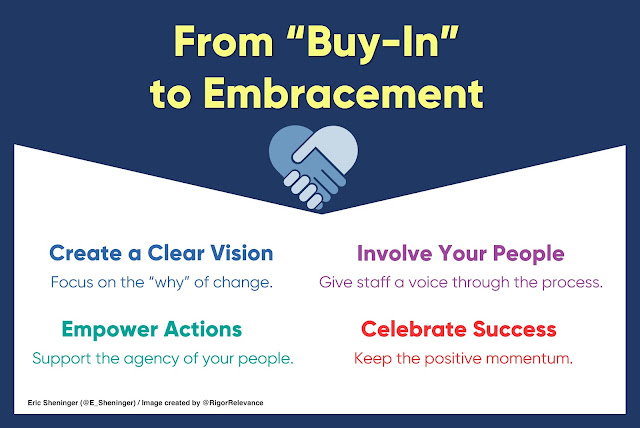
So what's the alternative to "buy-in"? I believe it's embracement, something I elaborated on in Digital Leadership. When people embrace change, they're not just willing to change; they're excited about it. They see the value in the change, and they're committed to making it happen.

So how do we create embracement? Here are a few tips:


  • Start with a clear vision. People need to understand why the change is necessary, and they need to see a clear vision of what the future will look like after the change is implemented.
  • Get people involved in the planning process. When people feel like they have a say in the change, they're more likely to embrace it.
  • Empower people to take action. Don't just tell people what to do. Give them the resources and support they need to make the change happen.
  • Celebrate successes along the way. When people see progress, they're more likely to stay motivated.

Creating embracement takes time and effort, but it's worth it. When people embrace change, they're more likely to be successful. They're also more likely to be happy and engaged in their work. So next time you're faced with a change, don't focus on "buy-in." Focus on creating embracement. It's the key to successful change.


Monday, May 22, 2023

#EDvice: Entry Points for Change

As we all know, navigating change is often a tricky process.  It requires a clear vision, a sound plan for implementation, and patience. Even with all these elements and many others in place, it is rarely a smooth journey.  One of the biggest obstacles to overcome is zeroing in on compelling reasons to change that will lead to better outcomes.  I refer to these as entry points, which can serve as a catalyst for any initiative or strategic plan.  One of the most powerful can be quality research, especially peer-reviewed studies.  I shared the following on social media recently:

Entry points for change are crucial. When trying to get the ball moving, leverage quality research. It can be used to identify areas for improvement to create new and innovative learning methods that better meet the needs of ALL learners. 

In this piece of #EDvice I discuss to vital role research plays in both initiating and sustaining the change process.  


Consider using Google Scholar, which is a great, FREE resource that anyone can use to search for peer-reviewed research on any topic.  Artificial Intelligence can also be used.  I prefer Google Bard over ChatGBT. Recently I asked the following question, "What peer-reviewed research studies support 1:1 laptops in schools?".  Below you can see the response.

There are a number of peer-reviewed research studies that support the use of 1:1 laptops in schools. These studies have found that laptops can improve student achievement, engagement, and motivation. For example, a study by the Pew Research Center found that students who used laptops in the classroom were more likely to say that they were engaged in their schoolwork and that they felt like they were learning more. Additionally, a study by the National Center for Education Statistics found that students who used laptops in the classroom were more likely to say that they enjoyed school and that they were motivated to learn.

Here are some specific examples of the benefits of 1:1 laptops in schools:

  • Laptops can help students to learn more effectively. For example, students can use laptops to access online resources, collaborate with classmates, and create multimedia projects.
  • Laptops can help students to be more engaged in their learning. For example, students can use laptops to take notes, participate in discussions, and complete assignments.
  • Laptops can help students to be more motivated to learn. For example, students can use laptops to explore their interests, learn at their own pace, and get immediate feedback on their work.
  • Of course, there are also some challenges associated with using laptops in schools. For example, laptops can be a distraction, and they can be expensive to purchase and maintain. However, the benefits of using laptops in schools generally outweigh the challenges.

Overall, the research suggests that 1:1 laptops can be a valuable tool for improving student achievement, engagement, and motivation. If you are considering implementing a 1:1 laptop program in your school, it is important to carefully consider the benefits and challenges involved.

I then asked Bard to cite specific studies.  Here is what was provided

  • Bebell, M., & Kay, A. (2010). Laptops and student achievement: Evidence from a large-scale, urban school district. Journal of Research on Technology in Education, 42(4), 357-377.
  • Cheung, A. C. K., & Slavin, R. E. (2013). Effects of one-to-one computing and teacher professional development on student achievement in high school mathematics. American Educational Research Journal, 50(3), 568-596.
  • DeWitt, S. L., & Watson, J. (2013). A review of the research on laptop computers in K-12 education. Journal of Research on Technology in Education, 45(4), 347-369.
  • Suhr, J. L., Johnson, C. C., & Lajoie, S. P. (2010). One-to-one computing: A review of the literature. Journal of Research on Technology in Education, 42(4), 307-329.
  • Watson, J., & DeWitt, S. L. (2010). Laptops and student achievement: A research synthesis. Journal of Research on Technology in Education, 42(4), 329-356.
Research can be a fantastic entry point, but it surely isn't the only one.  Other great options include evidence (qualitative and quantitative) as well as effective professional learning.  For more insight, check out this post


Sunday, May 14, 2023

Tackling Roadblocks to Change

Change is hard because it requires us to step outside of our comfort zone and into the unknown. It means letting go of the familiar and embracing something new. This can be a scary and uncertain process, which is why many people resist change.

There are many reasons why people resist change. Some people are afraid of the unknown. They may worry about what will happen if they change, and they may not be confident in their ability to adapt to new situations. Others may be resistant to change because it requires them to give up something they are comfortable with. For example, a person who is used to working from home may be resistant to the idea of going back to the office.

Change can also be difficult because it requires us to learn new things. This can be a challenge, especially if we are not used to change. Learning new things takes time and effort, and it can be frustrating when we don't see results immediately. However, in a disruptive world, it is a must. 

There are many reasons why change in education is so hard. Some of the most common reasons include:

  • Lack of resources. Schools often lack the resources they need to implement new changes, such as funding, training, and time.
  • Resistance to change. Teachers, administrators, and parents may be resistant to change for a variety of reasons, such as fear of the unknown, lack of trust in new approaches, or concerns about the impact of change on students.
  • Bureaucracy. The education system is often slow to change due to its complex bureaucracy. This can make it difficult to implement new initiatives and get them off the ground.
  • Political pressure. Schools are often under political pressure to maintain the status quo. This can make it difficult to implement changes that are seen as being too radical or controversial.
  • The need for evidence. Schools often need to see evidence that a new approach is effective before they are willing to adopt it. This can be a challenge, as it can take time to collect and analyze data on the effectiveness of new programs.

Despite these challenges, there are many examples of successful educational change, which I have highlighted in Digital Leadership. These changes often involve a combination of factors, such as strong leadership, a clear vision, and the support of key stakeholders. By understanding the reasons why change is so hard, we can better support efforts to improve our schools.

Here are some additional tips for making change in education more successful:

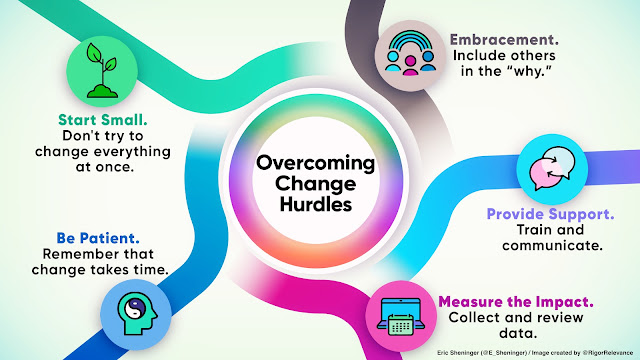
  • Start small. Don't try to change everything at once. Start with small, achievable goals that can be implemented quickly and easily.
  • Get embracement from stakeholders. Make sure that teachers, administrators, parents, and other stakeholders are on board with the change before you implement it.
  • Provide training and support. Teachers and administrators need training on how to implement new changes effectively. They also need support from their colleagues and administrators as they go through the process of change.
  • Measure the impact of change. Collect data on the impact of the change to make sure that it is having the desired effect. This data can be used to make further improvements to the change.
  • Be patient. Change takes time. Don't expect to see results overnight. Be patient and persistent, and eventually, you will see the benefits of change.

Despite the challenges, change can be a positive thing. It can help us to grow and learn, and it can lead to new opportunities. If we can learn to embrace change, we can open ourselves up to a world of possibilities.


Sunday, January 22, 2023

Imparting Value When It Comes to Change

I remember vividly as a young principal when I started to drink the “edtech” Kool-Aid many years ago. It represented a true turning point in how I thought about change in education. Up until this point, my thinking was relatively traditional and as such, so was the culture of my school. However, I was motivated like never before to move beyond the nearly impenetrable walls I had mentally constructed that had inhibited me from moving beyond my comfort zone until this point. It was now time to become a true leader and that required being honest about where not only I was but also the culture of my school.

When I first attempted to channel this excitement into a call to action, I failed miserably. Basically, all I did was talk about what “I” wanted to accomplish and what “I” thought was important when it came to the purposeful use of technology in the classroom as a catalyst to improve outcomes. After some deep internal and external reflection, I soon realized that I failed to help my staff see the value for themselves when it came to shifting their practice in new and innovative ways. Herein lies the reason that most change initiatives fail. If people don’t see the value in what they are being asked to do, the chances increase that they won’t get on board.

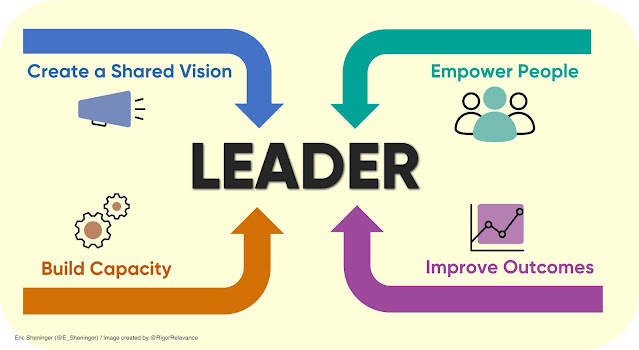
I learned an important lesson that still sticks with me today. Change for the sake of change is often a recipe for disaster. My role as a leader was to alleviate fear, mitigate risk, and create the conditions where my staff wanted to change for their own sake as well as that of their students. While research and data certainly play a pivotal role in showcasing the value of change efforts, the real key is to make everyone part of the solution. Leaders who do this strive to:

  • Create a shared vision
  • Empower people
  • Build capacity
  • Improve outcomes


All of the above elements play a part in achieving collective efficacy, which is the belief that a group can work together effectively to achieve common goals. Some positive outcomes include improved group performance, increased motivation, greater resilience, and better problem-solving.   Collective efficacy is hard to achieve without an initial sense of value in doing things differently.

Leaders need to be attuned to the fact that the world is rapidly evolving, something I discuss in detail in Digital Leadership. Abiding by the status quo doesn’t cut it, no matter where performance indicators reside.  Herein lies a significant challenge when it comes to venturing down an innovative path. Organizations can become more efficient and effective by continuously looking for ways to improve processes and systems, but people need to understand the value from the beginning. Valuing change is critical because it helps to create a culture of continuous improvement and innovation within an organization. When people value change, they are more open to new ideas and approaches and more willing to embrace and adapt to change when necessary.

Sunday, September 11, 2022

Rethinking Normal

It always amazes me that we possess such vivid memories of some experiences yet tend to forget others. As the years' pass, I am always trying to retain as many as possible from my childhood. One that sticks out goes way back to my pre-school years. Now I can’t remember if my twin brother and I were actually in a year-long program or just a set number of days where high school students worked with us. What I do recollect was the teacher, Mrs. McDonald. Years later, she would be my senior class advisor and someone I admired and respected.  

She was always a creative spirit in how she taught and motivated learners in culinary arts and early childhood development. Now I remember only two things from my pre-school years. The first was a big wooden train that all of us would fight over to play with, as it was the most popular toy at the time. Pretty normal, I would say, in the later 1970s. The other memory was of purple cow milk. Until now, “normal” milk was plain or flavored with chocolate or strawberry. Mrs. McDonald pushed us to move beyond our tastebud comfort zones and our perception that you could only put certain additives to flavor milk. We discovered that grape juice in milk looked cool and was quite tasty. She empowered us to rethink normal.


There is no better time than now to rethink education and the practices that are both favored and employed. Now I am not saying to throw out the baby with the bathwater. Instead, my call to action is to fight the urge to teach the way you were taught and lead the way you were led. Change can be a good thing as there is no such thing as perfection in education. This truth presents a constant opportunity to innovate and grow. However, there will always be challenges lurking in various forms. I shared the following in Disruptive Thinking in Our Classrooms:

The human brain is wired to keep us safe, and as a result, we often become averse to change. The status quo and our personal comfort zones create a perceived safety net that is difficult to relinquish. Our past experiences often dictate or influence our current professional practice. When this mindset is combined with silos erected to protect ourselves and organizations from external information and new ideas, it becomes clearer why transformational change is often just an idea that never gets put into motion. 

In a previous post, I shared the image below, which is a great starting point when it comes to re-thinking normal.  


It is ok to challenge conventional wisdom. The world is not sitting back and waiting for us to get on board with disruptive change. While “normal” might seem like the best or safest option, the question is, are we preparing kids for the present and future or the world where we grew up? There is no better time than now to change our practice for the betterment of those who we serve, whether that is students, colleagues, or other stakeholders. It begins with rethinking normal.  

Sunday, June 12, 2022

The Significance of Small Wins

Is there such a thing as a “small” win?  I think we can challenge this notion as the overall impact is in the eye of the beholder. Jude King shared the following:

Small wins can be as important or even more important than the big ones.  And there are two main reasons why.  First, without the small wins, the big one likely won’t happen — we give up in disappointment and frustration before we get to the big win.  The small wins hold the key to momentum.  They infuse us with motivation to keep going.  Second, the big magical moments, that we like to savor happens infrequently.  Those big, breakthrough moments that completely takes our breathe away…there are only so much of them in one lifetime.  That’s partly why we enjoy them so much.  But the small wins are more frequent — what they lack in size they make up for in numbers.

It is human nature to have a desire to “go big” or make a dramatic change at scale.  While we tend to think that this is the ultimate measure of success, the fact of the matter is that these situations are few and far between. 

The challenge then becomes what happens to motivation daily during any change process.  Research has shown that the small wins are just as important, if not more, than the big ones everyone aspires to achieve.  Below is a summary by Stephen Meyer of a study by Amabile & Kramer (2011):

Over the course of four months, researchers at Harvard conducted a study of over 200 employees at seven different companies.  The study required participants to do one simple thing each day – respond to a survey at the end of their workday.  The survey asked about the participants’ mood, motivation level and what they did at work that day.  The study resulted in over 12,000 survey responses in total, which were then analyzed by the researchers.

According to the head researcher, the type of progress that results in high motivation, engagement and positive feelings doesn’t need to be earth shattering.  In fact, it often isn’t.  “They don’t have to be big breakthroughs or huge successes… small wins can lead people to feel terrific,” she stated.

The immense value in small wins resides in the immediate impact they can have on an individual and the collective.  They also work to:

  • Increase motivation
  • Improve morale
  • Provide autonomy
  • Leverage available resources
  • Make the most out of time
  • Serve as a catalyst to learn from problems expeditiously
  • Foster collaboration


I shared the following in Disruptive Thinking in Our Classrooms:

We must not discount even the smallest successes during both good and trying times; doing so is a simple and authentic way to build people up and maintain momentum.  Over time these small wins can morph into catalysts for more extensive change efforts.

In actuality, small wins can be huge.  Never discount their impact as they are crucial in setting the stage for bigger ones in the future.

Amabile, T. M., & Kramer, S. J. (2011). The power of small wins. Harvard Business Review, 89(5), 70-80

Sunday, March 27, 2022

Change Begins with You

When we do things a certain way, we often become comfortable, especially if we are satisfied with the result.  While this might seem perfectly fine on the surface, the truth is that progress can become stagnant.  The fact of the matter is that change will always be needed as employing the same old thinking will continue to lead to the same old results.  My hope is that if you are reading this post, you are open to growth and the pursuit of innovative practices.  That, in my opinion, is the easy part.  The heaving lifting lies in moving the masses towards a common goal. 

The hardest challenge you will face is not changing yourself, but convincing or empowering others to embrace change. 

Changing perception and behavior amongst those you work with and for can possibly be the most complex task you ever take on.  Change is hard.  There is no way to sugarcoat this fact.  It is even harder for people who don’t see the value in doing things differently or are burnt out.  The need to push forward is simple yet profound.  Every student in every classroom and school deserves excellence.  While there will always be a myriad of obstacles, the struggle and effort will pay off. 

So, where does one begin?  I shared the following in Digital Leadership:

A true testament to an exceptional leader, regardless of position, is their ability to convince, persuade, or inspire others to change, especially those who do not want to.  It’s not now about trying to get buy-in but moving others to see the value in the change through embracement.

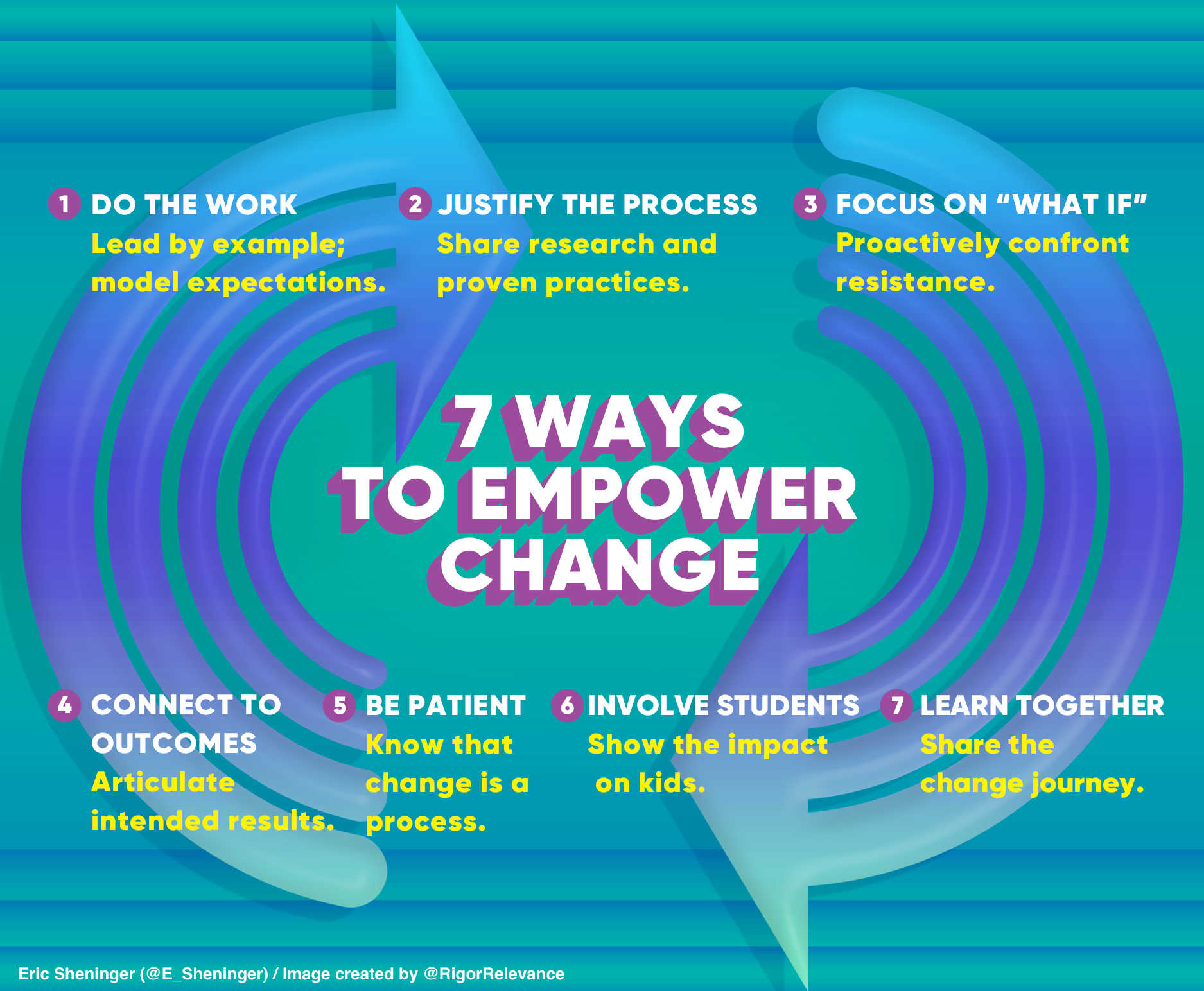
The most challenging yet gratifying work you might ever engage in is empowering your colleagues to change.  Below are some strategies for you to consider when trying to assist your colleagues with changing their professional practice.


  • Do instead of asking.  Impactful change comes from your ability to effectively model expectations for others.  While it might be lonely at first, leading by example is the best way to empower others.
  • Justify with research and proven practices.  Sharing what has been found to work strengthens your call to action.
  • Focus on “what if". Tackle fears and resistance head-on to alleviate concerns by being ready to counter any “yeah but” responses. 
  • Connect to outcomes.  Clearly articulate how the change will improve professional practice resulting in improved student learning and achievement.
  • Be patient (to a point).  Change is a process, not an event.  Treat your colleague like a student and remember how satisfying and rewarding it was when you helped that student succeed.  Help others see the value of the change on their own by taking a step back. 
  • Get students involved.  There is no better way, in my opinion, to convince others to change when educators can see firsthand the impact it has on kids.
  • Learn together.  Encourage colleagues resistant to change to attend professional learning opportunities with you, especially administrators.  If that doesn’t work, make sure you present what you learned at any recent learning experience, either during a faculty meeting or one-on-one.

As with any advice, context matters.  Keep this in mind as you look to implement the strategies presented above.  When it is all said and done, always remember that the most difficult work with the change process involves moving the masses to scale the initiative for the betterment of all learners.  If you are willing to put in the time and work while acknowledging some of the aggravation and stress that naturally comes with dealing with difficult people, a potential positive outcome will be that much sweeter.  

Sunday, March 20, 2022

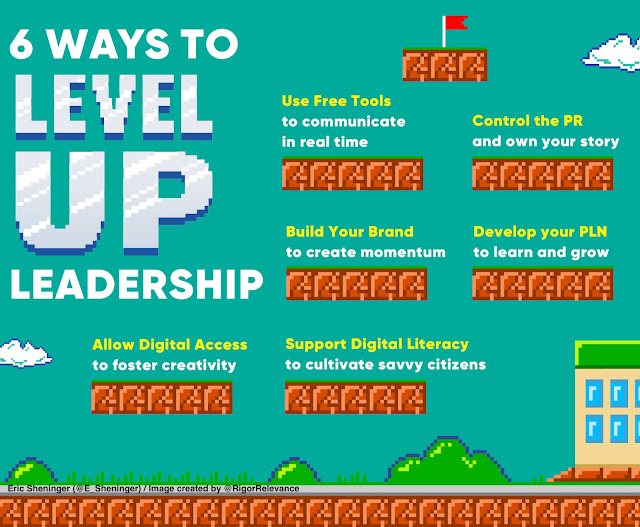
Level Up Your Leadership

Like most kids, past, and present, I loved playing video games.  During my very early years, Atari was the best and only option.  My parents eventually bought an Apple IIe where we needed to use floppy disks to load any meaningful content, which added to our gaming experience.  However, once the Nintendo was invented and stationed in our basement, we toiled away immersed in classics such as Super Mario Brothers, Donkey Kong, and Mike Tyson’s punchout.  Our goal was simple…acquire skills through analysis, practice, and watching others to reach new or more challenging levels.  I can still feel the rush when success was achieved and the bitter disappointment when I came up short.  In the case of the latter, this became motivation to press forward. 

We can take lessons learned from gaming and apply them to our own practice.  If we don’t push ourselves to grow and get better, it becomes increasingly difficult to empower those we work with to do the same.  You get what you model, for better or for worse. 

If leaders don’t get It, change rarely happens. 

In a world where technology is embedded in so many facets of society, it is incumbent upon leaders to look for ways to level up.  Social media is, and still represents, one of the most powerful ways to move a learning culture forward and engage with stakeholders.  For those who are still not seeing any value or are apprehensive by having their toe in the water instead of jumping all the way in, there is no better time than the present to make a change.  I encourage you to shift your mindset in order to create schools that work better for kids and, in the process, establish relevance as a leader, no matter your position.

In Digital Leadership, I presented an array of research and evidence-based strategies that can pave the way for any leader to level up.  I revisit some of these strategies as both a reminder and health-check for you to reflect on where you are, but more importantly, where you would like to be in the near future. 

  • Strategically utilize an array of free tools such as Twitter, Facebook, Instagram, and Tik Tok to communicate real-time information that stakeholders can access on any device.  Consistency aligned with intent is vital.  
  • Become the storyteller-in-chief and take control of your public relations.  If you don't share your story, someone else will, and you then run the chance that it will not be the one you want to be told.  Stop reacting to public relations situations you have limited control of and begin to be more proactive.  When supplying a constant stream of positive news, you will help to mitigate any negative stories that might arise.  
  • Any leader can harness the power of a brandED by telling, not selling, in order to build powerful relationships with stakeholders and empower learning like never before.  A brand presence is no longer restricted to the business world as everyone has access to the tools at their fingertips to do this in a way that won’t break the bank.  Simply communicating and telling your story with social media tools can accomplish this and organically develop your positive brand in the process. 
  • If you are the brightest and most innovative person in the room, you are in the wrong room!  Develop or enhance your Personal Learning Network (PLN) to connect with experts, peers, and practitioners across the globe to grow professionally through knowledge acquisition, resource sharing, engaged discussion, and to receive feedback. 
  • If you are an administrator, work to loosen up filtering policies and allow educators to use digital tools that can engage learners, unleash their creativity, and enhance learning.  As many schools know, CIPA does not require many of these to be blocked.  That’s a local decision. 
  • There is a golden opportunity to teach kids about digital responsibility and positively address their social and emotional needs when digital tools are used with purpose across the curriculum. 

In a disruptive world, societal change happens fast, and this has a ripple effect on education.  Leveling up your leadership flies in the face of the status quo, and “that’s the way we have always done it” to constantly move schools in a better direction.  By consistently chasing growth, you not only learn how to become a better leader, but you also empower those who you serve in the process.

Together we can continue to be the change we want to see in education. 

Sunday, February 20, 2022

Leading With a Swiss Army Knife Approach

How would one define great leadership?  What are the characteristics of influential leaders?  Each of these questions leads to various responses.  I am sure that each of you reading this post can develop a quick list of critical characteristics or behaviors that one must utilize to help move people to where they need to be to improve culture and performance.  Sure, some might naturally rise to the top, but the fact of the matter is that one is not necessarily better than the other.  Influential leaders tend to be great because they understand each situation requires a different approach.  Kendra Cherry provides an excellent synopsis below:

The situational theory of leadership suggests that no single leadership style is best.  Instead, it depends on which type of leadership and strategies are best-suited to the task.  According to this theory, the most effective leaders are those that are able to adapt their style to the situation and look at cues such as the type of task, the nature of the group, and other factors that might contribute to getting the job done.

Let me summarize the statement above.  There is no one best way to lead.  The landscape is changing at a frenetic pace, and this requires a multi-faceted approach, as detailed in Digital Leadership.  The key is understanding when and how to apply what is needed in different situations, and there isn’t a better analogy, in my opinion than a Swiss Army knife.  As a kid, I had one of these and loved the multi-functionality it provided.  While I tended to use some of the tools more than others, different problems or challenges required a different gadget.  Knowing what tool to select and when to use it helped to achieve success, even if it was just sawing small branches to make a habitat for all the creatures my brother and I collected as kids.  It was always reassuring to know that one device could do so many things. 

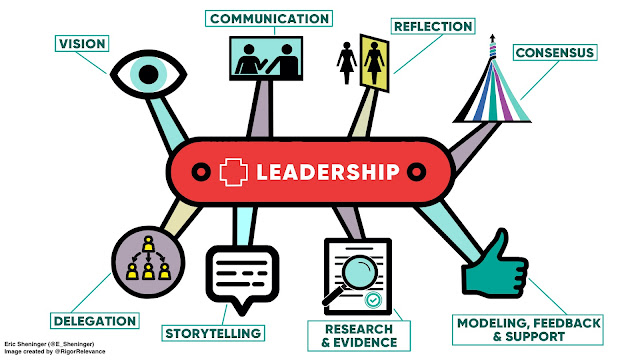
Leadership is a lot like a Swiss Army Knife.  First, leaders need to understand what strategies are the most critical in leading change, improving outcomes, and developing a thriving culture.  Second, they need to know when and where to employ these strategies based on the situation. Here is my attempt at creating the analogy. 


Communication (the right information at the right time the right way)

Consensus (sharing decision-making to build collective efficacy)

Storytelling (motivating and inspiring)

Modeling (practicing what is preached), Feedback (providing ways to grow and improve), and Support (professional learning, resources, empathy, time)

Research and Evidence (justifying changes to be implemented and validating strategies used to improve outcomes)

Vision (articulating where we are headed, how we’ll get there, and why)   

Reflection (thinking about what we do, why we do it that way, and how it can be done better)

Delegation (building capacity by empowering others)

To be effective, great leaders understand that they must be flexible if success is the goal.  While many of the elements above can happen simultaneously, different situations require a specific approach or strategy.  Leading with a Swiss Army approach empowers leaders to identify the context or challenge and readily adapt to employ a personalized approach to solve a problem, move an innovative idea forward, or improve culture.  In the words of Richie Norton, “That challenge you have right now...it’s not a wall; it’s a door.  It's meant to be opened.  Get a handle on the situation and open it.” Sometimes you need a different key to open the door. 

Sunday, February 13, 2022

Strength in Vulnerability

Vulnerability is the core, the heart, the center, of meaningful human experiences.” - Brené Brown

Change is hard.  It is even more challenging to sustain.  While there are many obstacles to individual or system growth, fear and comfort tend to lead the pack.  Both work to stymie a desire to improve for different reasons.  Often, we are afraid of taking risks or embracing new ideas because they might not work out, resulting in a decrease in performance, outcomes, or morale.  What might be will never be experienced if we are not open to trying.  Then there is comfort, which is typically the enemy of progress.  Hugh Jackman said something to this effect in The Greatest Showman.  What can materialize is a false sense that our current actions or practices are still effective.  

I shared the following in Disruptive Thinking:

Complacency has an insidious ability to inhibit our growth.  When we are in a state of relative comfort with our professional practice, it is often difficult to move beyond that zone of stability and, dare I say, “easy” sailing.  If it isn’t broke, why fix it, right?  Maybe we aren’t pushed to take on new projects or embrace innovative ideas.

While there is no silver bullet when it comes to change and growth, both become harder to achieve when we are not vulnerable.  While the standard view is that this is a sign of weakness, it is precisely the opposite.  Strength comes from stepping into the unknown and putting yourself in a position to tackle adversity head-on as a means to an end – getting better!  Vulnerability as a catalyst for change and springboard for growth comes from:

  • Stating you don’t know
  • Asking for help
  • Admitting you were wrong 
  • Sharing mistakes
  • Not hiding emotions (it’s ok to shed a tear)

The list above is all about being human and using perceived weaknesses as a bridge to not only build powerful relationships with others but also to actively overcome fear and complacency as a result of comfort.  As I mentioned earlier, change will be even more difficult, or in some cases impossible, if vulnerability isn’t seen as an asset.  Maz Dela Cerna shares the following:

Putting yourself out there, taking that leap, and showing vulnerability take a lot more courage and strength than to keep quiet and do nothing.  It shows strength when you can swallow your pride and ask for help.  It’s perfectly natural to experience tough times and to not always be on a high.  It takes guts to put yourself out there and launch an idea.  While you may be vulnerable and open yourself up to failure, you may also succeed.

I recently joined Tom Murray on the Future Ready podcast to share some of my thoughts on the topic, which you can view below. 

There is absolutely no shame in being vulnerable when it comes to change.  In the words of Brene Brown, “Vulnerability is about showing up and being seen.  It’s tough to do that when we’re terrified about what people might see or think.” If growth is an individual as well as a collective goal, which it should be, then embrace vulnerability and be the change you wish to see in education.  

Sunday, January 16, 2022

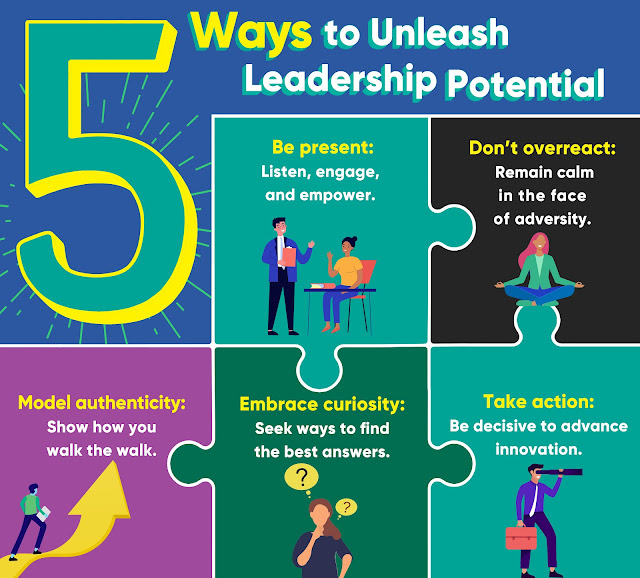
5 Ways to Unleash Your Leadership Potential

Leading is not easy.  I am a believer that leaders are not born but instead develop over time based on both the environment and learned experiences.  No matter where you are on your journey, there is the opportunity to grow and evolve.  Your potential is not set in stone.  It can be unleashed by being cognizant about where you currently are and taking the necessary steps to get to where you want, and others need you, to be.  Here are five ways to unleash your potential now and beyond. 

Be present

People by nature are very distracted creatures, and it has only gotten worse over the years.  Keeping one’s attention in the digital age can be an arduous task.  Just watch people in public places for a few minutes, and you will see countless individuals glued to their devices.  Social media and constant connectivity have evolved into both a blessing and a curse.  While you might not be able to control the actions of others fully, you can work to ensure that you are fully present during conversations, meetings, and professional learning events.  Listen intently when warranted, ask questions, avoid interrupting, use non-verbal language, and most importantly, stay off your devices.  An engaged leader is one who empowers. 

Don’t overreact

Emotions are often hard to control.  I know that I, like many others, grapple with how to hold them in check.  Losing your cool can alienate the people who are closest to you while also raising questions about your ability to lead.  The fact is that things will go wrong no matter how much you prepare.  A well-thought-out action plan will never prevent emergencies or rogue personalities from chaos every now and again.  Even though it is easier said than done, try to remain composed and not overact when something does not go your way.  The job of a leader is to help others remain calm in the face of adversity. 

Model authenticity 

People can sniff out those who are fake in both intentions and actions.  The same can be said when weaknesses are continuously masked with excuses.  Authentic leaders not only talk the talk but strive to walk the walk.  I shared the following a few years back:

Be true to yourself and others.  When you fail (and you will), showcasing your learning side will only help to strengthen the bonds with those you work with.  Being human is more important than being right all the time.  You will never have all the answers or solutions needed to move large change efforts forward.  Look to others to find answers to questions and help you achieve your change goals.  Continue to improve in ways that push you outside your comfort zone.  With authenticity on your side, finding success will be much easier.

In a world where exponential advances in technology are the norm, there is nothing more authentic than being a digital leader. 

Embrace curiosity

There are certain truths when it comes to leadership.  Not a single person has all the solutions or even the best answer to many situations.  There is immense power when a leader acknowledges that they don’t know.  It’s not always about being right or wrong but instead seeking out ways to make the best decisions for the people you serve.  Curious leaders inspire while also breaking down traditional barriers when it comes to transforming culture.  Francesca Gino shared the following after exploring research on the topic:

When curiosity is triggered, we are less likely to fall prey to confirmation bias (looking for information that supports our beliefs rather than for evidence suggesting we are wrong) and stereotyping people (making broad judgments, such as that women or minorities don’t make good leaders).  Curiosity has these positive effects because it leads us to generate alternatives.

Curiosity fuels a more collaborative and vulnerable approach that works to empower others to join the cause.  

Take action

Passiveness rarely leads to change and can negatively impact when it comes to motivating the masses.  While there are certainly times for consensus, sitting on one’s laurels when crucial decisions need to be made is something that many people often complain about when it comes to their leaders.  Navigating the change process and ushering in innovative practices requires decisiveness.  As I stated in Digital Leadership, the desire and drive to act is all that matters.  When it is all said and done, leadership is about action, not position, title, or power. 

Your potential is not set in stone.  In the words of Ralph Waldo Emerson, “The only person you are destined to become is the person you decide to be.” 


Sunday, November 21, 2021

Experience Can Be the Best Teacher

The earliest known version of the proverb that serves as the title for this post is attributed to Julius Caesar.  You might have noticed that I tweaked it a little bit by replacing “is” with “can” to prove a point in a little bit. While knowledge is undoubtedly essential, the act of using it effectively to implement shared and individual goals is what truly matters.  Through experience, we hone our craft and grow. At least, this is what the end goal should be if we are to learn from it to continually get better. 

I vividly remember an experience a few years back that radically changed my trajectory as a facilitator of learning. During a breakout session at a large national conference, I had a packed room, which is something most presenters yearn for, and I was no different.  Since I was relatively new in this space, I reverted to what I was comfortable with and talked at them for seventy minutes. Quite frankly, my thinking was that this is what they actually wanted at a conference.  In my mind, I was doing exceptionally well as only a few people left during the session.  When it was all over, I felt pretty good.

Later that evening, I pulled up Twitter to see if there was any chatter about my session. At the time, I wish I hadn’t, as I got skewered by numerous attendees. In a nutshell, I was told that I talked at them the entire time, provided no opportunities for discourse, and didn’t allow for needed reflection on the concepts presented.  As much as the critical feedback stung, it became a catalyst for my growth in the professional learning space. I had veered away from the strategies that I had championed as a principal with my staff and needed to make concerted efforts to increase agency across any type of session I facilitated.  In this case, experience was the best teacher, but only because I acted on feedback in order to grow. 


Experience can be the best teacher when it leads to:

  • Construction of new knowledge
  • Reflection to improve 
  • Openness to and acting on feedback 
  • Seeking out different perspectives
  • Regularly engaging in opportunities to improve 
  • Knowing that growth is a never-ending journey

As the saying goes, experience is the best teacher. This isn’t necessarily true, although it can be if the outcomes listed above are embraced.  It is critical that we reflect on our experience and continually grow. Doing something the same way for twenty years doesn’t mean someone is effective. If our practice doesn’t change or improve, then experience doesn’t mean very much.