Showing posts with label Student engagement. Show all posts

Sunday, December 21, 2025

4 Ways to Reach the Disengaged Learner

We have all seen "that" look. It’s the glazed-over eyes of a student in the back row, the head resting on the desk, or the active avoidance of eye contact when a question is asked. As educators and leaders, our knee-jerk reaction to the unmotivated learner is often to double down on control—more rules, stricter deadlines, and tighter oversight. We try to force engagement, something I recnetly spoke about on my podcast Unpacking the Backpack. 

But here is the hard truth: You cannot force a student to learn. You can force them to comply, but compliance is not learning. "Doing school" is not the same as acquiring the skills necessary to thrive in a complex world.

If we want to reach the unmotivated learner, we have to stop trying to manage their behavior and start trying to empower their minds. We must shift our focus from control to agency. This isn't just fluffy pedagogy; it is backed by rigorous science. If you are struggling to reach the disengaged, here are four research-backed strategies to shift the paradigm in your classroom or school culture.

Unleash Agency Through Choice

The quickest way to kill motivation is to strip away autonomy. When students feel they are just cogs in a machine, completing tasks because "the teacher said so," their internal drive vanishes. To spark motivation, we must hand the keys over to the learner. This doesn't mean chaos. It entails providing structured choices, such as how they learn, which tools they use, and how they demonstrate mastery.  A meta-analysis by Patall, Cooper, and Robinson (2008) found that providing choices—even small ones—significantly enhances intrinsic motivation, effort, and task performance. When students feel a sense of autonomy, they persist longer and produce higher-quality work.

Stop assigning the same worksheet to every student. Offer a "choice board" where students can select between creating a podcast, writing a blog post, or building a digital model to demonstrate their understanding. We discuss an array of choice strategies in Personalize: Meeting the Needs of All Learners. 

Cultivate Radical Relevance

"Why do I have to know this?"

If you cannot answer that question with something better than "because it’s on the test," you have lost them. Unmotivated learners often aren't "lazy"; they just don't see the value in the work. They crave authenticity. They want to solve real problems that matter to them and their communities.  In a randomized field experiment, Hulleman and Harackiewicz (2009) discovered that when students were encouraged to connect course material to their own lives, interest and performance increased dramatically. This effect was strongest precisely for those students who previously had low expectations of success.

Ditch the hypothetical word problems. As I shared in Disruptive Thinking in Our Classrooms, leverage the Relevant Thinking Framework to connect curriculum to real-world issues. Let students use data to solve a problem in the school cafeteria or use rhetorical skills to advocate for a community change. Make the learning stick by making it real.

Focus on Competence, Not Just Grades

Nothing drains motivation faster than feeling incompetent. When a struggling learner gets a paper back covered in red ink and a "D" grade, they don't see a roadmap for improvement; they see confirmation that they aren't "smart enough." We need to shift from grading (autopsy) to feedback (biopsy). Effective feedback tells the learner where they are, where they are going, and specifically how to get there. Hattie and Timperley (2007) provided a comprehensive review showing that feedback is one of the most powerful influences on learning and achievement. However, they noted that feedback directed at the "self" (e.g., "Good job," "You are smart") is ineffective. The most motivating feedback is task-oriented and provides specific cues on how to bridge the gap between current and desired performance.

Use digital tools to give real-time, actionable feedback while the work is in progress. Focus your comments on the task, not the student.

Build a Culture of Relatedness

We must remember that learning is a social and emotional process. If a student feels invisible, they will remain unmotivated. Self-Determination Theory (SDT) posits that human beings have three innate psychological needs: Competence, Autonomy, and Relatedness. If we miss the "Relatedness" piece—the feeling of belonging and connection—the other strategies will likely fail.  Ryan and Deci (2000) established that social environments that facilitate these three basic needs result in high-quality learning and well-being. Conversely, environments that are controlling or neglectful thwart these needs, leading to passivity and alienation.

Greet students at the door. Know their interests outside of school. Leverage digital tools not to isolate, but to connect—allow students to collaborate with peers globally or experts in the field.

Motivating the unmotivated isn't about finding the perfect app or the flashiest gadget. It’s about meeting the fundamental human needs of our students. It’s about moving from a culture of compliance to a culture of empowerment.

The research is clear. The question is: Are we brave enough to change our practices to match it?

Hattie, J., & Timperley, H. (2007). The power of feedback. Review of Educational Research, 77(1), 81–112.

Hulleman, C. S., & Harackiewicz, J. M. (2009). Promoting interest and performance in high school science classes. Science, 326(5958), 1410–1412. 

Patall, E. A., Cooper, H., & Robinson, J. C. (2008). The effects of choice on intrinsic motivation and related outcomes: A meta-analysis of research findings. Psychological Bulletin, 134(2), 270–302. 

Ryan, R. M., & Deci, E. L. (2000). Self-determination theory and the facilitation of intrinsic motivation, social development, and well-being. American Psychologist, 55(1), 68–78. 

Sunday, November 10, 2024

Using Student Discourse to Increase Engagement

As my Aspire Change EDU consultant team and I visit classrooms on a routine basis, we strive to lead administrators, coaches, and teachers in reflecting on their practice using questioning techniques.  The majority of these often revolve around engagement, and it is quickly realized that when students are compliant, it is because the adult is doing all the work or talking. A simple yet powerful strategy to move from compliance to engagement is discourse through turn & talk. 

So why is this so important when it comes to engagement? Student discourse, the interaction and exchange of ideas among students, is a vital component of learning. When students engage in meaningful conversations, they are not only actively constructing knowledge but also developing essential competencies for academic and personal success.

Cognitive Development and Critical Thinking

Research has consistently shown that student discourse is a powerful tool for cognitive development. As Mercer (2000) argues, "Talk is not simply a vehicle for transmitting information; it is a tool for thinking." When students articulate their thoughts and listen to the perspectives of their peers, they are challenged to think critically, analyze information, and construct new knowledge. This process helps students identify gaps in their understanding, refine their ideas, and develop a deeper appreciation for diverse viewpoints. 

Enhanced Communication 

The ability to articulate ideas clearly and persuasively is highly valued in today's interconnected world. Through classroom discussions, students learn to express themselves effectively orally and in writing. They also develop the ability to listen attentively, ask probing questions, and respond thoughtfully to the ideas of others. These skills are not only valuable for academic success but also for personal and professional growth.

Building Community and Belonging

When students feel safe and supported to share their thoughts and ideas, they are more likely to develop positive relationships with their peers and teachers. This sense of community can create a more inclusive and welcoming learning environment where all students feel valued and empowered to contribute, something Nicki Slaugh and I emphasize in Personalize. 

Nurturing Environments Conducive to Learning 

To maximize the benefits of student discourse through turn & talk or think-pair-share, educators must create a supportive classroom culture that encourages open dialogue and critical thinking. This involves establishing clear expectations for respectful interaction, providing opportunities for students to practice their communication skills, utilizing scaffolded questions, and modeling effective discourse practices themselves. As Weimer (2015) suggests, learner-centered teaching approaches, which prioritize student voice and active participation, can significantly enhance the impact of student discourse.

Quality discussion involves purposeful questions prepared in advance, assessment, and starting points for further conversations. I shared the following ideas in Disruptive Thinking:

  • Facilitate face-to-face interaction 
  • Pose open-ended questions 
  • Encourage peer-to-peer dialogue 
  • Prompt students to explain their reasoning 
  • Diversify question formats
  • Provide opportunities for all students to share out following the discussion to amplify voice (individual whiteboards, dry-erase surfaces, Post-it notes, technology)

By creating a space for authentic conversation, teachers can transform their classrooms into vibrant learning communities where students thrive. As the National Academies of Sciences, Engineering, and Medicine (2018) emphasize, student engagement is a key factor in promoting deep learning and long-lasting knowledge retention.

Student discourse is a powerful tool for fostering critical thinking, enhancing communication skills, and building a strong sense of community within the classroom. By prioritizing student voice and creating opportunities for meaningful conversation, teachers can create more engaging, inclusive, and transformative learning experiences for all students.

Mercer, N. (2000). Words and minds: How we use language to think together. Routledge.

National Academies of Sciences, Engineering, and Medicine. (2018). The science of learning: Organization, motivation, and engagement. National Academies Press.

Weimer, M. (2015). Learner-centered teaching: Five key changes to practice. Jossey-Bass.


Sunday, December 6, 2020

Feedback is Needed More Than Ever

I think we can all agree that this school year has been unlike any other and not for the best of reasons. The pandemic has upended the entire education system as schools have moved to remote, then hybrid, and back to remote in some cases with no end in sight. Even with the promising news of two potential vaccines, rising COVID-19 cases have resulted in a constant state of flux.  Continuity and consistency have been hard to come by and finding a groove have become an arduous task in many cases. Educators, students, and families have never been in a situation as challenging as what they are experiencing right now. 

The rapid state of uncertainty has caused a great deal of angst, and rightfully so. As a result, there have been increased levels of stress, anxiety, and fear amongst teachers, which has led to decreased motivation in some cases. It’s not that they don’t want to do a good job but more a battle to get through each day. The struggle is real. For students, a lack of engagement on their end has led to significant concerns across the globe. If they aren’t engaged, then the chances that meaningful learning is taking place are slim. Finally, administrators are searching frantically for answers while putting out fires and conducting contact tracing daily. 

With all these challenges, growth becomes an afterthought. However, it is a necessity in order to provide the best learning experience possible for kids, even in times of crisis.  Through adversity, some of the best ideas are developed and implemented with fidelity. The key to setting the stage for this to occur is a concerted effort to make feedback a daily phenomenon. While assessments, observations, and evaluations might have worked well in the past, a more sensitive approach is not only warranted but also a necessity right now. 

Feedback can be a catalyst for motivation, engagement, and finding answers to questions or problems. First and foremost, we must be open to it in some form. One way to move the need is to seek it out from a variety of perspectives. Teachers can engage both students and families in conversations to elicit essential ideas on how to improve remote and hybrid learning experiences. Administrators can do the same with stakeholders and staff in order to gather intel on how to improve school culture immediately. In the classroom, providing regular feedback to learners might be the most critical key to engaging them.  

Everyone benefits if we are diligent and sensitive as to how it is implemented as a means both to inform and empower. Below are some aspects to consider regarding quality feedback:

  1. Facilitate with sincerity
  2. Ground in practicality and specificity
  3. Give in a timely manner
  4. Dialogue over monologue 
  5. Focus on positive delivery
  6. Use the right medium(s)
  7. Be consistent
  8. Align to advancement towards a goal(s)

Most people want to know how they are doing and what can be done to improve, even it is a small shift in practice or learning. Keep in mind the importance of Maslow’s Hierarchy of Needs. Feedback can be as simple as reassuring others that they are doing a great job in these trying times or using it as a way to find out what might be inhibiting motivation or engagement. The bottom line is that it is a great tool that can be used in a variety of ways. When it is all said and done, its best use might be that of relationship builder. After all, relationships are the foundation of learning and growth, no matter if we are in a pandemic or not.  

Sunday, November 29, 2020

Overcoming Engagement Hurdles with Remote Learners

In order to empower people at some level, you first need to engage them.  It is nearly impossible to create a culture of learning if there are elements of boredom, inactivity, and lack of relevance.  This is a lesson I learned most recently as a presenter and workshop facilitator. Early on, I used more traditional strategies since this was a new arena for me. The shift from principal to full-time consultant brought a certain amount of fear. Thus, I reverted back to what I was comfortable with in terms of what I could control and perceived that educators wanted. I basically became the sage on the stage and a master of direct instruction with little participant interaction. 

I thought I was doing a pretty good job as no one told me otherwise. There was consistent eye contact, and all of the feedback I received from surveys was mostly positive. It wasn’t until a presentation at a major conference where I got the kick in the butt that I desperately needed but wasn’t aware of until then. As I was reading tweets from the session, a participant basically told me that I spoke at them the entire time and didn’t provide ample opportunities for greater discourse, practical application, or reflection. 

It was at this point about four years ago, where I began to embrace and model the very same strategies that were being used at my high school when I was a principal. Multiple opportunities for discourse and collaboration were included as well as time to develop action steps. Engagement was amplified with a focus on the how, exemplars from all types of schools, and the use of digital tools to provide everyone with an opportunity to respond. In essence, my role is now more of a facilitator of learning.  Another fundamental change was intentionally developing ways to personalize the experience for those I am fortunate to work with in my role. For example, I really appreciate Michael Ford pushing me in this direction when he asked me to create a choice board as part of a professional learning date with his staff. 

These changes, combined with what I hope is a unique style grounded in relationships, have enabled me to better connect with educators. Now more than ever, I have benefitted from these changes in the current remote and hybrid world. As someone who currently supports educators and schools all over the world in this area, it is critical that I not only engage as many people as possible but also model the most effective strategies that can be implemented in the classroom. I recently saw the fruits of my labor in action during a keynote with over 2000 educators.  Using one of the strategies listed above, I was able to get over 1200 responses to a question part of the way through using Mentimeter.

The pandemic has created a myriad of issues for educators, with engagement being at the top of the list. Every day I am asked for suggestions, especially when it comes to remote learners, no matter whether or not you are hybrid at this point. In addition to some of the ideas that I shared above, I strongly encourage you to check out this post, where I outline six specific focus areas. Below are some additional ideas:

  • Begin each lesson with an anticipatory set to get kids excited and impart relevance.
  • Call on students who have their camera and microphone off. By doing this consistently, the stage will be set for increased attention and participation. 
  • Integrate breakout rooms for discourse and randomly pop into them. 
  • Utilize quick checks for understanding (1-3 questions max) throughout the lesson using Google or Canvas forms.
  • Leverage digital tools for voice and choice. It is also good to use these following any breakout room activity to get a grasp on engagement levels.
  • Use the Rigor Relevance Framework as a means to evaluate the level of relevance in questions, tasks, and assessments. 
  • Develop means for accountability through routine feedback and timely grading. I cringe when mentioning the latter, but we must look at any and all strategies during these difficult times.
  • Include closure at the end of each lesson or synchronous session.
  • Move to tasks and work that are more purposeful through blended strategies such as station rotation, choice boards, playlists, self-paced activities, and flipped approaches.
  • Assign less work while going deeper into concepts.


The above ideas are more teaching-facing. However, engaging learners is a shared responsibility. Administrators can assist with the above by providing teachers non-evaluative feedback during remote lesson drop-ins or using a walk-through process. Additionally, job-embedded and on-going professional learning is critical for all educators, regardless of position, to improve engagement in pedagogically-sound ways.  Another way that administrators can help out teachers in this area is through relentless communication with families. In Digital Leadership, I outline how a multi-faceted approach that meets stakeholders where they are is the most effective way.  It is essential not just to get out information, but also engage families in a dialogue during these unprecedented times. 

When it is all said and done, engagement is grounded in a learner’s sense of why they are learning something and how it will be used in the real world through their lens. It can be achieved through a combination of context and application. Think about what motivated you as a learner and what still does today. This might be the best starting point of all. 

Sunday, January 21, 2018

Bridging Connections to Empower Learners

The other day I was working from home, which is a rarity for me these days.  I huddled in my home office and focused my attention on email, writing a blog post, tweaking some presentations, and updating the digital handouts that all participants get during one of my keynotes or workshops.  Always joining me on these work from home days is my beloved dog, Roxie.  Like usual she was perched on top of the couch sleeping. Her snoring not only brought a smile to my face but also made me jealous that she doesn’t have a care in the world and enjoys the life of a pampered pet. 

Later in the day I moved from my desk and joined Roxie on the couch. Before I knew it I apparently dozed off. I will be the first one to admit that I love naps and inherited this quality from my father. He is always taking an afternoon nap no matter where he is.  I realized I had fallen asleep when my son, Nick, awakened me as he returned home from school. Now I was enjoying one of those deep sleep naps so I was a tad bit annoyed that he interrupted this moment of pure joy. My annoyance with him was short lived as he had woken me up to share a current project that he completed in school.

My 7th-grade son stood above me and in his hands was a bridge that he had built as part of an engineering project. As he provided details on how he went about constructing it, I could see how proud he was of his creation.  In my opinion, Nick was beaming as his bridge ranked the 5th best out of a class of 28 students.  Typically, it is my daughter who comes home from school and consistently engages my wife and me in conversations about how awesome her day of learning was. This is not the case with my son so I relished the opportunity to dive deep into his learning experiences in this particular class.


My son's bridge

My son is fortunate to have engineering every day as a 7th grader.  Throughout the year he has brought home innovative projects that he has created and each has sparked a conversation about why this type of learning is important and how it will benefit him in the real world.  The result of these discussions illustrates how impactful the daily experiences are for him. He has been empowered to own his own learning by actively applying what he has learned in this class while making connections to math, history, and science.  Conceptual mastery translates into what he has been able to effectively build with his hands.  There are also language arts connections as the students are encouraged to write and speak about the engineering principals behind their designs.  This is learning at its finest. 

My son is an empowered learner in engineering as many elements are bridged together to facilitate REAL (relevant, engaging, authentic, lasting) learning.  Pulling from my son’s experience as well as what we know about sound pedagogy, the following elements work together to empower learners:

  • Interdisciplinary connections
  • Authentic contexts
  • Choice
  • Practical application
  • Creation of a product that demonstrates conceptual mastery  
  • Meaningful feedback

As Tom Murray and I state in Learning Transformed, to prepare students for the world of tomorrow we must transform their learning today.  The shift is not as difficult as one might surmise.  As you think about developing or evaluating lessons, learning activities, projects, and performance task ask yourself if the six elements above are integrated.  If they are then the chances are that your students will not only be empowered but also develop a greater appreciation for learning. Happy learners are empowered learners when the right connections and elements are bridged together. 

Sunday, October 16, 2016

The Need for More Play in School

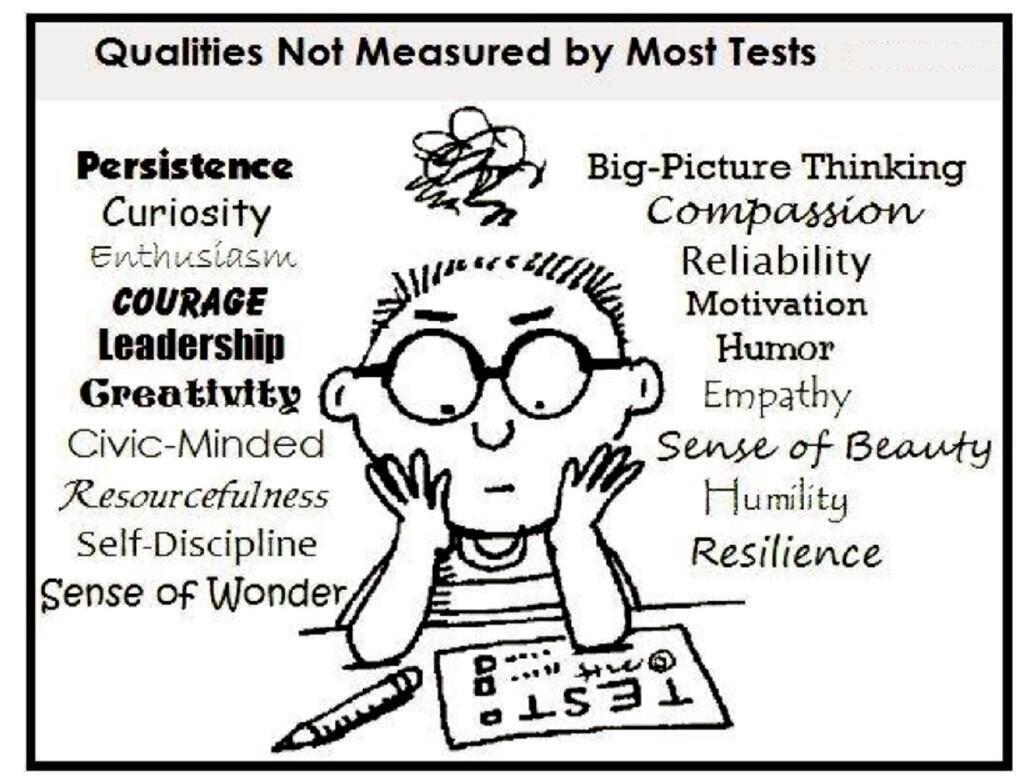
As I kid I loved play. Countless hours were spent building forts in the woods, creating sand castles at the beach, riding bikes, playing Atari (then Nintendo, Game Boy, Sega Genesis, etc.) or just running around for no apparent reason. Kids love play and it is a central component of their social and emotional development.  Important qualities such as patience, compromise, creativity, focus, critical thinking, problem solving, determination, resilience, and resourcefulness, to name a few, are developed through play.  Not only are these qualities vital to success, but they also represent elements that cannot be tested.


Image credit: dyslexickids.net

As much as I loved play I think I enjoy watching how it not only impacts, but also how important it is to my own children.  In many ways my kids engage in play in unique ways based on their personalities.  My son, Nick, is an avid gamer who loves Minecraft and the creative freedom it fosters. On many nights it is common to see him with his headset on collaborating and communicating with kids his age from across the country utilizing thought and strategy to create a product that matters. Like most children, he also has a passion for basketball, golf, Nerf gun battles, laser tag, going to the park, and of course playing with his sister. They love walking the neighborhood engaged in Pokemon Go. I love it when they come back and tell me how many kilometers they walked while having fun.

My daughter, Isabella, on the other hand is a ball of raw energy.  She is always on the go, running around the house and outside when the Texas heat is in check.  Like her brother, technology is a huge component of her play regime.  Many evenings after dinner she retreats to her room to play Roblox with her best friend, Brooke, who lives in New York. She will have a computer set up for the game and then stream in Brooke Live using Facetime on her iPad Mini. They then play the game together, but laugh and converse in real-time. She is also big on creating Musical.ly’s with her friends near and far. Outside of technology she is your typical kid when it comes to play, ranging from dolls, to stuffed animals, to a variety of aquatic games in the pool.

Play has a magical effect, at times, of taking away some of the stress and pressures of life. It is in these carefree moments that kids and adults develop and enhance certain skills that will play a huge role in personal and professional development.  I find myself reflecting on the seemingly endless positive impacts that play has on kids and yet it is being cut from schools across the world.  Ask any young kid what was their favorite part of the school day and they will respond in no specific order – recess, gym, or art.  

Our kids need and deserve more play, not less! Recess in particular is needed not just in our youngest grades, but also even through the middle and high school years.  Read about why high school should be more like kindergarten and the point becomes clearer. Play has to be valued in school and its integration should be a priority if student learning and achievement are the goal. Why you ask? Research has found that play develops students in four ways: physical, cognitive, social, and emotional.


Image credit: http://www.museumofplay.org

In order to create schools that work for kids a concerted effort has to be made to break up the monotony of formal learning that places a great deal of stress on students.  Structured and unstructured play should be integrated into every school schedule, regardless of the age group of the kids.  Below are a few ideas:

  • Add more recess (kids need it and the benefits are clear)
  • Integrate makerspaces 
  • Replace study halls with play options and open choice
  • Integrate games such as chess, checkers, Trivial Pursuit, and Xbox to common areas
  • Add time to lunch. With a full length lunch period at my school (48 minutes) students would regularly go outside and play, visit the makespace, or play video games thanks to our BYOD initiative.
  • Develop a play-based elective

These are just a few ideas to implement the power of play into the school day. Students should be excited to attend school and learn. By integrating more play we can begin to create a culture where more students want to learn. Once that is achieved the possibilities are endless.

Sunday, March 8, 2015

Engagement Does Not Always Equate to Learning

No matter where I am, whether it is a physical location or virtual, I am always hearing conversations about how technology can be used to effectively engage students.  This is extremely important as the majority of students spend six to eight hours a day in schools where they are completely disengaged. I for one can’t blame today’s learner for being bored in school when I all have to do is observe my own son at home playing Minecraft to see firsthand his high level of engagement.  His Minecraft experiences provide meaning and relevance in an environment that is intellectually stimulating but more importantly fun. Schools and educators would be wise to take cues from the real world and make concerted efforts to integrate technology with the purpose to increase student engagement. Engagement, after all, is the impetus for learning in my opinion.


Let’s take a closer look at defining what engagement really means from the Glossary of Education Reform:
"In education, student engagement refers to the degree of attention, curiosity, interest, optimism, and passion that students show when they are learning or being taught, which extends to the level of motivation they have to learn and progress in their education. Generally speaking, the concept of “student engagement” is predicated on the belief that learning improves when students are inquisitive, interested, or inspired, and that learning tends to suffer when students are bored, dispassionate, disaffected, or otherwise “disengaged.” Stronger student engagement or improved student engagement are common instructional objectives expressed by educators." 
The last line in the description above elicits a great deal of concern for me.  With or without technology, there always seems to be a great deal of emphasis on student engagement, but the fact of the matter is that engagement does not necessarily equate to learning.  I have observed numerous lessons where students were obviously engaged through the integration of technology, but there was no clear indication that students were learning.  Having fun, collaborating, communicating, and being creative are all very important elements that should be embedded elements of pedagogically-sound lessons, but we must not lose sight of the importance of the connection to, and evidence of, learning. Thus, students can walk away from a lesson or activity having been very engaged, but still walk away with very little in the form of new knowledge construction, conceptual mastery, or evidence of applied skills. When speaking at events I often ask leaders and teachers how they measure the impact of technology on learning. More often than not I receive blank stares or an open admission that they have no idea. The allure of engagement can be blinding as well as misleading.

It is so important to look beyond just student engagement when it comes to technology. If the emphasis is on digital learning we must not get caught up in the bells and whistles or smoke and mirrors that are commonly associated with the digital aspect alone. Engagement should always translate into deeper learning opportunities where technology provides students the means to think critically and solve problems while demonstrating what they know and can do in a variety of ways. Technology should be implemented to increase engagement, but that engagement must lead to support, enhancement, or an increase in student learning. It should not be used as a digital pacifier or gimmick to get students to be active participants in class. With technology there should be a focus on active learning where students are doing.

Here are some questions that will assist in determining if engagement is leading to actual learning:
  • Is the technology being integrated in a purposeful way grounded in sound pedagogy?
  • What are the learning objectives/outcomes?
  • Are students demonstrating the construction of new knowledge? Are they creating a learning product/artifact?
  • How are students applying essential skills they have acquired to demonstrate conceptual mastery? 
  • What assessments (formative, summative) are being used to determine standard attainment?
  • How are students being provided feedback as to their progress towards the specific learning objectives/outcomes?
  • Is there alignment to current observation/evaluation tools?
Engagement, relevance, and fun are great, but make sure there is observable evidence that students are learning when integrating technology. N

Sunday, December 15, 2013

Pillars of Digital Leadership Series: Student Engagement and Learning

This post is the fifth in a series that will outline the foundational elements of my new book, Digital Leadership: Changing Paradigms for Changing Times.  It is set to be published by Corwin Press on January 14, 2014.  Currently there is a pre-publication discount of 15% for any orders before this date.  Over the next couple of weeks I will introduce what I have come to identify as the Pillars of Digital Leadership, a conceptual framework for leaders to begin thinking about changes to professional practice.  My book will focus on each of these elements as part of a change process. It will illustrate them in action through the work of practitioners and provide implementation strategies. To view the entire series click HERE.

Pillar #5: Student Engagement and Learning

Many of us firmly believe in technology’s potential to transform the teaching and learning cultures of schools. Whether it is used to enhance lessons, assess learning, engage students, or unleash creativity, technology has a defined role in a variety of school functions.  Many schools and leaders still treat education as an effort to prepare students for a world that no longer exists, one in which technology is viewed as either a frill, distraction, or a non-factor in improving student achievement. For many students, school does not reflect real life. This results in various levels of disengagement during the teaching and learning process. Ask yourself this, would you want to be a student in the classrooms of our colleagues? The question then becomes, how do we move those schools that are the most irrelevant in terms of meeting the diverse learning needs of their students to begin the transformation process? This is pivotal if we are to truly begin to reform education in a way that is meaningful to our students.  It all begins with leadership, whether at the district, building, or classroom level.


NMHS students using Chromebooks and Socrative

Our students want to be creative, collaborate, utilize technology for learning, connect with their peers in other countries, understand the messages that media convey, and solve real-world problems. Schools and systems of education that do not embrace digital learning and place a high emphasis on standardization will always fail to resonate with our students. It only makes sense to harness the power of technology as a catalyst for authentic engagement and application of concepts among our learners. If schools allow students to use the digital-age tools that they are using on a routine basis outside their walls, chances are they will find more relevancy and meaning in what they are learning.

Digital leadership is a mindset and a call to transform a school’s culture into one that unleashes the creativity of students so they can create artifacts of learning that demonstrate conceptual mastery. It is about providing learners with the knowledge, skills, and confidence to succeed in college, careers, and jobs that have not even been created yet.  This is accomplished by allowing students to use real-world tools to apply what they have learned and construct new knowledge. By focusing on how specific technologies can be used to engage students, digital leaders are establishing a foundation for learning that will lead to eventual increases in student achievement. This becomes a reality when school cultures are transformed to meet and anticipate the needs of learners in the Digital Age. Chapter 9 showcases the work of Patrick Larkin and teachers at New Milford High School who have become change agents in this area. It provides leaders with the foundational elements to successfully implement digital learning across the curriculum.

It is crucial that sound pedagogical techniques and best practices are emphasized in order to effectively integrate technology to enhance teaching and learning. One of the most important questions a leader needs to answer is how the students are using technology to apply learning and demonstrate conceptual mastery. Students must always be at the center of this process. All too often technology is infused into the learning environment where the teacher is still employing a direct approach to instruction. Are you leading change in this area or abiding by the status quo?

Monday, July 15, 2013

Sensible Learning

Social Media is bad and has no place in education. It is a distraction to the teaching and learning process. If students are allowed to use social media in school they will stay off task or exhibit inappropriate behavior. Worse, teachers will spend countless hours “socializing” instead of educating. This is the misguided stigma that social media carries and, as a result, it is often banned in schools. However, there are a growing number of passionate educators who have embraced social media as a powerful tool for learning. When you look at how reliant the world is when it comes to social media use these educators look like geniuses.  Take a peak at the video below.


One must get past the stigma and truly experience what this free resource can do for our schools and students to appreciate its inherent value. Social media is all about conversations that center around user-created content. When structured in a pedagogically sound fashion, learning activities that incorporate social media allow students to apply what they have learned through creation. This fosters higher-order thinking skills and caters to a wide range of learning styles. Social media tools allow educators to authentically engage students as they encourage involvement, discussion, communication, collaboration, and creativity. These include mainstream examples such as Twitter, YouTube, and Facebook, as well as, specialized ones such as Voicethread, Glogster, Animoto, and Prezi.

Blogs are an incredible social media tool that can be utilized in a variety of ways.  Teachers can set up a class blog to foster creative writing and reflection, or as an alternative to a school newspaper.  Blogs are not isolated to just writing, students can add rich media to posts such as pictures, videos, widgets, and gadgets.  The Holocaust Study Tour blog created by a New Milford High School teacher and her students who travel abroad to Europe on an annual Holocaust Study Tour provides is a great example. School administrators can use blogs as a powerful public relations tool in lieu of traditional newsletters and email blasts.  The ability to comment on any blog increases both student and community engagement.  

In our digital journalism class students are required to have their own Twitter accounts.  They are then empowered by the teacher to promote their articles and tweet out real-time school news as it happens.  This class provides our students with experience using real-world tools that journalists rely on more than ever.  It also teaches them about how social media can be used responsibly, to support learning, and as a professional tool.

For our students that have grown up in the digital age learning needs to be relevant, meaningful, and fun. Allowing them to use social media tools to achieve learning goals and objectives, of which they already are familiar with outside of school, makes sense in the globally connected, digital world we are all a part of. This, in my opinion, constitutes sensible learning.  A shift towards incorporating social media into education provides a golden opportunity to teach digital responsibility and citizenship to our learners, an area where many schools are failing. When doing so, we must ensure that policies are in line with this change, teachers are supported through professional development on how to effectively use social media in the classroom, and parents are educated on its value.

All of this makes sense to me as an educator, parent, and citizen. What about you?

Wednesday, May 29, 2013

The Capstone Experience

One of our guiding beliefs here at New Milford High School is that our students will find purpose and meaning in their respective learning experiences.  Over the years we have added a series of new courses (19 in just two years), re-written the curriculum of existing courses, made available online courses as part of the VHS Collaborative, and developed numerous authentic learning experiences focusing on the unique interests of our learners.  All of these components have become critical elements of the Academies at New Milford High School.  As a result of these changes and the creation of the Academies, we have seen increases in academic achievement, graduation rates, and acceptances to four-year colleges.


Earlier this month I shared the Independent Open CourseWare Study (IOCS) project on this blog.   The IOCS project empowered our students to follow their learning passions and actively demonstrate new knowledge that was acquired.   We wanted students to have the freedom to learn about anything they were interested in using content from some of the most prestigious universities in the country while also unleashing their creativity.  In addition to this project, a book study on the Alchemist, and numerous off-campus field trips, Academy students develop a capstone project as a culminating experience.  This provides each student the opportunity to describe where he or she has been and where he or she is headed.

The final product has to be presented in a digital format and must be reflective of the theme “where I have been and where I am headed” or reflective of “your personal journey” in an authentic application.  Basically, students need to explain their personal/academic journey thus far and describe their goals: academically, personally and/or professionally.  No matter the creative avenue students’ choose to pursue (songs, poems, dramatic interpretations, artistic renderings etc.); the essential criteria must still be met.   This includes the following:

  • Must make direct reference to essential learnings throughout your NMHS coursework, which have influenced who you are and your aspirations.  Tell the viewer what NMHS has taught you about yourself and life. 
  • Must include legal (school) name and graduation year within the body of the presentation.  
  • Must have an academic focus but can still include sports, arts, clubs, service etc.  
  • Must include things you would like to do, learn, understand, see, improve, create or experience.
  • Must capture the attention of the audience (teachers, administrators, peers).
  • Must be original and make references to sources where appropriate (background music, art work, quotations, etc.)
  • Must make direct mention of NMHS in some way, via symbols or direct reference.  
  • Must make direct mention of major Academy designation, via symbol, crest or direct reference. 
  • Must make direct reference to any endorsement that may be sought.   
  • Must offer evidence of any of the 21St Century Skills acquired: collaboration, communication, creativity, critical thinking, problem solving, media literacy, technological proficiency, global awareness, and preparation for college, careers and life.  Label essential elements for clarity of scoring.  Don’t make us guess what the images, symbols or people represent.  
  • Must reflect interests and personality.   
Below is an example of one of the more creative capstone projects by senior Tariq Khan:


The capstone experience provides our students with an opportunity to tie together social, emotional, family, and learning experiences in a creative way to share their personal journey.  This exposition of learning not only allows them to reflect upon their time at NMHS, but also provides us with a glimpse as to what we re doing well and where we can improve as a school.  

Wednesday, April 17, 2013

The Best Keynote Ever

I have been extremely blessed to be invited to speak and work with administrators all over the country.  There is nothing more exhilarating than sharing the work of my students and teachers as it has radically changed how I lead.  Especially during keynote presentations, I talk about the need for school leaders to take calculated risks to initiate meaningful change. However, I rarely demonstrate this in action.

Well, that all changed recently at the Leadership 3.0 Conference in Irvine, CA.  As I was going through my slide deck one final time, a crazy thought crept into my head.  As I looked at my slide on how the learner has changed, I felt that someone else could make a stronger point than I.  During this part of my presentation I typically relay stories of how learners are extremely creative with technology outside of school.  They construct their own knowledge, solve problems, and employ critical thinking skills through many of the games they play.  Thus, the perfect person to make my point was my own son, Nicholas. He is currently a second grade student at PS 3 in Staten Island, NY.

Image credit: Elizabeth Calhoon http://instagram.com/p/YBGCTxhFb1/

I immediately texted my mother-in-law as I knew there was not much time to act.  Nicholas was about to get picked up at the bus stop and I needed to know at that very minute if he would agree to Facetime with hundreds of strangers and answer a few simple questions.  Once I received the go ahead from him, I tested out Facetime using his sister’s iPad mini as his iTouch was not working.  During this test I told him that I was going to ask him a few questions about Minecraft and that it would be a piece of cake.

Now I am never nervous when I speak, but this time I was a wreck.  In my mind Nick’s performance was going to be the highlight of my keynote.  About ten minutes into my presentation it was time to call him.  The first attempt failed and I had to actually call my wife on my cell phone to work out the small issue.  The second attempt worked and I could not be prouder of my son.  He told the audience that his favorite game was Minecraft and went on to explain all of the amazing things he has created on his own.  He spoke about creating his own McDonald’s that serves food, a racetrack for his pigs, new buildings, and a pool with a slide.  

His little words and cheerful demeanor conveyed a powerful message.  Learning should be fun, creative, collaborative, and self-directed.  Creativity is an essential skill that drives learning, especially that of our younger students. Schools must recognize this fact and work with students at all levels to implement outside experiences that authentically engage students in learning and construction of new knowledge.  Everyone in the audience saw firsthand the profound impact games such as Minecraft are having on my son's learning.  Thank you Nicholas Sheninger for being the best keynote speaker ever!

P.S. I plan on videoconferencing my son into future talks as long as his schedule permits it.
  

Monday, October 29, 2012

What Matters to Students


It is always great to hear back from alumni once they have left our buildings.  The feedback we sometimes receive provides us with a sense of whether or not we are doing a good job preparing them for success at the next stage in their lives.  Below is an email that I recently received from Amanda Howell, a 2012 graduate of New Milford High School.  Amanda's reflection on her time at NMHS put into perspective what really matters in an educational experience.


Mr. Sheninger,

            I just wanted to take the time to thank you for all of my experiences at New Milford High School. As I am embarking on my college career, I am thankful for all that I learned at New Milford. There are few people here who have had experiences as great as I had in High school, and I believe that much of that is due to the positive changes and environment you have created. The technology, the experiences, and the educators all play a positive role in the drive I have in furthering my education.

            I was able to take part in so many great experiences during high school. There were so many great opportunities I am glad that I took part in. I was able to attend a trip to the Liberty Science center to watch an open-heart surgery as a part of my AP biology course, and the S.T.E.M Academy. It was a great experience because the educators really ensured that we were taking everything we possibly could from everything presented to us. We traveled to the Google offices in New York City, which was a great learning experience because much of the technology I used in high school, and still do in college, runs with something from Google. I was able to sample and provide feedback on the Chromebook, which helped me choose the technology I wanted for college. I traveled to many competitions to work on my debate and public speaking skills through the Ethics Bowl and Mock Trial, where we had to research and formulate opinions and strategies on current issues. As I am getting involved in groups, clubs, and organizations in college I am learning just how important and valuable it is that I was immersed in those issues and I have to tools to become informed, formulate an opinion, and defend it.

            But beyond all of the experiences, and beyond all of the technology are the educators. The teachers of the school who encourage you to get involved, and make you want to be all you can be and do all that you can do. All of the teachers I had at New Milford helped to make me who I am today, but being a Biology major I need to point out Mr. Devereaux. His enthusiasm and passion for what he does really shines through in his teaching. He extended himself to be available to his students inside and outside of the classroom, always responding to e-mails and going out of his way to make sure all of his students were being the best they could be. He provided excellent resources, using social media such as twitter, to communicate with the students and provide them with further information beyond the topics covered in class. Even today in college, I still refer back to his notes and utilize his website, still enjoying his famous PowerPoint animations, to help me be the best I can be. Moreover, I know that if I ever have a question, or needed help with something all I would have to do is send him an e-mail and he would still help me today.

            My roots and New Milford are stronger and richer than most. I am extremely thankful for all that I was able to take part in during my time at New Milford. I am thankful for all that Mr. Sheninger has done to make the educational experiences at New Milford better, for I feel I was given to tools to reach my potential. I am also thankful for the educators who go above and beyond the call of duty and because of them I will forever be reaching for the stars!

Thank you,
Amanda Howell