Showing posts sorted by date for query makerspace. Sort by relevance Show all posts

Sunday, December 3, 2023

The Role of Place in Personalization

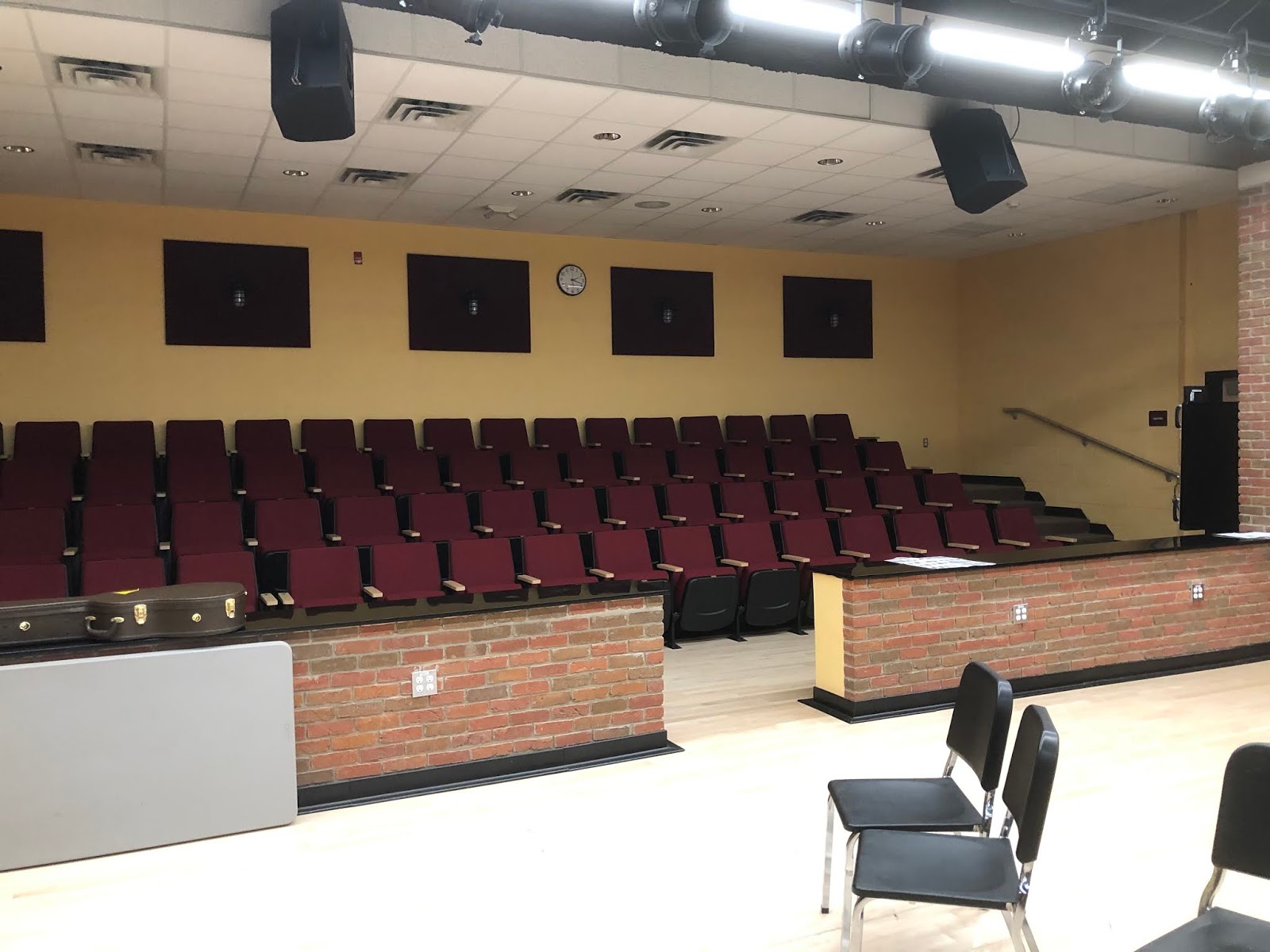
The physical and virtual environments where learning takes place play a pivotal role in shaping the effectiveness and depth of personalized learning strategies. Consider for a moment the impact of the physical classroom. It is not merely a backdrop but an active participant in the learning journey. The arrangement of desks, the presence of collaborative spaces, and the infusion of technology all contribute to the atmosphere that shapes a student's educational experience. As you delve into personalized learning, the importance of tailoring these spaces to accommodate diverse learning needs becomes increasingly evident.

Research consistently underscores the profound impact of physical and virtual learning environments on educational outcomes. According to a study by Tanner and Lackney (2006), the design of physical spaces significantly influences student engagement and academic performance. Flexible seating arrangements, varied learning zones, and interactive elements have been found to correlate positively with increased student motivation and collaboration (Tanner & Lackney, 2006). Furthermore, research by Hattie (2012) emphasizes the importance of creating a positive classroom climate, asserting that the physical layout plays a crucial role in fostering a conducive atmosphere for learning. The influence of virtual learning environments cannot be ignored either. A Means et al. (2013) meta-analysis highlighted the importance of well-designed online platforms, emphasizing their impact on student achievement and satisfaction. As the digital landscape continues to evolve, understanding and optimizing physical and virtual learning spaces is paramount for educational success (Means et al., 2013; Hattie, 2012; Tanner & Lackney, 2006).

Physical Learning Spaces

The traditional classroom setup, with rows of desks facing forward, may not be the most conducive environment for personalized learning. Flexible seating arrangements, breakout spaces, and interactive learning corners empower students to take control of their learning. Recognizing that each student is unique, physical spaces can be designed to cater to various learning preferences, whether it be quiet individual study, collaborative group work, or hands-on experimentation.

Virtual Learning Environments

In our digital age, the concept of place extends beyond physical boundaries. Virtual learning environments, online platforms, and educational apps contribute to the personalized learning ecosystem. The design of these digital spaces, from user interface to interactive features, can significantly influence the engagement and success of personalized learning initiatives. Thoughtful consideration must be given to user experience and accessibility, ensuring the virtual place complements and enhances the learning process.

Outdoor Areas

The importance of outdoor spaces for learning cannot be overstated, as they offer a transformative and holistic dimension to education. Beyond the traditional confines of classrooms, the outdoors provides a dynamic setting that stimulates curiosity, creativity, and a sense of exploration. Nature becomes a powerful teacher, offering biology, ecology, and environmental science lessons in a living laboratory. Beyond academic subjects, outdoor spaces promote physical activity, contributing to students' overall well-being. The fresh air and natural light create an invigorating atmosphere, fostering focus and reducing stress. Moreover, outdoor environments encourage collaboration, teamwork, and social skills as students engage in activities that often require cooperation and communication. By integrating outdoor spaces into the learning experience, educators enrich the academic curriculum and cultivate a love for the environment and a deeper connection to the world around us.

Below are some specific strategies for crafting effective learning spaces:

  • Individualized Learning Zones: Break down traditional classroom barriers by creating individualized learning zones. Each student can have a designated space that aligns with their preferred learning style, whether a quiet corner for reflection or an interactive area for hands-on exploration.
  • Technology Integration: Leverage technology to bridge the physical and virtual learning spaces. Interactive whiteboards, digital collaboration tools, and online resources can seamlessly integrate into the classroom, providing a dynamic and personalized learning experience.
  • Flexible Furniture: The days of static desks and chairs are behind us. Embrace flexible furniture that can be easily rearranged to accommodate different learning activities. This adaptability promotes a sense of ownership over the learning environment.
  • Makerspaces: When I hired Laura Fleming in 2012, I asked her to transform the library into a place where kids not only wanted to read but could also serve as a catalyst for personalization. She did all that and more by creating a makerspace that became revered by our students and educators across the globe. It was a place for learners to collaborate, hack, invent, share, create, make, and do, which is the epitome of personalization. They were given all the tools needed to get started, but where it went was up to them. Learn more about makerspaces HERE.
  • Student-Centric Design: Involve students in the design process. Solicit their input on the classroom layout, the choice of furniture, and technology integration. A student-centric approach ensures that the learning space truly resonates with its inhabitants.

As you embark on the personalized learning journey, consider the impact of place. The physical, outdoor, and virtual environments in which learning unfolds are not passive backdrops but active participants in the educational process. By strategically crafting these spaces to align with the diverse needs of learners, we can amplify the effectiveness of personalized learning initiatives. The power of place extends beyond the confines of walls and screens; it is a dynamic force shaping the essence of how we learn and grow.

Hattie, J. (2012). Visible learning for teachers: Maximizing impact on learning. Routledge.

Means, B., Toyama, Y., Murphy, R., & Baki, M. (2013). The effectiveness of online and blended learning: A meta-analysis of the empirical literature. Teachers College Record, 115(3), 1-47.

Tanner, C. K., & Lackney, J. A. (2006). Approaches to learning space design. Planning for Higher Education, 34(3), 35-50.


Sunday, April 30, 2023

Hire People That Will Make You a Better Leader

Being a leader is not a solo endeavor but a collective effort that involves everyone in the organization, school, or district. While a leader may occasionally have to make critical decisions that require going against consensus, such instances are rare and insignificant in the larger scheme of things. To succeed, it is crucial to foster a culture of open-mindedness where people are motivated to change on their own accord rather than being coerced into it. This entails a two-way relationship where effective leaders rely on the knowledge and expertise of all members, regardless of their hierarchical position.

The most successful leaders are those who surround themselves with self-motivated individuals who not only perform exceptionally well but also challenge the leader to grow and learn constantly. A crucial decision that leaders make is choosing the right people for the job and empowering them to take on leadership roles, even without a specific title. It is essential to recognize that the best ideas and solutions may not always come from the leader but from the team. Therefore, authentic leadership requires humility and a willingness to put aside one's ego for the organization's greater good. The bottom line here is that influential leaders hire people smarter than them with unique talents and then stay out of their way.

It is essential to surround oneself with individuals who will help you create a thriving learning culture for all students. For innovative change to occur, it requires relinquishing some control and placing trust in others. Great leaders recognize the importance of stepping aside and allowing empowered individuals to utilize their respective expertise. As a former principal, I made a conscious effort to embody this principle. When I needed to fill a math position, I hired someone who shared my vision for blended learning. She was then empowered to find the best way to implement her chosen strategies. The end result was the effective implementation and modeling of flipped learning in a pedagogically-sound way that demonstrated to me as a leader that I needed to support the rest of the math department in this area.

Another excellent example was hiring a new librarian. I needed an innovative leader who could quickly transform the space. The new hire had complete control over her budget and the autonomy to make any decision that would benefit our learners. While her successful launch of a makerspace was noteworthy, her real impact resided in empowering learners, regardless of their labels or perceived abilities, to find success in ways they had never before experienced. Her actions and determination transformed not only the space but also the entire learning culture of the school and district. She created a micro-credential platform well before any companies began to monetize them, pushing our teachers to learn in different ways, regardless of time or place.

Receiving feedback can manifest in various ways. These two hires were just two of the numerous educators I employed as a principal, and their actions indirectly told me what I should do to support them better. Additionally, many other teacher leaders and members of my administrative team, who were not only intellectually brilliant but also leveraged their professional relationships with me to guide me in the right direction, were also instrumental in my growth. Depending on others for counsel and insight is not an indication of feebleness; instead, it is a clear indication of strength. Competent leadership necessitates astute decision-making. Simplify things for yourself. Recruit or encircle yourself with gifted individuals, step aside, and do not be apprehensive about letting them "guide" you. If you want to succeed as a leader, commit to surrounding yourself with people who will positively push you.

When it comes to leadership and people:

  • Hire or surround yourself with intelligent people.
  • Listen to them
  • Get out of their way
  • Leverage their expertise

Enough said.

Sunday, January 27, 2019

Kid-Centric Schools: When There's a Will There's a Way

When I wrote Uncommon Learning back in 2015, the premise was to set the stage as to how we could create schools that work for kids. A good deal of the strategies presented came from what we successfully implemented at New Milford High School where I was the former principal. To get a better gist of the main focus areas check out my TEDx talk. As I have since transitioned from school principal to Senior Fellow with the International Center for Leadership in Education (ICLE), my work now focuses on helping schools transform teaching, learning, and leadership to create vibrant cultures that kids want to be a part of. Through the lens of an instructional and leadership coach, I have been able to see firsthand how schools across the country and world are implementing innovative change with this goal in mind.

There are many isolated pockets of excellence that all of us see or experience.  It is these examples that we can use to form the foundation as to where we eventually want to move towards. However, the goal should be sustainable changes that impact all students in a school, district, or system.  In the past, I have written extensively of how Wells Elementary in Cypress, TX has evolved into a prime example of what’s possible when teachers, building leaders, and district administrators work together to move from vision to action.  I encourage you to check out the numerous posts that showcase their efforts leading to efficacy.  It is now my honor to share some insights from a high school that has accomplished some equally impressive achievements in this area.

As a lead up to some long-term, job-embedded work with all schools in the Mount Olive Schools District in NJ, I had the honor of delivering a keynote to the entire staff on Learning Transformed.  After giving the message, I was able to visit with Kevin Stansberry, the High School Principal, and Susan Breton, the Director of Curriculum and Instruction.  Both of these leaders had been in the district for many years and were able to shed some insight as to where the high school was a decade ago and the innovative changes that had been implemented over the years since.  It was a fascinating story focusing on so many challenges that were in dire need of attention.  Quite frankly, that school resembled and functioned like virtually every other high school across the country. Then, changes were made. 

The prior superintendent, with overhwleming support from the Board of Education, was a genius when it came to finances and the budget.  Not only did Kevin and Susan emphasize this, but I saw it with my own eyes as I toured the building. More on what I saw in a bit. Through numerous revenue-generating programs and decisions, money began to flow into the facility and programs.  It is still flowing into the district today and I can’t wait to see how Robert Zywicki, the new superintendent and an innovative leader in his own right, leverage these financial resources to move the district even further. The premise of what was put in place is as simple as it is brilliant – put as many resources and opportunities into the hands of ALL kids to let them flourish.  

I was in awe by what I saw, and this says a lot as I spend so much time working in schools across the United States and the world.  Ove the past ten years Mount Olive High School has designed and built with relevant learning experiences and kids in mind.  As a parent, I would love for my kids to go there and I can’t even begin to imagine how proud the community is of what has been accomplished.  To give you some insight I will now share pictures of what I saw with some brief captions in an attempt to add context from a learning perspective.  

Professional TV studio


Science classrooms outfitted with dry-erase boards on the walls.


Giant-sized Scrabble board on a wall in the library for kids to play the game. 


Drunk-driving vehicle simulators that are used in PE/Health.


A room dedicated to a biological habitat focusing on numerous different ecosystems.  I loved seeing a giant tortoise that had free range of the entire room. Students use this room for turtle rehabilitation. How cool is that?


Marine robotics lab (M.A.T.E. - Marine Advanced Technology Education) where kids design and test their inventions in a large water tank purchased by the board of education. Not only do the kids develop robots that have received national acclaim, but they also create marketing and branding for their creations. I loved seeing the unique logo they designed for the class on the wall.


Robotics lab that has a machine (dual CnC mill and CnC plasma cutter) where kids create their own parts to either fix or build their robots.


Music studio that looks and feels like the real thing because it is.  I loved seeing all of the electric guitars that the Rock and Roll Academy class uses as well as all the periphery seating to accommodate performances. 


A makerspace, referred to as "The Mill" (The The Marauder Innovation Learning Lab), inspired by some of the most innovative company workspaces across the globe.  In addition to the space itself, resources for tinkering, inventing, creating, and making were available everywhere. One of my favorite rooms was the one that housed thirty-six 3D printers. The outside of the room also contained an inspirational slogan to motivate learners to think forward.


A seasonal, climate-controlled dome (Maurader Dome) is set up for physical education classes and athletics. You can't miss the large white bubble when you pull up to the campus.  It covers a large turf practice field during the colder months and then is taken down when the temperature warms.  From 6:00 PM on the facility is leased out to local organizations for use as a great revenue-generator. 


I cannot stress enough that leadership from every level made this transformation happen and epitomizes a shift from “yeah but” to “what if.” Central office administrators worked to make funds available using creative approaches that continually generate revenue outside the budget.  Kevin, as the building principal, worked with his assistants to develop a culture of risk-taking, support, and inclusiveness.  Every room we visited he made sure to state that what I saw is open to every student.  It was awesome speaking to teachers and hear how Kevin is always open to and supportive of their ideas, no matter how crazy. Finally, I was equally impressed with the teacher leadership. Their willingness to push the envelope and make learning relevant while challenging kids to think was apparent in all that I saw and the many conversations we had.

My job allows me to see first-hand how innovative practices, ideas, and strategies are being implemented with a high level of efficacy. My role is to share all of the awesome work they are doing, but also push and guide them down a path of continuous improvement. I can’t wait to return as a job-embedded coach when the kids are present with the goal of further scaling research and evidence-based practices.

We can learn a great deal from the successful outcomes at Mount Olive High School to empower other districts and systems to design and build schools that kids appreciate and want to attend. How have you worked to make your school(s) more kid-centric and what would you like to pursue? Please share in the comments below. 

Sunday, August 12, 2018

Student Agency is More Than Voice and Choice

Educators and schools across the globe have embraced the concept of student agency.  It is a relatively simple concept in theory, but much more difficult to implement in practice.  The underlying premise is to move learners from a state of engagement to empowerment so that they exert more ownership over their learning.  For many schools, this flies in the face of a traditional schooling mindset that was more geared to learners having to buy-in to a one-size-fits-all system where success was determined by how well everyone did under the same conditions more or less. Oh, wait…. this is still the case in many schools. I digress. A culture that embraces student agency promotes risk-taking while working to remove the fear of failure helps students develop a growth mindset, and has students applying what they have learned in real-world contexts as opposed to just in the classroom.

Student agency is all about improving the learning experience for kids. The most common strategy that is embraced in schools is empowering learners through voice and choice.  This could come in the form of kids selecting the right tool for the right task to demonstrate conceptual mastery or choosing where to sit in a classroom with flexible seating.  It might be facilitated by posing questions and then having students respond under cover of anonymity using mobile devices.  Or maybe it is combining both elements of voice and choice through pedagogically sound blended learning activities. Learning in and out of the classroom should always be at the forefront when it comes to agency. However, we must not lose sight of the third element that comprises this concept, and that is advocacy.


Image credit: https://addictionandrecoverynews.wordpress.com/

While voice and choice are more aligned with ownership of learning in the classroom, advocacy aligns with improving the school or district culture.  Learners should be in a position to advocate for ideas, strategies, resources, and other elements that will help them succeed. This is not a new concept in any sense.  Adam Fletcher writes:
Student advocacy has a long history going back to at least the 1930s when a youth-led group called the American Youth Congress presented a list of grievances to the US Congress including public education. Through the Civil Rights movement of the 1950s to the free expression movement of the 1960s to the resurgence in student voice in the 2000s, student education advocacy is alive in the US today. 
Meaningful student involvement engages students as education advocates to work within the education system and throughout the community to change schools. Many students participate in committees, on unique panels, and in functions that help raise awareness or interest in education issues.
How would you rate the level of learner advocacy in your school or district?  This was one of my main focus areas as a principal.  Every month I convened all elected members of student government and engaged them in a conversation as to how they wanted to improve their school. The discussion was relatively broad, focusing on anything related to academic, social, and emotional ideas for growth and improvement. My only request was that each idea or suggestion was accompanied with practical strategies for implementation. After each meeting, I emailed detailed minutes and provided regular updates on where some of their well-articulated suggestions stood. The best part for these students was when my admin team and I implemented some of their excellent ideas.  There is no point in student advocacy if no action results.  Schools with vibrant learning cultures recognize this fact.  Below are some other ideas to think about when it comes to empowering student advocacy, the majority of which were implemented in my former school.

  • When hiring new teachers and administrators include students on the panel for the first round of interviews.
  • If you make a move to Bring Your Own Device (BYOD) or 1:1 elicit input from students when crafting policies and expectations.
  • To start the school year, allow students to co-create classroom rules.
  • When looking to improve divisive topics such as grading and homework allow students to weigh in and offer suggestions.
  • Empower students to use social media and the school newspaper or magazine to engage in respectful dialogue about how to improve culture.
  • As you either create or refine your makerspace, gather student input on what themes, tools, and technology they would like to have
  • Ensure there is a student representative to the local Board of Education (BOE) and Parent Teacher Organization (PTO)

Student agency can be a powerful force in education.  It can increase the degree of autonomy and self-determination amongst our learners while also engaging them in activities which aim to influence decisions in a school or district. How are or will you integrate more opportunities for advocacy to create a learning culture that prioritizes all elements of student agency?

Below is my video reflection on this topic.


Sunday, July 29, 2018

Great Leaders Surround Themselves With Smart People

Leadership is a team sport.  It is not about what one person does, but instead the cumulative actions of everyone in an organization. Sure, a leader has to make some pretty important decisions at times that might require bypassing consensus or collaboration, but those are few and far between when you look at the big picture.  Success requires broad embracement of ideas where people are motivated to change because they want to, not necessarily because they are forced to. It’s both a two-way street and a give and takes relationship.  Effective leaders rely on the expertise of others regardless of where they are in the organizational hierarchy. 

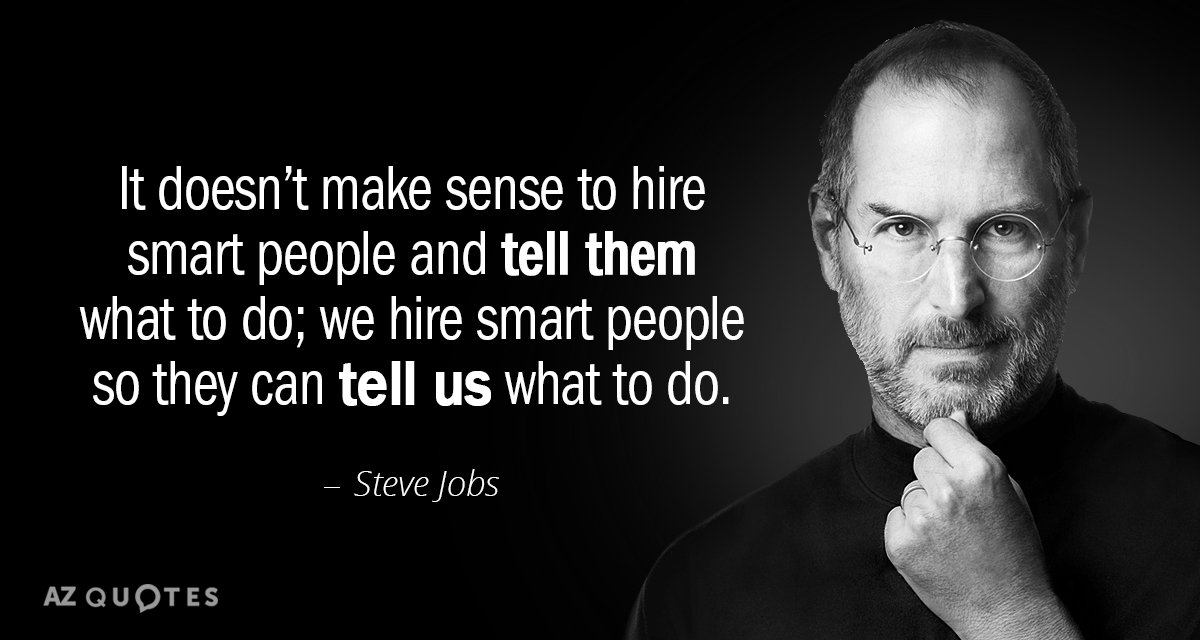
The best leaders surround themselves with intrinsically motivated individuals who will not only perform at a high level with little oversight but will also push the leader to reflect and grow continually.  One of the most important decisions a leader can make is either through hiring new employees or placing current staff in a position to lead change even if he or she doesn’t have a specific title.  Steve Jobs famously said, “It doesn’t make sense to hire smart people and tell them what to do; we hire smart people so they can tell us what to do.” Don’t ever think you have the best ideas or answers because you don’t. If you work with someone who thinks he or she does, then that person is not a leader.  Leadership means we must be willing to check our pride at the door if leading change and success are the ultimate goals.


Always try to hire or surround yourself with people that are smarter than you. This should be the most natural part of a two-step process.  The next step requires giving up some control and trust.  It is this next step where great leaders get out of the way of people who have been empowered for their respective expertise. When I think back to my time as a principal, I tried hard to embody this.  When a math position opened many years ago, I hired Kanchan Chellani.  She didn’t tell me what to do per se, but little did she know that her actions did.  Her ability to effectively implement and model flipped learning in a pedagogically-sound way sent the message to me as a leader that I needed to work better to support the rest of the math department in this area. 

Another great example was the hiring of Laura Fleming.  I desperately needed an innovative leader in the library who could transform the space in a quick amount of time.  She hit the ground running and had full control over her budget and the autonomy to make any decision related to the space that would benefit our learners.  Successfully launching a makerspace was what she is known for, but her real impact was how she empowered learners regardless of labels and perceived abilities to find success in ways that they never had.  Laura not only transformed the space but her actions and resolve helped to transform the entire learning culture of the school and ultimately the district. Her creation of a micro-credential platform came well before any companies began to monetize them and pushed our teachers to learn in different ways regardless of time or place.

Being told what to do can come in many forms. Laura and Kanchan represented just two of the many teachers that I hired as a principal who indirectly told me what I should do through their actions.  There were also may other teacher leaders, as well as members of my admin team, who were not only wicked smart but also leveraged the professional relationship they had with me to guide me in a better direction at times. Depending on others for guidance and wisdom is not a sign of weakness. On the contrary, it a definitive sign of strength. Effective leadership relies on making smart decisions. Make it easy on yourself. Hire or surround yourself with smart people, get out of their way, and don’t be afraid to let them “tell” you what to do. You need these people in your circle if you want to succeed as a leader. 


When it comes to leadership and people:
  1. Hire or surround yourself with smart people.
  2. Listen to them
  3. Get out of their way
  4. Leverage their expertise
Enough said.

Below are some more of my thoughts.


Sunday, April 22, 2018

Cognitive Flexibility: Paving the Way For Learner Success

A few years back the World Economic Forum came out with an article titled The 10 skills you need to thrive in the Fourth Industrial Revolution. The opening two paragraphs sum up the point of the piece nicely:
By 2020, the Fourth Industrial Revolution will have brought us advanced robotics and autonomous transport, artificial intelligence and machine learning, advanced materials, biotechnology, and genomics. 
These developments will transform the way we live, and the way we work. Some jobs will disappear, others will grow and jobs that don’t even exist today will become commonplace. What is certain is that the future workforce will need to align its skillset to keep pace.

The image above shows the skills that will be most in demand in 2020 and probably well beyond. After reading this article I was extremely interested in how schools and educators provide opportunities for learners to not only acquire these skills but also illustrate competence in how they are applied. Some of the skills and how leaners can demonstrate competency are self-explanatory.  Others are not.  This led me to focus on one skill in particular that crept onto the list at number 10 – cognitive flexibility.  What does this skill entail?  Below is a good definition from the University of Miami:
Cognitive flexibility is the ability to shift our thoughts and adapt our behavior to the changing environment. In other words, it’s one’s ability to disengage from a previous task and respond effectively to a new one. It’s a faculty that most of us take for granted, yet an essential skill to navigate life. 
Spiro & Jehn (1990, P. 65) provide another look at the skill:
By cognitive flexibility, we mean the ability to spontaneously restructure one’s knowledge, in many ways, in adaptive response to radically changing situational demands.
Both definitions seamlessly align with Quad D learning based on the Rigor Relevance Framework as described below:
Students have the competence to think in complex ways and to apply their knowledge and skills they have acquired. Even when confronted with perplexing unknowns, students are able to use extensive knowledge and skill to create solutions and take action that further develops their skills and knowledge.
In my mind, cognitive flexibility might be the most important skill on the list as it incorporates so many of the others in some form or another.  Below are a few ideas and strategies on how to help learners develop this important skill:

  1. Design learning activities the support divergent thinking where learners demonstrate understanding in creative and non-conventional ways.
  2. Empower students to identify a solution and then come up with a workable solution in a makerspace.
  3. Allow students to explore a topic of interest in OpenCourseware and then demonstrate what they have learned in non-traditional ways (see IOCS).
  4. Implement personalized learning opportunities where students think critically, openly explore, and then do using their own intuitive ideas to learn in powerful ways.
  5. Engage students in a real-world application in unanticipated situations where they use their knowledge to tackle problems that have more than one solution. 
  6. Provide pathways for students to transfer learning to a new context. 

How we prepare our learners for the new world of work has to be a uniform focus for all schools.  The key to future-proofing education and learning is to get kids to think by engaging them in tasks that develop cognitive flexibility.  

Sunday, March 12, 2017

Learning is the Reward

Let’s face it, school, as we know it is driven by grades as the main reflection of what students do, or do not, know.  What has resulted is a rat race of sorts where many kids and parents alike have their eye on the prize. The prize in this case is either a coveted letter or number grade that is celebrated above the most important aspect of education – whether a student actually learned and can apply this newly constructed knowledge in meaningful ways. Micro-credentials, although a step in a better direction as a means to make feedback more personal, can also perpetuate this problem.  

The process of grading is convoluted and fraught with errors and at times arbitrary decisions.  Just think about the inherent disaster of points systems. Many grades are determined using an accumulation of points over a set amount of time including homework (just checked for completeness), extra-credit, meeting (or failing to meet) behavioral expectations, participation, or a loss of points for late assignments.  The last example illustrates how many grades are nowhere close to indicating what a student has actually learned. The issues with grading are not new.  After an analysis of several research studies, Alfie Kohn (2011) concluded the following:
  • Grades tend to diminish students’ interest in whatever they’re learning.  
  • Grades create a preference for the easiest possible task.
  • Grades tend to reduce the quality of students’ thinking.
Grading perpetuates a bigger problem.  If students come through our doors each day to just "do school" then we have already failed them. By failure I mean a blatant disregard for providing them with the necessary skills, behaviors, and qualities that a grade could never quantify.  Grading is a major component compelling kids to just go through the motions and “do” school. Learning, not grades, should be the reward for students. Helping them recognize this is the challenge we must all accept. I recently came across the learning pit concept and it immediately resonated with me.  With learning as not only the goal, but also the final outcome, students are guided through a process that illustrates how learning is the ultimate reward. When grades are thrown into the mix the focus becomes a path of least resistance, negating the positive outcomes associated with students experiencing the learning pit. 


Image credit: http://francinemassue.weebly.com/

What is the hard truth about traditional grades and how they are currently used? In this day and age I think grades are more for parents and schools than they are for the students we are trying to serve. Learning is not only a messy process, but it the path also varies greatly from student to student. All kids learn differently and possess different and unique abilities to show us that they understand concepts. Makerspace work and projects that students engage in are a great example of this point. Students do to learn through trial and error, failure, collaboration, cross-disciplinary connections, taking risks, and overcoming certain fears that grades bring about. The ultimate reward is making something that does something and in many cases this is a workable solution to a problem they identified. 

I think we are a long way off from abolishing all grades.  That doesn’t mean we can’t critically reflect on the role grades play and how they are calculated.  If the true goal of schools is learning then that should be reflected somehow in a grade.  We must begin by developing better formative and summative assessments that move away from students telling us what they know and instead show us that they understand. A mindset shift is also needed where students work and think in ways that allow them to experience the inherent rewards of entering and exiting the learning pit.  This is Quad D learning at its finest. 

Sunday, August 7, 2016

Making is a Process

No two makerspaces should be exactly alike, because no two school communities are exactly alike. Properly planning your makerspace will ensure that you uncover themes that are unique and meaningful to your school.  It will ensure that your space is vibrant and relevant, as well as one that is sustainable into the future. “ – Laura Fleming, author of Worlds of Making

When we created our makerspace at New Milford High School many years ago we never fully realized the positive impact it would have on our learners. In a time where wood shop, metal shop, and agriculture were cut for the mere reason that the content was deemed non-essential or could not be tested something had to change. This was the reality for many schools in the Northeast. In our particular case not having trade-based courses was devastating as one third of our population was classified special needs. For all intensive purposes most of these students could care less about the curriculum, Common Core Standards, or standardized tests (i.e. PARCC).  The creation and evolution of our makerspace solved this problem.

The premise was simple; allow students to utilize guided inquiry in an informal learning environment that was facilitated by the use of real-world tools to do real-world work. Students were not only able to actively explore their passions, but also learn from failure as well as trial and error.  Our students thrived in an environment where the word “fail” really stood for first attempt in learning. There was no clearer evidence of this as when students were using old computer parts to design and create an entirely new operating system from scratch.

The makerspace was less about the latest technological gadget and more about the process of tinkering, inventing, creating, and making to learn. This is probably the single most important lesson I learned from Laura Fleming, the teacher librarian extraordinaire who was the original architect of our makerspace.  I say original architect as after the space was initially established she empowered the students to chart its course going forward. Success rested in her ability to focus on her role as a facilitator or coach as opposed to someone who knew who to use all the stuff.  She was the quintessential guide to possibilities who unlocked the learning potential of our students.  

In a time when we tend to focus on the next big thing in technology we learned that planning was key and that a focus on learning and pedagogy would help us to achieve better learning outcomes for our students. This was true for many of our change efforts including BYOD, blended learning, and virtual learning. The makerspace was no different. We meticulously planned with our students a vision for how the space would foster powerful learning experiences grounded in rigor, relevance, and relationships. Maker activities naturally align themselves to Quad D work as outlined by the Rigor Relevance Framework. It is through these hands-on activities that students employ a range of higher-order thinking skills to solve real-world, unpredictable problems that have more than one solution. Through this engaging process students also readily make connections to a range of other disciplines. 

Planning is key. Many people take the approach of ordering equipment and materials before taking time to plan out the space (same can be said with 1:1 initiatives). This should be the last step. Talk to your students, watch them, and understand their needs, wants, and interests first. Assess existing curricula, programs, and offerings within your school community Consider global trends and best practices, which will then help you to develop themes.  After considering these important steps a systematic approach to ordering technology and other items will help to create a makerspace that best meets the needs of your learners.


Process is everything. I try to emulate this when I conduct hands-on makersapce workshops.  The key takeaway that I want educators to leave with is a focus on open-ended exploration.  There is no better prompt than make something that does something. It is simple, yet so powerful in that educators (or in your case students) have to work collaboratively to come up with a creative solution to solve a problem. Take a look at this video from a workshop I recently conducted (also below). In addition to set materials that I provided, I encouraged attendees to utilize anything else they could find. The results were nothing less than spectacular.


The most important aspect of a makerspaces is that it can spark your student’s natural desire to learn.  I think we can all agree this should be the intended outcome when leading the maker movement. With a careful attention to planning and design thinking your makerspace can transform the learning culture of your school like ours did.

Sunday, April 3, 2016

Change Needed Today to Prepare for Tomorrow

There is always a great deal of talk about what schools need to do now. The problem though is that most of the talk is not followed with action. Then there are those who want to act, but do not have the adequate support to do so. Herein lies the issue with all the change talk, rhetoric, and opinions.  Very few people reading this post will deny that the education system has to change now or we run the risk of preparing students for a world that no longer exists. 


Change is needed today to ensure learner success in the modern era, but just as importantly to prepare them for the unique challenges of tomorrow.  The reality though is that change in education becomes a balancing act with pressure from stakeholders on one side demanding increases in achievement as measured by standard metrics such as test scores. On the other side is the need to innovate in order to successfully cultivate the next generation of thinkers, doers, inventors, and creators who will be able to solve some pretty serious global problems in the not so distant future.  We have to stop looking at each side of the balance here and begin to focus on disrupting the system with bold ideas that blend results with meaningful learning.

Hence, I come back to the need to support schools and educators in this endeavor. For over 20 years the Model Schools Conference has provided educators with a learning experience driven by the districts, schools, and educators who have closed the achievement gap.  There is no better way to learn what works in a seemingly endless debate about the needed change in schools than from those who have successfully done it.  As a Senior Fellow with the International Center for Leadership in Education, one of my responsibilities is to help provide practical strategies for accomplishing change in the digital age. As many readers of this blog know, I am a huge proponent of innovative change that leads to actual results in teaching, learning, and leadership.  This has resulted in innovative changes to the Model Schools Conference to provide attendees with the skills, tools, strategies, and mindset to initiate sustainable change. 

Here are some highlights and areas of focus for this year’s event:
  • Closing the achievement gap and digital divide – Teams from model districts and schools will present proven pedagogical and leadership strategies on how they accomplished this in challenging times. There will even be a special Future Ready Schools strand.
  • Innovative spaces for attendees to learn inDesign empowers learning, which is why we want attendees to experience this firsthand. Connections will then be made to how we can begin to transform spaces in our schools to improve student-learning outcomes. LEGO will also be on hand to lead immersion sessions on the importance of creativity in learning. 
  • Making to learn – For the second year straight there will be a working makerspace staffed by local students and outfitted by Table Top Inventing. What better why to see how making impacts learning than through our own students?
  • The power of virtual reality – As a result of Houghton Mifflin Harcourt’s strategic partnership with Google, there will be an immersion experience for attendees using Google Cardboard and Expeditions. Attendees will also be exposed to emerging ways on how virtual reality can support rigorous learning.
  • Return on Instruction – A hallmark of the conference will be a focus on the Collaborative Instructional Review (CIR) process, which will be on full display.  This process can help transform every administrator into an instructional leader, capable of unlocking the instructional power of every teacher and, in turn, the learning potential of every student.

In addition to the awesomeness listed above, numerous sessions will be led by some of the most prominent thought leaders and practitioners in education today.  Join us to get the support to initiate the change needed today to prepare for tomorrow. For the latest updates follow along on Twitter using #ModelSchools.

Sunday, November 1, 2015

Free Resources to Support Your Makerspace

The embracement of the maker movement is being seen in K-12 schools and districts across the world. As a result, makerspaces are being instituted to allow students to tinker, invent, create, and make to learn.  A makerspace can best be defined as a physical place where students can create real-world products/projects using real-world tools in a shared work space. With natural connections and applications to STEAM areas as well as a focus on self-directed, inquiry-based, and hands on learning, it is difficult not to appreciate and admire the positive impact that makerspaces can have on all students. In times when many schools and districts have cut programs such as wood/metal shop and agriculture, makerspaces provide a 21st Century alternative to meet the learning needs of our most at-risk students.  


There is no need to reinvent the wheel here, as there are many resources available. For a curated list of online resources related to makerspaces check out this Pinterest board. To learn more in depth about the concepts associated with making be sure to purchase the book World’s of Making by Laura Fleming and check out her website. It has everything you need to get started, including suggested items to outfit the space. She also has generated a step-by-step flow chart that will assist you in your makerspace planning. 

Initially, planning will cost some money and that is unavoidable. However, once you have established your makerspace and outfitted it with key items and tools there are many free resources available for you to take advantage of.  Below I will briefly describe some of the key makerspace items to purchase and then free resources that will help you and your students maximize the expense.  The items include Raspberry Pi, littleBits, MaKey MaKey, Arduino, and MinecraftEdu. Descriptions have been pulled from the respective website of each product.

Raspberry Pi

This is a low cost, credit card sized computer that plugs into a computer monitor or TV, and uses a standard keyboard and mouse. It is a capable little device that enables people of all ages to explore computing, and to learn how to program in languages like Scratch and Python.  Teach, learn, and make with Raspberry Pi’s free learning resources.

littleBits

This is a platform of easy-to-use electronic building blocks that empower you to invent anything from your own remote controlled car to a smart home device. The Bits snap together with magnets - no soldering, no wiring, no programming needed. These magnets are great for prototyping and learning. littleBits provides an array of free lessons (beginner, intermediate, advanced) for different grades and subject areas. 

MaKey MaKey

I love MaKey MaKey and so will your students!  It is an invention kit for the 21st century that allows you to turn everyday objects into touchpads and combine them with the Internet.  The simple Invention Kit is perfect for Beginners and Experts doing art, engineering, and everything in between. Each kit comes with a MaKey MaKey, Alligator Clips, USB Cable. Be sure to check out these free lesson plans 

Arduino

This is an open-source prototyping platform based on easy-to-use hardware and software. An arduino is commonly referred to as a microcontroller that can be used for building digital devices and interactive objects that can sense and control the physical world.  This has been the brain of thousands of projects, from everyday objects to complex scientific instruments. HERE is a fantastic tutorial that will assist you and your students create maker projects using arduino.  For even more information visit Arduino Classroom

MinecraftEdu

To put it bluntly, Minecraft is overtaking the world and the game is beloved by students of all ages.  I commonly refer to it as “Legos on steroids.” It is a sandbox independent video game where players dig (mine) and build (craft) different kinds of 3D blocks within a large world of varying terrains and habitats to explore. In schools it is being used to teach all kinds of skills and subjects from math to foreign languages to social justice to fair trade.  Getting a MinecraftEdu license and making it available on computers in the makerspace is a fantastic addition to the area.  The MinecraftEdu Wiki has tons of resources ranging from lesson examples, worksheets/handouts, alignment to curricula and standards, and many other nuggets of awesomeness.

I hope you enjoy these free resources and ideas as your makerspace evolves or if you are beginning the process of creating one. If you have any other free resources please provide them in the comments section below.