Showing posts with label Maker Movement. Show all posts

Sunday, December 16, 2018

Making is in Our DNA

I have such fond memories of the time I had with both my grandfathers, albeit much too short as one of them was taken from us too soon.  Each of them had such a great fondness for the outdoors, which influenced my decision to pursue degrees in marine environmental science and biology.  William Sheninger, or “Pappy” as we called him, was always outside fixing things and my brothers and I would often hover around to see what he was doing.  Robert Lewis, otherwise known as “Grandpop”, lived on the Jersey Shore and loved to fish in the surf.  Each morning when we visited, he would be out there like clockwork.  My brothers and I loved when he would catch sand sharks and place them in a nearby gully for us to observe. 

Besides the outdoors, both of my grandfathers had an interest in making things in a world that had yet to experience the types of disruptive changes that we are now seeing thanks to the exponential evolution of technology.  It was the late 1970’s and 1980’s after all.  At the time I only viewed these activities as hobbies, but now see that the time they both invested was much more.  Their passion manifested itself into unique creations that involved skill, knowledge, and patience to learn through doing.  Much of what they were doing didn’t make sense as it was the complete opposite of what I was doing in school. 

Pappy was the ultimate engineer as his day job was that of a master mechanic this comes as no surprise. He could take any broken tractor and either fix it entirely or design a whole new contraption.  I remember him re-engineering one tractor so that we could use it to ride through trails we had created in the acres of forest behind our house. It was amazing how he could get almost anything to work no matter what condition it was in.  His hands were always dirty.  Beyond mechanical devices, he was still willing to put his knowledge and skills to help out my brothers and me.  When my twin and I became fascinated with camping, he said let’s make a campsite.  Pappy helped us raise and then level a site in the woods out back.  He also helped us build a fire pit with old scrap metal to ensure that the hot coals wouldn’t spark any nearby debris.  Even though he did not have a college degree, Pappy was one of the most brilliant people I have ever known.

Grandpop also made things with his hands, but his creations were much different than that of my other grandfather.  During the day he was a certified life insurance underwriter for New York Life and had years of higher education beyond a bachelor’s degree. On evenings and weekends, he engaged in another job, but not one to make money.  In the guest room of his house was a workstation where he made jewelry.  One of the favorite stones he loved to work with was the Australian white/light opal. He also worked with amethyst since my grandmother loved the color purple.  They had purple carpet for crying out loud. Grandpop would make necklaces, rings, and pendants all of which he would give to my grandmother and other family members.  He was also fond of Cape May diamonds, which he collected on the beach in Ocean City, NJ. I remember scouring the beach with my brothers to locate these stones for him, after which we would use them to make some incredible jewelry.


With all the hoopla in regards to maker education and makerspaces I wanted to take a minute to share that this is not a new concept. Has it evolved – definitely! The process of making has been in our DNA since the dawn of human civilization to create tools for hunting and survival.  For many of us who grew up before the Internet, we spent countless hours playing with popular toys such as LEGO’s, Lincoln Logs, Construx, and Erector Sets.  It has also been the livelihood for many people and a focus on hobbies or passion projects.  Now we have 3D printers, Arduino’s, Raspberry Pi’s, Little Bits, Makey-Makey’s and an array of other innovative technologies to unleash the maker in all kids.  Regardless of the tool, the process is rooted in constructionism, which can be traced back to constructivism. Jonan Donaldson sums it up nicely:
Terms such as collaborative learning, project-based learning, metacognition, inquiry-based learning, and so on, might be new to some audiences, but they have a relatively long and well-documented history for many educators. The most widely-known and promising pedagogical approach is constructivism grounded on the work of Piaget, Vygotsky, and Bruner. Constructionism brings creativity, tinkering, exploring, building, and presentation to the forefront of the learning process.
It was Seymore Papert who developed the theory of constructionism.  Donaldson goes on to write:
Constructionism, a theory developed by Seymour Papert, articulates a theoretical foundation for learning based on creativity, tinkering, exploring, building, and presentation. Papert had previously worked with Jean Piaget but felt that Piaget’s constructivism placed too much emphasis on the internal mental processes of learners. He insisted that learning occurs not only through learners constructing meaning but also through constructing real-world inventions which can be shared with others. He argues that the construction that takes place ‘in the head’ often happens especially felicitously when it is supported by construction of a more public sort ‘in the world’—a sand castle or a cake, a Lego house or a corporation, a computer program, a poem, or a theory of the universe. Part of what is meant by ‘in the world’ is that the product can be shown, discussed, examined, probed, and admired. It is out there.
The connections above to the maker movement are indiscernible.  He goes on to share the following synopsis of constructionism penned by Kafai, Peppler, & Chapman (2009).
Constructionism is based on two types of construction. First, it asserts that learning is an active process, in which people actively construct knowledge from their experience in the world. People don’t get ideas; they make them. This aspect of construction comes from the constructivist theory of knowledge development by Jean Piaget. To Piaget’s concept, Papert added another type of construction, arguing that people construct new knowledge with particular effectiveness when they are engaged in constructing personally meaningful products.
When it is all said and done, the process of making is a powerful catalyst for meaningful learning.  In some cases, it can be the identification of a problem followed by the development of a workable solution.  How Pappy approached making is an excellent example of this. On the other hand, it can be the creation of meaningful products that are personal in nature, like what Grandpop created or how many kids have used building toys listed previously. Age is irrelevant.  Making is and has been, in our DNA forever.  Sure, the tools have changed, but the will to tinker, create, and invent hasn’t. The role of educators and schools is to seize on the opportunity inherent in this type of learning to unlock the potential in all of our kids not for grades, but instead the gratification of creating something that has meaning to the creator. There is no finer beauty in learning than making something that matters. 

For more ideas, strategies, and resources related to maker education check out this Pinterest board. 

Sunday, January 29, 2017

Learning is Not Linear

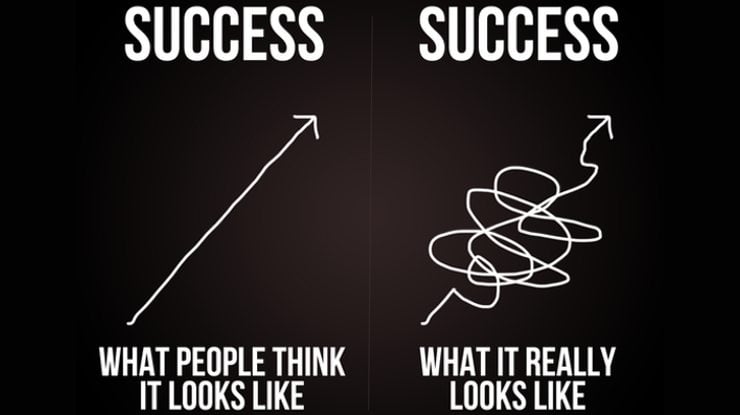
I think, for the most part, everyone strives for success.  We want to be successful in our professional as well as our personal lives.  I strived to be the best possible principal for my students, staff, and community.  Whether I was successful is a matter of perspective. My evaluations seemed to support the fact that I might have been.  I was far from perfect, but always strived for constant improvement. When I reflect upon what was accomplished during my time leading New Milford High School I think many observers would consider my leadership a success based on what we all accomplished together.  Our digital transformation, backed by evidence of improved learner outcomes, has been well documented.  In the eyes of many this is success. 

As I have transitioned into my new role over the past two years as a Senior Fellow for the International Center for Leadership in Education, I continue to set the bar high for myself. Again, whether I am successful is open for debate. Some observers might see the publishing of books as an indicator of success. Others could equate keynotes in the same manner.  No matter what someone’s view of success is, I can tell you one thing for certain – it is not a linear process. No one goes from point A to B by following a predetermined path or script. The question then becomes why does school, for the most part, focus on a linear transition that manifests itself in the form of curriculum? This is just one example that flies in the face of unleashing the talents of our students while teaching them what success really is. 


Success results from a series of experiences that include constructing then applying new knowledge, failure, persistence, commitment, perseverance, adaptation, evolution, and most of all reflection. There are so many images out there that illustrate the concept of success being like an iceberg.  In the eyes of many people, success is only what you see or a final product.  The reality is that success really is a unique combination of behaviors, skills, and mindset shifts. The recipe is different for everyone as well as the criteria used to determine success. The fact remains though that the path to success is always convoluted. 


Image credit: Sylvia Duckworth

Learning and success are intimately intertwined.  You can’t be successful if you don’t learn. You learn to eventually experience some sort of success in life. Learning, like success, is anything but a linear process.  As such we need to be more mindful of the experiences and structures in our schools if the goal, which it should be, is to prepare students to succeed in their future.  This includes the new world of work where in a few short years many of the jobs that exist today won’t.  If we continue to prescribe students to a one-size-fits-all approach in classrooms that have remained relatively unchanged we are in a sense forcing them down a linear path. Instead of a focus on learn to do, schools need to shift their practices and create a culture where students do to learn.

Students learn differently and have hidden talents that we must unleash. This is why I love the maker movement and makerspaces in particular.  Nothing, in my opinion, illustrates to kids the many pathways to success than learning with their hands through trial and error, open-ended exploration, and authentic problem solving.  Education needs some disruptive innovation.  We must lend a critical eye to our pedagogy, especially the way we assess and provide feedback to students. It is time for us to work harder to upend the status quo by redefining success in learning. Are you with me?

Sunday, August 7, 2016

Making is a Process

“No two makerspaces should be exactly alike, because no two school communities are exactly alike. Properly planning your makerspace will ensure that you uncover themes that are unique and meaningful to your school.  It will ensure that your space is vibrant and relevant, as well as one that is sustainable into the future. “ – Laura Fleming, author of Worlds of Making

When we created our makerspace at New Milford High School many years ago we never fully realized the positive impact it would have on our learners. In a time where wood shop, metal shop, and agriculture were cut for the mere reason that the content was deemed non-essential or could not be tested something had to change. This was the reality for many schools in the Northeast. In our particular case not having trade-based courses was devastating as one third of our population was classified special needs. For all intensive purposes most of these students could care less about the curriculum, Common Core Standards, or standardized tests (i.e. PARCC).  The creation and evolution of our makerspace solved this problem.

The premise was simple; allow students to utilize guided inquiry in an informal learning environment that was facilitated by the use of real-world tools to do real-world work. Students were not only able to actively explore their passions, but also learn from failure as well as trial and error.  Our students thrived in an environment where the word “fail” really stood for first attempt in learning. There was no clearer evidence of this as when students were using old computer parts to design and create an entirely new operating system from scratch.

The makerspace was less about the latest technological gadget and more about the process of tinkering, inventing, creating, and making to learn. This is probably the single most important lesson I learned from Laura Fleming, the teacher librarian extraordinaire who was the original architect of our makerspace.  I say original architect as after the space was initially established she empowered the students to chart its course going forward. Success rested in her ability to focus on her role as a facilitator or coach as opposed to someone who knew who to use all the stuff.  She was the quintessential guide to possibilities who unlocked the learning potential of our students.  

In a time when we tend to focus on the next big thing in technology we learned that planning was key and that a focus on learning and pedagogy would help us to achieve better learning outcomes for our students. This was true for many of our change efforts including BYOD, blended learning, and virtual learning. The makerspace was no different. We meticulously planned with our students a vision for how the space would foster powerful learning experiences grounded in rigor, relevance, and relationships. Maker activities naturally align themselves to Quad D work as outlined by the Rigor Relevance Framework. It is through these hands-on activities that students employ a range of higher-order thinking skills to solve real-world, unpredictable problems that have more than one solution. Through this engaging process students also readily make connections to a range of other disciplines. 

Planning is key. Many people take the approach of ordering equipment and materials before taking time to plan out the space (same can be said with 1:1 initiatives). This should be the last step. Talk to your students, watch them, and understand their needs, wants, and interests first. Assess existing curricula, programs, and offerings within your school community Consider global trends and best practices, which will then help you to develop themes.  After considering these important steps a systematic approach to ordering technology and other items will help to create a makerspace that best meets the needs of your learners.


Process is everything. I try to emulate this when I conduct hands-on makersapce workshops.  The key takeaway that I want educators to leave with is a focus on open-ended exploration.  There is no better prompt than make something that does something. It is simple, yet so powerful in that educators (or in your case students) have to work collaboratively to come up with a creative solution to solve a problem. Take a look at this video from a workshop I recently conducted (also below). In addition to set materials that I provided, I encouraged attendees to utilize anything else they could find. The results were nothing less than spectacular.


The most important aspect of a makerspaces is that it can spark your student’s natural desire to learn.  I think we can all agree this should be the intended outcome when leading the maker movement. With a careful attention to planning and design thinking your makerspace can transform the learning culture of your school like ours did.

Sunday, November 1, 2015

Free Resources to Support Your Makerspace

The embracement of the maker movement is being seen in K-12 schools and districts across the world. As a result, makerspaces are being instituted to allow students to tinker, invent, create, and make to learn.  A makerspace can best be defined as a physical place where students can create real-world products/projects using real-world tools in a shared work space. With natural connections and applications to STEAM areas as well as a focus on self-directed, inquiry-based, and hands on learning, it is difficult not to appreciate and admire the positive impact that makerspaces can have on all students. In times when many schools and districts have cut programs such as wood/metal shop and agriculture, makerspaces provide a 21st Century alternative to meet the learning needs of our most at-risk students.  


There is no need to reinvent the wheel here, as there are many resources available. For a curated list of online resources related to makerspaces check out this Pinterest board. To learn more in depth about the concepts associated with making be sure to purchase the book World’s of Making by Laura Fleming and check out her website. It has everything you need to get started, including suggested items to outfit the space. She also has generated a step-by-step flow chart that will assist you in your makerspace planning. 

Initially, planning will cost some money and that is unavoidable. However, once you have established your makerspace and outfitted it with key items and tools there are many free resources available for you to take advantage of.  Below I will briefly describe some of the key makerspace items to purchase and then free resources that will help you and your students maximize the expense.  The items include Raspberry Pi, littleBits, MaKey MaKey, Arduino, and MinecraftEdu. Descriptions have been pulled from the respective website of each product.

Raspberry Pi

This is a low cost, credit card sized computer that plugs into a computer monitor or TV, and uses a standard keyboard and mouse. It is a capable little device that enables people of all ages to explore computing, and to learn how to program in languages like Scratch and Python.  Teach, learn, and make with Raspberry Pi’s free learning resources.

littleBits

This is a platform of easy-to-use electronic building blocks that empower you to invent anything from your own remote controlled car to a smart home device. The Bits snap together with magnets - no soldering, no wiring, no programming needed. These magnets are great for prototyping and learning. littleBits provides an array of free lessons (beginner, intermediate, advanced) for different grades and subject areas. 

MaKey MaKey

I love MaKey MaKey and so will your students!  It is an invention kit for the 21st century that allows you to turn everyday objects into touchpads and combine them with the Internet.  The simple Invention Kit is perfect for Beginners and Experts doing art, engineering, and everything in between. Each kit comes with a MaKey MaKey, Alligator Clips, USB Cable. Be sure to check out these free lesson plans 

Arduino

This is an open-source prototyping platform based on easy-to-use hardware and software. An arduino is commonly referred to as a microcontroller that can be used for building digital devices and interactive objects that can sense and control the physical world.  This has been the brain of thousands of projects, from everyday objects to complex scientific instruments. HERE is a fantastic tutorial that will assist you and your students create maker projects using arduino.  For even more information visit Arduino Classroom. 

MinecraftEdu

To put it bluntly, Minecraft is overtaking the world and the game is beloved by students of all ages.  I commonly refer to it as “Legos on steroids.” It is a sandbox independent video game where players dig (mine) and build (craft) different kinds of 3D blocks within a large world of varying terrains and habitats to explore. In schools it is being used to teach all kinds of skills and subjects from math to foreign languages to social justice to fair trade.  Getting a MinecraftEdu license and making it available on computers in the makerspace is a fantastic addition to the area.  The MinecraftEdu Wiki has tons of resources ranging from lesson examples, worksheets/handouts, alignment to curricula and standards, and many other nuggets of awesomeness.

I hope you enjoy these free resources and ideas as your makerspace evolves or if you are beginning the process of creating one. If you have any other free resources please provide them in the comments section below.

Sunday, June 28, 2015

The Philosophy Behind Maker Success

For many students, school has become an irritating experience grounded in boring lessons and learning activities. A national focus on standardized testing and accountability has only made the experience worse for kids who only crave relevance, meaning, and value out of the hours of time spent in classrooms each school year.  To make matters worse, many states, districts, and schools made knee-jerk reactions when the budget ax came down a few years and cut traditional hands-on courses such as wood shop, agriculture, metal shop, and cooking. In many cases, elementary schools have even taken the fun out of school for kids by cutting recess.  

These courses represented a lifeline and a glimmer of hope in what has become a day fraught with relentless preparation for college and careers.  However, the powers that be found that they consumed precious time from the school day that could have been spent on more important curricular endeavors.  In the end, students, especially those most at-risk based on learning needs, have immensely suffered.  They desperately need an outlet during the long school day.  If not, their motivation to learn in all their other classes will wane, resulting in either a lack of effort or desire to even attend school.  The bottom line is that many schools have deprived students of real-world learning experiences that are needed now more than ever. 

This might seem like a bleak scenario that I describe above and it should.  Our students deserve activities that will not only prepare them for vital trade careers but also allow them to openly explore the solving of problems that are relevant to them. During my tenure as New Milford High School Principal, our district cut wood and metal shop.  Over the years, I have also seen recess time dwindle for my own kids and others who attend the New York City Public School System.  All hope is not lost, though, for any school looking to create a better learning environment that works for kids.  The solution for all schools comes in the form of makerspaces. 

A few years back, I heard of the concept when I was a principal.  When I hired Laura Fleming in 2013 to take over the traditional library, she was tasked with giving it a reboot and was given complete autonomy to do so. Her vision and subsequent plan resulted in a collaborative learning space open to all students where they could come to tinker, invent, create, and make to learn.  It was like having a 21st Century version of wood and metal shop back in school, with the main difference being the infusing of technologies for students to engage in informal, self-directed learning tasks.  Her Worlds of Making theme gave hope back to kids that had lost and needed it most. Don't just take my word for it. Read about what the makerspace did for Chris HERE.

There is a great deal of content out there about maker education. In addition to Laura’s website and book, I highly recommend you check out the work of Jackie Gerstein. Laura also collaborated with Steven and Debby Kurti from Tabletop Inventing to publish a series of articles featured in Teacher Librarian magazine that not only discuss the philosophy of makerspaces, but also provide practical implementation tips. Below are the three articles:

Schools today have a golden opportunity in makerspaces to increase relevancy while providing powerful ways for students to engage in self-directed learning. When embarking on this initiative, don't discount the importance of leadership during the planning, implementation, and evaluation process.

Sunday, January 4, 2015

Leading the Maker Movement

Over the past year more and more schools across the globe have embraced the concept of making to learn.  This phenomenon trickled into schools as the Maker Movement became more popular and natural connections to learning became quite evident.  To begin to understand the educational value of making we must look at the roots of this movement.  A recent article in Newsweek sums it up nicely: 
THE MAKER MOVEMENT is a global community of inventors, designers, engineers, artists, programmers, hackers, tinkerers, craftsmen and DIY’ers—the kind of people who share a quality that Larry Rosenstock says “leads to learning [and]…to innovation,” a perennial curiosity “about how they could do it better the next time.” The design cycle is all about reiteration, trying something again and again until it works, and then, once it works, making it better. As manufacturing tools continue to become better, cheaper and more accessible, the Maker Movement is gaining momentum at an unprecedented rate. Over the past few years, so-called “makerspaces” have cropped up in cities and small towns worldwide—often in affiliation with libraries, museums and other community centers, as well as in public and independent schools—giving more people of all ages access to mentorship, programs and tools like 3-D printers and scanners, laser cutters, microcontrollers and design software.
As the Maker Movement has gained steams schools and educators alike have begun to incorporate makerspaces as exploratory centers for students to invent, tinker, create, and make to learn.  A makerspace can best be defined as a physical place where students can create real-world products/projects using real-world tools.  In 2013 I was fortunate enough to hire media specialist/teacher librarian Laura Fleming, who took the initiative to create a makerspace in our school. Through her work I discovered some guiding principles that might just help you begin to create a makerspace in your school or integrate the process of making across the curriculum.  It is first important to understand three underlying qualities that essential in ensuring that students make to learn:

  1. Making is a process – As with any process, making requires the ability for educators to give up control and trust students. It can be messy and unpredictable, but the products students create, problems they solve, and questions they answer become learning relevant learning experiences they value. Making is guided by a student’s natural inquiry and self-directed learning. Specific skills are require of students, the first of which is knowing what tool to use and how to use it safely. The second involves problem-solving and diagnostic skills that are required to figure out why something won’t work, come up with a creative solution, and not get frustrated. 
  2. The right educator makes the difference – The process of making requires patience on behalf of an educator who will not have all the answers nor know how to help students out every time they experience a problem.  This is quite ok as it is near impossible for someone to have all of the required content knowledge to assist students as they make to learn. The right educator helps students diagnose a problem so that they can create a solution.  He or she guides students through the inevitable highs and lows of making something while tying the process and embedded concepts of various maker projects to different content areas.  This educator understands that there needs to be a fundamental shift from transmitting knowledge to enabling a student to create his/her own solution.  The right person is a coach, models when necessary, and has the mindset of a maker educator.                                                                                                                        
                                             Credit: http://usergeneratededucation.wordpress.com/                                                     
  3. Identify the perfect space – This can be a challenge as available areas to set up a makerspace in many schools are few and far between.  The perfect space must encourage creativity and support the idea that anything is possible. It should contain comfortable seating, have limited rules and control, be flexible, have ubiquitous access to WiFi and technology, and infuse prompts and guides to promote inquiry. Possibilities include the library/media center, classrooms, or a common area of the school. You can even develop a pop-up makerspace or a makerspace on a cart. The possibilities are only limited to your imagination. 
Once you understand the essential qualities to create the perfect makerspace or environment for your students it is time to begin planning.  There is no need to reinvent the wheel here are there are many resources available. For a curated list of online resources related to makerspaces check out this Pinterest board. To learn more in depth about the concepts associated with making be sure to purchase the book Invent to Learn by Gary Stager and Sylvia Martinez.  Laura Fleming's World's of Making website has everything you need to get started, including suggested items to outfit the space with. She also has generated a step-by-step flow chart pictured below that will assist you in your makerspace planning. 


For a maker culture to succeed and thrive in a school, leadership matters. I learned some of these lessons unbeknownst to me as they were only brought to my attention after making to learn became an embedded component of our school culture. Selecting the right person to lead the initiative is pivotal.  Once that is done give him or her the autonomy to make decisions related to the space and process.  Ensure that there is a mutual understanding of the freedom to execute on innovative ideas and create a space that is always in a state of controlled chaos.  Provide encouragement every step of the way, as there will be times when equipment does not work or fellow colleagues attempt to undermine the process due to their own insecurities.  Finally, make sure there is an allocated budget for the maker educator to establish a space that attracts students.  In simple terms, get out of the way.