Showing posts with label Makerspace. Show all posts

Sunday, December 3, 2023

The Role of Place in Personalization

The physical and virtual environments where learning takes place play a pivotal role in shaping the effectiveness and depth of personalized learning strategies. Consider for a moment the impact of the physical classroom. It is not merely a backdrop but an active participant in the learning journey. The arrangement of desks, the presence of collaborative spaces, and the infusion of technology all contribute to the atmosphere that shapes a student's educational experience. As you delve into personalized learning, the importance of tailoring these spaces to accommodate diverse learning needs becomes increasingly evident.

Research consistently underscores the profound impact of physical and virtual learning environments on educational outcomes. According to a study by Tanner and Lackney (2006), the design of physical spaces significantly influences student engagement and academic performance. Flexible seating arrangements, varied learning zones, and interactive elements have been found to correlate positively with increased student motivation and collaboration (Tanner & Lackney, 2006). Furthermore, research by Hattie (2012) emphasizes the importance of creating a positive classroom climate, asserting that the physical layout plays a crucial role in fostering a conducive atmosphere for learning. The influence of virtual learning environments cannot be ignored either. A Means et al. (2013) meta-analysis highlighted the importance of well-designed online platforms, emphasizing their impact on student achievement and satisfaction. As the digital landscape continues to evolve, understanding and optimizing physical and virtual learning spaces is paramount for educational success (Means et al., 2013; Hattie, 2012; Tanner & Lackney, 2006).

Physical Learning Spaces

The traditional classroom setup, with rows of desks facing forward, may not be the most conducive environment for personalized learning. Flexible seating arrangements, breakout spaces, and interactive learning corners empower students to take control of their learning. Recognizing that each student is unique, physical spaces can be designed to cater to various learning preferences, whether it be quiet individual study, collaborative group work, or hands-on experimentation.

Virtual Learning Environments

In our digital age, the concept of place extends beyond physical boundaries. Virtual learning environments, online platforms, and educational apps contribute to the personalized learning ecosystem. The design of these digital spaces, from user interface to interactive features, can significantly influence the engagement and success of personalized learning initiatives. Thoughtful consideration must be given to user experience and accessibility, ensuring the virtual place complements and enhances the learning process.

Outdoor Areas

The importance of outdoor spaces for learning cannot be overstated, as they offer a transformative and holistic dimension to education. Beyond the traditional confines of classrooms, the outdoors provides a dynamic setting that stimulates curiosity, creativity, and a sense of exploration. Nature becomes a powerful teacher, offering biology, ecology, and environmental science lessons in a living laboratory. Beyond academic subjects, outdoor spaces promote physical activity, contributing to students' overall well-being. The fresh air and natural light create an invigorating atmosphere, fostering focus and reducing stress. Moreover, outdoor environments encourage collaboration, teamwork, and social skills as students engage in activities that often require cooperation and communication. By integrating outdoor spaces into the learning experience, educators enrich the academic curriculum and cultivate a love for the environment and a deeper connection to the world around us.

Below are some specific strategies for crafting effective learning spaces:

  • Individualized Learning Zones: Break down traditional classroom barriers by creating individualized learning zones. Each student can have a designated space that aligns with their preferred learning style, whether a quiet corner for reflection or an interactive area for hands-on exploration.
  • Technology Integration: Leverage technology to bridge the physical and virtual learning spaces. Interactive whiteboards, digital collaboration tools, and online resources can seamlessly integrate into the classroom, providing a dynamic and personalized learning experience.
  • Flexible Furniture: The days of static desks and chairs are behind us. Embrace flexible furniture that can be easily rearranged to accommodate different learning activities. This adaptability promotes a sense of ownership over the learning environment.
  • Makerspaces: When I hired Laura Fleming in 2012, I asked her to transform the library into a place where kids not only wanted to read but could also serve as a catalyst for personalization. She did all that and more by creating a makerspace that became revered by our students and educators across the globe. It was a place for learners to collaborate, hack, invent, share, create, make, and do, which is the epitome of personalization. They were given all the tools needed to get started, but where it went was up to them. Learn more about makerspaces HERE.
  • Student-Centric Design: Involve students in the design process. Solicit their input on the classroom layout, the choice of furniture, and technology integration. A student-centric approach ensures that the learning space truly resonates with its inhabitants.

As you embark on the personalized learning journey, consider the impact of place. The physical, outdoor, and virtual environments in which learning unfolds are not passive backdrops but active participants in the educational process. By strategically crafting these spaces to align with the diverse needs of learners, we can amplify the effectiveness of personalized learning initiatives. The power of place extends beyond the confines of walls and screens; it is a dynamic force shaping the essence of how we learn and grow.

Hattie, J. (2012). Visible learning for teachers: Maximizing impact on learning. Routledge.

Means, B., Toyama, Y., Murphy, R., & Baki, M. (2013). The effectiveness of online and blended learning: A meta-analysis of the empirical literature. Teachers College Record, 115(3), 1-47.

Tanner, C. K., & Lackney, J. A. (2006). Approaches to learning space design. Planning for Higher Education, 34(3), 35-50.


Sunday, December 16, 2018

Making is in Our DNA

I have such fond memories of the time I had with both my grandfathers, albeit much too short as one of them was taken from us too soon.  Each of them had such a great fondness for the outdoors, which influenced my decision to pursue degrees in marine environmental science and biology.  William Sheninger, or “Pappy” as we called him, was always outside fixing things and my brothers and I would often hover around to see what he was doing.  Robert Lewis, otherwise known as “Grandpop”, lived on the Jersey Shore and loved to fish in the surf.  Each morning when we visited, he would be out there like clockwork.  My brothers and I loved when he would catch sand sharks and place them in a nearby gully for us to observe. 

Besides the outdoors, both of my grandfathers had an interest in making things in a world that had yet to experience the types of disruptive changes that we are now seeing thanks to the exponential evolution of technology.  It was the late 1970’s and 1980’s after all.  At the time I only viewed these activities as hobbies, but now see that the time they both invested was much more.  Their passion manifested itself into unique creations that involved skill, knowledge, and patience to learn through doing.  Much of what they were doing didn’t make sense as it was the complete opposite of what I was doing in school. 

Pappy was the ultimate engineer as his day job was that of a master mechanic this comes as no surprise. He could take any broken tractor and either fix it entirely or design a whole new contraption.  I remember him re-engineering one tractor so that we could use it to ride through trails we had created in the acres of forest behind our house. It was amazing how he could get almost anything to work no matter what condition it was in.  His hands were always dirty.  Beyond mechanical devices, he was still willing to put his knowledge and skills to help out my brothers and me.  When my twin and I became fascinated with camping, he said let’s make a campsite.  Pappy helped us raise and then level a site in the woods out back.  He also helped us build a fire pit with old scrap metal to ensure that the hot coals wouldn’t spark any nearby debris.  Even though he did not have a college degree, Pappy was one of the most brilliant people I have ever known.

Grandpop also made things with his hands, but his creations were much different than that of my other grandfather.  During the day he was a certified life insurance underwriter for New York Life and had years of higher education beyond a bachelor’s degree. On evenings and weekends, he engaged in another job, but not one to make money.  In the guest room of his house was a workstation where he made jewelry.  One of the favorite stones he loved to work with was the Australian white/light opal. He also worked with amethyst since my grandmother loved the color purple.  They had purple carpet for crying out loud. Grandpop would make necklaces, rings, and pendants all of which he would give to my grandmother and other family members.  He was also fond of Cape May diamonds, which he collected on the beach in Ocean City, NJ. I remember scouring the beach with my brothers to locate these stones for him, after which we would use them to make some incredible jewelry.


With all the hoopla in regards to maker education and makerspaces I wanted to take a minute to share that this is not a new concept. Has it evolved – definitely! The process of making has been in our DNA since the dawn of human civilization to create tools for hunting and survival.  For many of us who grew up before the Internet, we spent countless hours playing with popular toys such as LEGO’s, Lincoln Logs, Construx, and Erector Sets.  It has also been the livelihood for many people and a focus on hobbies or passion projects.  Now we have 3D printers, Arduino’s, Raspberry Pi’s, Little Bits, Makey-Makey’s and an array of other innovative technologies to unleash the maker in all kids.  Regardless of the tool, the process is rooted in constructionism, which can be traced back to constructivism. Jonan Donaldson sums it up nicely:
Terms such as collaborative learning, project-based learning, metacognition, inquiry-based learning, and so on, might be new to some audiences, but they have a relatively long and well-documented history for many educators. The most widely-known and promising pedagogical approach is constructivism grounded on the work of Piaget, Vygotsky, and Bruner. Constructionism brings creativity, tinkering, exploring, building, and presentation to the forefront of the learning process.
It was Seymore Papert who developed the theory of constructionism.  Donaldson goes on to write:
Constructionism, a theory developed by Seymour Papert, articulates a theoretical foundation for learning based on creativity, tinkering, exploring, building, and presentation. Papert had previously worked with Jean Piaget but felt that Piaget’s constructivism placed too much emphasis on the internal mental processes of learners. He insisted that learning occurs not only through learners constructing meaning but also through constructing real-world inventions which can be shared with others. He argues that the construction that takes place ‘in the head’ often happens especially felicitously when it is supported by construction of a more public sort ‘in the world’—a sand castle or a cake, a Lego house or a corporation, a computer program, a poem, or a theory of the universe. Part of what is meant by ‘in the world’ is that the product can be shown, discussed, examined, probed, and admired. It is out there.
The connections above to the maker movement are indiscernible.  He goes on to share the following synopsis of constructionism penned by Kafai, Peppler, & Chapman (2009).
Constructionism is based on two types of construction. First, it asserts that learning is an active process, in which people actively construct knowledge from their experience in the world. People don’t get ideas; they make them. This aspect of construction comes from the constructivist theory of knowledge development by Jean Piaget. To Piaget’s concept, Papert added another type of construction, arguing that people construct new knowledge with particular effectiveness when they are engaged in constructing personally meaningful products.
When it is all said and done, the process of making is a powerful catalyst for meaningful learning.  In some cases, it can be the identification of a problem followed by the development of a workable solution.  How Pappy approached making is an excellent example of this. On the other hand, it can be the creation of meaningful products that are personal in nature, like what Grandpop created or how many kids have used building toys listed previously. Age is irrelevant.  Making is and has been, in our DNA forever.  Sure, the tools have changed, but the will to tinker, create, and invent hasn’t. The role of educators and schools is to seize on the opportunity inherent in this type of learning to unlock the potential in all of our kids not for grades, but instead the gratification of creating something that has meaning to the creator. There is no finer beauty in learning than making something that matters. 

For more ideas, strategies, and resources related to maker education check out this Pinterest board. 

Sunday, January 29, 2017

Learning is Not Linear

I think, for the most part, everyone strives for success.  We want to be successful in our professional as well as our personal lives.  I strived to be the best possible principal for my students, staff, and community.  Whether I was successful is a matter of perspective. My evaluations seemed to support the fact that I might have been.  I was far from perfect, but always strived for constant improvement. When I reflect upon what was accomplished during my time leading New Milford High School I think many observers would consider my leadership a success based on what we all accomplished together.  Our digital transformation, backed by evidence of improved learner outcomes, has been well documented.  In the eyes of many this is success. 

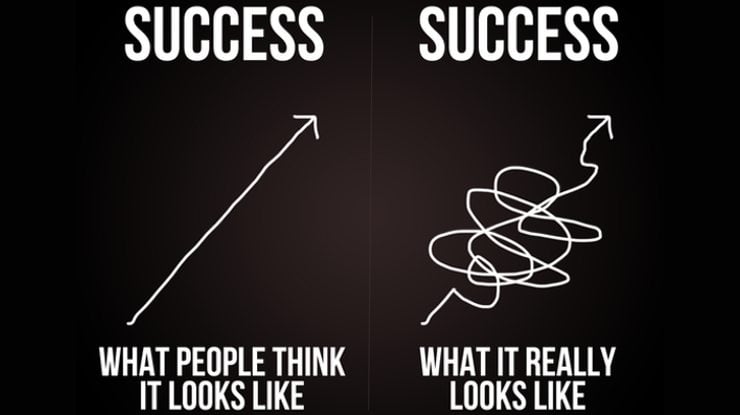
As I have transitioned into my new role over the past two years as a Senior Fellow for the International Center for Leadership in Education, I continue to set the bar high for myself. Again, whether I am successful is open for debate. Some observers might see the publishing of books as an indicator of success. Others could equate keynotes in the same manner.  No matter what someone’s view of success is, I can tell you one thing for certain – it is not a linear process. No one goes from point A to B by following a predetermined path or script. The question then becomes why does school, for the most part, focus on a linear transition that manifests itself in the form of curriculum? This is just one example that flies in the face of unleashing the talents of our students while teaching them what success really is. 


Success results from a series of experiences that include constructing then applying new knowledge, failure, persistence, commitment, perseverance, adaptation, evolution, and most of all reflection. There are so many images out there that illustrate the concept of success being like an iceberg.  In the eyes of many people, success is only what you see or a final product.  The reality is that success really is a unique combination of behaviors, skills, and mindset shifts. The recipe is different for everyone as well as the criteria used to determine success. The fact remains though that the path to success is always convoluted. 


Image credit: Sylvia Duckworth

Learning and success are intimately intertwined.  You can’t be successful if you don’t learn. You learn to eventually experience some sort of success in life. Learning, like success, is anything but a linear process.  As such we need to be more mindful of the experiences and structures in our schools if the goal, which it should be, is to prepare students to succeed in their future.  This includes the new world of work where in a few short years many of the jobs that exist today won’t.  If we continue to prescribe students to a one-size-fits-all approach in classrooms that have remained relatively unchanged we are in a sense forcing them down a linear path. Instead of a focus on learn to do, schools need to shift their practices and create a culture where students do to learn.

Students learn differently and have hidden talents that we must unleash. This is why I love the maker movement and makerspaces in particular.  Nothing, in my opinion, illustrates to kids the many pathways to success than learning with their hands through trial and error, open-ended exploration, and authentic problem solving.  Education needs some disruptive innovation.  We must lend a critical eye to our pedagogy, especially the way we assess and provide feedback to students. It is time for us to work harder to upend the status quo by redefining success in learning. Are you with me?

Sunday, August 7, 2016

Making is a Process

“No two makerspaces should be exactly alike, because no two school communities are exactly alike. Properly planning your makerspace will ensure that you uncover themes that are unique and meaningful to your school.  It will ensure that your space is vibrant and relevant, as well as one that is sustainable into the future. “ – Laura Fleming, author of Worlds of Making

When we created our makerspace at New Milford High School many years ago we never fully realized the positive impact it would have on our learners. In a time where wood shop, metal shop, and agriculture were cut for the mere reason that the content was deemed non-essential or could not be tested something had to change. This was the reality for many schools in the Northeast. In our particular case not having trade-based courses was devastating as one third of our population was classified special needs. For all intensive purposes most of these students could care less about the curriculum, Common Core Standards, or standardized tests (i.e. PARCC).  The creation and evolution of our makerspace solved this problem.

The premise was simple; allow students to utilize guided inquiry in an informal learning environment that was facilitated by the use of real-world tools to do real-world work. Students were not only able to actively explore their passions, but also learn from failure as well as trial and error.  Our students thrived in an environment where the word “fail” really stood for first attempt in learning. There was no clearer evidence of this as when students were using old computer parts to design and create an entirely new operating system from scratch.

The makerspace was less about the latest technological gadget and more about the process of tinkering, inventing, creating, and making to learn. This is probably the single most important lesson I learned from Laura Fleming, the teacher librarian extraordinaire who was the original architect of our makerspace.  I say original architect as after the space was initially established she empowered the students to chart its course going forward. Success rested in her ability to focus on her role as a facilitator or coach as opposed to someone who knew who to use all the stuff.  She was the quintessential guide to possibilities who unlocked the learning potential of our students.  

In a time when we tend to focus on the next big thing in technology we learned that planning was key and that a focus on learning and pedagogy would help us to achieve better learning outcomes for our students. This was true for many of our change efforts including BYOD, blended learning, and virtual learning. The makerspace was no different. We meticulously planned with our students a vision for how the space would foster powerful learning experiences grounded in rigor, relevance, and relationships. Maker activities naturally align themselves to Quad D work as outlined by the Rigor Relevance Framework. It is through these hands-on activities that students employ a range of higher-order thinking skills to solve real-world, unpredictable problems that have more than one solution. Through this engaging process students also readily make connections to a range of other disciplines. 

Planning is key. Many people take the approach of ordering equipment and materials before taking time to plan out the space (same can be said with 1:1 initiatives). This should be the last step. Talk to your students, watch them, and understand their needs, wants, and interests first. Assess existing curricula, programs, and offerings within your school community Consider global trends and best practices, which will then help you to develop themes.  After considering these important steps a systematic approach to ordering technology and other items will help to create a makerspace that best meets the needs of your learners.


Process is everything. I try to emulate this when I conduct hands-on makersapce workshops.  The key takeaway that I want educators to leave with is a focus on open-ended exploration.  There is no better prompt than make something that does something. It is simple, yet so powerful in that educators (or in your case students) have to work collaboratively to come up with a creative solution to solve a problem. Take a look at this video from a workshop I recently conducted (also below). In addition to set materials that I provided, I encouraged attendees to utilize anything else they could find. The results were nothing less than spectacular.


The most important aspect of a makerspaces is that it can spark your student’s natural desire to learn.  I think we can all agree this should be the intended outcome when leading the maker movement. With a careful attention to planning and design thinking your makerspace can transform the learning culture of your school like ours did.

Sunday, April 3, 2016

Change Needed Today to Prepare for Tomorrow

There is always a great deal of talk about what schools need to do now. The problem though is that most of the talk is not followed with action. Then there are those who want to act, but do not have the adequate support to do so. Herein lies the issue with all the change talk, rhetoric, and opinions.  Very few people reading this post will deny that the education system has to change now or we run the risk of preparing students for a world that no longer exists. 


Change is needed today to ensure learner success in the modern era, but just as importantly to prepare them for the unique challenges of tomorrow.  The reality though is that change in education becomes a balancing act with pressure from stakeholders on one side demanding increases in achievement as measured by standard metrics such as test scores. On the other side is the need to innovate in order to successfully cultivate the next generation of thinkers, doers, inventors, and creators who will be able to solve some pretty serious global problems in the not so distant future.  We have to stop looking at each side of the balance here and begin to focus on disrupting the system with bold ideas that blend results with meaningful learning.

Hence, I come back to the need to support schools and educators in this endeavor. For over 20 years the Model Schools Conference has provided educators with a learning experience driven by the districts, schools, and educators who have closed the achievement gap.  There is no better way to learn what works in a seemingly endless debate about the needed change in schools than from those who have successfully done it.  As a Senior Fellow with the International Center for Leadership in Education, one of my responsibilities is to help provide practical strategies for accomplishing change in the digital age. As many readers of this blog know, I am a huge proponent of innovative change that leads to actual results in teaching, learning, and leadership.  This has resulted in innovative changes to the Model Schools Conference to provide attendees with the skills, tools, strategies, and mindset to initiate sustainable change. 

Here are some highlights and areas of focus for this year’s event:
  • Closing the achievement gap and digital divide – Teams from model districts and schools will present proven pedagogical and leadership strategies on how they accomplished this in challenging times. There will even be a special Future Ready Schools strand.
  • Innovative spaces for attendees to learn in – Design empowers learning, which is why we want attendees to experience this firsthand. Connections will then be made to how we can begin to transform spaces in our schools to improve student-learning outcomes. LEGO will also be on hand to lead immersion sessions on the importance of creativity in learning. 
  • Making to learn – For the second year straight there will be a working makerspace staffed by local students and outfitted by Table Top Inventing. What better why to see how making impacts learning than through our own students?
  • The power of virtual reality – As a result of Houghton Mifflin Harcourt’s strategic partnership with Google, there will be an immersion experience for attendees using Google Cardboard and Expeditions. Attendees will also be exposed to emerging ways on how virtual reality can support rigorous learning.
  • Return on Instruction – A hallmark of the conference will be a focus on the Collaborative Instructional Review (CIR) process, which will be on full display.  This process can help transform every administrator into an instructional leader, capable of unlocking the instructional power of every teacher and, in turn, the learning potential of every student.

In addition to the awesomeness listed above, numerous sessions will be led by some of the most prominent thought leaders and practitioners in education today.  Join us to get the support to initiate the change needed today to prepare for tomorrow. For the latest updates follow along on Twitter using #ModelSchools.

Sunday, November 1, 2015

Free Resources to Support Your Makerspace

The embracement of the maker movement is being seen in K-12 schools and districts across the world. As a result, makerspaces are being instituted to allow students to tinker, invent, create, and make to learn.  A makerspace can best be defined as a physical place where students can create real-world products/projects using real-world tools in a shared work space. With natural connections and applications to STEAM areas as well as a focus on self-directed, inquiry-based, and hands on learning, it is difficult not to appreciate and admire the positive impact that makerspaces can have on all students. In times when many schools and districts have cut programs such as wood/metal shop and agriculture, makerspaces provide a 21st Century alternative to meet the learning needs of our most at-risk students.  


There is no need to reinvent the wheel here, as there are many resources available. For a curated list of online resources related to makerspaces check out this Pinterest board. To learn more in depth about the concepts associated with making be sure to purchase the book World’s of Making by Laura Fleming and check out her website. It has everything you need to get started, including suggested items to outfit the space. She also has generated a step-by-step flow chart that will assist you in your makerspace planning. 

Initially, planning will cost some money and that is unavoidable. However, once you have established your makerspace and outfitted it with key items and tools there are many free resources available for you to take advantage of.  Below I will briefly describe some of the key makerspace items to purchase and then free resources that will help you and your students maximize the expense.  The items include Raspberry Pi, littleBits, MaKey MaKey, Arduino, and MinecraftEdu. Descriptions have been pulled from the respective website of each product.

Raspberry Pi

This is a low cost, credit card sized computer that plugs into a computer monitor or TV, and uses a standard keyboard and mouse. It is a capable little device that enables people of all ages to explore computing, and to learn how to program in languages like Scratch and Python.  Teach, learn, and make with Raspberry Pi’s free learning resources.

littleBits

This is a platform of easy-to-use electronic building blocks that empower you to invent anything from your own remote controlled car to a smart home device. The Bits snap together with magnets - no soldering, no wiring, no programming needed. These magnets are great for prototyping and learning. littleBits provides an array of free lessons (beginner, intermediate, advanced) for different grades and subject areas. 

MaKey MaKey

I love MaKey MaKey and so will your students!  It is an invention kit for the 21st century that allows you to turn everyday objects into touchpads and combine them with the Internet.  The simple Invention Kit is perfect for Beginners and Experts doing art, engineering, and everything in between. Each kit comes with a MaKey MaKey, Alligator Clips, USB Cable. Be sure to check out these free lesson plans 

Arduino

This is an open-source prototyping platform based on easy-to-use hardware and software. An arduino is commonly referred to as a microcontroller that can be used for building digital devices and interactive objects that can sense and control the physical world.  This has been the brain of thousands of projects, from everyday objects to complex scientific instruments. HERE is a fantastic tutorial that will assist you and your students create maker projects using arduino.  For even more information visit Arduino Classroom. 

MinecraftEdu

To put it bluntly, Minecraft is overtaking the world and the game is beloved by students of all ages.  I commonly refer to it as “Legos on steroids.” It is a sandbox independent video game where players dig (mine) and build (craft) different kinds of 3D blocks within a large world of varying terrains and habitats to explore. In schools it is being used to teach all kinds of skills and subjects from math to foreign languages to social justice to fair trade.  Getting a MinecraftEdu license and making it available on computers in the makerspace is a fantastic addition to the area.  The MinecraftEdu Wiki has tons of resources ranging from lesson examples, worksheets/handouts, alignment to curricula and standards, and many other nuggets of awesomeness.

I hope you enjoy these free resources and ideas as your makerspace evolves or if you are beginning the process of creating one. If you have any other free resources please provide them in the comments section below.

Sunday, June 28, 2015

The Philosophy Behind Maker Success

For many students, school has become an irritating experience grounded in boring lessons and learning activities. A national focus on standardized testing and accountability has only made the experience worse for kids who only crave relevance, meaning, and value out of the hours of time spent in classrooms each school year.  To make matters worse, many states, districts, and schools made knee-jerk reactions when the budget ax came down a few years and cut traditional hands-on courses such as wood shop, agriculture, metal shop, and cooking. In many cases, elementary schools have even taken the fun out of school for kids by cutting recess.  

These courses represented a lifeline and a glimmer of hope in what has become a day fraught with relentless preparation for college and careers.  However, the powers that be found that they consumed precious time from the school day that could have been spent on more important curricular endeavors.  In the end, students, especially those most at-risk based on learning needs, have immensely suffered.  They desperately need an outlet during the long school day.  If not, their motivation to learn in all their other classes will wane, resulting in either a lack of effort or desire to even attend school.  The bottom line is that many schools have deprived students of real-world learning experiences that are needed now more than ever. 

This might seem like a bleak scenario that I describe above and it should.  Our students deserve activities that will not only prepare them for vital trade careers but also allow them to openly explore the solving of problems that are relevant to them. During my tenure as New Milford High School Principal, our district cut wood and metal shop.  Over the years, I have also seen recess time dwindle for my own kids and others who attend the New York City Public School System.  All hope is not lost, though, for any school looking to create a better learning environment that works for kids.  The solution for all schools comes in the form of makerspaces. 

A few years back, I heard of the concept when I was a principal.  When I hired Laura Fleming in 2013 to take over the traditional library, she was tasked with giving it a reboot and was given complete autonomy to do so. Her vision and subsequent plan resulted in a collaborative learning space open to all students where they could come to tinker, invent, create, and make to learn.  It was like having a 21st Century version of wood and metal shop back in school, with the main difference being the infusing of technologies for students to engage in informal, self-directed learning tasks.  Her Worlds of Making theme gave hope back to kids that had lost and needed it most. Don't just take my word for it. Read about what the makerspace did for Chris HERE.

There is a great deal of content out there about maker education. In addition to Laura’s website and book, I highly recommend you check out the work of Jackie Gerstein. Laura also collaborated with Steven and Debby Kurti from Tabletop Inventing to publish a series of articles featured in Teacher Librarian magazine that not only discuss the philosophy of makerspaces, but also provide practical implementation tips. Below are the three articles:

Schools today have a golden opportunity in makerspaces to increase relevancy while providing powerful ways for students to engage in self-directed learning. When embarking on this initiative, don't discount the importance of leadership during the planning, implementation, and evaluation process.

Thursday, March 26, 2015

Inspired Learning to Get Results Now at #ModelSchools

Rigorous and Relevant Adult Learning Fuels Rigorous and Relevant Schools

Solving ill-structured problems. Collaborating with peers. Integrating concepts across disciplines. Adapting to unpredictable scenarios. These experiences are hallmarks of what Willard R. Daggett calls “Quadrant D” learning – learning experiences that are both rigorous and relevant. Quadrant D tasks push students to their intellectual edges while engaging them in authentic and meaningful work.
Image credit: https://khspd12.wikispaces.com/

Most teachers and education leaders today agree that our schools need a nudge in the direction of rigor and relevance. However, even as they talk about the need for a shift in teaching and learning, educational conferences often model a very familiar learning experience—what Daggett refers to as “Quadrant A” (or what many teachers call less kindly: “sit n’ git”). It can be easy to leave a conference with a tote bag full of materials and new jargon, but very little else.

This year’s Model Schools Conference is going to be worlds apart from the traditional education conference. The organizers understand that in order to support students in engaging and challenging learning experiences, teachers and leaders need to be engaged and challenged. Rather than just listening to people talk about Quadrant D, participants will have the opportunity to engage in a range of Quadrant D learning experiences from the student perspective. Quadrant D opportunities at the Model Schools Conference include:

  • A focus on “makerspaces,” including a real makerspace provided as part of a conference partnership with Table Top Inventions. Makerspaces—collaborative, creative spaces chock full of tools and materials for informal creation, invention, and learning—are becoming increasingly popular at forward-thinking schools and libraries. Students are using the Model Schools Conference Makerspace as its venue to engage in a shared design challenge, working together to invent solutions to complex tasks. Participants will also have the opportunity to attend a variety of makerspace-focused sessions, and learn from colleagues at schools that have successfully implemented makerspaces on their campuses, including Clark Burnett, a 4th grade teacher from Lang Ranch Elementary School in Thousand Oaks, CA.
  • An opportunity for all participants to share, collaborate, teach, and learn in unpredictable ways through the DIY Design-Your-Own-Session strand of the program. Inspired by the popular EdCamp movement, and facilitated by Jimmy Casas, Principal of Bettendorf High School in Iowa and Jim Warford, of the International Center for Leadership in Education, this strand makes it possible for any participant to take the stage and present on an education-related passion.
  • Proven effective for the past three years, these sessions provide teachers and instructional leaders with two options for immersing themselves into practical strategies ready to be implemented including:
  • Engaging in simulated classrooms that allow conference participants to experience Quadrant D learning. Instead of just hearing about Quadrant D work, teachers and leaders will be able to see, hear, feel, and learn from real Quadrant D activities and lessons.
  • Realizing that decision-making goes way beyond just giving a “yes” or “no” answer; for each decision made, factors must be weighed and looked at from every angle and a game plan for dealing with pushback must be devised. Ideal for both current and aspiring leaders, this high-energy, interactive session will challenge and inspire you with thought-provoking, real-life leadership dilemmas and real-time feedback and discussion among peers.
This type of professional learning—immersive, creative, engaging, and challenging—is focused more on transformation than information. Providing teachers and leaders with Quadrant D experiences for their own learning is one of the most critical ways to shift the learning we ultimately provide to students. I’m excited to see the paradigm of professional conferences changing, and look forward to more rigorous and relevant learning for all members of our school communities. Register now to attend this years Model Schools Conference.

P.S. I will be there as well leading sessions on digital leadership and learning. Hope to see you there!

Sunday, January 4, 2015

Leading the Maker Movement

Over the past year more and more schools across the globe have embraced the concept of making to learn.  This phenomenon trickled into schools as the Maker Movement became more popular and natural connections to learning became quite evident.  To begin to understand the educational value of making we must look at the roots of this movement.  A recent article in Newsweek sums it up nicely: 
THE MAKER MOVEMENT is a global community of inventors, designers, engineers, artists, programmers, hackers, tinkerers, craftsmen and DIY’ers—the kind of people who share a quality that Larry Rosenstock says “leads to learning [and]…to innovation,” a perennial curiosity “about how they could do it better the next time.” The design cycle is all about reiteration, trying something again and again until it works, and then, once it works, making it better. As manufacturing tools continue to become better, cheaper and more accessible, the Maker Movement is gaining momentum at an unprecedented rate. Over the past few years, so-called “makerspaces” have cropped up in cities and small towns worldwide—often in affiliation with libraries, museums and other community centers, as well as in public and independent schools—giving more people of all ages access to mentorship, programs and tools like 3-D printers and scanners, laser cutters, microcontrollers and design software.
As the Maker Movement has gained steams schools and educators alike have begun to incorporate makerspaces as exploratory centers for students to invent, tinker, create, and make to learn.  A makerspace can best be defined as a physical place where students can create real-world products/projects using real-world tools.  In 2013 I was fortunate enough to hire media specialist/teacher librarian Laura Fleming, who took the initiative to create a makerspace in our school. Through her work I discovered some guiding principles that might just help you begin to create a makerspace in your school or integrate the process of making across the curriculum.  It is first important to understand three underlying qualities that essential in ensuring that students make to learn:

  1. Making is a process – As with any process, making requires the ability for educators to give up control and trust students. It can be messy and unpredictable, but the products students create, problems they solve, and questions they answer become learning relevant learning experiences they value. Making is guided by a student’s natural inquiry and self-directed learning. Specific skills are require of students, the first of which is knowing what tool to use and how to use it safely. The second involves problem-solving and diagnostic skills that are required to figure out why something won’t work, come up with a creative solution, and not get frustrated. 
  2. The right educator makes the difference – The process of making requires patience on behalf of an educator who will not have all the answers nor know how to help students out every time they experience a problem.  This is quite ok as it is near impossible for someone to have all of the required content knowledge to assist students as they make to learn. The right educator helps students diagnose a problem so that they can create a solution.  He or she guides students through the inevitable highs and lows of making something while tying the process and embedded concepts of various maker projects to different content areas.  This educator understands that there needs to be a fundamental shift from transmitting knowledge to enabling a student to create his/her own solution.  The right person is a coach, models when necessary, and has the mindset of a maker educator.                                                                                                                        
                                             Credit: http://usergeneratededucation.wordpress.com/                                                     
  3. Identify the perfect space – This can be a challenge as available areas to set up a makerspace in many schools are few and far between.  The perfect space must encourage creativity and support the idea that anything is possible. It should contain comfortable seating, have limited rules and control, be flexible, have ubiquitous access to WiFi and technology, and infuse prompts and guides to promote inquiry. Possibilities include the library/media center, classrooms, or a common area of the school. You can even develop a pop-up makerspace or a makerspace on a cart. The possibilities are only limited to your imagination. 
Once you understand the essential qualities to create the perfect makerspace or environment for your students it is time to begin planning.  There is no need to reinvent the wheel here are there are many resources available. For a curated list of online resources related to makerspaces check out this Pinterest board. To learn more in depth about the concepts associated with making be sure to purchase the book Invent to Learn by Gary Stager and Sylvia Martinez.  Laura Fleming's World's of Making website has everything you need to get started, including suggested items to outfit the space with. She also has generated a step-by-step flow chart pictured below that will assist you in your makerspace planning. 


For a maker culture to succeed and thrive in a school, leadership matters. I learned some of these lessons unbeknownst to me as they were only brought to my attention after making to learn became an embedded component of our school culture. Selecting the right person to lead the initiative is pivotal.  Once that is done give him or her the autonomy to make decisions related to the space and process.  Ensure that there is a mutual understanding of the freedom to execute on innovative ideas and create a space that is always in a state of controlled chaos.  Provide encouragement every step of the way, as there will be times when equipment does not work or fellow colleagues attempt to undermine the process due to their own insecurities.  Finally, make sure there is an allocated budget for the maker educator to establish a space that attracts students.  In simple terms, get out of the way.

Sunday, December 14, 2014

Impact of a Makerspace

One of the best parts of my day is checking in on Media Specialist/Teacher Librarian Laura Fleming as she always shares the incredible work her students are doing in the makerspace she created at New Milford High School. Whether it is pictures or Vine videos, each day I witness high school students tinkering, inventing, creating, and making to learn. She has created a learning space and environment that students truly find value in as they are afforded the opportunity to explore their passions, be creative, and take ownership over their learning.  Lately I have been seeing many pictures from a specific group of students who have developed an interest in building their own computers. Last week I was utterly amazed when Laura asked me to check out the website (NMHS Computer Designs) that these students had created. After looking it over I asked if one of the students would consider writing a guest blog post for me. Luckily for us he said yes.  I hope you enjoy this guest post by NMHS freshman Chris Pavone as he explains the impact Laura and a makerspace have had on his high school learning experience. 

My name is Chris and I am a freshman at a New Jersey High School.  I always had an interest in computers, but that increased even more thanks to my library makerspace. When I started school this year, I found out that the makerspace had a Take-Apart Tech Station where students could visit and take apart computers.  Through this I learned the parts of a computer.  I enjoyed the experience so much that my friends and I then decided to challenge ourselves and began to think what we really could do with computers.  We decided to not only take a computer apart, but also to then put it back together.  We also decided to make a new computer case to put our computer in.  


The first thing we had to do was find a working computer to take apart.  Once we did that, we carefully took everything out of it.   There were a lot of screws and parts to disassemble.  It took us about three days of working on it to get everything out without breaking any of the parts.  After the computer was completely taken apart, we then began to think of ideas for making a new computer case.  We started looking around the library and in the back room we saw some empty boxes.  This is when we decided to turn a regular cardboard box into our new computer case!

We planned out how we would arrange the computer components in the box and drew lines where we wanted all of the parts to be.  Instead of screws, we used hot glue to attach the pieces to where we wanted them to be in the box.   We cut out pieces of the box to make cutouts for all of the plugs.  In order to do this, we measured the pieces and the size of the holes we needed to cut in the box.   After that we only had to put in the hard drive and the CD drive into our case and on day four our new computer was assembled!

At that point we attached a monitor and a power supply and turned our computer on to test it.  As amateur technicians, we were not surprised that we ran into a few problems. We spent some time researching the error messages we were receiving.  After a few hours, and with the help of Mr. Caronia, a member of our school IT department, we figured out the adjustments we needed to make. After successfully booting up our computer, Mr. Caronia created a user account for us to be able to login and gain full access to our computer.  We set it up so that other people in the library could use it and test it out too.  Right away students were logging on and using the computer to play games and do their work.   They were shocked that a computer in a cardboard box could work!  My school principal even came down to look.  After a few days, we moved our computer out into the showcase in our hallway.

If it weren’t for our librarian and Mr. Caronia, none of this would have been possible. Although this project was difficult at times, it was so fun and we were proud to have pulled it off.  A few days later, we wanted to try the same thing again and this time we decided to turn an old G5 Mac into a Windows-based PC. Once again, we really enjoyed it!

At this point we decided to create a website in order to share our creations with other schools around the world. Our hope is that students and teachers all over will learn from our work.  Not only do we hope they learn from it, but we hope that they participate in it. Visitors can register on our site to receive updates, they can post messages and questions in our forum, and they can participate in our challenge.  On our site we have a challenge for students to build their own computers and put them in a creative case. Students who do this can submit creations to us and we will post them in our gallery. We are proud that we have comments from teachers all over the country on our site already.  I am also proud that a student contacted me to tell me how much my website impacted her and a project she was working on.  I was even contacted by a librarian looking for my help in setting up a makerspace for her library!  

We know this is just the beginning for us and have plans to continuing taking apart computers, creating creative computer cases and sharing them on our site.  We hope our work inspires others to do the same!

Our schools are in desperate need of teacher librarians and media specialists like Laura Fleming. Had it not been for her growth mindset and innovative spirit, the learning environment that invokes relevancy and meaning in Chris's school day would not have become a reality. This is now the case for hundreds of students at NMHS. Informal learning is just as powerful, if not more, than formal learning.  Create a space that works for kids and let them make for the sake of making. 

Sunday, September 28, 2014

A Tale of Two Libraries

The summer of 2013 was probably one of the most important hiring years during my seven-year tenure as a high school principal. Now don’t get me wrong, I hired so many amazing educators over the years and will forever be indebted to the incredible work they did for our students.  Upon leaving New Milford High School a few weeks ago, I was like a proud father who watched his children grow up, mature, and experience undeniable successes that forever changed the teaching and learning culture there.   The summer of 2013 will always stand out because that was the year that I was able to woo Laura Fleming back to not only her Alma Mater, but also where she was originally employed for years. 


In my opinion great leaders surround themselves by great people.  The hiring process can make or break a school culture.  This is one of the most important aspects of educational leadership as the nuts and bolts of the change process come from those doing the most direct work with our students.  It represents an opportunity to find the missing pieces to move an aggressive agenda of growth and innovation forward.  Finding the right people is often an arduous task and at times is fraught with mistakes.  

When the position of library media specialist became available she was the only person that I wanted for the position.  She was hired with one major objective and that was to transform the media center into a vibrant learning space. For years it was a place that students and staff alike avoided.  Outdated books filled the stacks, food and drink were not allowed, student devices were prohibited, and senseless rules were consistently enforced.  It needed a digital age and pedagogical reboot.  Without any specific guidance from me I bestowed upon her the autonomy over the budget and space that eventually laid the foundation for change.  However, it was her unrelenting desire to create a space that worked for kids that lead to a total transformation.  

Below is what the library looked like prior to her arrival.


This is what it looks like today. 


The learning atmosphere in the library is nothing less than amazing. Just take a look at this CBS New York video and you will see for yourself.  In September of 2013 Laura laid out her plans to create a makerspace. I offered whatever assistance I could give in terms of monetary support and then did the next best thing I could do – I GOT OUT OF HER WAY. Never once did I second-guess what she was doing or purchasing as I knew when I hired her that she was a doer, difference-maker, and spark plug for change.  The learning space that was once in the traditional library has now been taken over by the students. You see, Laura knew that once the space was up and running it would only continue to evolve.  She then got out of the way of the students.  By respecting their voice she empowered them to take ownership of the makerspace. Thus the baton has been passed and now the students are in charge.  

To learn more about Laura's amazing work visit Worlds of Learning. For specific information in regards to her philosophy of makerspaces check out Worlds of Making. 


Wednesday, April 2, 2014

Makerspaces Provide a World of Opportunities

As of late it seems that I have been blogging a great deal about our makerspace here at New Milford High School and with good reason. Not only is the space being overrun with students during their lunch periods, but teachers here have begun to explore how the process of making can enhance the learning experience for the students in their classes. Just last week I shared on my blog how physics classes were exploring concepts related to circuitry in a more hands-on, authentic fashion in our constantly evolving space through a collaboration between Mr. Fowler and Mrs. Fleming.  It seems that this might have been a catalyst for even more collaborations in order to fully take advantage of what a well-designed makerspace can provide.


While studying the unit on Promotion in Marketing class and addressing the chapter of Visual Merchandising and Display as a form of promotional strategies to sell products and services, Mrs. Vicari thought about a design project that was assigned last year.  In an effort to make this project more meaningful, she thought about our school store, which is currently being redesigned and reopened.  She then challenged the students to use all the elements of Visual merchandising and display to create a model of what our school store should look like.  

Their project was to consist of designing NMHS’s school store that included a storefront, sign, entrance, window display, selling space, storage space, personnel space, customer space, color, lighting, graphics, paint, fixtures, a point of purchase display and props. Collaborating with NMHS media specialist Laura Fleming, who introduced Mrs. Vicari to Tinkercad, she challenged the students to use this website to create a 3-D model of their school store, which could be printed out in plastic using the Makerbot 3-D printer that is a main component of our makerspace.  The students also elaborated on their design with a written explanation that included all the elements of visual merchandising.


You can check out the written portion of this project HERE. 

Monday, March 24, 2014

Making to Learn in Physics

Ms. Fleming recently hosted Mr. Fowler’s Conceptual Physics classes for some hands-on experiences with electronics in the Makerspace at New Milford HS.  Prior to their experience in this space, students had worked with the pHET DC Circuit Simulator. They were able to explore current flows through light bulbs in circuits powered by batteries and controlled by switches.  This simulation experience gave the students some cause and effect experiences allowing them to witness the interplay between voltage, current, and resistance.  Despite these experiences, they missed the reality of low batteries, poor electrical connections, and other real world experiences that impact circuits.  This all changed dramatically when students were afforded a hands-on, authentic learning experience in the Makerspace that allowed them to create artifacts of learning to demonstrate conceptual mastery.    


Image credit: http://www.snapcircuits.net

Once in the Makerspace students began to create, tinker, and invent to learn concepts related to circuitry   When they made the Little Bits circuits that rotated paper hands and Snaptricity circuits that launched propellers, they experienced success that usually followed some initial impediments.  They had to troubleshoot to find a broken lead on a connection to the battery, or find an open circuit because a connection that appeared to be made was electrically disconnected.  The support provided by Ms. Fleming was excellent and pivotal to the success of the lesson.  Kits were readily available for the students to use.  When batteries ran low she had backups on hand for all of the groups.  Two students were pulled more towards the Legos and she immediately improvised by having electronic motors available that they could work with.  

This experience has provided a reservoir of learning opportunities for both of Mr. Fowler's classes that they continue to draw from when working through series and parallel circuits.  The Makerspace in the library is an oasis for student self-directed learning.  It serves as a rejuvenation center for inspiring of love for both formal and informal learning.  In my opinion a space like this should be a priority for all schools in the 21st Century and you do not have to break the bank to create one. 

Sunday, February 23, 2014

Creating Our Own Unique Learning Environments #DigiLead


Over the past couple of months, the staff at New Milford High School has been diligently creating our own unique learning environments for our students.  Building on the success of our Bring Your Own Device (BYOD) initiative and with the addition of a new, innovative staff member two noteworthy advancements have been made since September 2013. That new staff member is Laura Fleming and she has done nothing less than blaze a trail since joining the NMHS team.  She embraced the autonomy that she was given in a position that functions as a librarian, media specialist, and educational technology integrator to push the envelop.  Lucky for her, NMHS already had many innovative teachers on staff and students yearning for changes in how and where they can learn since NMHS is an ancient building (i.e. 1928).  

LED stools at the Little Bits bar

One of the most amazing transformations that has taken place at NMHS is the creation of the Makerspace in what was our traditional library.  A space that could once be compared to a barren wasteland is now a thriving learning metropolis where students flock to tinker, invent, create, collaborate, work, and most importantly, learn.  When I hired Laura I basically told her what her budget was and that she had complete control of how she wanted to use the money.  I could never have imagined how quickly she could radically transform this outdated space, using money that in the past had always been spent on books, magazines, and electronic databases.  Some quick highlights include the following:

She just launched an updated site for the Makerspace at NMHS that I highly suggest you visit.  Not included on the site is the recent purchase and addition of an LED chessboard and cafe style seating.  This has resulted in many spirited chess matches between students and NMHS teachers over the past couple of weeks.  For more information on our Makerspace check out this post that I wrote earlier in the year.

Laura is also working on bringing the campus of New Milford High School into the cloud.  This 3-D virtual learning space will enable students to participate, create content, and to collaborate with others, physically and virtually, nearby or anywhere across the globe, through their chosen media.  We will be exploring how we can use the virtual terrain for face-to-face collaboration, and how we can embed collaboration into the planning and the outcomes of instructional design and the learning process. Our virtual environment will be made possible by a solution called ProtoSphere, a 3-D collaboration environment created by a company called ProtonMedia that connects people from all around the globe, at any moment in time, from virtually any device. Mrs. Fleming will be collaborating with Ms. Jennifer Lyons, Ms. Vicki Smith, Ms. Lisette Morel, and Ms. Rebecca Luzuriga along with some of their students.  This project was recently featured on Getting Smart. 


I'd say we are well on our way to creating learning environments that our students need, deserve, and value.  Stay tuned as we continue our transformation!