Showing posts with label best practices. Show all posts

Sunday, April 21, 2024

The Fallacy of Best Practices

In an education world obsessed with standardization, the pursuit of "best practices" reigns supreme. Countless systems and schools rely on pre-defined, one-size-fits-all approaches, promising guaranteed success. However, this rigid adherence to a single ideal can stifle innovation and hinder progress. We must shift our focus to effectiveness – achieving desired results in a way that adapts to unique situations. 

The allure of best practices lies in their simplicity. They offer a seemingly foolproof formula, eliminating the need for critical thinking and tailored solutions. This, however, ignores the dynamic nature of learning. Industries evolve, technologies change, and societal needs are constantly in flux—context matters.  A practice deemed "best" today might be obsolete tomorrow, especially in a disruptive world. Chasing an elusive ideal can leave schools stagnant, resulting in students who cannot adapt to new circumstances. The reality is that there is no such thing as a “best” practice.  If there were, every system, district, school, and educator would implement them with high fidelity and get amazing results. 

Effectiveness, on the other hand, prioritizes results. It encourages experimentation, research-based pedagogy, and data-enhanced decision-making. Schools that embrace effectiveness analyze their specific context, identify goals, and then explore diverse approaches to achieve them. This fosters a culture of innovation, where solutions are not copy-pasted but thoughtfully crafted. 

Imagine a marketing campaign: a "best practice" approach might dictate a specific social media strategy. However, focusing on effectiveness would analyze the intended audience and platform trends, potentially leading to a more innovative, targeted approach. Like a marketer analyzing their audience and platform trends to tailor their approach, educators should assess their students' individual and collective needs, key concepts, and the most recent pedagogical research. This could lead to more innovative, personalized, and effective teaching strategies that deviate from traditional practices but result in better learning outcomes.

Best practices often lack nuance. They are developed based on broad trends in education or a world that no longer exists, failing to account for unique strengths and weaknesses at the school or individual level. Effectiveness, however, thrives on understanding specificities. It empowers schools to leverage their unique assets – their culture, staff skillset, or niche expertise – to achieve their goals in a way that optimizes their strengths. This approach encourages autonomy, knowing what actually works in a given context, and innovation, allowing for the adoption of cutting-edge strategies that resonate with the current generation of students. It also fosters a more dynamic environment where feedback and data from actual classroom experiences can shape ongoing approaches, keeping learning relevant and impactful.

The shift towards effectiveness is a testament to the power of educators and schools. It requires a change in mindset, a move away from blind adherence to methodologies that some figureheads and organizations claim are the only way to get results, and instead, a move towards continuous learning and adaptation. Schools need to invest in ongoing support, evidence collection, and analysis, allowing them to track the success of their chosen strategies. They must cultivate a culture of open communication where educators feel empowered to challenge assumptions and propose alternative methods. 

Embracing effectiveness isn't about discarding all existing knowledge. Established practices can serve as valuable starting points. The key lies in using them as a springboard, not a rigid blueprint. Schools gain the agility and creativity needed to navigate an ever-changing world by prioritizing effectiveness, not clinging to the fallacy of best practices. Achieving real results in a dynamic world trumps a theoretical ideal. 

The time has come to break free from the shackles of "best practices" and embrace the power of effectiveness driven by the true experts in education—the schools and educators who implemented these strategies consistently and with a high degree of fidelity. It is these people who move an idea into action and determine its effectiveness.  


Sunday, October 27, 2019

Don't Forget Closure

There are many pedagogical techniques that run the gambit when it comes to instruction and learning. In a previous post, I discussed the importance of opening lessons with a bang, using an anticipatory set. Whether you call it a set, hook, or bell ringer is not the issue. What is, though, is the value the strategy has as part of a comprehensive lesson. Here’s why:
The anticipatory set is used to prepare learners for the lesson or task by setting their minds for instruction or learning. This is achieved by asking a question, adding a relevant context, or making statements to pique interest, create mental images, review information, and initiate the learning process. A good do-now activity can accomplish this.
While the opening moments with students are crucial, so are the final minutes. Think about this for a second. What’s the point of an objective or learning target, whether stated, on the board, or students have the opportunity to later discover for themselves, if there is no opportunity at the end to determine if it was met or reflected upon? Closure matters, yet virtually every lesson I observe in schools across the country are missing the crucial component. Here’s why. Learning increases when lessons are concluded in a manner that helps students organize and remember the point of the lesson. Closure draws attention to the end of the lesson, helps students organize their learning, reinforces the significant aspects of the lesson, allows students to practice what is learned, and provides an opportunity for feedback, review, and reflective thinking.


Kathy Ganske provides this take.
As in a puzzle, an effective lesson has many pieces that must fit together. We typically give considerable thought to how we initiate lessons: activate or build background knowledge, teach essential vocabulary, engage learners, and set a purpose for the lesson. And we carefully select tasks or activities and texts for use during the lesson. But closure is often given short shrift or omitted entirely. We need to be sure we plan time to cycle back to the what, why, and how of students’ learning to help them actively synthesize the parts into a whole. Lesson closure provides space for students to digest and assimilate their learning and to realize why it all matters. Closure is a component of planning and teaching that we can't afford to leave out.
A Google search will turn up a slew of ideas on how to close lessons. I prefer to keep it simple. First, make sure it is planned for and that at least three to five minutes are set-aside at the end of every period or block. Second, consider the following questions that students should answer or reflect upon in relation to the objective or learning target.

  • What exactly did I learn?
  • Why did we learn this?
  • How will I use what was learned today outside of school, and how does it connect to the real world?

Whether exit tickets, journals, whiteboards, or technology are used doesn’t really matter. What does is that closure is prioritized.

Sunday, September 2, 2018

Who Should Facilitate Professional Learning?

Have you ever paid money to go and watch a professional sporting event, play, or musical? Your answer is probably a resounding yes.  If you are like me, then you have gone too many times to count and have lost track. What drives you to spend money and attend these events? More than likely you go to watch the athletes compete or artists perform. In some cases, you participated in these activities at a certain level during your lifetime.  Or maybe you are just passionate about and moved by, how the experience makes you feel.  Regardless of your rationale, it is essential to understand that there is so much going on behind the scenes leading up to the culminating event that you pay to watch.   

Let me focus the rest of my point on professional sports. For countless hours each athlete is coached, taught, and guided by numerous individuals who have some direct experience in the sport. These individuals either excelled at some level, whether professional or collegiate, or they are a master teacher when it comes to knowledge, ideas, and strategy as to how to take a group of individuals and help them succeed as a team. The majority of these coaches possess a track record of success and the evidence to back it up.  Why else would these people be employed to coach in the first place?

The kicker here though is that many of these coaches have not played the game in years, even decades.  Take Nick Saban for example.  Currently, he is paid millions of dollars (a little over eleven to be exact) as the head coach of the Alabama Crimson Tide football team.  As the head coach, he ultimately calls the shots while training both players and assistant coaches alike.  He has had unprecedented success developing players and building a football dynasty that others hope to emulate yet has not played a single snap of collegiate football since 1972 when he was on the team at Kent State University. Right after graduating in 1973 he became an assistant coach at Kent State. Approximately 45 years later he is still at it. This begs the question, which we all know the answer. Had not playing the game in decades hindered his ability to help others achieve impressive results?


There is often a debate in physical and virtual spaces about who should facilitate professional learning for educators.  I see and appreciate the points from both sides.  Many people want current practitioners who can directly relate to either the content or responsibilities of the position.  In a perfect world this would be great as well as ideal, but just like it is unrealistic for current players to coach, the same can be said for practicing educators, especially when the research has shown that on-going, job-embedded professional learning is what leads to improved learning outcomes. Quality professional learning takes time and goes well beyond one and done. It involves a critical lens, lack of bias, modeling, and meaningful feedback to drive growth. 

Saban was a smart player who initially played offense but was later moved to defense. He was also part of a championship team during his playing days and has led teams he has coached to six college championships.  The point here is that experience and outcomes matter. That is what all educators expect and deserve when it comes to professional learning.  The key is to find the right consultants to help move you forward.  When investing in any professional learning options do your research!  Below are some questions that might help you with this:

  • How does the organization or consultant’s experience align with our intended outcomes? It is crucial that each have the appropriate experiences to facilitate the work.
  • Does the organization or consultant have evidence of success when it comes to improving outcomes? What criteria make them the best to facilitate the work? Just like I did a Google search on Nick Saban, you can do the same when it comes to companies and consultants. 
  • How can an outsider’s view move us forward by helping us see what we are missing? It is often difficult to move beyond internal bias.  Sometimes a different relationship and lens are needed to move systems forward. This is where outside consultants can help.
  • Is the intended work aligned to research and evidence on what works? In more blunt terms, have they implemented what they are going to train you on? Effective professional learning moves beyond the fluff and broad claims. 

Effective Professional Learning

Important decisions have to be made when it comes to facilitating professional learning whether it is a workshop, keynote, or something more intensive like job-embedded coaching. As goals and outcomes are fleshed out, it is then incumbent to determine who is best to oversee the work, whether it is a practicing educator, in-house personnel, or an outside consultant. The lesson learned from the story of Nick Saban is that it behooves us not just to write someone off because they are not currently in a classroom or working in a school. 

Substance matters. 

Context matters. 

Experience matters. 

Professional learning is and should be an experience, not just an event. Satisfaction lies not only in having a message that resonates but how the work leads to improvements in teaching, learning, and leadership that are supported by a broad base of research and backed up by actual evidence of better outcomes. Don’t be so quick to judge based on someone’s current position. Do your homework and take a critical lens to their body of work to find the best fit to facilitate professional learning. 

Sunday, June 10, 2018

Reflective Learning as the New Normal

The quest to improve pedagogy, and in turn learner outcomes, is a focus of many schools.  We toil away at chasing the next big innovative idea, trend, or tool as a path to improvement yet little changes. Maybe success lies in taking a more detailed look at daily practice. The key to future-proofing education is to empower students to not only think, but to apply their thinking in relevant ways to demonstrate what has been learned.  Whether you call this rigorous, deeper, personalized, or just plain learning is of no concern to me.  Semantics aside, the goal of all schools should be to equip students with the appropriate knowledge, skills, mindset, and behaviors to help them develop into competent learners.  Getting better at this seems to be a potential rallying cry. 

We can have students learn to do or flip the experience and have them do to learn.  The question then becomes not a conversation as to what pathway is better, but whether or not learning has occurred. Sure, we can slap a grade on it and in many cases that become the evidence that learning did or did not happen. There are flaws inherent here. As many grading practices still are entirely arbitrary and do not provide an accurate indication of learning, we need to re-think our practice. Now I am not saying to do away with grades or tests, as that is just not realistic right now, although it might be at some point in the future. The question then becomes what can be integrated into daily practice to help students learn? 

To get to where you want to be, you need to be honest about where you are right now. This leads me to ask the following question: Are your students provided an opportunity during every lesson to reflect on what he or she has learned? As John Dewey stated, “We do not learn from experience... we learn from reflecting on experience.” It is not a hard ask at all to ensure that students are provided with an opportunity to reflect on the learning target for the day. As I work with schools and districts as a job-embedded coach, one of my main focus areas is to help improve pedagogy both with and without the use of technology. More often than not I do not see opportunities for student reflections through countless walk-throughs, lesson plan reviews, or audits of how digital tools are being used. This is an easy fix if an approach is taken where there is a combination of self-efficacy and commitment to a school-wide goal.  


Something so simple can have a significant impact on learning.  The University of Sheffield provides the following synopsis that validates the importance of this pedagogical strategy:
Reflective learning is a way of allowing students to step back from their learning experience to help them develop critical thinking skills and improve future performance by analyzing their experience. This type of learning helps move the student from surface to deep learning.
Daily reflection provides students with an opportunity to exert more ownership over their learning. Below are some simple strategies that can be used to integrate reflection into any lesson:

  • Writing - A daily journal, blog, and LMS (i.e., Google Classroom) can be added as a means to not just review, but also reflect on prior learning.  It can also be used as a form of closure. Simple reflective prompts can also be used.  During a coaching visit I observed Zaina Hussein, a 4th-grade teacher at Wells Elementary, use this with her students (see image below). A great deal of research reviewed by Lew & Schmidt (2011) in their study suggests the positive impact of reflective writing on cognitive development. 


  • Video – Flipgrid fever has overtaken many schools. This tool can allow students to use video to reflect on their learning. They can be guided with simple prompts like the ones used by Ms. Hussein. All of the videos are then easily accessible for review on a grid. Think about the value of having students see and hear from their peers about what they either learned or struggled with during the lesson. In their research, Rose et al. (2016) found that video made the reflection experience more authentic and meaningful for both student and teacher.
  • Peer interaction – Research by Hatton & Smith (1995) indicated that engaging with another person in a way that encourages talking with, questioning, or confronting, helps the reflective process by placing the learner in a safe environment so that self-revelation may take place.  Consider implementing the critical friends’ strategy or more opportunities for discussion as a means to reflect.

For more strategies and ideas on how to incorporate reflection into pedagogical practice check out this article. If you are interested in learning more about how technology can be used as a catalyst for reflection the check out this post by Silvia Rosenthal Tolisano HERE. She also created a great summary image, which you can view below. 


Making the time for students to reflect on their learning leads to more ownership of the process, builds essential connections between both present and past experiences, provides teachers with valuable information related to standard attainment or mastery, and compels them to exert a degree of self-management as they become more capable of regulating their own learning. With these positive outcomes, reflective learning should become the new normal.

Hatton, N., & Smith, D. (1995). Reflection in Teacher Education: Towards Definition and Implementation. 
     The University of Sydney: School of Teaching and Curriculum Studies.

Sunday, September 4, 2016

10 Strategies to Improve Instructional Leadership

I still vividly remember my early years as an assistant principal and principal. Instructional leadership was a routine part of the job along with the budget, master schedule, curriculum development, meetings, email, phone calls, and many other duties.  With the evolution of social media yet another responsibility was added to my plate in the form of digital leadership. The position of school administrator really requires one to be a jack-of-all-trades and master of none. This is where many leaders fail to live up to the most important aspect of the position, which is instructional leadership.  

Even though I tried, the frequency of which I observed teachers rarely extended beyond the minimal expectation. Not only was I not in classrooms enough, but also the level of feedback provided through the lens of a narrative report did very little to improve teaching and learning both in and out of the classroom.  If improvement is the ultimate goal, then we as leaders need to put the most focus on elements of our job that impact student learning.  Instructional leaders understand that management is a necessary evil associated with the position, but not something that should come at the expense of improving the learning culture in order to increase achievement. 


Image credit: http://info.k-12leadership.org/

It is easy to just say how one should improve instructional leadership or anything else for that matter. Below I offer ten specific strategies implemented during my time as high school principal that you can begin to adopt now.

Get in Classrooms More

This seem so easy, yet is a constant struggle. Begin by increasing the amount of formal observations conducted each year and commit to a schedule to get them all done. We formally observed each one of our teachers three times a year regardless of experience.  Another successful strategy is to develop an informal walk-through schedule with your leadership team.  I mandated five walks a day for each member of my team and we used a color-coded Google Doc to keep track of where we visited and the specific improvement comments provided to each teacher. 

Streamline Expectations and Eliminate Ineffective Practices

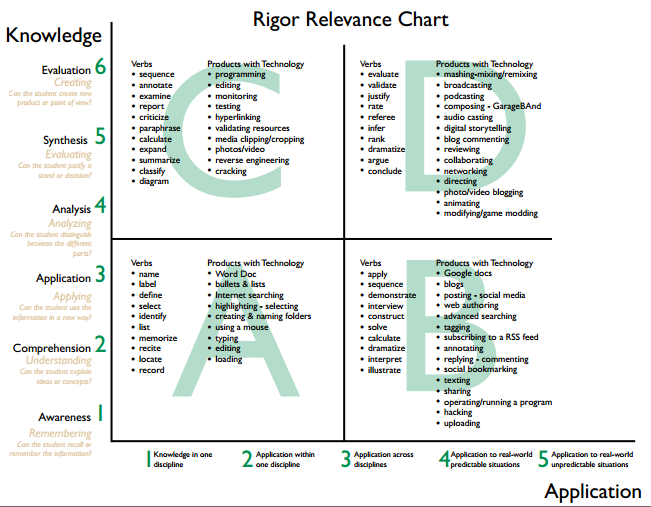
Begin with establishing a common vision and expectations for all teachers. We did this by using the Rigor Relevance Framework.  This will provide all teachers with consistent, concrete elements to focus on when developing lessons. Get rid of the dog and pony show ritual of announced observations. If lesson plans are still collected, ask for them to demonstrate what will be done two weeks into the future. Consider less of a focus on lesson plans and more on assessment. Collect and review assessments two weeks into the future. 

Improve Feedback

Provide at least one suggestion for improvement no matter how good the observation is.  There is no perfect lesson. Suggestions for improvement should always contain clear, practical examples and strategies that a teacher can begin to implement immediately.  Timely feedback is also essential.

Be a Scholar

Being a scholar not only helps you as a leader to improve professional practice, but it also puts you in a position to have better conversations with your teachers about their own improvement. This adds a whole new level of credibility to the post-conference.  I made the point of aligning every point of critical feedback to current research. As you come across research that supports the types of effective pedagogical techniques that you wish to see in your classrooms archive it in a document that you can refer to when writing up observations. I spent each summer as principal reading, researching, curating, and adapting this for use during the school year. It not only saved me time when it came to writing up observations, but also greatly improved my relationship with my staff as the instructional leader. 

Model

Don’t ask your teachers to do anything that you are not willing to do yourself. This is extremely important in terms of technology integration in the classroom and professional learning to improve practice. If a teacher is struggling with his or her assessments don't just say you need to work on building better ones. Either provide an example that you have created or co-create an assessment together. 

Teach a Class 

This can be accomplished regularly during the year or by co-teaching with both struggling and distinguished teachers. During my first couple of years as an administrator I taught a section of high school biology. This is leading by example at it’s best. It also provides a better context for the evolving role of the teacher in the digital age. An instructional leader who walks the walk builds better relationships with staff and in turn will be in a much better position to engage staff in conversations to improve instruction. 

Grow Professionally

Attend at least one conference or workshop a year that is aligned to a major initiative or focus area in your school/district. Try to also read one education book and another related to a different field such as leadership, self-help, or business. So many powerful lessons and ideas can be gleaned once we venture outside the education silo. To compliment traditional means of professional learning, work to create or further develop a Personal Learning Network (PLN).  Social media provides a 24/7 pathway to ideas, strategies, feedback, resources, and support that every educator should take advantage of in the digital age.

Write in Order to Reflect

Like many other connected educators, writing has really enabled me to process my thinking resulting in a more critical reflection of my work in relation to teaching, learning, and leadership.  Our reflections not only assist us with our growth, but can also be catalysts for our staff and others to reflect on their own practice or grow professionally. Having teachers write a brief reflection prior to the post-conference is a great strategy to promote a conversation on improvement that isn't one-sided.

Integrate Portfolios

Portfolios were a requirement for my teachers and complimented our observation process nicely. They provided more clarity and detail on instruction over the entire course of the school year. Portfolios can include learning activities, assessments, unit plans, examples of student work, and other forms of evidence to improve instructional effectiveness. They can also be used to validate good practice.

Co-Observe 

During the first quarter of each year I co-observed lessons with members of my administrative team. This was invaluable for many reasons. For one we were able to utilize two sets of eyes during the observation, as some things will always be missed when done solo, no matter how much experience you have. This also allowed me to work with my team to help them improve their instructional leadership.  It also helped me improve as every conversation helped me to further reflect on what I saw.

There is nothing more important than ensuring quality learning is taking place in our classrooms. The ten strategies presented can be implemented immediately to improve your instructional leadership. Like all lists there are many great strategies that I missed. With that being said, what would you add to the list?

Sunday, June 28, 2015

The Philosophy Behind Maker Success

For many students, school has become an irritating experience grounded in boring lessons and learning activities. A national focus on standardized testing and accountability has only made the experience worse for kids who only crave relevance, meaning, and value out of the hours of time spent in classrooms each school year.  To make matters worse, many states, districts, and schools made knee-jerk reactions when the budget ax came down a few years and cut traditional hands-on courses such as wood shop, agriculture, metal shop, and cooking. In many cases, elementary schools have even taken the fun out of school for kids by cutting recess.  

These courses represented a lifeline and a glimmer of hope in what has become a day fraught with relentless preparation for college and careers.  However, the powers that be found that they consumed precious time from the school day that could have been spent on more important curricular endeavors.  In the end, students, especially those most at-risk based on learning needs, have immensely suffered.  They desperately need an outlet during the long school day.  If not, their motivation to learn in all their other classes will wane, resulting in either a lack of effort or desire to even attend school.  The bottom line is that many schools have deprived students of real-world learning experiences that are needed now more than ever. 

This might seem like a bleak scenario that I describe above and it should.  Our students deserve activities that will not only prepare them for vital trade careers but also allow them to openly explore the solving of problems that are relevant to them. During my tenure as New Milford High School Principal, our district cut wood and metal shop.  Over the years, I have also seen recess time dwindle for my own kids and others who attend the New York City Public School System.  All hope is not lost, though, for any school looking to create a better learning environment that works for kids.  The solution for all schools comes in the form of makerspaces

A few years back, I heard of the concept when I was a principal.  When I hired Laura Fleming in 2013 to take over the traditional library, she was tasked with giving it a reboot and was given complete autonomy to do so. Her vision and subsequent plan resulted in a collaborative learning space open to all students where they could come to tinker, invent, create, and make to learn.  It was like having a 21st Century version of wood and metal shop back in school, with the main difference being the infusing of technologies for students to engage in informal, self-directed learning tasks.  Her Worlds of Making theme gave hope back to kids that had lost and needed it most. Don't just take my word for it. Read about what the makerspace did for Chris HERE.

There is a great deal of content out there about maker education. In addition to Laura’s website and book, I highly recommend you check out the work of Jackie Gerstein. Laura also collaborated with Steven and Debby Kurti from Tabletop Inventing to publish a series of articles featured in Teacher Librarian magazine that not only discuss the philosophy of makerspaces, but also provide practical implementation tips. Below are the three articles:

Schools today have a golden opportunity in makerspaces to increase relevancy while providing powerful ways for students to engage in self-directed learning. When embarking on this initiative, don't discount the importance of leadership during the planning, implementation, and evaluation process.

Sunday, February 1, 2015

Getting Digital Tools On Your Side: 4 Steps

This is the second post as part of an adapted article I co-authored, Real-World Ready: Leveraging Digital Tools

A few weeks back I shared ways that digital tools can improve teaching and learning.  It goes without saying that the most important aspect of digital leadership is enhancing student learning while increasing achievement. Technology needs to be integrated with purpose in ways that support learning as opposed to driving instruction.  A good rule to follow is pedagogy first, technology second when appropriate. Using technology just for the sake of it is an ineffective practice.  Effective digital leaders understand this and through the observation and evaluation of instruction ensure that digital tools align to learning outcomes and are having an impact on student learning.


Image credit: http://www.robeson.k12.nc.us/cms/lib6/NC01000307/Centricity/Domain/4057/Blooms_Circle.png

The main driver of successful, effective teaching originates from educators who are scaffolding learning in relevant and strong ways. A grounding in the Rigor/Relevance Framework -- an action-oriented continuum that describes putting knowledge to use -- gives teachers a method for charting learning. This framework is based on traditional elements of education yet encourages movement from acquisition of knowledge to application of knowledge. Although digital tools themselves are no substitute for a clear framework, they can underpin it. No matter what digital tool is considered, introduced, or integrated into the classroom, capable teacher presence and teacher-centered instruction always belongs in the foreground.


How can you, as a school leader, take your understanding of the strengths behind some digital tools and create pathways for rigorous and relevant use of digital tools? Use the following best practices when assessing digital tools and their use in your school:

Prioritize Instructional Excellence: Technology can be an effective tool but it remains just that -- a tool. Educators provide the backbone of the student’s learning experience. A teacher should always have concrete answers to these questions:
  • What capabilities do I want my students to develop? In what specific ways is my instructional design rigorous and relevant? 
  • What are my benchmarks for rigor? relevance? relationships? creativity? inquiry? 
Armed with responses to these questions, a teacher can then go on to consider a specific digital tool, asking:
  • How does this digital tool provide a way towards full development of the capability I want to develop in my students? 
  • Is my teaching, using this tool, still just as structured, rigorous, and relevant as it would be without this tool? 
Identify Student Needs Around Use of Digital Tools: Information should not be confused with knowledge in evaluating digital tools. Knowledge is the recall of information, discovery, observation, or naming. Teachers should be able to define what knowledge (not information) students will need to apply when using a digital tool.

Create a Game Plan for Managing Student Use of Online Tools:  It takes work and careful planning to implement the use of digital tools in defined ways. Before introducing a digital tool into a learning context, teachers should understand:
  • How he/she will be able to support students in using a tool that might be unfamiliar
  • How each student will be able to manage it independently 
  • How he/she will take advantage of students’ diversity and inclination towards building community online 
  • How students and instructor will connect across sometimes great distance
Maximize Opportunities for Diverse Forms of Feedback:  Rather than relying on feedback or evaluation models suited to older models of assignments, have teachers ask:
  • How will this online tool allow me to hone in on each student’s thought process and provide targeted, formative feedback that can be immediately and usefully applied? 
  • How can my feedback help pave the way for next steps in learning and in reaching established, articulated, or modeled goals?
Educational landscape and digital landscape have become inherently intertwined. Learners are teachers alike are enmeshed in digital life and need effective, specific ways to best use digital tools in rigorous and relevant ways. Educators must be able to develop and enact rigorous, relevant instructional methods and formats, while learning about and using effective digital tools to underpin their instruction. As long as educators are clear about the learning objectives, digital tools can be a powerful supporting tool.

Sunday, July 6, 2014

Raising the Bar on Learning

In my opinion inquiry-based learning is one of the best pedagogical techniques available to teachers.  When activities are developed appropriately students are afforded the opportunity to construct new knowledge through exploration, problem solving, developing then answering their own questions, application, and trial & error. This technique typically makes students uncomfortable at first as they have become so conditioned by our traditional culture of education where they would rather be spoon-fed information instead of having to think. Not only do students fight this technique at first, but so do parents.  This stems from the fact that many parents want their children taught the same way they were.  I have engaged in numerous conversations over the past two years with parents explaining how the inquiry-based process for learning will much better prepare their children for success in the future. It is a conversation that I relish as the students themselves ultimately discover the value of this type of learning over traditional pedagogical techniques that are mostly passive in nature and do not require critical thought. 


Image credit: http://www.inquirylearn.com/inquirydiagram.jpg

New Milford High School teacher Mrs. Chowdury has evolved into a master teacher in this approach and here is why. Physics is often thought to be a fun subject where students get to perform exciting experiments. Mrs. Chowdhury has a teaching philosophy that her students cannot engage in fun activities simply for the sake of having fun, but the activities have to trail or follow difficult calculations. When Mrs. Chowdhury’s students found out that she had some Nerf guns in the classroom, they wanted to play with them. So she created an assignment that involved Nerf guns where students had to apply their understanding of energy concepts to figure out the velocity of the bullet as it was leaving the gun. 

She gave the students a meter stick, a protractor with a string attached from the center, and a Nerf gun with one bullet. The students’ task was to design how they wanted to set up and use the materials to be able to calculate the starting velocity of the bullet. The students chose to use the protractor to figure out how high the bullet went and from there use energy concepts to calculate the velocity. When it comes to learning there should never be an easy way out. Making the process fun and engaging while invoking problem solving and critical thinking skills epitomizes the type of learning our students need and deserve. 

Thursday, June 20, 2013

Learning Artifacts

I routinely speak about the need for students to produce learning artifacts that demonstrate conceptual mastery.  Knowledge often comes to us via transcribed content or artifacts, which is derived from other's knowledge. These are facts, concepts, processes, procedures, and principles (Clark & Chopeta, 2004). Thus, artifacts are used in the learning process for creating knowledge, while in turn, knowledge creates new artifacts. With the technological tools that are at our disposal today this has become easier than ever.  Providing students the ability to actively apply what they have learned in creative ways using real-world tools is as authentic as it gets.  Even in a Common Core world this can be accomplished if teachers are given the autonomy and empowered to develop innovative lessons that push students to think critically while having them showcase what they have learned.


One New Milford High School teacher continues to push the envelop in this area.  Earlier in the year I blogged about Mrs. Westbrook's use of Instrgram in her English class as a means for her students to demonstrate conceptual understanding.  Today I was super excited to see yet another one of her impressive learning activities.  For their last project,  her 9th graders had to complete a video explication of a poem dealing with one of the four themes from the year. They used the videos from the Favorite Poem Project as exemplar texts and followed the basic structure of those videos. After Mr. Pevny, another NMHS teacher, gave her some suggestions on how to use iMovie, the kids ran with it.  

It them about a week of writing, rehearsing, and creating to finish the explications. In the final versions, students spoke briefly about a poem's personal significance. They then read the poem aloud connecting to the poem’s message and its impact on their lives. The major focus for their work was on making personal and original connections and on demonstrating a deep understanding of the text. Therefore, the students emphasized interpretation and the thoughtful recognition of devices that contribute to tone and theme.  

Mrs. Westbrook is pretty proud of the results.  The video below show the explication of "If" by Rudyard Kipling where one of her students even added extra thoughts to the explication with a second video because he felt he could say more. In his explication, you hear him note the personal and universal significance of the poet's message and make productive and substantive points about the poet's diction.  It was exactly what I Mrs. Westbrook was hoping for. 


To view the complete project that Mrs. Westbrook developed click HERE.

How are you or your school using artifacts created with the use of technology as a means for students to demonstrate conceptual mastery and learning?