Showing posts with label Authentic Learning. Show all posts

Sunday, January 21, 2018

Bridging Connections to Empower Learners

The other day I was working from home, which is a rarity for me these days.  I huddled in my home office and focused my attention on email, writing a blog post, tweaking some presentations, and updating the digital handouts that all participants get during one of my keynotes or workshops.  Always joining me on these work from home days is my beloved dog, Roxie.  Like usual she was perched on top of the couch sleeping. Her snoring not only brought a smile to my face but also made me jealous that she doesn’t have a care in the world and enjoys the life of a pampered pet. 

Later in the day I moved from my desk and joined Roxie on the couch. Before I knew it I apparently dozed off. I will be the first one to admit that I love naps and inherited this quality from my father. He is always taking an afternoon nap no matter where he is.  I realized I had fallen asleep when my son, Nick, awakened me as he returned home from school. Now I was enjoying one of those deep sleep naps so I was a tad bit annoyed that he interrupted this moment of pure joy. My annoyance with him was short lived as he had woken me up to share a current project that he completed in school.

My 7th-grade son stood above me and in his hands was a bridge that he had built as part of an engineering project. As he provided details on how he went about constructing it, I could see how proud he was of his creation.  In my opinion, Nick was beaming as his bridge ranked the 5th best out of a class of 28 students.  Typically, it is my daughter who comes home from school and consistently engages my wife and me in conversations about how awesome her day of learning was. This is not the case with my son so I relished the opportunity to dive deep into his learning experiences in this particular class.


My son's bridge

My son is fortunate to have engineering every day as a 7th grader.  Throughout the year he has brought home innovative projects that he has created and each has sparked a conversation about why this type of learning is important and how it will benefit him in the real world.  The result of these discussions illustrates how impactful the daily experiences are for him. He has been empowered to own his own learning by actively applying what he has learned in this class while making connections to math, history, and science.  Conceptual mastery translates into what he has been able to effectively build with his hands.  There are also language arts connections as the students are encouraged to write and speak about the engineering principals behind their designs.  This is learning at its finest. 

My son is an empowered learner in engineering as many elements are bridged together to facilitate REAL (relevant, engaging, authentic, lasting) learning.  Pulling from my son’s experience as well as what we know about sound pedagogy, the following elements work together to empower learners:

  • Interdisciplinary connections
  • Authentic contexts
  • Choice
  • Practical application
  • Creation of a product that demonstrates conceptual mastery  
  • Meaningful feedback

As Tom Murray and I state in Learning Transformed, to prepare students for the world of tomorrow we must transform their learning today.  The shift is not as difficult as one might surmise.  As you think about developing or evaluating lessons, learning activities, projects, and performance task ask yourself if the six elements above are integrated.  If they are then the chances are that your students will not only be empowered but also develop a greater appreciation for learning. Happy learners are empowered learners when the right connections and elements are bridged together. 

Sunday, January 29, 2017

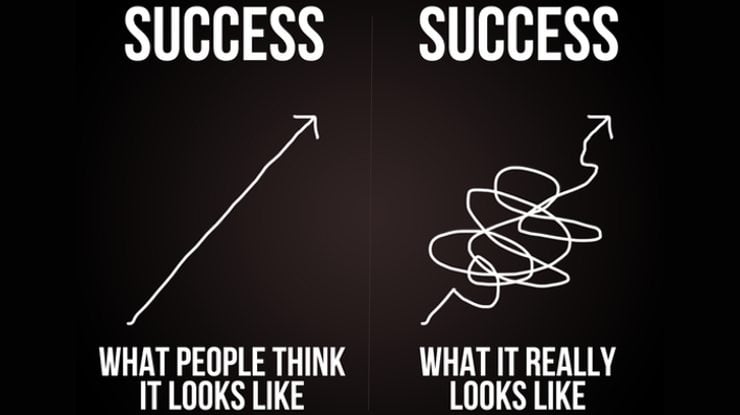
Learning is Not Linear

I think, for the most part, everyone strives for success.  We want to be successful in our professional as well as our personal lives.  I strived to be the best possible principal for my students, staff, and community.  Whether I was successful is a matter of perspective. My evaluations seemed to support the fact that I might have been.  I was far from perfect, but always strived for constant improvement. When I reflect upon what was accomplished during my time leading New Milford High School I think many observers would consider my leadership a success based on what we all accomplished together.  Our digital transformation, backed by evidence of improved learner outcomes, has been well documented.  In the eyes of many this is success. 

As I have transitioned into my new role over the past two years as a Senior Fellow for the International Center for Leadership in Education, I continue to set the bar high for myself. Again, whether I am successful is open for debate. Some observers might see the publishing of books as an indicator of success. Others could equate keynotes in the same manner.  No matter what someone’s view of success is, I can tell you one thing for certain – it is not a linear process. No one goes from point A to B by following a predetermined path or script. The question then becomes why does school, for the most part, focus on a linear transition that manifests itself in the form of curriculum? This is just one example that flies in the face of unleashing the talents of our students while teaching them what success really is. 


Success results from a series of experiences that include constructing then applying new knowledge, failure, persistence, commitment, perseverance, adaptation, evolution, and most of all reflection. There are so many images out there that illustrate the concept of success being like an iceberg.  In the eyes of many people, success is only what you see or a final product.  The reality is that success really is a unique combination of behaviors, skills, and mindset shifts. The recipe is different for everyone as well as the criteria used to determine success. The fact remains though that the path to success is always convoluted. 


Image credit: Sylvia Duckworth

Learning and success are intimately intertwined.  You can’t be successful if you don’t learn. You learn to eventually experience some sort of success in life. Learning, like success, is anything but a linear process.  As such we need to be more mindful of the experiences and structures in our schools if the goal, which it should be, is to prepare students to succeed in their future.  This includes the new world of work where in a few short years many of the jobs that exist today won’t.  If we continue to prescribe students to a one-size-fits-all approach in classrooms that have remained relatively unchanged we are in a sense forcing them down a linear path. Instead of a focus on learn to do, schools need to shift their practices and create a culture where students do to learn.

Students learn differently and have hidden talents that we must unleash. This is why I love the maker movement and makerspaces in particular.  Nothing, in my opinion, illustrates to kids the many pathways to success than learning with their hands through trial and error, open-ended exploration, and authentic problem solving.  Education needs some disruptive innovation.  We must lend a critical eye to our pedagogy, especially the way we assess and provide feedback to students. It is time for us to work harder to upend the status quo by redefining success in learning. Are you with me?

Sunday, January 1, 2017

10 Tips to Make Learning REAL

Another Christmas has passed and I am continually amazed by the technologies that kids now have access to. For example, my son received a drone from my mother-in-law and has been playing with it non-stop for days now. At first, he was focused on just the basics of flying the device. After having mastered take off, landing, and balance, his focus now is on using the camera to take photos and video.  It is awesome to see how engaged he is with the drone, but that he is also learning in the process.   Technology for him, like most kids today, has become an embedded component of their lives. They have grown up in a world where they have become accustomed to the fast-paced evolution of everything digital. 

The world as we know it has fundamentally changed our learners.  It is not that they are learning differently per se, but the environment in which they learn has dramatically changed.  The challenge for educators and schools today is to make learning REAL (relevant, engaging, authentic, and lasting) for all students and align it more with their world.  A great deal of emphasis has been placed on personalized opportunities for students. Whereas there are many benefits with this approach, the reliance on technology platforms and human interaction can take away from intended outcomes. REAL learning places a greater emphasis on making learning personal for students. 

Below are some quick tips that can make learning more REAL (relevant, engaging, authentic, and lasting):
  1. Provide students access to real-world tools to do real-world work (i.e. makerspaces).
  2. Allow students to select the best tool to complete a learning task while moving away from a one-size-product-fits-all approach.
  3. Provide meaningful feedback in a timely fashion.
  4. Connect standards and learning outcomes to their interests and passions.
  5. Implement Academy programs (school within a school).
  6. Offer virtual course options and innovative self-paced learning opportunities in lieu of traditional independent study programs (i.e. IOCS).
  7. Transform outdoor spaces into flexible classrooms and stimulating learning environments.
  8. Broaden student horizons by bringing in experts both face-to-face and virtually who work in emerging fields of work. Take kids on field trips through virtual reality technology.
  9. Move away from traditional grading and homework practices.
  10. Clearly articulate the “why” all the time so that students understand how what they are learning impacts them now and in the future.
REAL learning should be a reality for all of our students.  What would you add to the list I have started above? 

Sunday, November 6, 2016

Critical Thinking in the 21st Century and Beyond

One of my fondest memories of school was my science teacher, Mr. South. Having attended a K-8 consolidated school in rural NJ, we knew who all the teachers were.  However, Mr. South stood out.  I remember an elementary student seeing paper flyers with a caricature of Mr. South wearing one of his famous flannel shirts. As the years passed, he transitioned from flannel to a dress shirt, tie, and jeans.  He was stylish in the sense that he always got students and staff alike to talk about what he was wearing over the years.

There was a reason why everyone talked about Mr. South. He was an amazing teacher. Every student in the school could not wait to take his class.  Since our school was small, there was a chance you could even have him multiple times before moving up to the high school.  What separated Mr. South from his peers was his passion for helping students learn and love the sciences.  His lessons were light on direct instruction and heavy on authentic connections and application. He didn’t teach science. We learned science.

All of his classes were amazing.  He is the main reason I pursued a degree in science initially, before taking this passion to the field of education. There was one project in particular that has stuck with me to this day.  Instead of lecturing to us about Mars he had us actually create Mars in the classroom. Students were broken up into teacher-selected groups that had different tasks to complete. The specific task of each group played a larger part in the Martian project.  My partner and I were tasked with getting materials to Mars in order to create an infrastructure on the planet.  Through our research we came across a device called the mass driver.  We presented our finding to Mr. South and he gave us the tasks of creating 2 different working mass driver prototypes

During school and after school, my partner and I worked on developing these miniature prototypes that would actually propel mass.  This was certainly a frustrating experience, as we were never really asked to learn like this before.  Countless hours were spent outside of school working on this project. We even went to Mr. South’s house on weekends so that we could use the many different tools he had in his garage.  Through it all we owned our learning by being engaged in thoughtful work and made numerous connections to other disciplines. The process in itself was fraught with highs and lows, but in the end we developed the two working prototypes as assigned while learning with our hands.  

Over a period of a couple of weeks each group worked to complete their assigned tasks.  The final step was then to actually create Mars in the classroom and that is what Mr. South had us do. It was controlled learning chaos that involved tools, wood, paper mache, collaboration, communication, black lights, and so much more.  When thinking of makerspaces today, our learning experience in his class was one connected to the guiding principles of the maker movement.  Once the surface of Mars was completed each group set up stations throughout the planet to present their specific projects.  The culminating activity was a multi-night presentation to parents and the greater community where each group showed off a thriving community would hypothetically be created on Mars. 


This was by far one of the most powerful learning experiences I ever engaged in as a student.  Mr. South had us actively learn science instead of just taking notes and then a traditional assessment.  It was relevant, meaningful, and fun. Real-world predictable and unpredictable problems were tackled.  We developed the competence to think in complex ways and to apply knowledge and skills. Even when faced with perplexing unknowns, the pedagogy employed by Mr. South allowed us to use extensive knowledge and skills we didn’t know we had to create solutions and take action to further develop skills and knowledge. At ICLE this is what we call a Quad D learning activity.  

Many of the 21st Century skills that are emphasized today were evident in the project that took place in 1988.  It is not that this type of learning is new. Heck, everything we see and hear for the most part is not new.  What has changed is how technology provides a new avenue to actively integrate this type of learning in ways that many of us could never have imagined.  The key is to focus on project-based and authentic inquiry. Taking the example I presented from my schooling consider the following elements and the ubiquitous role technology should play:

  • Driving question or challenge
  • Need to know
  • Inquiry and innovation
  • 21st Century skills
  • Student agency
  • Feedback and revision
  • Publicly presented project

These elements, when aligned with sound pedagogy, can provide students with the types of learning opportunities that they will carry with them no matter what path they choose.  

Sunday, February 2, 2014

Control or Ownership

For over a century, the industrial model of education did a fantastic job of preparing students for careers.  Those careers are no longer relevant in today's rapidly changing world.  With obvious remnants of this system still in place, new changes are being pushed through under the guise of education reform. Instead of preparing students for an industrialized world the education system is now being tasked with preparing all learners to be college and career ready in order to compete globally with their peers.


Image credit: http://neatoday.org/2011/05/19/beware-pro-charter-parent-groups/

The education system is still not changing at all and is totally based on control and compliance.  The failed legacy of NCLB should provide a stark reminder that pummeling students with standardized tests will not achieve the desired outcome.  So again our education system is in a pickle consisting of an outdated model and the pressure to prepare students for an absurd amount of testing days throughout the school year.  The world does not rest on standardized tests.  Success now lies in one's ability to create solutions to problems, collaborate with peers to meet a goal, communicate effectively, and develop unique ideas that can change things for the better.

Unfortunately the powers that be are ultimately stripping the autonomy away from educators and schools, something that has defined our country for decades.  Even with an outdated model, we have still found ways to provide innovative pathways to unleash a passion for learning among our students. Control, as bad as it is in our system, has been a challenge that some have chosen to overcome.  In the face of adversity, educators have strived to overcome it to benefit our most precious resource - students. However, the current rhetoric and testing blitz that is upon us seeks to not only undermine what makes education special, but to control us to a point that will break the morale of many if it hasn't already.  This control will be the demise of our education system.

Up to this point I have ranted about control at the federal and state level and the dramatic impact it has, and will continue to have, on education if we don't change course.  There is another type of control that we need to acknowledge that is prevalent in virtually every school in the world.  This is the control fostered by administration and teachers as to how learning should, and will, be structured.  This hits home for me on many fronts, as I was guilty of this years ago.  We are often our own worst enemies as we work hard to control what students can do in school or classrooms.  This stems from the fact that we don't want to give up control. Compliancy has worked for so long, and quite frankly we don't trust students or even our own teachers.  What we don't know and understand we fear.  So we react by trying to control every facet of school structure, function, and learning. This was me for many years, but thankfully I changed and I think my school bas benefited.


Image credit: http://whatedsaid.wordpress.com/2011/08/25/10-questions-learners-shouldnt-ask/

The motivation from this post came from a recent presentation I did on digital learning.  The whole premise behind this concept it to provide relevancy, meaning, and authenticity in the teaching and learning process.  It hinges upon our ability to provide an environment and activities that unleash our students' passion for learning and allows them to create artifacts of learning with the tools of their choice to demonstrate conceptual mastery.  Additionally, it relies on a bold vision to grant students and educators the autonomy to take risks, learn from failure, and then adapt as needed.  This is where we have seen a significant shift from a control to ownership of learning.  Students are now able to demonstrate learning transparently for an authentic audience, allowing them to have a choice as to the device and/or tool to demonstrate and apply what they have learned.  Teachers are being empowered and embracing digital learning methodologies to improve professional practice. Meaningful change will only happen if we begin to give up control and establish a culture built on trust and respect.

In the end students have taken ownership of their learning.  As we continue to see the positive impacts of the changes we have willingly made, I wonder if those who are not in schools will take a second and truly reflect upon what their reform decisions are doing to schools, educators, and kids.  I also hope that those who block social media, ban students’ devices, and mandate Common Core scripts understand that these decisions are destroying a love for learning.  Digital learning in its many forms could be one such catalyst to put education on a better path.  If we truly want to prepare the next generation of thinkers, doers, inventors, and change agents we must give up control, trust students and educators, and work to develop a better system that will produce desired outcomes.


Wednesday, December 4, 2013

Making to Learn

The following post was written by Laura Fleming who is the Media Specialist at my school.  It is also cross-posted at her blog Worlds of Learning.  Here Laura describes our philosophy and journey to create a Makerspace for our students. 

Setting up a Makerspace has been a priority of mine from the moment I started here at New Milford High School, and it’s already well on its way to being achieved. Having a school principal who provides the perfect mix of encouragement and autonomy has, of course, been a great help, but it has also been very much a team effort: the school’s tech team and custodians have been very supportive and cooperative, along with a diverse variety of students interested in ‘making’ experiences.


Makerbot (3D printer) that just arrived to NMHS

At the heart of the vision for my Makerspace is to develop the space and to provide resources and opportunities that will aid in promoting web literacy. These components encompass Mozilla's Web Literacy Standard.  The standard is make up of three key elements:  exploring, building and connecting and focuses on reading, writing and participating on the web.   

As it is shaping up so far, all students will have access to a Makerspace where they can collaborate on STEM-related concepts and ideas through lunchtime activities, independent study, and classroom collaborations.  The themes of my Makerspace include:

  • Robotics
  • Stop-Motion Animation
  • 3D Printing/Design
  • Hacking/Remixing the Web/Coding/COMPUTER PROGRAMMING
  • Molecular Gastronomy
  • Wearable Tech
  • Electricity/Papertronics
  • Polymers
  • Engineering Inventions

My intention is that instruction for students across the themes will make use of open-source options wherever possible. A good example will be Mozilla Webmaker, a suite of open-source tools dedicated to teaching digital skills and web literacy, as well as Scratch, which offers open-source programming for kids.

Visitors to both our physical and virtual Makerspaces are greeted with the following message:
"What is Worlds of Making @ NMHS? Well, that is up to you, the maker. This space, both physical and virtual, is a place for you to collaborate, hack, invent, share, create, make and do. You have been given the tools you need to get started, but where it goes is up to you. The world is your platform. The aim of our virtual space will be a place to guide students, to showcase their creations and to provide them with a virtual sandbox in which they can play and create." 
Our Makerspace will be stocked with:


NMHS students tinering with Legos

Our physical space will be an attempt to create an environment that encourages creativity and ideas in designing and constructing a wide variety of 3-D artifacts.

For example, we have provided computers designated for students specifically to disassemble and investigate.  We are building a Little Bits Bar in which students will have the opportunity to participate in using modular electronics to invent their own creations.  We will have a lego table in which students can bring STEM concepts to life. Our working computers are transparent so students can see their innards, perhaps gain an understanding of how the major components fit together, and begin to examine how they work.  Everything is hands-on and nothing is off-limits (within the obvious bounds of safety).  

Our Makerspace is about creating a genuine and committed culture of innovation at New Milford High School, encouraging tinkering, play and open-ended exploration for all students.

Student drawing on new SMART Board E70

And this is only the start – the concept will grow and grow, with new ideas being brought into the space over time.  Keep an eye on our Makerspace site at www.worlds-of-making-nmhs.com and also on Twitter for updates. 

Wednesday, May 29, 2013

The Capstone Experience

One of our guiding beliefs here at New Milford High School is that our students will find purpose and meaning in their respective learning experiences.  Over the years we have added a series of new courses (19 in just two years), re-written the curriculum of existing courses, made available online courses as part of the VHS Collaborative, and developed numerous authentic learning experiences focusing on the unique interests of our learners.  All of these components have become critical elements of the Academies at New Milford High School.  As a result of these changes and the creation of the Academies, we have seen increases in academic achievement, graduation rates, and acceptances to four-year colleges.


Earlier this month I shared the Independent Open CourseWare Study (IOCS) project on this blog.   The IOCS project empowered our students to follow their learning passions and actively demonstrate new knowledge that was acquired.   We wanted students to have the freedom to learn about anything they were interested in using content from some of the most prestigious universities in the country while also unleashing their creativity.  In addition to this project, a book study on the Alchemist, and numerous off-campus field trips, Academy students develop a capstone project as a culminating experience.  This provides each student the opportunity to describe where he or she has been and where he or she is headed.

The final product has to be presented in a digital format and must be reflective of the theme “where I have been and where I am headed” or reflective of “your personal journey” in an authentic application.  Basically, students need to explain their personal/academic journey thus far and describe their goals: academically, personally and/or professionally.  No matter the creative avenue students’ choose to pursue (songs, poems, dramatic interpretations, artistic renderings etc.); the essential criteria must still be met.   This includes the following:

  • Must make direct reference to essential learnings throughout your NMHS coursework, which have influenced who you are and your aspirations.  Tell the viewer what NMHS has taught you about yourself and life. 
  • Must include legal (school) name and graduation year within the body of the presentation.  
  • Must have an academic focus but can still include sports, arts, clubs, service etc.  
  • Must include things you would like to do, learn, understand, see, improve, create or experience.
  • Must capture the attention of the audience (teachers, administrators, peers).
  • Must be original and make references to sources where appropriate (background music, art work, quotations, etc.)
  • Must make direct mention of NMHS in some way, via symbols or direct reference.  
  • Must make direct mention of major Academy designation, via symbol, crest or direct reference. 
  • Must make direct reference to any endorsement that may be sought.   
  • Must offer evidence of any of the 21St Century Skills acquired: collaboration, communication, creativity, critical thinking, problem solving, media literacy, technological proficiency, global awareness, and preparation for college, careers and life.  Label essential elements for clarity of scoring.  Don’t make us guess what the images, symbols or people represent.  
  • Must reflect interests and personality.   
Below is an example of one of the more creative capstone projects by senior Tariq Khan:


The capstone experience provides our students with an opportunity to tie together social, emotional, family, and learning experiences in a creative way to share their personal journey.  This exposition of learning not only allows them to reflect upon their time at NMHS, but also provides us with a glimpse as to what we re doing well and where we can improve as a school.  

Wednesday, May 15, 2013

Authentic Learning Can't Be Standardized


This year’s Holocaust Study Tour took place from April 1 through 14.  I am proud to say that this unparalleled learning experience, under the direction of Colleen Tambuscio, has taken place for the last twelve years at NMHS.  Students that participate in this experience travel to Germany, Poland, and the Czech Republic as they learn firsthand about one of the most traumatic events in human history.  The trip involved twelve NMHS students, two students from Midland Park High School (NJ), and nine students from Bishop O’Dowd High School (CA).  Once again they recorded their daily journey on the trip blog.   Please visit the blog for an in-depth look at the dedicated students who participated in HST 2013 as they reflect upon what they learned.  


Some of this year’s highlights include the following:

  • In Prague the group once again met with Pavel Stransky who inspired them with his story of survival and took them to Theresienstadt, where he worked as a teacher during the Holocaust, and where he married his girlfriend Vera in order to stay together when they were sent to Auschwitz.  For the entire day our students asked him questions, and learned from his experiences as they visited the Theresienstadt ghetto and prison.  Pavel’s story of survival, which he calls his Holocaust love story, means so much to group because they know the kind, sweet man who experienced this horrible moment in history.  For a more detailed synopsis check out Day 5 from the trip blog.
  • This year the group had the opportunity to stop in the town of Lostice on their way to Olomouc.  Lostice is a town of about 3,000 people. In Lostice, they were met by the town historian and Director of the Respect and Tolerance program, Ludek Stipel. Mr. Stipel took the group to the former Lostice synagogue and gave them the history of the Jews in Lostice. They had an incredible opportunity to learn how they utilize this former synagogue as an education center. Our students were engaged in an innovative approach to Holocaust education by viewing these boxes, which included documentation of survivors from Lostice and the surrounding towns.  For a more detailed synopsis check out Day 8 from the trip blog.
  • In Trsice, through the support of the U.S. Commission for America’s Heritage Abroad, the group was able to dedicate a second memorial to the Wolf family, which honors the rescuers of this community.  The dedication was another opportunity for students to witness history in the making.  An article appeared in the Global Post, which highlighted this portion of our trip.  

Technology has enabled all stakeholders to become a part of this authentic learning experience.  More importantly, however, is the apparent fact that this type of learning experience cannot be replicated in the classroom.  Before, during, and after the trip students engage in authentic learning elements while enhancing essential skill sets such as communication, collaboration, critical thinking, media/digital literacy, and global awareness.  The culminating learning activity is the ultimate creative artifact where students compile everything they learned into a book and documentary using Adobe tools.  This is followed by a public presentation to the New Milford community and program donors.  Learning beyond the walls of a school can and often does leave a lasting impact on our students and will never be able to be measured by a standardized test.

Monday, February 6, 2012

An Inside Look

One of New Milford High Schools crowning achievements is our Holocaust Study Tour.  Students that participate in this experience visit Germany, the Czech Republic, and Poland.  The creator and facilitator of the program is Colleen Tambusico.  Below is text from a recent email she sent me about components of this years trip.  There are numerous references to Holocaust survivors that either participate in this trip or routinely Skype into our Holocaust & Genocide course at NMHS.  As you will see, this is an example of an ultimate authentic learning experience available to our students.  To learn more visit our Holocaust Education Program website and associated student blog.


1. Berlin, Germany

Last year, we had an exchange student at NMHS from Germany.  Her name was Sarah Lauterbach.  I got to know her in the first semester of the school year and encouraged her to take the Holocaust course second semester.  Sarah became an excellent contributor to class discussions, bringing to the discussions a perspective on Germany that only she could have as a citizen.  As Sarah returned to her hometown in northern Germany, she spoke of her experiences in America and the Holocaust course. Her high school principal contacted me recently and we are arranging to meet with Sarah, her classmates, and the principal in Berlin.  We are hoping to spend a day together at the Wannsee Villa near Berlin which today is a museum that deals with a meeting of high ranking Nazi officials in 1941 when they crafted the Final Solution.  There were many moments in class last year when Sarah taught us incredible lessons about the guilt her generation deals with in terms of the Holocaust.  In particular, when we Skyped with survivor Peter Feigl, Sarah revealed her background to him and asked how he felt about Germans today.  It was the only time I have ever seen Peter Feigl get choked up and he told her that he can't hate her or anyone else who had nothing to do with the crimes that led to the Holocaust.  Sarah later reflected upon this experience in writing and I have saved her index card response in Peter's diary as a bookmark - here is Sarah's reflection:

"For me, the most outstanding thing in the conversation with Peter Feigl yesterday was when I asked him if he would go back to Germany and he said he actually went back for a couple of times.  For me it is important to know that he is forgiving Germans.  He said there is a difference between actual Nazis and today's German generation.  This is important to me because I can identify myself with Germany, but not with the Nazis.  The experience that someone called me a Nazi was very hard for me because I felt like people don't understand me and the German culture.  People still blame Germany for what happened more than 60 years ago, but Peter, the one who was actually involved in the Holocaust as a Jew, is forgiving."

I thought including this example would demonstrate the value of this exchange with German students in Berlin and the continued potential for our students to learn important life lessons.

2. Prague - Olomouc - Trsice

The students this year will have two extraordinary opportunities in the Czech Republic.  First, Alexandra Zapruder, the author of Salvaged Pages (a book of diaries we use in the course and a long time friend and colleague from USHMM) will be traveling with us from Prague through our visit to Trsice.  Alexandra's research first led me to discover the Otto Wolf diary and our connections with the Jewish Community of Olomouc and the rescuers in Trsice.  Alexandra has never been to Olomouc or Trsice and has always wanted to be present when we dedicate the memorial to the underground hideouts that hid the Wolf family for three long years.  Secondly, we have finally acquired enough funds to build the first memorial in the forest and Alexandra will be present with us during the dedication!  You may recall last year that, for the first time, I made contact with Eva, the daughter of Lici, Otto's sister, who lives in Prague.  She came to meet us in Prague last year and spoke to our students.  This year Eva and her husband will be traveling to Trsice to witness the dedication.  Finally, a few years ago when we conceptualized the memorial project, the Mayor of Trsice wanted a second stone in the center of town honoring the rescuers and providing directions to the memorial in the forest.  We just found out last week that the mayor of Olomouc, which is the 5th largest city in the Czech Republic, has agreed to personally fund the second memorial, which will cost $6,000!  Therefore, it appears that in 2013 we will finally dedicate the second memorial in which we feel extremely proud that our efforts have caused the local community to take ownership of its own important history.

3. Zakopane, Poland

You may recall during our extended stay two years ago that we had spent a day in Zakopane, a mountain region about 1.5 hours from Krakow. While we were stuck there and planning our visit, Mr. Barmore told us of some places we could see associated with the Holocaust along the way and a rescuer we could meet who lives near Zakopane.  In 2010, we didn't have the resources or the time to plan these meetings overnight, so we decided we had the time in our schedule this year to make the trip and the meetings a reality.  Thanks to Mr. Barmore, we will visit some obscure Jewish cemeteries in the mountain region of Zakopane and meet with a rescuer associated with hiding Jews in this region.

This past summer Colleen was one of a handful of teachers selected by the USC Shoah Foundation to work on iWitness, a searchable database that gives students and educators access to watch and learn from more than 1,000 video testimonials of Holocaust survivors.  On January 23, 2012, I was fortunate to travel with Colleen and NMHS students to the United Nations in New York City to be a part of the official unveiling of iWitness.  All in all our incredible Holocaust program are the direct result of an incredible educator who truly sees the value in authentic learning.


Monday, June 6, 2011

Perspectives - Looking Back...Thinking Forward

The following is a summary by New Milford High School teacher Colleen Tambuscio on this year's Holocaust Study Tour.  The post speaks for itself in terms of the impact this authentic learning experience has on our students as well as people all over the world.


The Holocaust Study Tour always provides new and exciting learning opportunities because, although there is an itinerary, the schedule flexes as new educational experiences arise. However, this year, our group expanded to 22 students, the largest ever. While learning about the history of the Holocaust, we became more than just a group of students and teachers. We became a family.

One of the many highlights was the opportunity to meet Eva Vavrencka, the daughter of Felicitas (Lici) Wolf Garda. Lici was the sister of Otto Wolf in theDiary of Otto Wolf (required reading prior to the trip). We are so grateful that Eva, who has never spoken in public about her family's history, was willing to meet with us at our hotel in Prague. We discovered many new aspects of the story including that Otto's diary was smuggled out of Czechoslovakia and brought to America in the 1970's by Lici's half brother, Thomas Mandl. Eva was able to give us insight into Lici's post-Holocaust life, and we are incredibly grateful to Eva for bringing this history from Salvaged Pages to life.

As always, Pavel Stransky continues to inspire us each year telling his story and guiding us to Theresienstadt, the camp where he and his wife, Vera, were interned before being sent to Auschwitz. As Pavel talked to our students, all 22 pairs of eyes were riveted to his face. Pavel, now 90 years old, compassionately and bravely tells of his time in both Theresienstadt and Auschwitz. Tears flowed down the faces of our 22 teenage children, who are now barely younger than Pavel was when the Holocaust began. All day our students approached Pavel and gave him hugs, posed for pictures and asked questions. We are thankful for Pavel’s friendship and the important historical and personal lessons he gives us.

This year the Olomouc Jewish Community invited us to celebrate the Passover Seder with them. Welcomed by Petr and his grandfather, Milos Dobry, our own Sarah Schrenzel sang the four questions in Hebrew. What an incredible evening: first listening to Milos tell his story of surviving Auschwitz; then celebrating what, for many of us, was our first Passover Seder; and finally, being able to share in this experience with the Jewish Community of Olomouc, which includes many of the Holocaust survivors that we interviewed during last year’s Holocaust Study Tour. How thankful we are that the Olomouc Jewish Community is helping us next year with our dedication at Trsice.

A new facet to our relationship with the community of Trsice was the presentation of a special pin by Colonel Zuffa-Kunci of the Czechoslovak Legions in Olomouc, to our group’s leader Colleen Tambuscio, in recognition of the special relationship which has developed between the Czech people in the Olomouc region and American students through the Holocaust Study Tour program. We have been working with the local community to further commemorate this story by building a memorial to mark the site of the underground hideouts in which the villagers of Trsice hid the Wolf family for three years during the Holocaust.

The most unexpected learning opportunity occurred inside the villa of Amon Goeth, commandant of Plaszow Concentration Camp, where Spielberg filmed parts of Schindler's List. After visiting the area of the camp where today lay the ruins of the Jewish Burial Hall and a memorial to Sarah Schenirer (this is the area of the camp that the HST 2009 participants cleaned up), we walked to the villa of Amon Goeth. While looking at the house from the street, we saw a gentleman come out of the doorway and wave us up the walkway. We, of course, approached the house with Shalmi, our historian for the trip, and Ewa, our Polish guide, and immediately took him up on his offer to come inside. This was an incredible chance meeting that demonstrates the importance of experiential learning and its possibility for rare opportunities that become profound teachable moments.

New this year was our overnight hotel stay at Auschwitz--actually in the town Osweicim. We entered the town, passing by Auschwitz I, which is now a museum, and also passing through Auschwitz III, the industrial complexes of Monowitz and Buna. The hotel and town center are just down the street. It is impossible to believe that anyone who lived here during World War II can say they didn't know what was happening in these camps. By the time our group reached Auschwitz, we had bonded completely. Before dinner, we debriefed about our visit in Trsice, and ended the session with a giant family hug.

Each night we ended our day of learning with journaling and discussion, and of course, the blog. Our blog has taken on an important, impactful role in the Holocaust Study Tour. Not only is the blog a way for us to focus and communicate what we are learning as we travel, it is has tremendous impact on student learning. Each night we choose students to post their reactions to the day, using their reflections from their journals. Our followers post comments, and students react and really process their learning.

The Holocaust Study Tour is unlike classroom learning not only because students experience the history through firsthand encounters, but also because they learn that history is dynamic, and that as time passes, we unearth more of the history. History is not just about the pages in a textbook. History is the story of real, living people, like Pavel Stransky, Mrs. Ohera, and Eva Vavrencka. The history lessons will continue to impact all of us who journeyed together in our Holocaust Study Tour 2011 family.

Wednesday, April 13, 2011

Cultivating Authenticity in Learning


A slightly altered version of this post entitled "Learning Like Never Before" is cross-posted at the Huffington Post.
Let me start off by saying that I work at an incredible school. When I came to New Milford High School in 2004 there were many amazing programs in place.  One was the Holocaust Study Tour.  This global learning endeavor provides some of our students the opportunity to travel to Europe for at least 10 days and study the Holocaust in depth. This authentic learning experience cannot be reproduced in the classroom.  For detailed information on the program please visit The New Milford Holocaust Project.
Technology now allows the students and staff at NMHS to share in the authentic learning experiences taking place in Europe (Germany, Poland, Czech Republic).  Last year we launched a blog where the students in Europe chronicled and reflected on essential questions, focusing on a dark time in human history.  Meanwhile, students and staff back on the campus of NMHS are using the blog as a catalyst for a variety of other learning experiences.  Some teachers even have their students respond to the posts each day.  The first Holocaust Study Tour 2011 blog post should be up tomorrow so be sure to check it out.
 
Skype has also brought a whole new element to the program. Prior to the trip, students Skyped numerous times with their guide who resides in Israel.  This year we even Skyped in a Holocaust survivor to our elective course on the topic.  I use Skype to keep in contact with my teacher while on the trip and to sometimes converse with the students about what they are learning.  We also encourage our history teachers to Skype with the study tour if the times can be worked out.  At our District Open House this Thursday, I plan to Skype the group in from Europe to kick off the event. The theme for the event is appropriately centered around what it is like to be a student in the 21st Century.
 
It is an exciting time to be in education. Technology has really added a whole new dimension to learning.  Schools that confine themselves to a bland curriculum, textbooks, worksheets, or learning activities that do not go beyond the walls of the brick and mortar building are really doing a disservice to their learners.  In a society that is now globally connected through easy to use and cost effective web 2.0 tools, opportunities to engage and make the process of learning meaningful to all students has quickly become a reality. Teachers now have at their fingertips many tools to add a global context to any lesson. For example, Skype in the Classroom is a free community that assists teachers in establishing connections between teachers in different countries to help their students learn.  

Unfortunately, many schools across the country block blogging tools and Skype as well as a variety of other web 2.0 technologies that foster creativity, collaboration, problem-solving, and communication skills. Schools have not evolved in step with societal changes. In order to best prepare out students, we must move away from an industrial model of instruction and let go of control in order to meet the diverse needs of today’s learner. This will only happen when schools realize that technology is not the enemy and when combined with passionate teachers and visionary schools the end result for students is learning like never before.

Wednesday, January 12, 2011

Wait Until I Tell My Mom What I Did in School Today

Hopefully the title of this post grabbed your attention.  As I was walking out of an eighth period class on Monday that is what I heard one student tell her friend.  As a Principal it was an amazing way to end the day.  I too sat in the same class as those students engaging in that conversation and am still in awe of how a little bit of technology could dramatically transform the learning experiences for our students. 


The state of NJ mandates that the Holocaust be covered at some point in the history curriculum.  In addition to this content being assimilated into various history courses, NMHS also offers an elective course on the topic.  On Monday January 10, 2011 our Holocaust and Genocide class Skyped with Peter Feigl, who currently resides in FL.  Mr. Fiegl's diary is found in chapter 3 of the book Salvaged Pages: Young Writers' Diaries of the Holocaust by Alexander Zapruder. The book contains a collection of diaries written by Holocaust survivors in which they reflect on their experiences and provide a glimpse into this dark period in history.  For the entire period students had the opportunity to ask questions they had prepared.  Here are some examples followed by some of his summarized responses:

  • Of all the experiences, which had the most impact on you? Crossing the border into Switzerland in 1944.
  • How long did it take for you to think about other things than the Holocaust after it was over? I have the ability to push unpleasant things in the back of my mind, didn't confront until we were in our 60's.
  • Do you consider yourself Jewish or catholic?  This was a tricky question.  Here is a little history.  Father had him baptized Catholic in Vienna during 1937 to protect him from the Nazis anti-jewish policies.  The family then fled to France in 1940.  After his parents were arrested in 1942 he began to write a diary for them.
  • When did your children find out about your diary? Diary was originally confiscated in 1945. Shared amazing story of how he eventually got it back in 1982 from a collector of WWII items who purchased it at a flea Paris flea market in 1947.
  • Do you think that after everything you have been through, has it made you a better person and how? All I can say about this is that his response was very compelling and emotional.
  • Did you ever meet any of the other children you hid with or those that hid you after the war? The answer was yes and to the surprise of the teacher and class the survivor resided in NJ (Colleen Tambuscio, the teacher of the course, is now on a mission to find that survivor and connect him with the class).
  • How did you feel about the Neo-Nazi that killed the black security guard at the U.S. Holocaust Museum last year? Discussed the root of hate in certain people.
  • Where are the original diaries today? Donated to U.S. holocaust Museum

I found Mr. Feigl to be extremely articulate and he was able to recall events with clarity and detail.  It is one thing to read about historical facts and discuss them in class, but why be satisfied with just that?  With the integration of technology and a passionate educator, an authentic element can be constructed in a way that engages learners like never before.   Don't we wish for all of our students to go home excited to tell their parents what they learned in school each day?


For media coverage on the event click HERE.

Friday, June 4, 2010

Promotion of Learning Beyond School

The other night I was invited to attend the New Milford Girl Scouts Awards Ceremony as a "dignitary".  As I sat there and listened to the accomplishments of each Troop I was amazed by the service and authentic learning experiences these girls were being exposed to.  Their intrinsic motivation to give back to the community and others was inspiring.  I quickly realized that the only true dignitaries in the room were the girls being recognized for their incredible accomplishments.  The following is an excerpt from the program detailing the Silver Award winning project of Troop 58 (the majority of the girls in this Troop are NMHS students):

Textbooks can tell you facts, but it takes people to make history come alive. After meeting with members of the New Milford Historical Society, the girls of Troop 58 began to realize how important it is to hear about our past from the people who actually experienced it. New Milford is an awesome place to live, and the girls decided that they wanted a permanent record of what life was like in our town. Thus our New Milford Oral History Project began. During the process, the girls researched the town history and learned about the American Memories Oral History Project run by the Smithsonian. They generated interview questions, met with members of the New Milford Senior Citizen Center, transcribed the interviews and also created four videos that captured the memories of New Milford residents. These were then donated to the New Milford Historical Society for inclusion in their archives. Not only did the girls learn fascinating tidbits about the “Brown Bomber, a bus service in Hackensack, The Ames Brothers, boat traffic on the Hackensack River and rhubarb farms, but they also had the satisfaction of being part of preserving New Milford’s history for future generations!
All I can say is WOW!  As an administrator I place an emphasis on my teachers utilizing authentic instructional techniques and train them on the associated pedagogical aspects.  This project, combined with a service component, resulted in a powerful learning experience.  When it was my turn to speak, I spoke about the significance of this type of learning experience outside of school and emphasized how authentic it was.  In particular, I discussed the attributes of effective authentic learning experiences evident in the project.  These included:

1. Relevant and meaningful to the learner
2. Real-world connection
3. Collaborative
4. Identified audience
5. Open-ended
6. Defined roles

Not to be forgotten in all of this was the effective integration of technology on behalf of the students under the guidance of the troop leaders.  They used iPods with recording devices for the interviews and iMovie on Mac Books to create the videos.  Does it get any better than this?  A love for learning and commitment to community service are two values that will lead students down a path of success.  Examples like this motivate me to become a better administrator and make me so proud to be the Principal of New Milford High School.  As I always say, my students ROCK!

Monday, April 12, 2010

Authentic Learning in Action

As a Principal I place an emphasis on student engagement and learning activities that are meaningful and relevant to my students.  There is no learning experience more authentic than our Holocaust Study Tour where NMHS students travel to Europe with their peers from another NJ high school as well as students from Kansas.  This rigorous learning experience begins with advanced preparation on the Holocaust prior to the trip including Skype sessions with an Israeli historian, application of knowledge in multiple European countries over the course of 10 days, intense reflection (essays, video documentary) upon returning, and numerous student-driven presentations to local and state organizations.  For the first time during the existence of the trip the teachers and students have been blogging each day about their experiences.  I encourage you to read the Holocaust Study Tour 2010 blog and see firsthand how a group of committed students explore a difficult topic in a way that will leave a lasting impression. Upon reading their analysis and reflections you will probably learn something new yourself.  Now that is powerful learning!