Showing posts with label Learning Transformed. Show all posts

Sunday, July 9, 2023

The Essence of Being a Leader

What is the essence of leadership? How do leaders effectively implement, sustain, and scale change? There is no shortage of responses regarding the topic, which is why questions are more important than answers. Narrowing down the most critical competencies can take time and effort. However, let’s look at it from the perspective of debunking what authentic leadership is, not to get at the heart of what it really is when it comes to agents of change.

The word "leader" is often paired with "follower." However, leadership is not about attracting others to follow. In fact, I think that this definition of leadership is outdated and limiting. Leadership is about inspiring others to take action. It's about creating a shared vision and then working together to achieve it. It's about empowering others to reach their full potential. Leadership is not about power, authority, or control. It's about collaboration, trust, and respect. It's about creating a sense of community and belonging.

The definition and perception of leadership need to change. We must move away from the traditional view of leadership as a top-down hierarchy and embrace a more collaborative and inclusive approach. We need leaders willing to listen to others, learn from their mistakes, and share power. We need leaders passionate about their vision and ready to inspire others to join them in making a difference.

Influential leaders don't tell people what to do. Instead, they take them where they need to be to succeed. They don't need to create a harem of followers or disciples because they know that their success depends on the team's success. True leaders understand that one person cannot win a war, election, or football game. It takes a team effort. Each person has an important role to play. The same principle applies to businesses, schools, and districts.

Leadership is not about position. It's about action. Great leaders are not afraid to get their hands dirty. They are willing to roll up their sleeves and work alongside their team members. They are also willing to take risks and make mistakes. Leadership is about creating a better future for everyone. It's about making a difference in the world. Great leaders are not afraid to dream big. They are also fearless in putting in the hard work necessary to make their dreams a reality.

In Learning Transformed, Tom Murray and I developed an acronym that speaks to the essence of being a leader. The best leaders do the following consistently:

Learn 

Empower

Adapt 

Delegate

Engage

Reflect

Serve


Learn

Effective leaders understand that learning is an ongoing process. They know there is no such thing as perfection and can constantly improve their skills and knowledge to develop vital competencies. They make time to learn new things daily and share their learning with others. Leaders who love their work are always learning. They are curious about the world around them and always look for ways to improve their skills and knowledge. They are also willing to take risks and try new things.

Empower

Empowering others is a key element of effective leadership. It involves giving people the freedom to take risks, promoting a mantra of failing forward and granting them autonomy to innovate. When people feel empowered, they are more likely to find greater value in their work. This leads to respect and trust, which builds powerful relationships where everyone is focused on achieving shared goals. Here are some specific ways that leaders can empower others:

  • Promote consensus. Give people the opportunity to influence decisions and take ownership of their work.
  • Provide feedback. Let people know how they are doing and offer suggestions for improvement.
  • Celebrate successes. When people do a good job, make sure to recognize their efforts.
  • Create a safe environment. Make sure that people feel comfortable taking risks and making mistakes.

Empowering others can be challenging. It requires leaders to be willing to let go of some control and trust that their team members will often do the right thing. The benefits of empowerment are worth the effort. When people feel empowered, they are more likely to be engaged, productive, and creative. This can lead to significant improvements in the performance of any district, organization, or school.

Adapt

The world is constantly changing, and leaders must be proactive instead of reactive when it comes to these changes to succeed. This means being flexible and open to change, as well as being able to adapt to different situations, challenges, and pressures. Consider the following:

  • Be willing to change your plans. Things don't always go according to plan, so it's essential to be ready to pivot or shift as needed.
  • Be open to new ideas. Feel free to try new things, listen to different perspectives, and move beyond your comfort zone.
  • Be able to think outside the box. Sometimes the best way to solve a problem is to look at things through a different lens.
  • Be able to learn from your mistakes. Everyone makes mistakes, but it is important to learn from them and avoid making the same mistake twice.

Adaptable leaders are more likely to be successful in the long run as they are more in tune with the ever-changing needs of their organizations. They are also more likely to be able to solve problems and overcome challenges. Adaptability is a crucial competency for leaders in today's world. Leaders who can adapt will be more likely to lead their organizations to success.

Delegate

Delegating tasks and responsibilities is not a sign of weakness. This is a common misconception. Some people think that delegating tasks means the leader is incapable of doing them themselves. It is actually a sign of strength as it shows that the leader is confident in their ability to lead others while freeing up the leader's time so that they can focus on the most critical tasks. This could include strategic planning, getting in classrooms, providing feedback, or building relationships with key stakeholders. When leaders delegate tasks, they are allowing others to develop their leadership competencies, and this, in turn, builds capacity.

Engage

Information is king in the sharing economy, which is our current reality. Leaders who understand this fact develop strategies to authentically engage their stakeholders through multi-dimensional communications, public relations, and brand building. They meet stakeholders where they are, encourage two-way communication, and become the storyteller-in-chief. 

Reflect

Great leaders always reflect on their work, which is essential for learning and growth. When leaders reflect on their work, they can identify what they did well, what they could have done better, and what they need to learn in the future. In the digital age, there are many ways to reflect, and doing so can lead to greater transparency. However, what matters most is that leaders make a consistent effort to reflect on their actions and decisions.

Serve 

Servant leaders put the needs of others first. They are not focused on their own personal goals or objectives but rather on the success of their staff or team. Those who put serving above all else are not motivated by power or prestige but rather by a desire to help others and make a difference in the world. This type of leadership style can create a more collaborative and supportive environment where employees feel valued and heard.

Leading change in any organization is a difficult task. Be true to yourself and others. When you fail (and you will), showcasing your vulnerable side will only help to strengthen the bonds with those you work with. Being human is more important than being right all the time. You will never have all the answers or solutions needed to move significant change efforts forward. Look to others for answers to questions and help you achieve your change goals. Continue to improve in ways that push you outside your comfort zone. With authenticity on your side, finding success will be much easier.

Sunday, May 10, 2020

The Vital Role of Digital Leadership in Transforming Education

Education will not be the same.  Now before you think that this is a “doom and gloom” outlook, let me elaborate.  The COVID19 pandemic has fundamentally changed our world more than we could have ever imagined. In the case of schools, there has been a dramatic shift to remote learning that has allowed all of us to reflect on where we are, but more importantly, where we want and need to be in the near future. There has been a myriad of challenges that have, and will, continue to be overcome. Through all this adversity, educators have risen to the occasion and have begun the tedious process of redefining education and what real learning really should be.

In times of chaos, opportunity arises. That is how we must look at the present situation.  We can ill afford to go back to a mindset of that’s the way we have always done it (TTWWADI) as our learners and educators deserve better. The lessons learned from this crisis can empower us all to chart a new path to create cultures of learning that provide kids with the competencies to succeed in a post-COVID19 world.  What this will look like is truly anyone’s guess, but the one thing I know for sure is that the ability to think, regardless of what’s going on in the world, will best serve our learners.

So, where do we begin? The answer is and has been right in front of us, and that’s digital leadership.  The thing though, is that it can no longer be optional or just aforethought. Here are some of my thoughts from 2013, which have aged nicely:
Digital leadership considers recent changes such as ubiquitous connectivity, open-source technology, mobile devices, and personalization. It represents a dramatic shift from how schools have been run and structured for over a century, as what started as a personal use of technology has become systemic to every facet of leadership. Digital leadership can thus be defined as establishing direction, influencing others, and initiating sustainable change through the access to information, and establishing relationships to anticipate changes pivotal to school success in the future. It requires a dynamic combination of mindset, behaviors, and skills that are employed to change and/or enhance school culture through the assistance of technology.
I must say that the definition and description above align seamlessly with the environment we are currently experiencing. In a previous post, I outlined the Pillars of Digital Leadership that included key considerations. Below I will address these through a new lens from which we can begin to transform teaching, learning, and leadership in a post-COVID19 world. 


Student engagement, learning, and outcomes: How will learning change in ways that better meet the needs of all learners? The pandemic revealed a harsh reality that a good number of educators already knew, and that was the fact that in many cases, education was preparing students for a world that no longer exists. The purposeful use of technology and sound pedagogy that empowers kids to think through relevant applications should be the drivers. Learning going forward should be anything but common. 


Innovative learning spaces and environments: How will the environment and conditions under which kids learn change to more adequately reflect the reality of the world they live in? Remote learning has brought to the forefront the need to develop pedagogically sound synchronous and asynchronous strategies, especially in virtual environments. The “space” during the COVID19 pandemic hasn’t been a brick and mortar school, but a home. Investments in flexible seating should continue, but a more concerted effort to personalize learning through high-agency practices such as blended learning is needed at scale. Many kids have flourished during remote learning as they have been able to follow a unique path or learn at their own pace. This might be one of the most valuable lessons learned during the pandemic and can be a catalyst to re-envision learning when schools re-open.

Professional learning: How will professional learning change to better emulate the conditions where kids are now expected to learn? This question also takes into consideration the support that teachers and administrators need based on lessons learned from COVID19. Let’s face it - many schools were caught off guard and were not prepared to implement remote learning. While educators across the world stepped up and have made it work, support now, and in the future, has to be prioritized.  When it comes to professional learning that leads to improved outcomes, the research is pretty clear in that it should be job-embedded and ongoing. We can now add that it should also be more reflective of the current landscape. You can’t re-envision or transform education if professional learning doesn’t change. A Personal Learning Network (PLN) is a must in a remote learning world. 


Communication: How have you effectively and consistently given stakeholders the right information at the right time through a variety of digital and non-digital pathways?  Excessive communication during times of crisis is a must and is greatly appreciated by all members of the community.  The key is to leverage a variety of tools, but also be cognizant that not everyone might have access to or even want to use technology.  Finding a balance and sweet spot should be the goal. Consider taking risks with different mediums and media to better connect with those who you serve and support. 

Public relations: How are you sharing remote learning successes and forging relationships with the mainstream media? As I have stated for years, if you don’t tell your story, then someone else will.  Social media is a great tool that everyone has access to use. However, we cannot forget the power of television, newspapers, radios, and other traditional sources. Not only do they still have value, but also, in some cases, they resonate more within and beyond a community. Digital leaders understand that a strategy has to be in place, and it will be crucial to garnering support for a new normal of learning. 


Branding: How does our messaging resonate with stakeholders while building relationships in the process? The “brand” is your work that is shared through communication and public relations strategies. Anything shared works to create a presence, either positive or negative. Digital amplifies this process. The key is to embrace a brandED mindset. 


Opportunity: It is vital for leaders to consistently seek out ways to improve existing programs, resources, and professional learning opportunities. It requires a commitment to leverage connections made through technology to take advantage of increased opportunities to make improvements across multiple areas of school culture. Improve the work, share the work, celebrate the work, and the process of change will take hold. There is no better opportunity to re-envision and transform education than now. 

Here are a few points to keep in mind. Leadership is about action, not title, position, or power. Teachers are just as, if not more, important than administrators in terms of ushering in change at scale. Autonomy, selflessness, support, and a growth mindset are critical. The most effective leaders are not in it for themselves. They are great because they build capacity, promote the success of others, provide needed support, and always give credit where it belongs. 

When it is all said and done, the embracement of digital leadership can, and will, lead to the creation of schools that not only work better for kids but also leave them better prepared if and when another crisis occurs. 

Be sure to check out my entire #remotelearning series. 

Sunday, August 25, 2019

Return on Instruction (ROI) Revisited

The pursuit to improve never ends and nor should it. With all of the disruption we see as a result of the 4th Industrial Revolution, changes to how we educate kids have to be considered. The result has been districts, schools, and educators making a great deal of investment in an array of ideas, strategies, and solutions with the goal of improving learning for all kids. Obviously, this makes sense, and I am all for it. However, caution must be exerted when there is an urge to purchase the next “silver bullet” or embrace ideas that sound great on the surface but have little to show in terms of evidence of improvement at scale. Results, both qualitative and quantitative, matter, and this is something that everyone should be mindful of.

Over the years, I have not shied away from discussing the need to align ideas and strategies to research as well as evidence that shows in some way that there is an improvement in student outcomes. Seems fair and reasonable, right? You would think so as the teacher and principal in me know full well that results matter, especially when dealing with increased mandates, initiative overload, limited time, and lack of money. Herein lies why the allure of the “next best thing” is so compelling, and everyone is so quick to jump on the bandwagon. Just because something sounds or looks good doesn’t mean that it is, plain and simple. This applies to what is seen on social media, in marketing assets, and at conferences. Being a critical consumer is more important than ever. I’d even go as far as to say that it is our duty, something I elaborate greatly on in Digital Leadership. 


However, it is essential to go beyond just the consumption aspect as outlined above and be just as critical during the implementation phase. A sound strategic plan, not online focus, on where you want to go and how you will get there, but also a set of measures for success and a determination of how things went. A few years back I tackled this through strictly a technology lens and brought forward the concept of a Return on Instruction (ROI); borrowing from the term “return on investment” synonymous with virtually every profession.  In retrospect, this was shortsighted and not encompassing of all the many competing and complementing elements that are pursued simultaneously. Below is my evolved take:
 "When investing in technology, programs, professional development, and innovative ideas, there needs to be a Return on Instruction (ROI) that results in evidence of improved student learning outcomes." 
If you take a look at my original post, you will see that evidence comes in many forms, not just data. The bottom line is why make an investment to improve teaching, learning, and leadership but have nothing to show for it? That would prove to be quite frustrating, to say the least. To be clear, I am not talking about fluffy ideas or opinions, but actually substantive changes to practice that lead to real change. So how can you determine an ROI? Some guiding questions that might help are below:

  • How have instructional design and pedagogy changed?
  • How has the scaffolding of both questions and tasks changed?
  • How have student work and products changed?
  • How has assessment changed?
  • How has feedback changed?
  • How has the use of data changed?
  • How has the learning culture changed?
  • How has leadership changed?
  • How has meeting the needs of students who need specialized supports changed?
  • How has professional learning changed? 

The questions above will be answered differently as each district, school, and educator is unique as well as the respective culture. The key is to think broadly about financial and time investments to determine if in fact, they are paying off. Both are important. Another aspect to consider is realism. In the end, results matter.

Sunday, July 28, 2019

Flexible Spaces Need to Lead to Flexible Learning

Do you remember the classrooms that you learned in as a child?  I sure do and not for many positive reasons. Each room was a carbon copy of one another, where you would have as many uncomfortable desks lined up in cute little neat rows.  The exception was science classrooms flush with lab tables. However, there still was the issue of sitting in chairs for long periods of time that killed our backs. Uncomfortable seating options and a lack of movement not only led to discomfort, but it also had a negative impact on engagement. Now don’t get me wrong; some lessons were extremely engaging.  The issue, however, was that the conditions under which learning was supposed to take place were not conducive to the process at all. Little did we know at the time that classroom design could be something different. It was what we always knew and came to expect and never thought twice about it.
"School should be a place that learners want to come to….not run away from." 
Evolving research on the importance of classroom design and routine movement has begun to uplift the status quo.  Some fantastic changes are being implemented in schools across the world. For some, typical classrooms with desks in rows are now a thing of the past. They have been replaced by more contemporary furniture that is not only comfortable but also modular.  Flexibility, choice, and movement are all being incorporated to make the school experience more enjoyable while setting the stage for increased engagement. The key is to create the conditions for our learners where we, as the adults, would want to learn. 

Here is the rub.  As spaces change has pedagogy as well? In some cases, the answer is no. Now I am not trying to be negative, just honest. If kids are comfortable while receiving direct instruction or all completing an activity at the same time, then what’s the point of new furniture or updated spaces? As the saying goes, if you put lipstick on a pig, it’s still a pig. As precious funds are used to upgrade classrooms and entire schools, improvements to learning must be at the forefront, something Tom Murray and I emphasize in our book Learning Transformed.  Flexible spaces need to lead to flexible learning. 


Here are some questions to consider when it comes to space redesign:

  • How will it support more movement and application of knowledge or competencies?
  • How will it promote higher levels of student agency?
  • How will pedagogy change in ways that emphasize path, pace, and place?
  • How will assessment and feedback change or improve?
  • What will be the role of technology?
  • What professional learning support is needed to maximize the use of flexible spaces?

If you have already invested in flexible seating, think about the questions above in terms of what has changed.  One strategy that addresses all of the questions I posed is a move towards pedagogically-sound blended learning.  It is important not to confuse this with the use of technology to support or enhance instruction. Here is the difference. 
"Blended instruction is what the teacher does with technology. Blended learning is where students use tech to have control over path, place, and pace."
The three “P’s” in the description above combined with choice are what allow flexible seating to live up to both the hype and potential to improve learning for kids.  In my work with schools on implementing blended learning to maximize the investment in innovative spaces, I typically showcase several models that I have found to be most effective. These include station rotation, choice boards, playlists, and flipped lessons. I highly suggest you check out this post, which goes into detail on the pedagogy of blended learning. 

Educators are now inundated with ideas on how to better design classrooms and schools. It is always prudent to take a critical lens to both the work and the investments that are made to determine if there are improvements to learning and school culture.  It is ok to be skeptical of what you might see shared on social media when it comes to learning spaces (or anything for that matter).  We need to move away from classroom design that is “Pinterest pretty” and use research, design thinking, and innovative pedagogy guide the work. The space will not improve outcomes all on its own. It’s how the space is used in ways that better prepare learners for now and the future that will. 

Sunday, June 16, 2019

Education for the 4th Industrial Revolution

“Don’t prepare kids for something. Prepare them for anything!”

I remember a world without the Internet, smart devices, mobile phones, 3D printers, and 4K televisions sets. After all, this was the world that many of us grew up in. There was an abundance of playing outside, reading, walking around the mall, going to the movies, and talking on the phone. Sure, we had our technology at the time, which now seems quite archaic compared to even the most rudimentary devices of today.  However, we were not connected even in the slightest bit when compared to the present. Rotary phones and face-to-face were the main, and really only viable, options available. Little did we know that we were in the midst of the 3rd Industrial Revolution and the dawn of the computer age was upon us. Disruptive change was upon us; we just didn’t know it back then.


Whether you like it or not, we are in the midst of the 4th Industrial Revolution and have been so for many years.  It has and will continue to, fundamentally change the way we engage with each other, work, and go through life. It is exhilarating as it is terrifying.  Take this view from the World Economic Forum:
We stand on the brink of a technological revolution that will fundamentally alter the way we live, work, and relate to one another. In its scale, scope, and complexity, the transformation will be unlike anything humankind has experienced before. We do not yet know just how it will unfold, but one thing is clear: the response to it must be integrated and comprehensive, involving all stakeholders of the global polity, from the public and private sectors to academia and civil society.
Tom Murray and I presented a call to action, highlighting the need to transform teaching, learning, and leadership in Learning Transformed to meet the demands and challenges inherent in the 4th Industrial Revolution.  In the updated edition of Digital Leadership, I took it a step further.  Improving upon and then building pedagogical capacity in ways that align to the competencies that our learners will need in a world that is almost impossible to predict is critical.   Rest assured, it is not as arduous an endeavor as you might think. The key to future-proofing education, and learning, for that matter, is to empower students to think and construct new knowledge while simultaneously having them apply what they have learned in relevant ways. More specifically, education has to prepare kids to be competent in the following areas:
  • Critical thinking and real-world problem solving
  • Relationship building (inter and intra-personal)
  • Digital awareness and use
  • Career and job-specific requirements
So where to begin?  For starters, it is vital to get everyone on the same page. The Rigor Relevance Framework provides the common vision, language, and expectations to help learners develop the competencies to succeed in the 4th Industrial Revolution. For more detailed information, you can view a series of posts on the framework HERE.

Now more than ever, the importance of education cannot be overstated. However, things do need to change at scale.  The status quo cannot be tolerated.  If schools continue down the same path as they have for decades, two things will happen. In one possible scenario, our students could begin to abandon them as they will find more relevant and applicable programs and information online.  The more likely outcome though is that they will not be adequately prepared for the new world of work.  In either case, both of these should be viewed as unacceptable.  Challenging the mantra of TTWWADI (that’s the way we’ve always done it) requires both a bold and fearless educator.  The good news is that we have many of these people in our schools. 


One thing I have learned from hundreds of classroom coaching visits each year is that innovative practices are present. I have been so inspired by teachers and administrators who have begun to embrace different and better pedagogical techniques aligned to the competencies listed above while also improving outcomes in the process.  The challenge is moving practices that prepare kids to succeed in the 4th Industrial Revolution from obscurity to more mainstream.  We must not be satisfied with isolated pockets of excellence. Even though they represent a great starting point and should be celebrated, it is essential to remember that every learner deserves excellence. 

Will the learners in your school be ready?

Sunday, January 27, 2019

Kid-Centric Schools: When There's a Will There's a Way

When I wrote Uncommon Learning back in 2015, the premise was to set the stage as to how we could create schools that work for kids. A good deal of the strategies presented came from what we successfully implemented at New Milford High School where I was the former principal. To get a better gist of the main focus areas check out my TEDx talk. As I have since transitioned from school principal to Senior Fellow with the International Center for Leadership in Education (ICLE), my work now focuses on helping schools transform teaching, learning, and leadership to create vibrant cultures that kids want to be a part of. Through the lens of an instructional and leadership coach, I have been able to see firsthand how schools across the country and world are implementing innovative change with this goal in mind.

There are many isolated pockets of excellence that all of us see or experience.  It is these examples that we can use to form the foundation as to where we eventually want to move towards. However, the goal should be sustainable changes that impact all students in a school, district, or system.  In the past, I have written extensively of how Wells Elementary in Cypress, TX has evolved into a prime example of what’s possible when teachers, building leaders, and district administrators work together to move from vision to action.  I encourage you to check out the numerous posts that showcase their efforts leading to efficacy.  It is now my honor to share some insights from a high school that has accomplished some equally impressive achievements in this area.

As a lead up to some long-term, job-embedded work with all schools in the Mount Olive Schools District in NJ, I had the honor of delivering a keynote to the entire staff on Learning Transformed.  After giving the message, I was able to visit with Kevin Stansberry, the High School Principal, and Susan Breton, the Director of Curriculum and Instruction.  Both of these leaders had been in the district for many years and were able to shed some insight as to where the high school was a decade ago and the innovative changes that had been implemented over the years since.  It was a fascinating story focusing on so many challenges that were in dire need of attention.  Quite frankly, that school resembled and functioned like virtually every other high school across the country. Then, changes were made. 

The prior superintendent, with overhwleming support from the Board of Education, was a genius when it came to finances and the budget.  Not only did Kevin and Susan emphasize this, but I saw it with my own eyes as I toured the building. More on what I saw in a bit. Through numerous revenue-generating programs and decisions, money began to flow into the facility and programs.  It is still flowing into the district today and I can’t wait to see how Robert Zywicki, the new superintendent and an innovative leader in his own right, leverage these financial resources to move the district even further. The premise of what was put in place is as simple as it is brilliant – put as many resources and opportunities into the hands of ALL kids to let them flourish.  

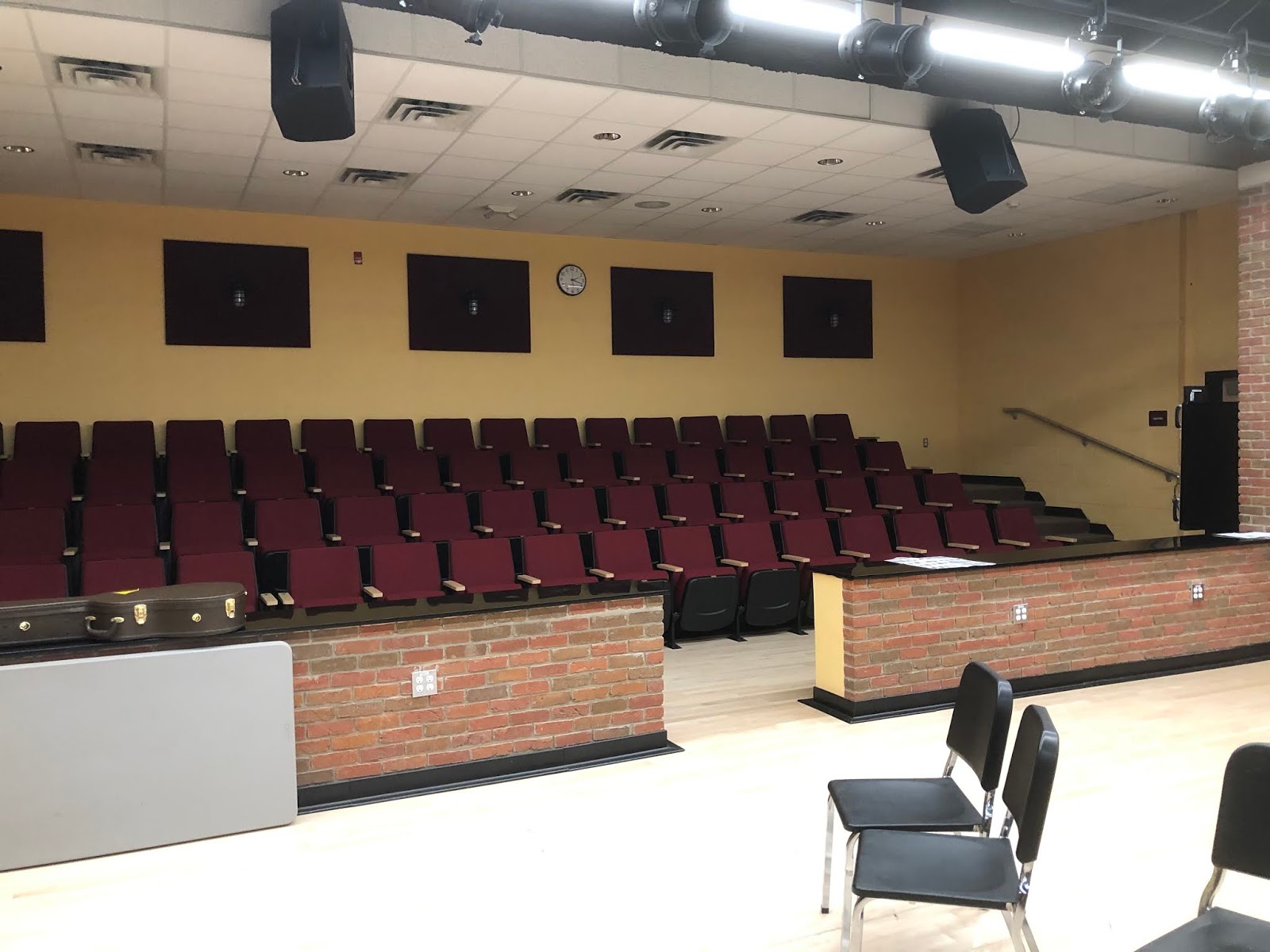
I was in awe by what I saw, and this says a lot as I spend so much time working in schools across the United States and the world.  Ove the past ten years Mount Olive High School has designed and built with relevant learning experiences and kids in mind.  As a parent, I would love for my kids to go there and I can’t even begin to imagine how proud the community is of what has been accomplished.  To give you some insight I will now share pictures of what I saw with some brief captions in an attempt to add context from a learning perspective.  

Professional TV studio


Science classrooms outfitted with dry-erase boards on the walls.


Giant-sized Scrabble board on a wall in the library for kids to play the game. 


Drunk-driving vehicle simulators that are used in PE/Health.


A room dedicated to a biological habitat focusing on numerous different ecosystems.  I loved seeing a giant tortoise that had free range of the entire room. Students use this room for turtle rehabilitation. How cool is that?


Marine robotics lab (M.A.T.E. - Marine Advanced Technology Education) where kids design and test their inventions in a large water tank purchased by the board of education. Not only do the kids develop robots that have received national acclaim, but they also create marketing and branding for their creations. I loved seeing the unique logo they designed for the class on the wall.


Robotics lab that has a machine (dual CnC mill and CnC plasma cutter) where kids create their own parts to either fix or build their robots.


Music studio that looks and feels like the real thing because it is.  I loved seeing all of the electric guitars that the Rock and Roll Academy class uses as well as all the periphery seating to accommodate performances. 


A makerspace, referred to as "The Mill" (The The Marauder Innovation Learning Lab), inspired by some of the most innovative company workspaces across the globe.  In addition to the space itself, resources for tinkering, inventing, creating, and making were available everywhere. One of my favorite rooms was the one that housed thirty-six 3D printers. The outside of the room also contained an inspirational slogan to motivate learners to think forward.


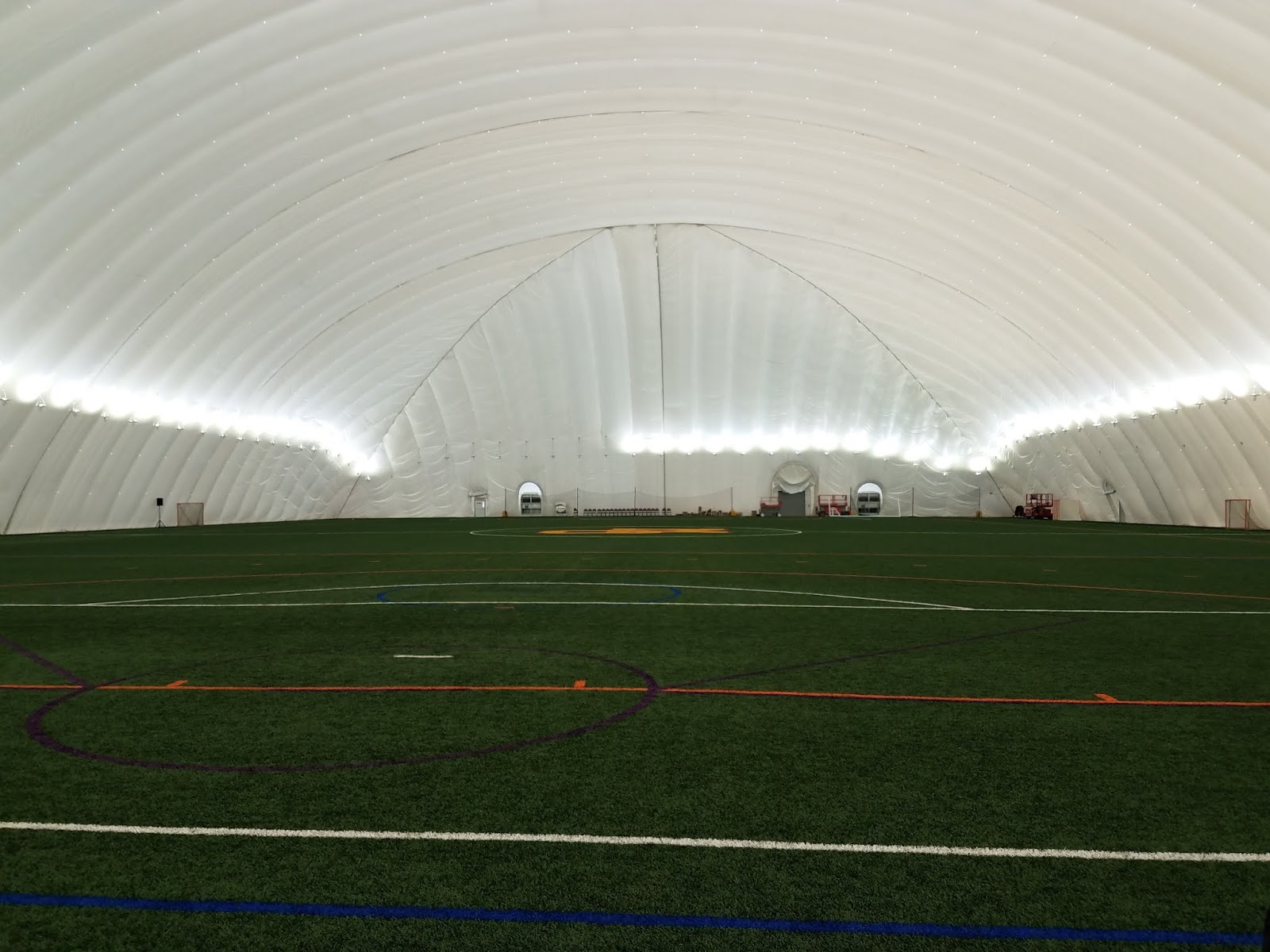
A seasonal, climate-controlled dome (Maurader Dome) is set up for physical education classes and athletics. You can't miss the large white bubble when you pull up to the campus.  It covers a large turf practice field during the colder months and then is taken down when the temperature warms.  From 6:00 PM on the facility is leased out to local organizations for use as a great revenue-generator. 


I cannot stress enough that leadership from every level made this transformation happen and epitomizes a shift from “yeah but” to “what if.” Central office administrators worked to make funds available using creative approaches that continually generate revenue outside the budget.  Kevin, as the building principal, worked with his assistants to develop a culture of risk-taking, support, and inclusiveness.  Every room we visited he made sure to state that what I saw is open to every student.  It was awesome speaking to teachers and hear how Kevin is always open to and supportive of their ideas, no matter how crazy. Finally, I was equally impressed with the teacher leadership. Their willingness to push the envelope and make learning relevant while challenging kids to think was apparent in all that I saw and the many conversations we had.

My job allows me to see first-hand how innovative practices, ideas, and strategies are being implemented with a high level of efficacy. My role is to share all of the awesome work they are doing, but also push and guide them down a path of continuous improvement. I can’t wait to return as a job-embedded coach when the kids are present with the goal of further scaling research and evidence-based practices.

We can learn a great deal from the successful outcomes at Mount Olive High School to empower other districts and systems to design and build schools that kids appreciate and want to attend. How have you worked to make your school(s) more kid-centric and what would you like to pursue? Please share in the comments below. 

Sunday, November 11, 2018

3 Shifts to Make Learning Personal

In education, a lesson makes or breaks a learner’s experience in a classroom.  Planning takes time. I remember many nights and weekends when I spent countless hours developing a variety of activities that would keep my students engaged while also following the scope and sequence of the curriculum based on the standards that needed to be addressed.  When it is all said and done, it is more about the experience than the lesson, but the latter is necessary to create the former.  The key to strengthening learning and instruction consists of the right balance of two main components:

  1. Instruction (what the teacher does)
  2. Learning (what the student does)

Balance surely is important. There is a time for direct instruction, but many learners would tell you outright that this component of a lesson is not what they really crave or find meaningful. In Learning Transformed, Tom Murray and I examined research and evidence to conclude that kids want a learning experience that is personal, while educators want alignment with the real expectations placed on schools across the world.  Finding common ground in this area at times poses quite a challenge.  Any personalization necessitates a move from “what” to the “who” to emphasize ownership of learning.  Sounds simple enough, right?  Getting everyone on board becomes the challenge.

Making the shift to personal learning goes right back to finding the right balance between instruction and learning.  Success in this area requires a shared vision, language, and expectations that not only make sense but also jive with curriculum, standards, and assessment.  Enter the Rigor Relevance Framework.  Now, I am not going to rehash the details of this tool as I have been writing about it for years, but I will provide an image of it below. The essence of the framework is quite simple as it allows for a lens for teachers and administrators to determine the level of thinking and relevant application that kids demonstrate while engaged in the process of learning. Instilling a purpose of learning while challenging all kids in the learning process is at the heart of a more personal approach.


Solid instruction should lead to great learning where kids are in the proverbial driver’s seat.  The Rigor Relevance Framework unearths three critical shifts in practice that can lead to personal learning experiences for kids.  As I love using images to articulate ideas and concepts, I will frame each shift with a question that will then be described in more detail using an associated image.

Shift 1: Are learners telling us what they know or showing that they actually understand?


Shift 2: Who is doing the work and thinking?


Shift 3: Who is asking the questions?


There is obviously more to consider when embracing and implementing the shifts listed above.  A personal learning experience doesn’t sacrifice higher-level thinking and application just for the sake of relevance and meaning.  Sound pedagogy lays the foundation with an added emphasis on scaffolding, innovative assessment, and improved feedback.   Student agency and technology both play a huge role throughout by empowering learners through choice, voice, and advocacy.  When these are combined to create effective blended learning activities in flexible spaces, the added elements of path, pace, and place further influence the personalization that will help kids flourish regardless of zip code or label.

However, it is the third shift that tells the tale as to whether a lesson or task supports rigorous and relevant learning to create a more personal experience for kids.  If kids see and understand the purpose while being challenged, then they will be asking the questions.  Better outcomes rely on transforming practice in a way that kids of the present and future can relate.  Making learning personal is a means to this end. 

Sunday, October 21, 2018

Meaningful Learning Begins and Ends with the Opportunities We Create

Learning hasn’t really changed, but the conditions that impact and influence it has. In Learning Transformed my co-author Tom Murray and I detailed eight keys backed by research and evidence that can facilitate a transformation of practice that will result in improved outcomes and better experiences for kids.  For change to occur, it is essential to continually evaluate where we are at in the process to eventually get to where we want to be, and our learners need us to be.  Ownership and empowerment result when meaningful opportunities are created for kids to explore, interact, design, and create in real-world contexts. How well are we developing critical competencies in our learners as depicted below?


Our beliefs, values, and experiences all work to shape our respective practice. When it comes to learning the emphasis has to be on what the kids do, not the adult. Therein lies the significant distinction between teaching and learning. It’s not that the former is bad per se, but ultimately kids should be actively engaged in the thinking and the work.  As we work to create powerful learning opportunities, it is important to reflect upon and update our belief system as needed. 

I recently shared what I believed in. Don Bartolo, in his book Closing the Teacher Gap, shares a list of beliefs that should be considered when creating learning opportunities for kids. I have merged his list (italicized), which I slightly tweaked, with some of mine, as there was overlap. Bartolo suggests engaging in the following exercise where you pick 3 of the items below that most resonate with you. 
  • Knowledge must be organized around key concepts and not learned in isolation as this promotes understanding. Relevant application to construct new knowledge matters.
  • Learners must receive feedback from more knowledgeable others as well as peers. It must be timely and specific.
  • Learners must be given the opportunity to connect current knowledge with new learning to build on what they know and can do.
  • Learners need to be working for a purpose and not ritual compliance. Real engagement means students are involved and invested in their work.
  • To become self-directed learners, students must learn to monitor and adjust their approaches to learning.
  • Young learners need to be immersed in all kinds of texts, fiction, and nonfiction.
  • Learners need time and opportunity to practice, use, and apply what they have learned. Mistakes and approximations are a part of learning.
  • Learner perceptions must be addressed directly. Understand what students are thinking, especially when beginning a new topic or unit.
  • Spaces and environments should be more reflective of the real world.
  • Just because it worked in the past doesn’t mean it still does.
  • Technology can be a game-changer with a solid pedagogical foundation.
  • All kids can learn.
  • Chase growth, no perfection.
So which of the above did you choose in your quest to transform learning? The key going forward is to reflect upon what you feel can help to create meaningful learning opportunities for students and decide what actions need to be taken on your part. It is important to note that we must also work to create powerful learning opportunities for ourselves. 

For more questions that can help guide you in the process of improving student and professional learning check out the free Learning Transformed Study Guide from ASCD. 

Sunday, August 26, 2018

A Picture is Worth a Thousand Words

In the past, I have written about my journey from digital nomad and detractor to leader. The catalyst for this transformation came in part from Twitter. My experiences in this social space forced me to take a critical lens to my professional practice as well as that of my staff in my school.  Over time my primary use of social media shifted from communicator to learner. It was this shift that got me thinking about how tools could be used to amplify the fantastic work of my teachers, administrators, and students to showcase efficacy in improving school culture. It all comes down to this. If you don’t tell your story, then someone else will. I learned quickly that it was in our best interests to be proactive in this endeavor.

My strategy was to implement a multi-faceted approach that utilized a variety of tools beyond just Twitter and single media sources with the ultimate goal of sharing and engaging more with stakeholders. The digital world allows all educators to become the storyteller-in-chief, something that I first discussed in detail in Digital Leadership years ago.  In both BrandED and Learning Transformed, the concept of building better relationships as a result of improved community engagement was discussed through both a research and innovative practice lens. Along with video, pictures were one of the most potent artifacts that I used to tell our story through greater context. Apparently, there was a reason for this. Take a look at the visuals below, and you will see very quickly why my first inclination was to capture an image and then share using a variety of options.


Each picture provided a more detailed look at how our learners were purposefully using technology to either support or enhance learning.  They also were used to showcase how my staff was effectively integrating innovative practices to improve learning outcomes.  In other cases, images painted a picture of how our students were serving others in the local community and beyond.  Contrary to popular belief, Twitter was not my preferred storytelling tool as a principal.  This designation went to Instagram. With this tool, I could quickly snap a picture, add a caption or context, and then not only share here but also to Twitter and Facebook. Hashtags were used to amplify locally, nationally, and globally. With Instagram having over one billion users it makes perfect sense that this platform should be at the center of all sharing efforts. On a side note, you can check out my Instagram account HERE.

One of the most important decisions I made early on during our digital transformation was to get into classrooms more to conduct observations, walk-throughs, and provide better feedback to my teachers. A commitment to instructional leadership helped pave the way to improving learning outcomes across the school. I quickly seized on the opportunity of being in classrooms more by talking to learners and taking pictures of their work. In a matter of seconds after leaving a room, I was able to share the pictures on social media. Many of these became the catalyst for more detailed blog posts that illustrated how theory and research were being implemented in a way that led to evidence of better results.


Regardless of your position, you can use pictures to showcase the greatness that happens in classrooms, schools, and districts across the globe.  I took pictures of everything, including plaques hanging in our hallways that celebrated impressive accomplishments relating to student achievement. Below is a quick list that can guide your image taking and sharing strategy:
  • Innovative practices: These can be pedagogical or even learning spaces. The key is to add context as to how these practices are leading to improvements in outcomes.
  • Artifacts: As a job-embedded coach I am always taking pictures of student work across all disciplines, assessments, what kids are doing on devices, and any tangible item that illustrates good practice.
  • Student achievement gains: It is important to share all types of success, including this. Plaques, banners, newspaper articles all make for powerful pictures that can be quickly shared.
  • Culture: Everything that falls between, around, or outside classrooms and school that depicts how the needs of the whole child are being met make for compelling pictures. Pep rallies, staff comradery, service projects, internship experiences, capstone projects, and field trips are just a small sampling of what can be shared to illustrate a thriving school culture.
As the title of this post implies, a picture is worth a thousand words and our brain loves them. How good is your current strategy at taking advantage of this?