Showing posts with label teaching. Show all posts

Sunday, September 22, 2024

4 Steps for Continuous Improvement

There is a great deal on the plates of teachers and administrators.  How many of us were initially trained doesn’t carry as much weight in a world where information is readily at our fingertips. Take lesson planning, for example. Many of us recall the days when lesson plans were a labor of love or a big waste of time. We spent countless hours crafting detailed outlines, complete with objectives, activities, assessments, and even a backup plan in case of inclement weather. For some of us, lesson plans were works of art; each one was a testament to our dedication and passion for teaching. In other cases, they were a waste of time.  

Let’s now take a look at the modern era. Efficiency and flexibility are now prized above all else. Lesson plans should be more streamlined, focusing on essential learning outcomes and incorporating innovative strategies to enhance the learning experience. While we understand the value and importance of planning, a more adaptable approach allows educators to respond to students' needs in real-time. 

Yes, a plan is important. However, it does not and should not be an arduous process. Consider the following steps when it comes to continuous improvement as a teacher. If you are an administrator, consider how your learning walks and feedback protocols can support growth in these areas. 

  1. Plan standards-based lessons with measurable learning goals.
  2. Implement effective strategies to maximize time, provide an appropriate amount of challenge, and engage students. 
  3. Evaluate insights from exit tickets, assessments, adaptive tools, and/or student work to determine lesson effectiveness. 
  4. Grow by reflecting to identify gaps in practice. Then, attend and implement strategies gleaned from professional learning. You can also leverage professional learning communities (PLCs), personal learning networks (PLNs), or other growth opportunities.

Teachers and administrators are compelled to adapt to changing times where access to information is instant and flexibility is crucial. The days of rigid, labor-intensive lesson planning are behind us. Instead, streamlined, standards-based lesson plans focusing on essential learning outcomes are critical. Teachers can embrace adaptability to better respond to students’ needs in real-time while clearly focusing on measurable learning goals. Consider how this continuous improvement process can transform the teaching and learning experience, whether you are an educator or an administrator. Administrators, empower your teams by offering meaningful feedback and encouraging professional growth. By embracing flexible, outcome-driven planning, we can better meet the needs of every student and cultivate a thriving learning environment.


Sunday, May 26, 2019

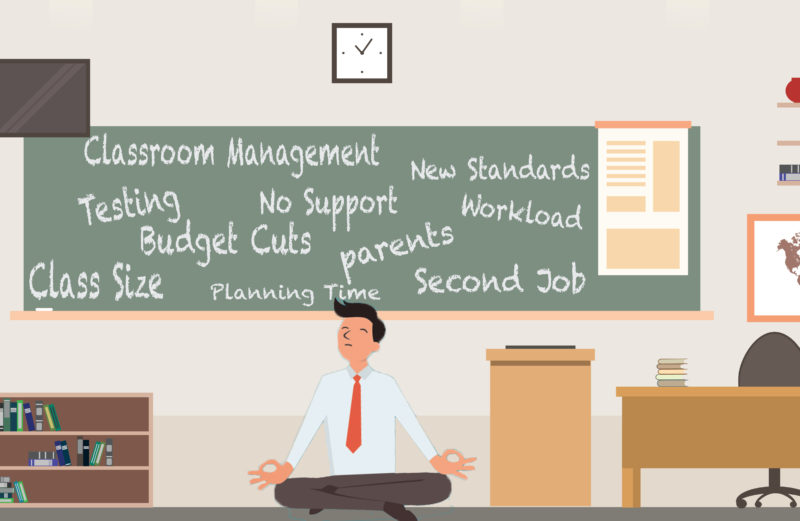
The Challenges Educators Face

We live in amazing times.  Technology, most specifically social media, has flattened the world. Remember when we had to get all of our professional literature and information from journals, books, conferences, over the phone, or people that we came in direct contact with? Educators now have access anytime from anywhere to people, ideas, resources, strategies, and feedback.  As much as this has been a game-changer for so many, we now have better access to research and evidence of improved student outcomes to really hone in on the types of changes that are needed in classrooms, schools, and districts across the world. 

Even with all the positives associated with what I listed above, the truth of the matter is that much of it doesn’t matter when the realities educators face are not given the attention that they deserve.  Just because something sounds good on Twitter and during a keynote or looks good on Pinterest and Instagram does not mean whatever is being promoted will work. Context matters. Finances matter. Facilities matter. Staffing and community support matter.  I have been blessed to not only deliver keynotes and workshops but also to facilitate job-embedded coaching on a long-term basis. It is the latter component of my work where I see firsthand the challenges educators are facing regardless of zip code.  This work has provided me with a more empathetic lens and has allowed me to tailor and personalize the coaching process as well as the feedback that is delivered.  


Image credit: NEA Today

How I see things is still limited and can be influenced by bias. Now don’t get me wrong. I see some significant obstacles and challenges thanks to the long-term work I am engaged in. However, I wanted to move beyond me and focus on the people who are in the trenches on a day to day basis.  This led me to pose a question on Twitter, asking educators to share their particular challenges.  You can see the tweet below. 


Here is a summary of the majority of the responses:
  • Fear of failure and willingness to fail forward
  • Helping educators understand and integrate maker-centered learning
  • Helping teachers and leaders break down silos and understand it is not a competition but a concerted push to provide students with learning experiences they need.
  • Effective strategies to remind adults we are preparing kids for the future not the adults for the future
  • The mental health of students. We don’t have the support needed for emotionally or mentally challenged students that are in the regular education class.
  • Dedicating time to fortify universal instruction and systematic procedures while continuing to attend to the intensive needs of the high volume of kids in crisis & experiencing trauma.
  • Inspiring high school students to choose teaching as a profession.
  • Attracting the best and brightest to the field
  • Boys’ achievement and engagement. There is a considerable disparity at present in our school across all years.
  • Finding the balance between "meet students where they are" and "getting them where they need to go." Many educators are clear on the former, then handhold & scaffold low expectations. Others are better at the latter then lose a good % of their class by not differentiating enough.
  • Lack of alignment of educational institutes knowledge with the practical world. Educational institutions are preparing the future leaders, and due to lack of such coordination they fail to groom themselves as per new emerging trends and increase their absorption level in industry.
  • Work-life balance 
  • Implementing Innovative student-centered learning that improves outcomes 
  • Matching sustainable grading practices that reflect learning
  • Empowering teachers and maintaining alignment to mission, vision, curriculum, etc.
  • Feeling genuinely supported in taking risks and being innovative in the classroom.
  • Students not taking responsibility. Even taking responsibility for picking trash up that they dropped.
  • Inclusion and REAL collaborative teaching... integration of universally designed practices to help all students (which covers social justice, restorative practices, SEL) and somehow helping more teachers embrace that accommodations are not cheating.
  • Screen time for students
  • Making technology purposeful, not just tech for the sake of it
  • Students don’t hold the information anymore as they can get it anywhere. There is a need to teach them not only to access safely and critically but also to apply and construct new knowledge.
  • Motivating digital immigrant teachers and administrators to have a growth mindset to try new strategies and tools.
  • Using interactive whiteboards like projectors
  • Teacher-student ratio
  • Principals seem to be regretting their decision to go into leadership as they have too much on their plate and not enough time. More supports are needed.
  • There is always a new program being purchased. It's used for a few years and then discarded, leading to a high level of initiative fatigue.
  • Real evaluation and accountability
  • School overcrowding, support of libraries by districts, and limited access to libraries
  • Principals with control issues
  • Antiquated buildings, facilities, and resources
  • Ideas that don’t align to consider the realities educators have to deal with
  • Drive-by, one and done professional development that is not on-going, job-embedded, aligned to research, have evidence to back up the investment and lacks accountability for growth.
There are a lot of challenges listed.  What would you add to the list above? 

By putting these and others front and center, efforts can be made to develop practical solutions. Before any new change or mandate, considerations have to be made as to the feasibility (and sustainability) of the idea, strategy, or investment.  Case in point. If you are asking teachers to differentiate instruction on a daily basis, class size and resources matter. Or if you are committed to blended learning, then a combination of pedagogical change as well as updated spaces is needed. It behooves all of us to consider reality when ideas are presented, whether through social media, workshops, professional development days, in books, or during keynotes and presentations.  The struggle for many is real, and they need our support.

Sunday, September 30, 2018

10 Strategies to Strengthen Instruction and Learning

When I think back to my training to become a teacher, there were some reasonably consistent norms.  These consisted of sound classroom management, listing the learning objectives, and developing a lesson plan. I still can’t believe how much time and focus there was on how to manage a classroom effectively. When it came to the lesson plan piece, many of my colleagues and I in the Northeastern United States were educated in the Instructional Theory Into Practice Model (ITIP) developed by Madeline Hunter.  For many years this framework was the lay of the land in schools when it came to direct instruction.  

Many of the original tenets still have merit today. As a realist, there is still value in direct instruction. In his meta-analysis of over 300 research studies, John Hattie found that direct instruction has above average gains when it comes to student results, specifically an effect size of 0.59. Another meta-analysis on over 400 studies indicated strong positive results (Stockard et al., 2018).  The effectiveness of this pedagogical technique relies on it being only a small component of a lesson. The rule of thumb during my days as a principal was for my teachers to limit any lecture component. Direct Instruction should be designed so that learners can construct (induce) concepts and generalizations.  For example, lessons can be divided into short exercises (two to four minutes) on slightly different but related topics.  This sustains children's interest level and facilitates children's synthesizing knowledge from different activities into a larger whole. 


We now live and work in different times. Technology, the pursuit of innovation, and advancements in research have fundamentally changed the learning culture in many schools for the better.  As I have conducted thousands of walk-throughs in schools, I am always looking at the convergence of instruction and learning. To me, instruction is what the adult does whereas learning is what the student does. There is some gray area here, but the overall goal is to continually grow by taking a critical lens to practice with the goal of improving learning outcomes for kids. With this being said, I have gone back to the ITIP Model and adapted it a bit. Some items remain, while a few others have been added. 

Standards-aligned learning target 

These frame the lesson from the students' point of view and are presented as “I can” or “I will” statements. They help kids grasp the lesson's purpose—why it is crucial to learn this concept, on this day, and in this way. Targets help to create an environment where kids exhibit more ownership over their learning. Critical questions framed from the lens of the learner include:

  1. Why is this idea, topic, or subject vital for me to learn and understand so that I can do this? 
  2. How will I show that I can do this, and how well will I have to do it?
  3. What will I be able to do when I've finished this lesson? 

Anticipatory set 

Anticipatory set is used to prepare learners for the lesson or task by setting their minds for instruction or learning. This is achieved by asking a question, adding a relevant context, or making statements to pique interest, create mental images, review information, and initiate the learning process. A good do-now activity can accomplish this.

Review prior learning 

Research in cognitive science has shown that eliciting prior understandings is a necessary component of the learning process. Research also has shown that expert learners are much more adept at the transfer of learning than novices and that practice in the transfer of learning is required in good instruction (Bransford, Brown, and Cocking 2000).

Modeling 

A pedagogical strategy where the teacher or student(s), demonstrates how to complete tasks and activities related to the learning target.

Check for understanding 

Specific points during the lesson or task when the teacher checks to see if the students understand the concept or steps and how to enact them to achieve the target. It clarifies the purpose of the learning, can be leveraged as a mechanism for feedback and can provide valuable information that can be used to modify the lesson. 

Practice 

Guided practice is when the students engage in learning target activities under the guidance of a support system that can assure success. Independent practice is when the kids practice and reinforce what they learn after they are capable of performing the target without support.

Authentic application of learning 

REAL learning in the classroom empowers students to manipulate the material to solve problems, answer questions, formulate questions of their own, discuss, explain, debate, or brainstorm.   These activities deemphasize direct instruction and can include discussion questions and group exercises, as well as problem-posing and -solving sessions, to get the concepts across in a meaningful and memorable way. Pedagogical techniques such as personalized, blended and project-based learning as well as differentiated instruction and student agency can lead to greater ownership amongst learners. 

Closure 

Learning increases when lessons are concluded in a manner that helps students organize and remember the point of the lesson.  Closure draws attention to the end of the lesson, helps students organize their learning, reinforces the significant points of the lesson, allows students to practice what is learned, and provides an opportunity for feedback and review. 


Feedback 

Verbal and non-verbal means to justify a grade, establish criteria for improvement, provide motivation for the next assessment, reinforce good work, and act as a catalyst for reflection. Feedback is valuable when it is received, understood and acted on (Nicol, 2010). How students analyze, discuss and act on feedback is as important as the quality of the feedback itself. Make sure it is Timely, specific to standard(s) and concept(s), constructive and meaningful. For more strategies on how to improve feedback click HERE. 

Assessment 

Well-designed assessment sets clear expectations, establishes a reasonable workload (one that does not push students into rote reproductive approaches to study), and provides opportunities for students to self-monitor, rehearse, practice and receive feedback. Assessment is an integral component of a coherent educational experience.

Not all of these strategies will be implemented in every lesson nor should they. However, each provides a lens to look at practice and make needed changes that can lead to better outcomes.  It should also be noted that technology represents a natural pedagogical fit that can be used to implement these strategies with enhanced fidelity. Make the time to reflect daily as to where you are to get to where your learners want and need you to be. 

Bransford, J. D., Brown, A. L., & Cocking, R. R. (2000). How People Learn: Brain, Mind, Experience, and School. Washington DC: National Academy Press.

Nicol, D. (2010). From monologue to dialogue: improving written feedback processes in mass higher education. Assessment & Evaluation in Higher Education, 35(5), 501-517.

Stockard, Jean & W. Wood, Timothy & Coughlin, Cristy & Rasplica Khoury, Caitlin. (2018). The Effectiveness of Direct Instruction Curricula: A Meta-Analysis of a Half Century of Research. Review of Educational Research: 88(4).

Sunday, August 20, 2017

The Impact of an Educator

I fondly remember when I was first asked to consider what my future career path might be.  Mrs. Williams, my kindergarten teacher, asked the class to draw a picture that articulated what we wanted to be when we grew up. I immediately knew exactly what I was going to draw. That was the easy part. The difficult task, for me at least, was to then utilize what limited artistic abilities I had to create an illustration that depicted my future career. To this day I still remember the image I created of a farmer tending to his crops. This was a natural career choice for me as a six-year-old having grown up in a rural area of northwestern NJ with a farm right across from our house. I had no idea how to farm, but being outside the rest of my life was good enough for me.

As I aged the thought of becoming a farmer faded as I began to focus more on careers in the biological sciences. Growing up surrounded by nature and spending each summer at the Jersey Shore helped to kindle and sustain an interest in this area.  I never gave much thought, nor did either of my brothers, about becoming an educator. Quite honestly, I told myself, and my parents, that I would never become an educator.  My response might have stemmed from the fact that I really didn’t understand what they actually did and the impact they were having on kids. All I knew with a great deal of certainty was that a career in education was not in the cards.

My mom, after taking many years off to take care of us, eventually became an elementary teacher where she had a celebrated career.  I say celebrated because at her retirement dinner I was able to witness firsthand the impact that she had on students and colleagues alike. Their stories of her passion and dedication for helping kids learn made me so proud. My father was a successful school administrator for what seemed like forever.  He held many positions, but what I was most in awe of was the fact that he was an elementary principal at the same school for close to 30 years.  When he retired they gave him a key to the city. I don’t know if you can be more successful than that. I never knew the impact my parents had as educators until after I myself became one. Hearing story after story about their work as their careers ended taught me that sometimes the ultimate reward for an educator comes years after we have had direct impact with kids or adults. 


Image credit: http://www.teamworkandleadership.com/

Herein lies the motivation behind this post.  I recently received a text message from a former student and athlete of mine. It started off like this:

"Coach Sheninger, is this still your number?"

My response was a simple yep.

He then went on to text me the following:


"Well hey, its Spenser Brenn just in case you lost my number. Sorry if it’s super early. As sappy as this is going to sound…."

I really was not prepared for what followed next, but I can tell you that his words below touched my heart and soul.


"I was just working out with my athletes and kids yesterday and it reminded of when I was in high school. You let me workout with you and would push me in the weight room, classroom, and on the football field. I have always been asked why did you want to become a teacher and coach. To be honest, I wasn't sure of that answer until I had this moment yesterday when I realized that those seemingly trivial moments of the two of us working out at lunch or study hall were more impactful than most other moments during high school for me. You were tough on me (a pain in the butt, or at least in the eyes of a stupid high school kid), deservingly so, considering I was a pain right back to you. However, you taking me under your wing and motivating, mentoring, and challenging me (whether you knew it or not) meant and still means more to me than you probably know, or more than I knew until yesterday. So I just wanted to reach out and say this - a small gesture like working out with a pain in the butt kid meant the world to him. It showed that you cared, something he, and all people, needed at that time. Thank you. I now know why I became a teacher, a coach, and a mentor to the youth."

It goes without saying that I was totally humbled by Spencer’s message.  As educators we all chose a profession that would not lead to riches in a financial sense. We chose to become educators so that we could not only help kids learn, but hopefully impact them well beyond just grades and achievement.  Education is a calling. It is a calling to make a difference.  That’s what educators do on a day-to-day basis.  Never forget that your work matters and that each day you get up in front of a class, help lead a building, or collaborate with others to run a district that you have an opportunity to positively impact kids. This also applies to your work with adult learners. 

Below is the response I sent to Spencer.


Well you just made my day, well week actually (maybe the entire summer). Life is so much more than what we are made to think is important. Everything comes down to relationships built on trust, empathy, compassion, understanding, and honesty. I really never knew until later in my education career that one of the most important things we can do is to show kids we care. It's not until much later in life that we learn of the impact we have on our students. You will one day be in the same position as me, a proud person humbled by the feedback that you receive knowing that you positively influenced others. Thank you so much for taking the time to send that text. It meant more than you will ever know.

Why did you become an educator? Who were those people and experiences in your life that led you to your current role?  In my new role, I still see myself (and other amazing speakers and presenters) as an educator. Each day is still a calling to try to make a difference.  Whether or not I make a real difference is in the eye of the beholder. Nonetheless, I am driven by the same passion I had as a teacher and principal to help others see the greatness that is within all of us.  

Thank you to every educator out there for the work that you do.