Showing posts with label student choice. Show all posts

Sunday, November 5, 2023

Charting a Student's Journey: A Guide to Crafting Effective Learning Paths

The journey of learning is a unique and intricate process, with each learner embarking on their own distinctive path towards success. The idea that every individual follows a different route to achieve their goals is deeply rooted in the diverse nature of human cognition, aspirations, and experiences. In this post, I will strive to care out the fundamental reasons why every learner carves out a distinct educational journey, acknowledging the multifaceted elements that contribute to this diversity.

One of the key factors that drive the individuality of learning paths is the inherent uniqueness of each person's cognitive and emotional makeup. Cognitive science has demonstrated that no two minds are alike, and individuals possess distinct learning styles, strengths, and weaknesses. Some learners may excel in visual or kinesthetic learning, while others lean towards auditory or logical approaches. These intrinsic differences in how we process information and tackle challenges lead to the development of personalized learning pathways, as individuals naturally gravitate towards methods that resonate with their cognitive preferences. 

Furthermore, the varying motivations, interests, and aspirations of learners play a pivotal role in shaping their educational journeys. While one student might be passionately driven by a desire to explore the realms of science and engineering, another may find their calling in the world of art and literature. These unique interests and objectives guide individuals toward specific areas of study and influence the choices they make in their learning endeavors. The distinct paths learners follow reflect their personal quests to align their educational experiences with their passions and long-term aspirations.


One of the key reasons why the learning path is critical in personalized learning is its ability to address diverse learning needs and preferences. Research by Vygotsky (1978) highlights the importance of adapting instruction to a student's individual needs, emphasizing the role of scaffolding and guidance. A well-designed learning path can provide various resources and activities that cater to visual, auditory, kinesthetic, and other learning preferences, ensuring that each student can engage with the material in a way that suits them best.

The learning path empowers students to take control of their learning journey. In a study conducted by Means et al. (2009), researchers found that personalized learning, with a focus on allowing students to set their own pace, led to improved academic outcomes. A personalized learning path enables students to progress through the curriculum at a pace that suits their capabilities and preferences, fostering a sense of autonomy and motivation.

What makes them even more valuable is the fact that they allow educators to adapt content to individual needs. Research by Kulik and Kulik (1991) highlights that adapting instruction to individual differences can result in substantial learning gains. By customizing the learning path to each student's strengths and weaknesses, educators can provide targeted resources and activities to enhance understanding and retention.

Varying paths often incorporate continuous assessment and feedback mechanisms, which play a pivotal role in the learning process. Research by Hattie and Timperley (2007) suggests that feedback is one of the most potent influences on learning. Personalized learning paths can provide real-time feedback on students' progress, helping them identify areas for improvement and guiding them toward mastery.

Every student learns at their own pace, and personalized learning paths are designed to accommodate this variation. Research by Bloom (1984) demonstrated the benefits of mastery learning, a concept closely related to personalized learning, in which students must achieve a predetermined level of proficiency before progressing. Learning paths can ensure that students have mastered a topic before moving on, preventing gaps in understanding.

Here are some practical implementation strategies that allow students to follow a path aligned with their learning needs and interests:

Path recognizes the learner as an active participant in their educational journey. It leverages their autonomy, choice, and self-direction to create a personalized and highly engaging learning experience. This approach not only fosters academic success but also equips individuals with essential competencies and a mindset for continued self-directed learning throughout their lives.


Sunday, August 6, 2023

Why Choice in Learning Matters

Do you like being told or directed to do something a certain way even though you know it doesn’t align with your innate strengths, interests, or learning preference? Pretty frustrating, right? It becomes even more of an obstacle to growth if you know how to demonstrate understanding but aren’t afforded different pathways to articulate a response. Choice matters when it comes to learning if that is the ultimate goal. The key is first to be open to giving up some control and understanding that, in many cases, there isn’t always one right way to demonstrate competency.

While educators can leverage many high-agency strategies, choice might be the most essential element of personalization because it allows students to take ownership of their own learning in so many different ways. When students have a say in what they learn, how they learn, and when they learn, they are more likely to be engaged and motivated. They are also more likely to see the relevance of their learning to their own lives and interests. Most importantly, when they are able to demonstrate understanding on their own terms, it builds invaluable confidence in their abilities.

I shared the following in Disruptive Thinking in Our Classrooms:

Choice is the great differentiator that helps meet the needs of all learners.

There are many ways to incorporate choice as a means to personalize. For example, students can choose their own learning:

  • Goals by involving them in setting individual goals, working with a group to set group goals, or choosing from a set of pre-determined goals.
  • Materials such as a variety of textbooks, articles, websites, technology, or other resources to assist with or demonstrate learning.
  • Activities such as hands-on activities, simulations, projects, or tasks in a choice board, playlist, or must-do/may-do list. During Tier 1 instruction, there are opportunities where students can choose to show their understanding using individual whiteboards or dry-erase surfaces (text, drawings) or technology (video, audio, drawing, text, images, etc.).
  • Pace by setting their own deadlines for completing assignments, projects, or when working on a personalized task.

In my work with principal Nicki Slaugh and her Quest Academy Junior High School staff, student choice as a high-agency strategy has begun to flourish. Below you can see a few examples. I also encourage you to check out these posts from Wells Elementary (TX), Snow Horse Elementary (UT), Juab School District (UT), and the Corinth School District (MS).


Giving students a choice in their learning can be a challenge, but it is worth the effort. While some might see it as more work or just another thing to do, once you find a schedule that works for you, choice can be integrated routinely, even if it is once a week. When students have a say in their learning, they are more likely to succeed. Here are some of the benefits of giving students choices in their learning:

  • Increased engagement and motivation
  • Improved understanding of the relevance of learning
  • Increased self-regulation and direction
  • Enhanced problem-solving skills
  • Increased creativity and innovation
  • Improved critical thinking skills

If you are interested in incorporating choice into your classroom, here are a few tips:

  • Start small. Try to do only a little at a time.
  • Be clear about your expectations. Let students know what they need to learn and how they will be assessed.
  • Provide students with a variety of choices. This will help ensure that everyone can find something they are interested in.
  • Be flexible. Be willing to adjust your plans based on student feedback.
  • Celebrate student choices. When students make good choices, be sure to let them know.
  • Share templates and ideas. Don't reinvent the wheel. Leverage your best resource, which is other educators invested in the work.  

Giving students choices in their learning can be a powerful way to improve their engagement, motivation, and understanding. If you are looking for ways to personalize your classroom, I encourage you to give choice a try. For an array of strategies, check out this post.

Sunday, October 31, 2021

Different Ways to Show Learning

For many of us, our preparation to become teachers consisted of courses focusing on classroom management, lesson design, grading, and proven strategies that had withstood the test of time.  We were also exposed to learning style theory and the many benefits it had on meeting the diverse needs of students. To this day, it is still heavily referenced, even though it has been debunked extensively.  Cindi May shared the following in Scientific American:

Just because a notion is popular, however, doesn't make it accurate. A recent review of the scientific literature on learning styles found scant evidence to clearly support the idea that outcomes are best when instructional techniques align with individuals' learning styles. In fact, several studies contradict this belief. It is clear that people have a strong sense of their own learning preferences (e.g., visual, kinesthetic, intuitive), but it is less clear that these preferences matter.

There is little scientific support for this fashionable idea—and stronger evidence for other learning strategies.

Research continues to provide further evidence that the conventional wisdom about learning styles should be rejected by educators and students alike (Kirschner, 2017; Husmann & O'Loughlin, 2018; Riener & Willingham, 2010).  While this challenge to conventional wisdom might be hard to swallow, some good news comes in the form of a silver lining. There isn't one best way to learn as the path and preference are different for everyone. Hence the need to incorporate an array of strategies that pull on the strengths of some learners while addressing weaknesses in others.  

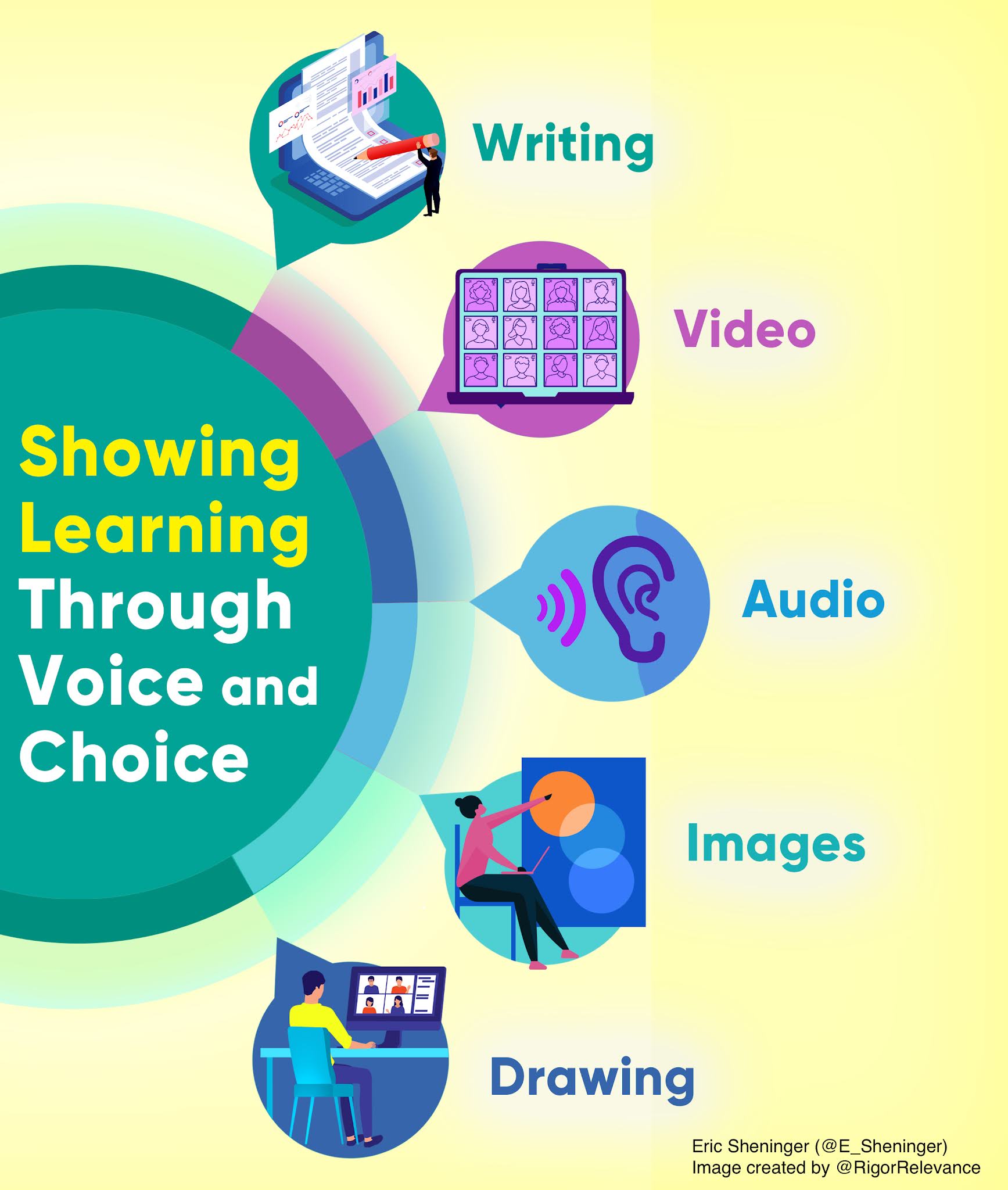
In Disruptive Thinking in Our Classrooms, I laid out an array of personalized strategies that can be implemented after a mini-lesson is facilitated.  While these take some planning upfront, there are some simpler techniques that can be readily integrated into any lesson in the form of voice and choice.  When reviewing prior learning, checking for understanding, or closing lessons, allow students to choose how to show what they have learned through the following means:

  • Writing (digital tools, individual whiteboards)
  • Video (Flipgrid, Padlet, Seesaw)
  • Audio (Padlet, Seesaw)
  • Images (Padlet Jamboard)
  • Drawing (Nearpod, Pear Deck, Padlet, individual whiteboards)

While tech presents a myriad of options for students to show learning, traditional mini-whiteboards can also be used in some cases. None of the pathways above are meant to replace summative assessments, but using varied formative means caters to a learner's preference by giving them the best opportunity to show what they have learned. It builds confidence, fosters creativity, and empowers students during lessons. 

Husmann, P.R., and V.D. O'Loughlin. 2019. "Another Nail in the Coffin for Learning Styles? Disparities among Undergraduate Anatomy Students' Study Strategies, Class Performance, and Reported Vark Learning Styles." Anatomical Sciences Education 12, 6–19. 

Kirschner, P. 2017. "Stop Propagating the Learning Styles Myth." Computers and Education 106, 166–171.

Riener, C., and D.T. Willingham, 2010. "The Myth of Learning Styles." Change: The Magazine of Higher Learning 42(5), 32–35.