Sunday, May 31, 2015

Finally, an SIS Worth Switching For

I’ve recently discovered an exciting new company called Alma, which has built a groundbreaking new Holistic Student Engagement Platform (an SIS/LMS hybrid) that I believe in so much that I’ve joined their Advisory Board.  

Here’s why I’m excited about Alma’s potential to make a big impact on K-12 education:

  • It’s actually easy to use.  You don’t need to be a database administrator or techie to make it work for you.  Most of the SIS’s out there are just good enough to get the job done, but take awhile to learn and can still be challenging.  Why should we as educators settle for that?  We are increasingly accustomed to using extremely intuitive software on our smart phones, tablets, and laptops.  Why shouldn’t our school and district management tools be just as intuitive?  We deserve this.  
  • It saves a ton of time for admins and teachers.  We all know how stretched for time we are.  If a system’s tools and ease of use can save us just 30 minutes a day, wouldn’t that be a huge win for both educators and students?  Think of the positive impact on educator happiness and work/life balance, not to mention the potential gains for student improvement as a result of reclaimed time to focus on students.  Many in the K-12 space don’t think an SIS can impact student outcomes, but when you consider the potential time savings for teachers, it can actually have a huge impact. 
  • It saves schools and districts money.  With most schools and districts using up to ten different systems serving niche needs to operate, a lot of time and money is spent trying to integrate and connect these systems to each other.  Because Alma offers SIS, LMS, and communications tools in a single platform, business managers and principals save big by consolidating.  And much less is required to be spent on training due to the ease of use.  
  • It fosters communication like no other.  Alma has woven communications tools into virtually every aspect of their SIS and LMS, so that you don’t have to leave whatever you are doing to engage any member of the community in seconds.  Building these tools right into the workflow increases efficient communication, and we all know how important that is for success.
  • 'All in one' is the future of school management software.  Think about it.  How many different tools do you have to remember and save passwords for, not to mention learn how to use?  It just doesn’t have to be that hard.  With more capability in a single platform, you have less to learn, fewer disparate places to go to get things done, and a simpler existence.  Why pass the data though so many systems and put data privacy and security at risk in the process?  It’s like going to the doctor’s office and filling in the same information on so many different forms – it just doesn’t have to be that complicated.  
These are the big reasons I’m so excited about Alma.  But don’t just take my word for it – I encourage you to see for yourself at www.getalma.com and requesting a demo.  It’s unlike anything else you’ve seen – in a good way.  

Sunday, May 24, 2015

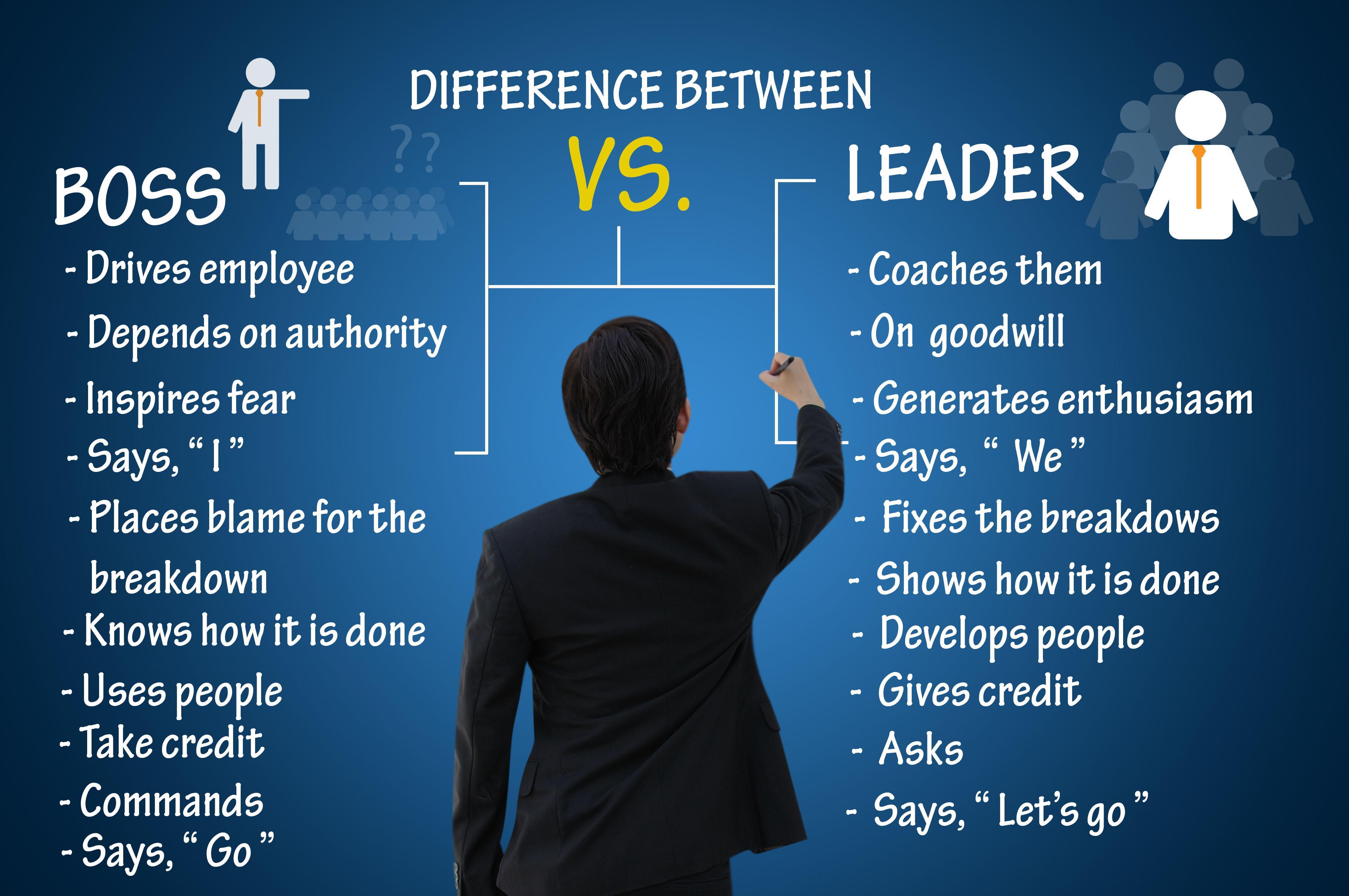
Leaders Don't Boss

"Leaders care about why things get done. Bosses just want things to get done. Bosses maintain order for the sake of order. Leaders introduce order for the sake of progress." - Akshay Kapur 

Do you work for a boss or with a leader? Are you a boss or a leader? This is an extremely important question where the answer is probably indicative of the climate in which you work and the success (or lack thereof) of change initiatives.  The fact of the matter is people choose to be either a boss or a leader.  This choice can have a monumental impact on any organization.  Leadership is a choice that evolves over time through one’s actions.  Leaders look to constantly improve and help others to do the same. Bosses care very little about self-improvement and are more focused on extrinsic motivational factors.  

More than one individual  

Change does not come from one person.  Leaders believe in servitude while embracing the collective strengths and abilities of all people in an organization. They work hard to build a team and use the hiring process to surround themselves with smart people.  Great leaders do not shy away from hiring people that are smarter than them and are not afraid to admit it.  Consensus and shared decision-making are strategies commonly used to foster embracement for change, which ultimately leads to success.  Leaders work tirelessly to build relationships with everyone through collaboration, trust, and respect.  The power of many always trumps that of one.  Bosses on the other hand expect everyone to serve them. Their specific title and self-perceived power that comes with it leads to a sense of entitlement. 

Example moves the masses

Leaders never ask others to do what they are not willing to do themselves.  They model the way and use their example as a means to move a change initiative forward.  Leaders understand that talk is cheap and opinions do absolutely nothing in the long run to successfully implement change.  Their actions speak for themselves and are used as catalysts to inspire others to join in.  Bosses command and direct others to do what they are not willing to do themselves.  They use talk and rhetoric as the main drivers to force an agenda forward or have others do their bidding. Bosses do not see the inherent value in spending the time and effort to participate in actively building a better culture leading to improvement.  

Implement vision into action

Leaders work with others to develop a vision to help move a mission forward.  In the case of schools, these people ensure measures of action result in the vision becoming a reality so that all students learn and overall achievement increases.  Great leaders focus on the vision for the mission’s sake. Bosses set the vision themselves, usually in the form of a mission statement. They then sit on top of this mission statement and use it to promote themselves when others succeed. 

Expect more and work harder

True leaders set high expectations of themselves.  They understand by doing so the workload increases as progress is made.  Leaders that have raised the bar and let their work be the example motivate and inspire others to do the same. They focus on solutions instead of excuses. Bosses on the other hand expect to reap rewards and benefit from the hard work of others. 

Bosses come in many forms, as do leaders.  They are not just with people you might work for, but also those in positions of authority.  When I look at current education reform efforts across the globe I see endless examples of bosses, but very few leaders.  I can also say the same about the social media space. There needs to be less telling educators what to do and more showing them how to do it. If not, then those individuals are no better than many of the bosses that they complain about.


Image credit: http://sinsip.com/st.jpg 

Bosses tell others what to do. Leaders on the other hand take them where they need to be.  

Sunday, May 17, 2015

A Time and Place For Buy-In

Maybe it’s just me, but I can’t stand the term “buy-in” when it comes to change.  It is one of these phrases that has outlived its usefulness, if in fact sustainable change leading to transformation is the ultimate goal. More often than not, this leadership tactic is put into play to get educators on board with specific mandates and directives that have been pushed down from either the state government or central office.  In my opinion, this is the only time when looking for buy-in is appropriate because you really don’t have much of a choice in the matter.  It is in these situations that leaders have to “sell” others on the importance of change whether or not they actually find value in it themselves.  We have to do so by developing a concrete strategy comprised of compelling reasons to get staff on board with these changes even though we ourselves never actually bought in.  


Image credit: https://trmurf.files.wordpress.com/2015/06/embrace-change.jpg

As a principal this was always a tough pill for me to swallow. I often felt guilty as I addressed my staff with an elevator pitch loaded with reasons as to why these changes were needed.  In these situations my role became more about selling change.  Thus educational leadership in many regards has morphed leaders into sales reps who have to move an agenda forward even if the outcome will not help to positively transform school culture.  It comes as no surprise that initiatives implemented through a buy-in approach rarely are sustained to a point where there is a noticeable lasting impact on culture.  

Real change that is sustained does not come from buy-in. If you have to sell people on change then you will always have to spend precious time keeping people bought-in.  With buy-in the leader becomes, and remains, the focus of the change initiative. If there is one thing I learned during my time as a school leader, where many successful changes were successfully implemented over a short period of time, it was that change has to be embraced by all stakeholders.  When educators have to be coerced through a buy-in approach animosity and resentment often follow.   

Our approach focused on putting our stakeholders in a position to experience the value of change firsthand. Instead of a one-size-fits-all methodology to moving the masses to where we wanted them to be, we instead identified those among the staff who exhibited powerful leadership attributes and empowered them to be agents of change.  I still provided an overall explanation to my entire staff as to why we needed to change certain things and how we could go about it, but allowed everyone to go at their own pace initially. This allowed me to focus time, energy, and resource on a smaller group of go-getters who I had hoped would be the key.  The calculated gamble paid off.  This team of teacher and student leaders was put in a position to experience the value of changes we supported as administrators, but they championed through their successes.  They owned the process and I shared their successes far and wide.

I might have played my part by bragging about the successes this group experienced early on, but it was their actions that compelled their colleagues to move in a different direction and embrace change.  There is nothing more powerful than the act of modeling when it comes to initiating and sustaining change.  It is at this point that stakeholders embrace new and different ways of doing work because they want to, not because they have to. The true leaders of change are our teachers and students. Great leaders, in my opinion, remove all excuses by providing the necessary support.  Place people in a position to experience firsthand the benefits of the change and they will do the hard work of moving the masses.  


Image credit: http://usercontent2.hubimg.com/8187243_f520.jpg

Think about changes that you have made on a professional level.  Did you have to “buy-in” in order to make those changes or did you embrace them once you experienced the inherent value for yourself?  I would guess the latter and that is why the change took hold resulting in an improvement of professional practice. For change to be successful and last the test of time it has to be embraced. The next time you are in a position to implement needed change think about how you will approach it in a way that focuses on embracement as opposed to buy-in.

Monday, May 11, 2015

Turn Students from Passive Listeners into Engaged Learners with imakiku

The following is a sponsored blog post by imakiku.

Student engagement that leads to actual learning is the goal of any pedagogically sound lesson.  With that in mind have you ever pondered the following questions?

  • What do the students think while in class?
  • What are students interested in now?
  • How do I know if they are actually learning?


These questions are a major concern for many teachers, as they want to know what the students think while in class. Advances in web-based technologies now offer teachers the ability to answer these questions in a more holistic manner. Today I introduce a new web browser based tool called imakiku, which is sure to enhance formative assessment in your classroom.


Imakiku enables real-time voting, posting, and survey capabilities through the use of smartphones, tablets, or laptops.  It is specifically optimized for these mobile devices. Simple, intuitive interfaces make everything easy for both teachers and students alike - from creating and asking questions, making comments, designing and completing surveys. You do not need extra devices. There is no software to download and registration is not necessary. Your students simply log in using the participation code that is provided.

The teacher goes to imakiku.com and prepares the questions.

Students go to sugukiku.com; login and participate.

It’s that simple!

For Teacher: imakiku.com

Here are some more detailed instructions for the teacher:

  1. Before the class go to imakiku.com to create questions and topics for the students to respond to during the lesson.
  2. As the class begins, ask the students to use the participation code to log in to sugukiku.com via their devices.
  3. During the class the student responses will appear as bold informational graphics in real-time.
For Students : sugukiku.com


Instructions for the students are as follows:
  1. As the class begins students login and participate during the class using their devices. 
  2. During the class students answer the questions with “one click”. They can also submit comments and questions during the class, which the class can see and “vote” on.
You can access a free trial until 12/31/2015 for general use.  For readers of A Principal's Reflections the trial is free until 3/31/2016 by using a special code. Visit imakiku, click on the orange sign up button, copy and paste this code in the promotion box: 20150505_ZVMQODFJSA

After you give imakiku a try, please send your comments/feedback to contact@tenmondo.com. They will then better develop imakiku to reflect your feedback. 

Once you grasp what your students think in real time, you can begin to develop even better lessons and learning activities based on their feedback.  Students will feel more respected when afforded the opportunity to demonstrate their learning in real-time, thus increasing their active engagement.  It will enable your class to keep concentration and motivation high. Above all, your students are more likely to enjoy taking your class.

Give imakiku a try and turn your students from passive listeners into engaged learners.

Visit imakiku’s website to learn more!