Showing posts with label change leadership. Show all posts

Sunday, March 22, 2026

The Profound Impact of Leader Modeling

The concept of "do as I say, not as I do" has no place in school leadership. As educational leaders, we are the architects of our school’s culture, and every action we take serves as a blueprint for our staff and students. Modeling is not just a soft skill; it is a rigorous, intentional practice that bridges the gap between abstract vision and daily reality. When we lead by example, we provide a living demonstration of the values we expect others to uphold.

The Power of Observational Learning

At its core, modeling is rooted in the idea that people learn more from what they observe than from what they are told. In a school setting, teachers are constantly looking to their principals and administrators to gauge what is truly valued. If we advocate for lifelong learning but never share our own professional growth, the message falls flat.

Research consistently shows that leadership behavior directly influences teacher efficacy and commitment. When leaders model pedagogical involvement, it signals that the core business of the school is teaching and learning. According to May and Supovitz (2011), the frequency and quality of a principal's instructional leadership activities are significantly associated with changes in teacher practice. By being present in classrooms and participating in professional learning communities, we move from being mere managers to being active lead learners.

Building Relational Trust through Consistency

Modeling is also the primary vehicle for building trust. Trust is the "lubricant" that allows the gears of a school to turn smoothly. If a leader expects staff to be vulnerable and take risks with new pedagogical strategies, that leader must first demonstrate vulnerability. This might mean admitting when a new initiative did not go as planned or asking for feedback on a presentation at a faculty meeting.

Trust is not built through grand gestures but through the consistent alignment of words and actions. When leaders model consistency and fairness, it creates a psychological safety net for staff. This environment is essential for innovation. Without the trust established through leader modeling, teachers may hesitate to deviate from safe, traditional methods for fear of reprisal or a lack of support. As I stated in Digital Leadership, without trust, there is no relationship. Without relationships, no real change will ever occur. 

Professionalism and Emotional Intelligence

The "hidden curriculum" of leadership includes how we handle stress, conflict, and setbacks. Our emotional intelligence serves as a thermostat for the building. If we remain calm and solution-oriented during a crisis, the staff is likely to follow suit. Conversely, a leader who reacts with frustration or opacity can inadvertently create a culture of anxiety.

Modeling professional behavior also extends to how we interact with all stakeholders. Respectful communication, even in the face of disagreement, sets a standard for how teachers should interact with parents and how students should interact with one another. We cannot demand a culture of respect if we do not embody it in every email, meeting, and hallway conversation.

Impact on Student Outcomes

While it might seem that a leader’s modeling only affects the adults in the building, the ripple effect eventually reaches the students. A leadership style focused on modeling high expectations and continuous improvement creates a trickle-down effect. When teachers feel supported and see high standards modeled by their leaders, they are more likely to mirror those behaviors in their own classrooms.

The relationship between leadership and student achievement is well-documented. Sebastian and Allensworth (2012) found that the influence of leadership on classroom instruction and student performance is mediated by the professional environment of the school. Essentially, the leader sets the conditions. By modeling a relentless focus on student needs and data-informed decision-making, we empower our teachers to do the same, leading to improved academic results.

The Responsibility of the Mirror

Leadership by modeling is a 24/7 commitment. It requires a high level of self-awareness and the humility to recognize that we are always being watched. Every choice we make, from the way we handle a difficult parent phone call to the way we prioritize our schedule, tells a story about what we believe. Leading through both mirrors and windows is vital. 

If we want schools that are innovative, compassionate, and academically rigorous, we must be the first practitioners of those traits. We are the mirror in which our school culture sees itself. By modeling the excellence we seek, we don't just lead a school; we transform it.

May, H., & Supovitz, J. A. (2011). The variable effects of instructional leadership: How principal leadership varies across schools and teachers. Educational Administration Quarterly, 47(2), 332-370.

Printy, S. M., Marks, H. M., & Bowers, A. J. (2009). Integrated leadership: How principals and teachers share transformational and instructional influence. Journal of School Leadership, 19(5), 504-532.

Sebastian, J., & Allensworth, E. (2012). The influence of principal leadership on classroom instruction and student learning: A study of mediated pathways to learning. Educational Administration Quarterly, 48(4), 626-663.

Urick, A., & Bowers, A. J. (2014). What are the different types of principals across the United States? A latent class analysis of principal perception of leadership. Educational Administration Quarterly, 50(1), 96-134.


Sunday, September 28, 2025

Leading from the Heart: How Vulnerability Drives Trust and Innovation

Recently, on my podcast, Unpacking the Backpack, I shared some thoughts on the importance of vulnerability as a leader.  Below, I take a deeper look at this concept. 

For way too long, we've been sold a bill of goods about what leadership looks like. The old-school playbook said a great leader is a superhero—unflappable, all-knowing, and always in control. They were taught to never show a crack in the armor, to project an image of perfection. This outdated ideal, however, is not just broken; it's actively sabotaging our efforts to build resilient, innovative teams. We’ve seen this play out in organizations worldwide, where a culture of fear and control stifles creativity and prevents people from taking the risks needed for growth.

What if the most powerful move you could make is to simply admit, "I don't know"? Or, "I messed that up"? Or even, "I need help"? This isn't about being weak. In fact, it's the exact opposite. True leadership is about having the courage to be seen for who you really are, flaws and all.  This isn't some fluffy "soft skill." It's a foundational shift in how we build trust,  innovate with purpose, and create a culture where people don't just survive, they thrive. 

Vulnerability Isn't Weakness; It’s a Superpower

Let's address the elephant in the room. The biggest misconception is that vulnerability is a sign of weakness. When people hear the word, their minds jump to emotional fragility or a lack of competence. The fear is that if you let your guard down, you’ll lose the respect of your team, and your authority will evaporate. That fear is a major roadblock, but it's built on a false premise.

Think about it: is it weak to stand in front of your people and say, "We've hit a wall here, and I don't have the perfect answer"? No way. That's a profound act of courage. It takes guts to be transparent about a challenge and even more guts to admit you don't have all the solutions. As BrenĂ© Brown, a trailblazer in this field, and other researchers have taught us, vulnerability involves "uncertainty, risk, and emotional exposure" (Fong, 2021). In a leadership context, it's about being willing to show up and be seen when you can't control the outcome. It’s telling your staff, "This change is a huge lift, and it’s going to take all of us. I can't do it alone." That’s not weakness; it's a declaration of shared purpose. It’s an act of courage because it requires you to be honest with yourself and your team about your limitations. You can’t build a strong foundation on a false front of perfection. Instead, you build it on the solid ground of authenticity. 

Building a Culture of Psychological Safety

So, why go through all this? Why risk showing your human side? Because the payoff is massive, and it directly impacts your team’s performance. When you lead with vulnerability, you create a powerful environment of psychological safety.

Psychological safety is a shared belief that a team is a safe place for interpersonal risk-taking (Edmondson, 1999). It’s a culture where people feel comfortable speaking up, asking questions, admitting mistakes, and sharing crazy ideas without fear of being shamed or punished. When a leader models vulnerability, they give everyone else permission to do the same. This isn't just my opinion; it’s backed by some of the most compelling research out there. Google’s Project Aristotle, for example, spent years analyzing hundreds of their teams to figure out what made them tick. The number one factor for team success wasn’t the skill of the individuals or their tenure; it was psychological safety. When you foster this kind of safety, you unlock innovation, boost problem-solving, and accelerate learning. How many amazing ideas have been lost because someone was too afraid to suggest them? Vulnerability is the key that unlocks that door.

Beyond psychological safety, leading with vulnerability builds authentic trust. You can't demand trust with a title; you have to earn it through consistent, honest behavior. When you're open about your struggles or your mistakes, you become relatable. Your people see you not as a distant authority figure but as a partner in the work. This creates a deeper sense of loyalty and commitment. They're more willing to go the extra mile for a leader they respect and trust. It also cultivates empathy, which is crucial for a modern workplace dealing with burnout and mental health challenges. Research by Nembhard and Edmondson (2006) shows that when leaders are perceived as vulnerable, it encourages employee voice and strengthens team effectiveness.

Actionable Steps: How to Start Small

How do you actually do this? It’s not a switch you can just flip. It's a muscle you have to build slowly and deliberately.

First, get real with yourself. What makes you feel vulnerable? Is it admitting you don't know an answer? Apologizing for a mistake? Asking for help? Once you pinpoint your triggers, you can start small.

A great next step is to model accountability. If you mess up, own it. Say, "I dropped the ball on that deadline, and I take full responsibility. Here’s what I learned, and here’s how we'll adjust." No excuses, no blame game. This is a powerful, low-risk way to show vulnerability. Another simple action is to ask for help. Instead of presenting a top-down plan, try saying, "I'm not sure what the best approach is here. What are your thoughts? I'd really value your input." This not only shows your human side but also empowers your team, making them feel like true partners. 

Finally, be a human being. Share a brief, non-work-related story. Maybe it's a challenge you're facing with a home project or a new hobby you're trying. It's about building genuine connection, not oversharing personal details.

Remember, this is about being purposeful. The goal isn't to air all your dirty laundry. It's to share enough to build connection and trust without making your staff uncomfortable. The litmus test should be simple: "Is this in service of the students we serve and our core mission?" If the answer is yes, you're on the right track. If not, you might be veering into oversharing territory.

The Path Forward

So, what’s your move? This isn't a one-and-done deal. Vulnerability in leadership is a continuous practice. It's about taking one small, intentional step at a time. Apologize for a minor error. Ask for help with a non-critical task. Share a moment of genuine uncertainty. Don't try to change everything overnight. Just take one small risk to be seen for who you are, not for who you think you're supposed to be.

You’ll likely find that instead of losing respect, you'll gain it. Your team won't see weakness; they'll see a fellow human being who has the courage to connect. Vulnerability is no longer a "nice to have" skill; it's a core competency of modern leadership. It's the key to unlocking trust, innovation, and a resilient culture that can weather any storm. Find one small way to be vulnerable this week. Maybe it's admitting a mistake, maybe it's asking for help, or maybe it’s simply saying, “I don't know, but let's figure it out together.” The most powerful leaders aren't the ones who pretend to be perfect; they're the ones who have the courage to be real.

Edmondson, A. (1999). Psychological safety and learning behavior in work teams. Administrative Science Quarterly, 44(2), 350–383.

Fong, C. (2021). The benefits of leader vulnerability in times of crisis. Organizational Dynamics, 50(1), 1-8.

Nembhard, I. M., & Edmondson, A. C. (2006). Making it safe: The effects of leader inclusiveness and professional status on psychological safety and improvement efforts in health care teams. Journal of Organizational Behavior, 27(7), 941–966.


Sunday, June 8, 2025

The Phrases That Keep Us Stuck and What to Do About Them

Words can be quite polarizing and morph into reasons why change is not necessary.  Recently, on Unpacking the Backpack, I shared some thoughts on how TTWWADI (That's the way we have always done it) can be a culture killer after revisiting a blog post I wrote in 2018. Listen on Spotify or wherever you access your favorite podcasts. You can also read the original blog post HERE. Below are some expanded thoughts on the topic, including additional research.

We often think the greatest obstacles in education are external—limited resources, shifting policies, or ever-changing standards. But sometimes, the most insidious barriers come from within. They hide in plain sight, embedded in our everyday language and mindsets. Harmless at first glance, these phrases quietly sabotage progress, limit potential, and preserve the status quo. If we want to transform education in meaningful ways, we must start by confronting the words that hold us back.

These phrases are more than just words—they're warning signs of fixed mindsets, low expectations, and a resistance to change. Left unchecked, they become part of the culture, quietly influencing decisions, limiting innovation, and undermining student success. To create schools that are responsive, equitable, and future-ready, we must identify and challenge the language that sustains outdated practices. Below are six of the most dangerous phrases heard in schools—and why they must be replaced with a mindset of growth, possibility, and purpose.

1. "That's the way we've always done it."

Why it's dangerous: This mindset resists change, stifles innovation, and prioritizes tradition over effectiveness. It discourages educators from examining whether practices are meeting current student needs or aligning with modern research.

2. "These kids can't..."

Why it's dangerous: This phrase reflects deficit thinking and lowers expectations. It places limits on student potential based on assumptions about background, behavior, or ability—often reinforcing systemic inequities. 

3. "We tried that already."

Why it's dangerous: Often used to dismiss ideas without evaluating whether they were implemented effectively or supported over time. Innovation requires iteration, adaptation, and reflection—not one-time trials.

4. "It’s not my job."

Why it's dangerous: This mindset erodes collective responsibility. In successful schools, everyone plays a role in student success—whether it's academic support, behavior management, or cultural responsiveness.

5. "They’re just not motivated."

Why it's dangerous: It shifts the blame to students instead of examining how learning experiences might lack relevance, challenge, or support. It ignores the educator's role in creating engaging and meaningful learning environments.

6. "That won't work with our kids."

Why it's dangerous: This phrase shuts down evidence-based practices by presuming local exceptionalism. It dismisses research and replicable strategies without trying to adapt them to fit the context.

Overcoming these limiting phrases begins with cultivating a growth mindset among educators and leaders. Dweck (2006) emphasizes that when educators believe all students can grow with effort and support, they are more likely to implement equitable and innovative practices. This shift requires professional learning environments where reflective dialogue, data-enhanced decision-making, and collective efficacy are prioritized. As Hattie (2012) found, collective teacher efficacy—when educators believe in their shared ability to positively affect students—has one of the highest effect sizes on student achievement. Eliminating phrases that reflect doubt, blame, or resignation helps create a culture where high expectations and continuous improvement are the norm.

Intentional leadership also plays a crucial role in disrupting these harmful narratives. Leithwood, Harris, and Hopkins (2020) argue that transformational leadership—marked by vision-setting, fostering collaboration, and challenging the status quo—is key to school improvement. Leaders who model curiosity, openness to feedback, and a willingness to challenge traditional norms help create conditions where innovation thrives. By replacing passive or defeatist language with solution-oriented thinking, schools become learning organizations where students and staff alike are empowered to take risks, grow, and succeed.

Dweck, C. S. (2006). Mindset: The new psychology of success. Random House.

Hattie, J. (2012). Visible learning for teachers: Maximizing impact on learning. Routledge.

Leithwood, K., Harris, A., & Hopkins, D. (2020). Seven strong claims about successful school leadership revisited. School Leadership & Management, 40(1), 5–22.


Sunday, May 11, 2025

Why School Leaders Need a Coach: The Critical Role of Job-Embedded and Ongoing Professional Learning

Professional learning is an embedded element of every district and school, but the focus is usually on teachers.  Leaders deserve support as well.  Recently, on Unpacking the Backpack, I discussed the value of job-embedded and ongoing coaching for administrators backed by research after revisiting blog posts I wrote in 2018 and 2021. Listen on Spotify or wherever you access your favorite podcasts. Below are some expanded thoughts on the topic, including additional research.

Effective school leadership is pivotal in shaping successful learning outcomes and creating an enriching school culture. However, the complex responsibilities inherent in school leadership often demand continuous skill development, reflective practice, and adaptive leadership approaches. Increasingly, educational research underscores coaching as a highly effective form of professional learning, essential for empowering school leaders with the capabilities required for impactful, sustainable leadership.

The Case for Coaching in School Leadership

School leaders today face unprecedented challenges, from navigating diverse educational needs to managing organizational change effectively. Coaches provide critical support, enabling leaders to build essential skills, reflect critically on their practice, and apply adaptive strategies in real-time scenarios (Aguilar, 2013). According to Wise and Cavazos (2017), leaders who engage in coaching report increased self-efficacy, enhanced problem-solving skills, and a heightened capacity for effective decision-making. Effective leadership is about people and how their collective actions align with new thinking, ideas, and tools to help build cultures primed for success (Sheninger, 2019). Coaching helps leaders get to where they need and want to be to improve outcomes.

Job-Embedded Coaching as Continuous Improvement

One of the defining characteristics of successful leadership coaching is its job-embedded nature, meaning the learning occurs within the actual work context. This approach ensures relevance, practicality, and immediacy, directly connecting coaching sessions to daily challenges and responsibilities (Drago-Severson & Blum-DeStefano, 2018). It also avoids having to miss time to attend presentations and workshops.  Job-embedded professional learning through coaching allows leaders to immediately apply new insights, receive timely feedback, analyze evidence, and refine their practices iteratively, which is imperative in a disruptive world (Sheninger, 2021). 

Research Support for Ongoing Professional Learning

Research consistently highlights ongoing, sustained professional development as significantly more effective than isolated training events (Darling-Hammond, Hyler, & Gardner, 2017). Ongoing coaching supports deep, reflective learning processes, allowing leaders to progressively build and reinforce leadership competencies over time. The sustained nature of coaching contributes to deeper internalization of effective leadership practices, ultimately enhancing organizational outcomes and student achievement (Goff, Guthrie, Goldring, & Bickman, 2014).

Promoting Reflective Leadership

Coaching promotes reflective practice, a cornerstone of effective school leadership. Reflection facilitated by a skilled coach helps leaders critically analyze their actions, decisions, and outcomes, driving continual growth and learning (Robertson, 2016). Through guided reflection, leaders develop a deeper understanding of their strengths and areas for growth, enhancing their overall leadership capacity and effectiveness.

Building Capacity for Adaptive Leadership

Adaptive leadership, crucial in today's educational environments characterized by complexity and constant change, is significantly enhanced through coaching (Heifetz, Grashow, & Linsky, 2009). Coaches support leaders in developing adaptive strategies, resilience, and flexibility, ensuring they are equipped to lead effectively amidst changing contexts and challenges (Sheninger, 2015).

Creating Sustainable Leadership Growth

Ultimately, coaching contributes to the sustainability of leadership growth by embedding continuous learning within the leader's professional practice. This sustained engagement supports immediate performance improvement and long-term leadership capacity building, benefiting the broader educational community and fostering school-wide improvement (Killion & Harrison, 2017).

The evidence supporting coaching as an essential component of professional learning for school leaders is compelling. Job-embedded, ongoing coaching helps leaders develop the reflective capacity, adaptive skills, and sustained effectiveness necessary to meet contemporary education's dynamic demands. As schools continue navigating complex educational landscapes, investing in coaching for school leaders remains a strategic imperative (Sheninger, 2019). 

Want to learn more about the Aspire Change EDU coaching model? Reach out today to set up a complimentary thirty (30) minute Zoom - AspireChangeEDU@gmail.com

Aguilar, E. (2013). The art of coaching: Effective strategies for school transformation. Jossey-Bass.

Darling-Hammond, L., Hyler, M. E., & Gardner, M. (2017). Effective teacher professional development. Learning Policy Institute.

Drago-Severson, E., & Blum-DeStefano, J. (2018). Leading change together: Developing educator capacity within schools and systems. ASCD.

Goff, P., Guthrie, J. E., Goldring, E., & Bickman, L. (2014). Changing principals’ leadership through feedback and coaching. Journal of Educational Administration, 52(5), 682–704. 

Heifetz, R., Grashow, A., & Linsky, M. (2009). The practice of adaptive leadership: Tools and tactics for changing your organization and the world. Harvard Business Press.

Killion, J., & Harrison, C. (2017). Taking the lead: New roles for teachers and school-based coaches. Learning Forward.

Robertson, J. (2016). Coaching leadership: Building educational leadership capacity through coaching partnerships. Leading and Managing, 22(1), 26–38.

Sheninger, E. (2019). Digital Leadership: Changing Paradigms for Changing Times (2nd Edition). Corwin: Thousand Oaks, CA. 

Sheninger, E. (2021). Disruptive Thinking in Our Classrooms: Preparing Learners for Their Future. ConnectEDD Publishing: Chicago, IL.

Sheninger, E. (2015). Uncommon Learning. Corwin: Thousand Oaks, CA 

Wise, D., & Cavazos, B. (2017). Leadership coaching for principals: A national study. Mentoring & Tutoring: Partnership in Learning, 25(2), 223–245. 

Sunday, February 2, 2025

From Struggle to Success: Mastering the Stages of Innovative Change

Recently, on my podcast Unpacking the Backpack, I revisited a 2019 blog post outlining the stages of innovative change.  Take a listen on Spotify or wherever you access your favorite podcasts. You can also read the blog post HERE.  I have found great value in using the podcast to expand on ideas, concepts, and frameworks I have developed over the years. An unintended outcome has also materialized, which is using my blog to delve a little bit deeper by providing additional insight and thoughts.  Let’s dive into the intricacies of innovative change! 

Change is an inevitable part of growth, yet it is often accompanied by discomfort and resistance. When it comes to innovation in education or leadership, the process of transitioning from the familiar to the unknown can feel daunting. The Change Process resource I created for Digital Leadership (2nd Edition) offers a powerful visual and conceptual tool to help individuals and organizations understand and navigate the stages of transformation.


At its core, the Change Process is cyclical, illustrating how ideas evolve over time before becoming part of a new status quo. It begins with the status quo, the comfortable, familiar baseline from which we operate. Innovative ideas challenge this baseline, introducing a sense of disruption. This initial phase is exciting, but it often meets resistance as the idea tests the limits of established norms. 

The next phase is struggle, where implementation begins. As new practices are introduced, the process often feels messy and overwhelming. Mistakes are made, challenges arise, and the temptation to revert to the old ways can be strong. However, this is the tipping point of the process. Resilience, persistence, and support are critical to navigating this stage. Leaders and teams must stay focused on the long-term vision, knowing that meaningful change is rarely linear or smooth.

As the change progresses, individuals and teams may enter the stage of dissonance. Here, doubt, fear, and uncertainty emerge as the gap between the old and the new becomes apparent. This stage is crucial—it forces reflection and lays the foundation for growth. While uncomfortable, dissonance encourages us to confront the barriers preventing progress. Leaders should view this phase as an opportunity to foster open dialogue, address concerns, and build trust.

The development of an innovative idea begins as a spark of possibility—a bold vision that challenges the status quo and offers a solution to existing problems or unmet needs. However, an idea alone isn’t enough; it requires nurturing to evolve into a practical and actionable concept. This involves collaboration, brainstorming, and testing to refine the idea into something feasible and scalable. During this phase, leaders must foster an environment that encourages creative thinking and risk-taking, allowing team members to experiment and explore without fear of failure. As the idea takes shape, early adopters and champions play a critical role in validating its potential, providing feedback, and building momentum for broader acceptance. These steps are crucial for transforming a fleeting concept into a robust initiative that can survive the challenges ahead.

Finally, through sustained effort, the process reaches assimilation. The new idea begins to take root, becoming a natural part of the organization’s culture and practice. Over time, what was once innovative becomes the new status quo, paving the way for future cycles of growth and change. Keep in mind that the key to innovation is a willingness to innovate and the inherent change this has brought to our learning. 


The Change Process is a reminder that transformation is not an overnight journey—it requires time, patience, and adaptability. Always remember that innovation is more than an idea or tool. It also behooves us to know when to innovate or not. By understanding and embracing the stages of change, educators and leaders can navigate the challenges of innovation with confidence and clarity. As you reflect on your own change journey, remember that struggle and discomfort are not signs of failure but essential steps toward progress.


Sunday, October 20, 2024

Cutting Through the Fog: Why Leadership Clarity Matters

"Leadership clarity is the light that cuts through the fog of uncertainty, guiding others toward a clear and purposeful path."

During my early years as a principal, I was literally flying by the seat of my pants. No one person or program can adequately prepare you for the realities of the job, as things are coming at you from every direction.  While putting out fires comes with the territory, the real work lies in developing a learning culture prioritizing relationships and student outcomes. A leader’s calling is to make a difference in the people they serve, but success is often challenging to attain if they are unclear on the purpose or direction. It took me two years into my principalship to realize that there was a lack of clarity and I needed to own this fact. 

The Benefits of Leadership Clarity

Leadership clarity, the ability to articulate a clear vision, set specific goals, and communicate effectively, is a cornerstone of any successful district, school, or organization. When leaders are clear about their expectations, it creates a sense of direction, alignment, and motivation among team members. Below, I outline some clear benefits.

  • Enhanced Engagement: Leaders who clearly articulate their vision and goals create a sense of purpose and meaning. This engagement can increase productivity, job satisfaction and lower turnover rates.
  • Improved Decision-Making: Clear communication and expectations from leaders can help people make informed decisions and avoid misunderstandings. This can lead to faster and more effective problem-solving, which is imperative in a disruptive world. 
  • Stronger Team Cohesion: When leaders provide clear direction and guidelines, it fosters a sense of unity and collaboration among staff. This can lead to increased trust, cooperation, and overall team performance.
  • Increased Agility: Clear leadership can help systems adapt more quickly to changing conditions and educational trends. Leaders can help their people navigate uncertainty and seize opportunities by providing a clear roadmap.

The “why” always matters.

Research Supporting the Importance of Leadership Clarity

Numerous studies have demonstrated the positive impact of leadership clarity on outcomes. For example, a study by Hersey and Blanchard (1988) found that leaders who effectively communicated their expectations and provided the necessary support were likelier to achieve their goals. Similarly, a study by Bass and Avolio (1993) identified "transformational leadership" as a critical factor in organizational success. Transformational leaders are known for their ability to inspire and motivate their followers by articulating a clear vision and communicating effectively.

Strategies for Developing Leadership Clarity

So, where do you begin? While there is no “secret sauce” regarding leadership clarity, there are some general strategies leaders can employ, which I have outlined below.

  • Set Clear Goals and Expectations: Who doesn’t love SMART goals? Leaders should establish specific, measurable, achievable, relevant, and time-bound (SMART) goals for their team. By communicating these goals clearly, leaders can help their people understand their role in achieving organizational objectives.
  • Multi-faceted Communication: As I shared in Digital Leadership, you will not find an effective leader who is not an effective communicator. Leaders should use clear and concise language when communicating with staff. They should also actively listen to concerns and feedback from the people they serve.
  • Provide Regular Feedback: Regular feedback is essential for helping staff understand their practice and areas for improvement. It also serves to validate great work. Leaders should provide positive and constructive feedback to help people grow and develop. Just remember that timeliness, practicality, and specificity determine the overall impact of feedback
  • Lead by Example: Don’t ask others to do what you are unwilling to or have not done yourself. Leaders should model the behavior they expect from others. By demonstrating clarity, commitment, and integrity, leaders can inspire the masses to follow suit.

Don’t let others get lost in the fog. Leadership clarity is the compass that guides educators through the complexities of today’s landscape. It can inspire people and create a culture of trust, innovation, and increased achievement. As the world continues to evolve rapidly, the importance of leadership clarity will only grow. With your fog lights turned on, the future will be bright. 

Bass, B. M., & Avolio, B. J. (1993). The multifactor leadership questionnaire (MLQ). Leadership & Organization Development Journal, 14(3), 30-41.

Hersey, P., & Blanchard, K. H. (1988). Management of organizational behavior (5th ed.). Addison-Wesley.


Sunday, August 18, 2024

Prioritization: The Key to Leadership Success

Do you ever feel virtually everything seems critical or important as a leader? Most, if not all, of us have been in this position repeatedly. What happens, though, is that we place an emphasis on tasks that seem essential but have little to no impact on student learning. Prioritization 

The reasons people often prioritize less essential tasks over crucial ones are multifaceted. Sometimes, urgent tasks masquerade as important, capturing immediate attention and eclipsing long-term objectives. Additionally, fear of failure or the unknown can lead to procrastination on challenging but essential tasks. External pressures, such as meeting deadlines or pleasing others, can also divert focus from higher-priority items. Furthermore, a lack of clarity about goals or values can make it difficult to discern what truly matters. Personal factors, including stress, fatigue, or emotional state, can influence decision-making and prioritization abilities. Ultimately, a combination of these elements can contribute to the common challenge of prioritizing effectively.

The ability to prioritize is paramount for effective leadership. Leaders juggle countless responsibilities, such as strategic planning, professional learning, evaluating staff, engaging with stakeholders, and a slew of management tasks.  Trust me when I tell you that this is just a sample list. Prioritizing incorrectly can lead to wasted resources, missed opportunities, and a demotivated team. By focusing on the right things, leaders can drive the organization toward its goals, inspire confidence, and create a clear path forward. 

Educators develop a sense of direction and purpose when priorities align with the overall mission and vision, something I elaborate on in Digital Leadership. Moreover, effective prioritization allows leaders to make tough decisions, allocate resources efficiently, and manage time effectively. The last outcome is the most critical.  How time is used in support of student and educator growth is worth its weight in gold.  Ultimately, a leader who excels at prioritization demonstrates strong decision-making skills, strategic thinking, and a clear understanding of what truly matters to the organization's success.

A person stands at the center of a large, sandy desert with several paths leading out in different directions. Above each path, there are floating scales. Each scale has different objects balanced on it—some light and insignificant, like feathers, and others heavy and meaningful, like gold bars. The person is carefully weighing the paths, looking at the scales, and deciding which path to take, representing the act of prioritizing important tasks over less significant ones.

Shifting from a focus on management to pedagogical leadership requires a reprioritization of time.  Instruction is what the teacher does, whereas learning is what the student does.  Here is where a sole emphasis on instructional leadership might not lead to efficacy at scale.  Pedagogical leadership focuses on numerous responsibilities and roles that work to ensure a vibrant learning culture that helps to meet the needs of all students. It is a broader view that includes more attention to what the learner is doing and the support needed for success such as:

  • Development of collaborative benchmarks that lead to continuous improvement across the system
  • Deeper understanding of how the brain works and research-based strategies that teachers can readily implement in their classrooms
  • Routine use of data and feedback
  • Ongoing and job-embedded professional learning

As you reflect on how your time is used, is it more on managerial tasks or aspects that actually move the learning needle in your school or district?  Now I get it; everything seems important all at once, so where do you begin?  Enter the Eisenhower Matrix.  The Eisenhower Matrix is an invaluable tool for school administrators seeking to prioritize pedagogical leadership. By categorizing tasks based on urgency and importance, administrators can allocate their time to high-impact activities directly influencing student learning. This framework helps them focus on critical long-term goals like curriculum development and teacher support rather than being consumed by immediate but less significant demands. Additionally, the matrix empowers administrators to delegate or eliminate less important tasks, freeing up valuable time for strategic initiatives that foster a positive learning environment and drive academic achievement.

Below are some questions I developed to help leaders prioritize their time as pedagogical leaders.

Urgent and Important: Critical Instructional Issues

How effectively are we addressing the most pressing teaching and learning challenges, such as low student achievement in core subjects, significant gaps in student learning, and consistently implementing research-based pedagogies? This question focuses on immediate needs that require immediate attention and significantly impact student outcomes.

Important but Not Urgent: Long-Term Instructional Goals

Are we consistently allocating sufficient time and resources to long-term instructional improvement initiatives, such as implementing new curricula and professional learning communities (PLCs) with a focus on data, developing teacher leadership, conducting learning walks, providing timely feedback, /or fostering a growth mindset culture? If not, where do we begin and why? This question helps prioritize proactive steps to enhance overall pedagogical quality.

Urgent but Not Important: Time-Consuming Distractions

How can we delegate or eliminate urgent tasks that do not directly contribute to improved student outcomes, such as administrative paperwork or non-essential meetings? This question encourages focusing on high-impact activities by reducing time spent on less important matters.

Neither Urgent nor Important: Low-Value Activities

Are there any practices or initiatives that consume valuable resources but have little impact on student achievement? How can we eliminate or repurpose these? This question helps to identify and eliminate ineffective practices to optimize resource allocation.

As you reflect on the image above, consider how the Eisenhower Matrix can help you maximize time while delegating or eliminating practices that don’t significantly impact learning.  

Learn more about the pedagogical leadership offering and others from Aspire Change EDU HERE or email aspirechangeedu@gmail.com

Sunday, November 19, 2023

Improvement is a Never-Ending Process

Looking for ways to improve should be an expectation, not something that is optional. Whether at the individual or system level, the fact remains that there is always room for growth. So why is this the case? Pursuing improvement is a never-ending process because the landscape of knowledge, technology, and human understanding is in a perpetual state of evolution. As we advance in one area, new challenges and opportunities emerge, necessitating continuous adaptation and enhancement. The dynamism of the world, driven by scientific discoveries, technological innovations, and cultural shifts, ensures that there is always room for improvement. Each achievement unlocks doors to new possibilities, inviting a cycle of refinement and progress. Moreover, the interconnected nature of global systems means that advancements in one field often have cascading effects on others, creating a ripple effect that fuels the ongoing need for improvement.

Furthermore, the human capacity for growth and learning is boundless. Individuals and societies possess an innate drive to overcome limitations and seek better ways of doing things. This intrinsic motivation propels the never-ending quest for improvement in various aspects of life, including personal development, business practices, and societal structures. The recognition that there is no absolute pinnacle of achievement fosters a mindset of continuous improvement, encouraging a commitment to learning, innovation, and the pursuit of excellence. In this dynamic environment, embracing change and consistently striving for improvement becomes not just a goal but a fundamental aspect of the human experience. I shared the following in Disruptive Thinking:

Chase growth, not perfection.

The above quote embodies so many of the schools and districts that I have been fortunate to work with over the years, including Wells Elementary (TX), Corinth School District (MS), Davis Schools (UT), Randolph Howell Elementary (TN), Juab School District (UT), and many more. While you can read specifics by clicking on the hyperlinks above, the one common thread has been a collective belief held by all educators that improvement was and always will be a natural component of teaching, learning, and leadership.

My work with Quest Academy Junior High School (UT) validates why change succeeds or fails. It all comes down to a realization that even small shifts to practice are not only doable but necessary in a disruptive world. Principal Nicki Slaugh and her staff are committed to evaluating and reflecting on their pedagogy to provide their students with the most effective learning experiences. In her words, they never settle for average. They engage in professional learning every Friday, as it is built into their schedule. You also see teachers during prep periods, lunch, and after school constantly involved in learning conversations. To top it off, at the end of the school year, Nicki leads a retreat that establishes the focus going forward. 

During my first coaching visit at the school two years ago, I questioned how I could help get them to the next level as I saw firsthand the best scalable implementation of competency-based learning in the country. To put it bluntly, I was in awe. Nicki, being the visionary she is, knew exactly where there were opportunities to grow based on the Utah PCBL Framework and insights from one of my presentations she attended. From there, we worked out goals and success criteria aligned to voice, choice, rigor, relevance, co-teaching models, and inclusion. As we near the end of the partnership, more and more evidence is being collected and analyzed to show improvement in each identified area.  

In the case of Quest, success is a collective effort, as every staff member sees the value in refining their craft. They crave feedback and aspire to be the best iterations of themselves for students and each other. When it is all said and done, I have learned so much from them and I hope the feeling is mutual. Coaching is not a one-way flow of information, ideas, concepts, and feedback. It is an organic process that enriches the learning of all involved.  

The pursuit of improvement is a perpetual journey, a dynamic expedition that resonates with dedication and resilience. For educators, the path of progress is not a destination but a continuous evolution, an unwavering commitment to refining their craft and enhancing the learning experience for every student. Embracing the notion that improvement knows no bounds, educators become architects of innovation, constantly seeking new strategies, adapting to evolving methodologies, and inspiring a culture of lifelong learning. In this relentless pursuit, they discover that the true magic lies not in reaching a pinnacle but in the transformative journey of growth itself—a journey that shapes not only the minds of their students but also the indomitable spirit of the educators themselves.

Sunday, September 24, 2023

Quality Over Quantity

In education, there is never a lack of ideas on how to improve teaching, learning and leadership. Most would agree that they are a dime a dozen. Over the years, I have been writing extensively about efficacy-based pathways that have led to proven results. While innovation is a lofty goal, we must be cognizant of what we are trying to accomplish. Too many balls in the area can have an adverse impact on focus, derailing what we are trying to improve.

Quality over quantity matters when it comes to implementing new ideas because it is more important to have a few well-thought-out and well-executed strategies than to have a large number of thoughts that could be better developed, something that I emphasize in Digital Leadership.  Of course, quantity does play a role in the creative process. The more ideas you generate, the more likely you are to come up with a good one. However, it is essential to strike a balance between quantity and quality. If you focus too much on quantity, you may end up with many ideas that could be better.


Below are ten reasons why quality almost always trumps quantity.

  1. Effectiveness: Implementing a small number of sound ideas is often more effective than attempting to execute a large number of mediocre or poorly thought-out ideas. Quality ideas are more likely to address specific problems or opportunities and deliver meaningful results effectively. When it comes to professional learning, this is critical. 
  2. Resource Allocation: Resources such as time, money, and peoplepower are finite. Focusing on a smaller number of high-quality ideas allows you to allocate these resources more efficiently and ensure they are used where they can have the most significant impact.
  3. Risk Management: High-quality ideas are typically better researched, planned, and tested, which reduces the inherent risks associated with implementing new concepts. Rushing into numerous things at once can result in failure, wasted resources, and potentially harm your district, school, or classroom culture.
  4. Learning and Adaptation: When prioritizing quality, you can invest more time and effort into learning from each idea's implementation. This allows you to gather valuable feedback and insights that can inform future initiatives and increase the likelihood of success over time.
  5. Focus and Clarity: Pursuing too many ideas at once can lead to confusion and dilution of efforts. High-quality ideas are more likely to have a clear vision and purpose, making it easier for your team to stay focused and aligned.
  6. Educator Satisfaction: High-quality ideas are more likely to address your student's or staff's needs and preferences. This leads to higher satisfaction and loyalty, which can translate into long-term success.
  7. Competitive Advantage: Implementing a few high-quality ideas can set you and your school or district apart from others pursuing a quantity-based approach. Quality innovations can become unique elements of the learning culture that set your learners up for success compared to other schools or districts chasing the next shiny thing. 
  8. Sustainable Growth: Quality ideas are more likely to have a long-lasting impact on growth and sustainability. They can lay the foundation for ongoing success and adaptation to a rapidly changing society because of disruptive forces.
  9. Reputation and Branding: Successful implementation of high-quality ideas can enhance your reputation and brand image. In BrandED, we illustrated how It signals to stakeholders that you are committed to delivering excellence and innovation to support all learners. 
  10. Engagement: Focusing on quality can boost staff morale and engagement. Educators are more likely to feel motivated and fulfilled when working on meaningful, well-executed initiatives.

Here are some more tips for implementing new ideas with a focus on quality:

  • Take the time to define the problem or opportunity that you are trying to address. The more specific you can be, the better.
  • Generate a variety of ideas, but be critical of them. Don't just accept every idea that comes to mind. Think about each idea's feasibility, potential impact, and potential risks.
  • Select the best ideas and develop them further. Conduct research, get feedback from others, and ensure your ideas are well thought out.
  • Implement your ideas in a phased approach. This will allow you to learn from your mistakes and make adjustments as needed.
  • Measure the results of your ideas and make adjustments as needed. This will help you ensure that your ideas have the desired impact.

Don’t get caught up in the hoopla that seems to surround the latest pedagogical fads and technology. While it may be tempting to pursue a large number of new ideas, prioritizing quality over quantity is often the wiser approach. High-quality ideas are more likely to deliver the desired results, effectively use resources, and contribute to long-term success and growth.


Sunday, July 23, 2023

The Magnitude of Follow-Through

"It's the follow-through that makes the great difference between success and failure, because it's so easy to stop." - Charles F. Kettering

Have you ever made a commitment to do something, only to find yourself needing to follow through? How about getting motivated at a conference or professional learning, only to keep everything the same once you are back in your classroom, school, or district? What about promising students assignments would be graded within a specific timeframe only to not deliver on that promise? If so, you're not alone. While I still struggle with visualizing new ideas and how they will play out when acted upon, I have made a great deal of progress. Truth be told, many people struggle with follow-through, but it's a vital competency to develop.

There are many reasons why following through is essential. First, it shows that you're reliable and trustworthy. People expect you to keep your word and take action when you make a commitment or bold proclamation. If you don't follow through, you'll damage your reputation and make it harder for people to trust you in the future. From an individual standpoint, it helps you achieve your goals. When you establish where you want to go, you're more likely to reach it if you're able to follow through on the steps necessary to achieve it. If you keep putting things off or giving up on your goals, it becomes much harder to reach your full potential. Following through builds self-confidence. When you're able to complete a task or achieve a goal, it gives you a sense of accomplishment and makes you feel good about yourself. This can boost your self-confidence and make you more likely to take on new challenges.

Rina Koshkina shared the following advice:

There are many things in life that are out of our control, but you have full control over your ability to follow through. You are the only one who can choose to be consistent and proactive, creating the sense of accomplishment and closure for yourself and those around you.

You can do a few things to improve your willingness to follow through:

  1. Breaking down your goals into smaller, more manageable steps is important. This will make them seem less daunting and more achievable.
  2. Set deadlines for yourself and stick to them. I can speak to how this dramatically helps me stay on track and avoid procrastination when writing, preparing presentations, and mapping out model lessons to facilitate when coaching.
  3. Find a way to stay motivated. Consider setting alarms on your phone, putting reminders into an online calendar, finding a colleague to work with, developing rewards for yourself, or simply reminding yourself why you want to achieve your goal.

Following through is a skill that takes practice, but it's worth it. When you can follow through on your commitments, you'll be more successful in both your personal and professional life. You'll also build stronger relationships and gain a reputation for being reliable and trustworthy. So, if you want to improve your follow-through skills, start by breaking down your goals into smaller steps, setting deadlines, and finding a way to stay motivated. With a bit of practice, you'll be able to follow through on your commitments and achieve your goals.

In addition to the benefits mentioned above, following through can also help you to:

  • Develop discipline
  • Learn from your mistakes
  • Build resilience
  • Gain a sense of control over your professional life


If you want to be successful in life, it's crucial to be able to follow through on your goals, responsibilities, and any other commitments. By following the suggestions in this post, you can achieve your goals while improving relationships in the process.

Sunday, June 25, 2023

Leading for Sustainability

Leadership embodies consistent qualities and characteristics that remain unchanged while the tools, research, and societal shifts influencing the work have evolved. Leadership combines artistic and scientific elements, aiming to mobilize people toward a shared objective. Despite my extensive writing on the subject, I continuously seek additional insights to assist others, including myself, in excelling in this role.


Co-create a vision

A shared and co-created vision has the potential to transform an organization's culture. However, true leadership lies in progressing from the visioning process to developing a strategic plan that transforms the vision into reality. While a shared vision is an attribute of great leaders, the best leaders ensure the formation and meticulous implementation of a strategic plan. A vision must be accompanied by a plan that directs the change initiative, and this plan should be monitored and evaluated for sustainable, transformative outcomes.

Establish boundaries

Leaders understand that an unregulated environment will not facilitate necessary change. Establishing boundaries helps align everyone with the vision and agreed-upon actions. Setting norms, though not overly restrictive, fosters an environment where people feel comfortable taking risks. Boundaries are crucial for establishing and maintaining relationships, as trust is the foundation for effective relationships, learning, and change.

Leverage intrinsic motivators

I recommend reading Dan Pink's book, "Drive." Extrinsic rewards are problematic as they create an expectation and seldom result in lasting cultural changes. As Pink revealed, autonomy, mastery, and purpose are the keys to unlocking and sustaining intrinsic motivation. Exceptional leaders assist others in recognizing the value of their work and the transformative potential it holds for their professional growth.

Navigate

Similar to plotting a course when a ship sets sail, leaders determine the direction by establishing practical and achievable goals that are clearly communicated. Effective communication is an essential trait of a successful leader. Without a clear understanding of their current position or the desired destination, the chances of success become limited.

Be an Example

Leadership is about action, not merely position, title, or power. Effective leaders do not command others but guide them to where they need to be. Leaders must model the behavior they expect from others and be an example

Build Capacity

Sustainable change cannot be sustained by a single individual. Although an individual can initiate the process, it requires a collective effort to make change stick. Delegation and trust-building empower others to actively participate in the process. Leadership is a collaborative endeavor.

Own Mistakes

Mistakes are inherent to being human, and admitting and owning them is crucial for establishing a culture of trust. Own your mistakes, but do not allow them to define you. Additionally, do not dwell on the mistake but rather focus on the lessons learned.

Tackle Challenges

Challenges come in various forms, whether it's a small percentage of individuals causing the majority of problems, unpopular decisions, resource constraints, or diminishing support. Effective leaders do not shy away from addressing these challenges, recognizing that leadership is not a popularity contest.

Overcome Fear

We all have fears, but they should not hinder our professional growth. Fear of the unknown or failure often holds us back from embracing change. I can’t stress enough the importance of facing our fears rather than running away from them. Choices shape our lives, and succumbing to fear prevents us from reaching our full potential. Embracing risks may lead to failure, but it also offers valuable learning experiences through reflection, enabling improvement in practice and personal growth.

Scalability

Leaders are evaluated based on their ability to guide their organizations to achieve and sustain success at a macro level. It is a calling and responsibility to propel a culture forward for improved outcomes in ways that are scalable. Effective leaders prioritize efficacy in ideas, strategies, decisions, and programs while embracing accountability. The result is scalability. 

Patience

Leadership is not an isolated event but an ongoing process. Meaningful change seldom occurs rapidly, and transforming a culture requires time and patience. While urgency is necessary for certain aspects, system-wide results and achievements take time. Setting expectations and goals while understanding that they may take years to fully materialize is essential.

Leadership is a demanding task, and achieving effectiveness in it is more challenging than mere words suggest. It's important to recognize that perfection and constant peak performance are not required. However, the key responsibility lies in assisting others in attaining a shared objective that yields tangible outcomes. Are you ready to embrace this challenge?


Sunday, April 2, 2023

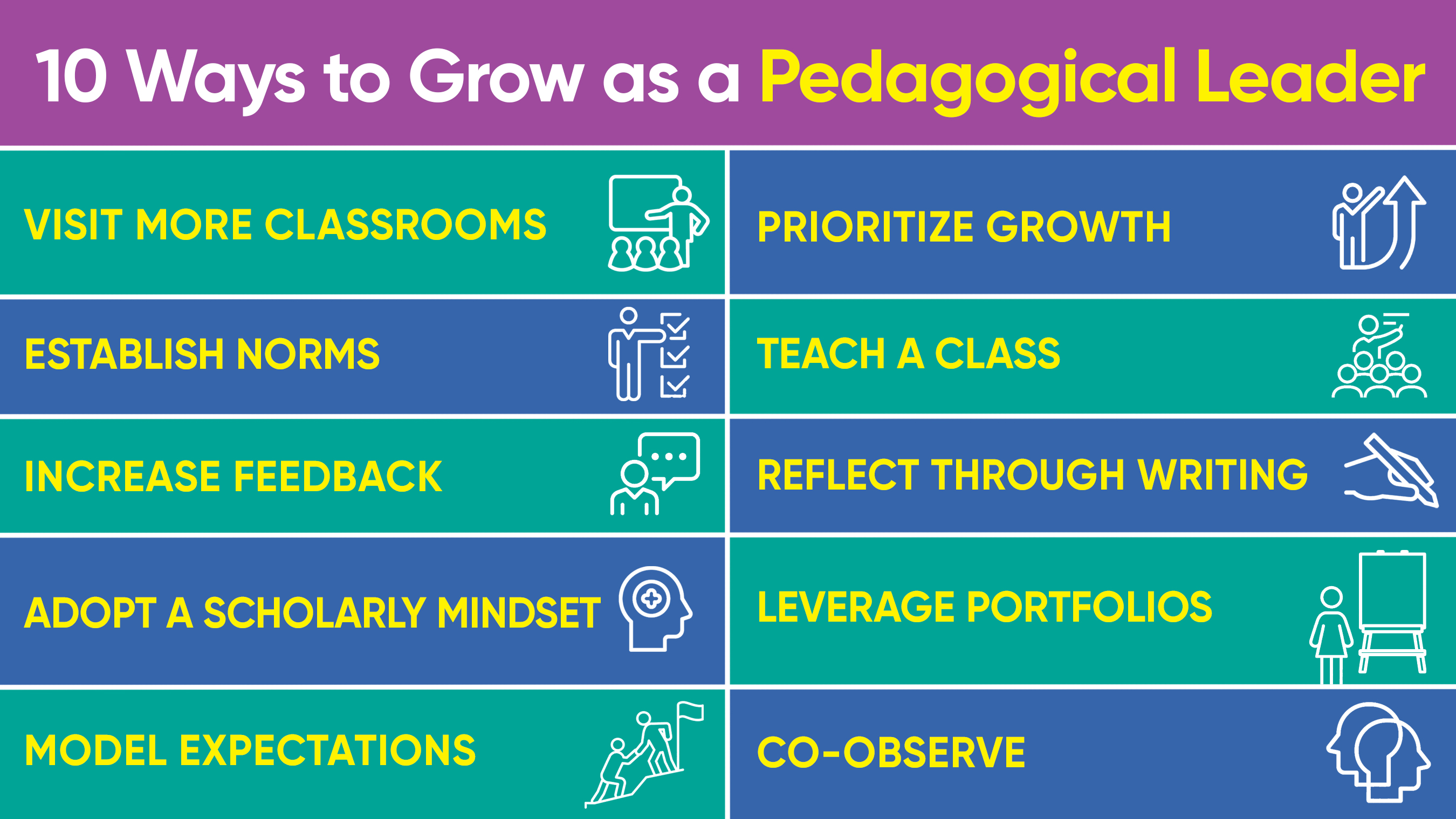
10 Ways to Grow as a Pedagogical Leader

I have vivid memories of my early days as an assistant principal and principal, where overseeing instruction was just one of many duties that came with the job. Managing budgets, developing memos, attending meetings, responding to emails and phone calls, and other tasks also consumed a significant portion of my time. The advent of social media introduced yet another responsibility into my already packed schedule: digital leadership. As a school administrator, one must be proficient in many different areas, but it's essential to maintain sight of the most crucial aspect of the role: pedagogical leadership.

Despite my best efforts, I couldn't visit classrooms as frequently as I would have liked, and the feedback I provided in written reports could have done more to enhance teaching and learning both inside and outside the classroom. If our ultimate goal is to improve, we need to prioritize the aspects of our job that impact student learning most. Pedagogical leaders recognize that management is a necessary part of the job, but it shouldn't come at the expense of cultivating a positive learning culture to boost academic achievement.

It's simple to offer advice on improving in this area or anything else, but putting it into practice can be a constant challenge. To help you get started, I've compiled ten specific strategies that I used during my tenure as a high school principal and now help other leaders with during coaching cycles. 

Visit more classrooms

Firstly, begin by increasing the number of formal observations conducted each year and sticking to a schedule to ensure that all teachers are observed three times annually, regardless of experience. Secondly, develop an informal walk-through schedule with your leadership team, mandating at least five walks per day for each member, and track visits and improvement comments on a color-coded Google Doc.

Establish norms

Establishing a shared vision and expectations for all teachers is crucial. You can do this by utilizing the Relevant Thinking Framework to provide them with consistent, concrete elements to focus on when developing lessons and deciding which high-effect strategies to use. Abolishing the routine of announced observations, having teachers provide artifacts of evidence to show the bigger picture since you can never see all that is done in a single observation, and prioritizing the collection assessments over lesson plans can also be effective.

Increase feedback

When observing lessons, always provide at least one practical suggestion for improvement, no matter how excellent the lesson was. These suggestions should be clear, straightforward, actionable, and timely. For learning, consider curating data weekly and present at an upcoming staff meeting. Feedback is critical to encourage growth and development.

Adopt a scholarly mindset

Improving professional practice as a leader is not the only benefit of being a scholar. It also enables you to have more effective conversations with teachers about their own growth, adding credibility to post-conference feedback. You can align critical feedback to current research by keeping a document of effective pedagogical techniques found in your readings. This approach saved time when writing up observations and improved relationships with staff as the instructional leader. When in doubt, lean on Google Scholar. Another key aspect of a scholarly mindset was brought to my attention by Thomas William Miller and that is to get curious and ask questions. When it comes to leading pedagogical change, questions are often more important than answers. 

Model expectations

As I shared in Digital Leadership, leaders should lead by example and not ask teachers to do anything they wouldn't do themselves, especially regarding technology integration and improving practice. When a teacher struggles with assessments, provide or co-create an example assessment. Developing and implementing professional learning is also an effective way to lead by example and build better relationships with staff.

Prioritize growth

Attending at least one conference or workshop a year that aligns with a significant school or district initiative and reading one education book and one from another field, such as general leadership strategies or self-help, can yield powerful lessons and ideas. Creating or further developing a Personal Learning Network (PLN) is also essential to access 24/7 ideas, strategies, feedback, resources, and support.

Teach a class

One can achieve this regularly throughout the year or by co-teaching with both struggling and exceptional teachers. I personally taught a high school biology class during my first few years as an administrator, which is an excellent example of leading by example. This approach also provides a better understanding of teachers' changing role in the disruption age. When a pedagogical leader sets an example, it strengthens relationships with staff and puts them in a better position to discuss and enhance learning.

Reflect through writing 

As a connected educator, writing has been a valuable tool for me to process my thoughts and critically reflect on my teaching, learning, and leadership work. Our reflections aid in our personal growth and serve as a catalyst for others to reflect on their own practice and develop professionally. Encouraging teachers to write brief reflections before post-conferences can foster a more collaborative conversation on improvement.

Leverage portfolios

Incorporating portfolios into our observation process was a helpful way to provide more detailed insight into pedagogical practices over the course of the school year. Portfolios can showcase personalized learning activities, assessments, unit plans, student work, and other forms of evidence to enhance instructional effectiveness and validate good practice.

Co-observe 

During the first quarter of each year, I collaborated with members of my administrative team to co-observe lessons. This allowed us to benefit from each other's perspectives and expertise and provided opportunities for us to improve our pedagogical leadership skills and reflect on our observations. In my role as a coach, I have K-12 leaders visit classrooms beyond the grade levels they serve when working with districts. For example, elementary will conduct walks in secondary to provide feedback and vice versa. We then share collective insight while processing the feedback. Gaining a perspective of strategies used at various grade levels is invaluable. 

Ultimately, ensuring quality learning takes place in our classrooms is of utmost importance. These ten strategies can be implemented immediately to improve pedagogical leadership, but there may be additional strategies that others find effective. The image below provides further insight.